
FEATURE:
Nothing Compares 2 U
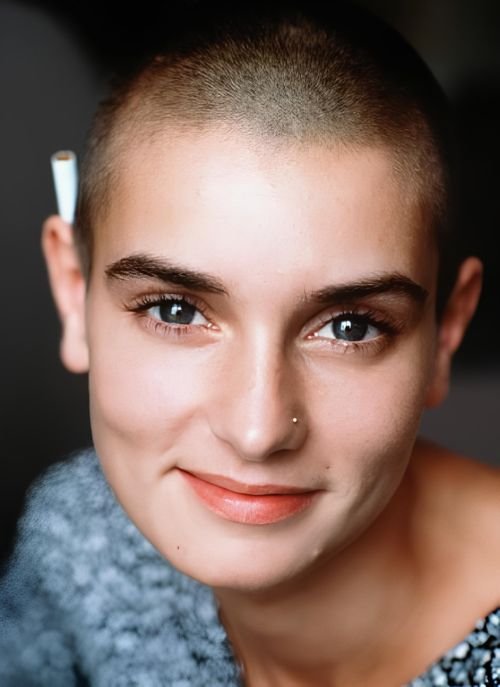
PHOTO CREDIT: Jane Bown/The Observer
Sinéad O'Connor at Sixty
_________
ALTHOUGH it is a little way off…
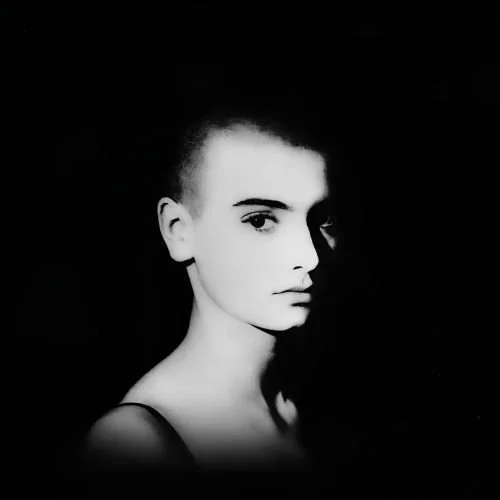
I am thinking to 8th December and the sixtieth birthday of Sinéad O'Connor. We lost this icon 2023 at the age of fifty-six. Rather than this being mournful, I wanted to highlight her incredible catalogue. My mind is in 1966 at the moment. Talking about artists born in that year or events that occurred then. Though the brilliant Sinéad O'Connor is no longer with us, you can feel her influence today. Artists such as John Grant, Tori Amos and Fiona Apple have cited her music as an inspiration. Like I do with similar features, I am ending with a mixtape. The best from Sinéad O'Connor. There are a few biographies out there, but I wanted to bring in this one from Factory International. They provided one around The Surge: An Ode to Sinéad O’Connor. It is a bold contemporary dance production directed and choreographed by Tony Award winner Sonya Tayeh. It acts as a theatrical wake and meditation celebrating the life, spirit, and legacy of Irish singer-songwriter and activist Sinéad O’Connor. It had its world premiere in Manchester in June. It had its New York run in September. It is moving to Los Angeles in January:
“Beginnings
Born in Dublin in 1966, Sinéad O’Connor’s early life was marked by instability and violence. Her parents separated when she was young, and she later described her mother as a physically and emotionally abusive figure who shaped both her fear and her defiance.
At odds with her mother, Sinéad was placed in Catholic reform institutions as a teenager. Constantly under strict supervision, the young Sinéad learned that authority was something to be survived, not trusted. These experiences would shape how she saw authority, religion and power.
In her childhood, music stood out as a place to seek solace, as noted in her memoir, Rememberings where she recalls an encounter where she was drawn to her grandmother’s piano, treating it like a person to be cared for. From an early age, music was something Sinéad felt deeply connected and called to – and it would become her way out of the reform institutions she loathed.
While at the An Grianan Training Centre – a former Magdalene Laundry – a nun recognised Sinéad’s talent for singing, encouraging the teenager and buying her a guitar. This led to her singing at a wedding reception where she met members of the Irish band Tua Nua. At just 15 the band thought her too young to join officially, though she co-wrote and recorded their first single for Island Records, Take My Hand.
It wouldn’t be the first band Sinéad joined – after cutting her teeth busking and gigging in Dublin, Sinéad formed the group Ton Ton Macoute with Colm Farrelly, meeting through an advertisement in Hot Press magazine.
Finding her own voice
In 1985, at just 18 Sinéad O’Connor signed to Ensign Records after Nigel Grainge, one of the labels co-founders, was impressed by her vocals while watching Ton Ton Macoute (he was less impressed by the band’s overall sound). She moved to London and began work on what would become her 1987 debut album – The Lion and the Cobra.
While recording her first record, Sinéad became pregnant. Accounts from the time describe pressure from her label to prioritise her career over having a child – to terminate the pregnancy, to reconsider motherhood. She refused.
This moment set the tone for what followed – Sinéad would not separate her life nor her morals from her work to fit industry expectations.
At the 1989 Grammys, she protested the Recording Academy’s refusal to televise the Best Rap Performance category by painting Public Enemy’s logo in her hair – and also wore her baby son Jake’s onesie attached to her jeans during her performance of Mandinka, representing her identity as both a mother and a musician.
Nothing Compares
By the early 1990s, Sinéad had become internationally renowned. Her 1990 album I Do Not Want What I Haven’t Got sold millions worldwide. With her definitive version of Prince’s Nothing Compares 2 U, Sinéad’s voice and image became instantly recognisable – her shaved head, direct gaze and a single tear rolling down her face spurred on by the lyrics reminding her of the passing of her mother five years earlier.
But with that level of fame came scrutiny. Sinéad was celebrated as a monumental talent, while also being questioned for how she looked, spoke and behaved.
She defied industry expectations again by boycotting the 1991 Grammys despite having one of the most successful singles that year – fed up with how the industry prioritised commercial success over artistic integrity.
Fight the real enemy
In 1992, during a live performance on Saturday Night Live, Sinéad made a gesture that would come to define her public life.
After singing an acappella version of Bob Marley’s War, she held up a photograph of Pope John Paul II and tore it into pieces, saying “fight the real enemy.”
The act was a protest against child abuse within the Catholic Church – something she connected to her own experiences and to broader, institutional violence.
The response was immediate and hostile. She was banned from performing on NBC and even called a ‘she-devil’ in headlines. Hundreds of her CDs, tapes and records were destroyed by a 30-tonne steamroller outside her record label's US headquarters at the Rockefeller Center in New York. Yes, really. And all of this happened when she was just 25 years old.
At the time, the systemic abuse within the Catholic church was not yet widely acknowledged. Years later, her actions have been re-evaluated for what they were – an early and public challenge to institutional abuse, far ahead of its time.
The media circus
Sinéad O’Connor’s relationship with the media was often difficult. She was frequently described as controversial, rather than being taken seriously on her own terms.
Her appearance, beliefs and outspokenness were often used to define her, overshadowing her music and message. She famously shaved her head in a rejection of femininity after being told to present a more conventional image – but the media weaponised this as something to evidence her being unstable.
The SNL incident was the pinnacle of this treatment – but not the only time she was grossly misunderstood. Post-SNL, Sinéad was condemned, mocked and, in many spaces, erased. Her commercial success never recovered – but that didn’t matter for someone who wanted to live on their own terms.
Always searching
Sinéad continued to make music throughout her life, exploring different styles and collaborations while also speaking openly about her personal struggles – maintaining a commitment to truth-telling about abuse, religion, mental health and survival.
In 2011, she performed with us at Manchester International Festival – calling it “one of my favourite nights of all time”.
In 2018, she converted to Islam, taking the name Shuhada’ Sadaqat. For Sinéad, it was part of an ongoing spiritual journey and search for peace rather than a sudden change.
In 2023, she passed away at the age of 56, leaving behind her three children and an incomparable catalogue of songs.
The Surge
Throughout her career, Sinéad’s voice captured listeners with its emotion and restraint – but it also challenged authority and refused to fit expectations. Now her voice and life will be celebrated through a new dance work directed by the Tony Award-winning choreographer and director Sonya Tayeh.
The Surge: An Ode to Sinéad O'Connor is a meditation on voice, protest and the courage to live a life that defies the norm. Set to her songs and narration from her memoir, Rememberings, The Surge is inspired by Sinéad’s uncompromising spirit.
Revisiting her work a quarter of the way through the twenty-first century, her words are as vital as ever. Sinéad O’Connor was ahead of her time, and the world is still playing catch up”.
It is true that Sinéad O’Connor was a trailblazer. Such a distinct artist. I look around the world today and wonder what O’Connor would make of it. You know she would be writing about what is happening in the world. Genocide in Gaza and the corruption of leaders around the world. Her voice lives on in artists that she has inspired. On 8th December, we mark Sinéad O’Connor’s sixtieth birthday. A chance to reflect on everything she gave us. How her brilliance lives on. She is so sorely missed. The world is a lot poorer without this music giant…
IN it.