
FEATURE:
Britain’s Quiet One on the Dial

PHOTO CREDIT: Denis Oregan
Exploring Kate Bush’s 1984 Interview with Pulse!
_________
THERE are not too many…
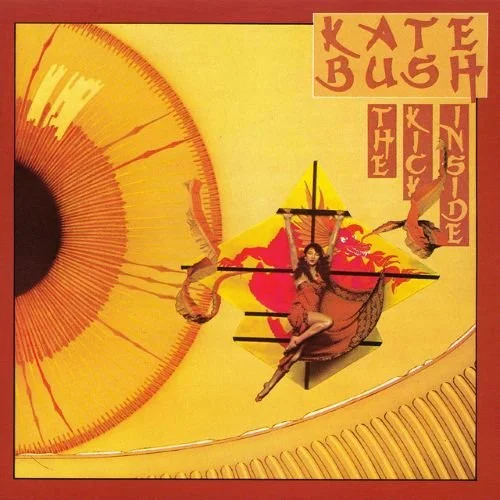
interviews where Kate Bush discussed her musical tastes. Or specific songs at least. I did want to bring in a great 1984 interview with Pulse!. 1984 was a very interesting year. Kate Bush released Hounds of Love in 1985. By this time, there was a lot more American interest. I guess there was after 1982 and The Dreaming. It was a slow seduction. Bush never really touched America before that. They did not get her music and she did not tour the country or do too much promotion there. She was not bothered by this. However, the country did start to pick up on her brilliance by 1984. The release schedule in the U.S. was weird. The Kick inside, her 1978 debut, was released in America in March 1978 by Harvest Records (and later reissued by EMI America). 1984 saw Lionheart (1978) and Never for Ever (1980) released in America. Lots of debates as to why Bush was not that well received in the U.S. when her debut came out. I feel that it was too unusual for America. They could not really get their heads around someone as brilliant and unique as Bush. Perhaps more used to conventional music. In the sense that their tastes were a bit basic in 1978. Or they felt Bush was too British. Something odd that meant she did not get a lot of traction there. However, I feel the U.S. release and promotion was needed. Most artists expected to try and crack America. Six years after The Kick Inside came out, Kate Bush was starting to penetrate the America market:
“Kate Bush first touched America's music sensibilities in 1977 with the release of her first record, a mysterious, melodic collection called The Kick Inside [the album wasn't released until 1978] and an appearance on Saturday Night Live, performing strange mime to some of her more viscerally meaningful lyrics. While many viewers scoffed at the undefinable movement on the screen, some ran out in curiosity to buy the product behind the performance.
The Kick Inside feature Bush as writer, singer, and keyboardist, and dissects such esoteric subjects as telepathy, sensuality, incest, and the classic film Wuthering Heights. In 1977, a year laden with disco, Kate's vinyl presence stood out as new and original. But the Bush sound - unusual to be sure - has taken time to catch on in this country. While British critics call Kate "too commercial," because of her frequent appearances on family talk shows and other promotional venues, her label, EMI, has felt until recently that her records were "too British for American tastes." So, with only one of her four records available here domestically, Bush fans had to search the import bins for her product. Her second album, Lionheart, was suddenly released without explanation by EMI on January 13 and it entered Billboard's LP and tape charts at #202, Kate's first appearance on those charts.
"I don't know why they released it," said Caroline Prutzman of EMI in New York. "I think EMI believes in Kate and would like to see her break over here. They have all that material, and she does have a following, so it seems like a good idea." So good, in fact, that by the time this Pulse! hits the stores, EMI should have a domestic release of Kate's third album, Never For Ever, in the stores.
"It's hard to say exactly what they're trying to do." Prutzman commented, "but Kate's video (Kate Bush In Concert) has been playing all over the country, and it's been received very well." That video is also commercially available.
"Only two of my records have actually been released in America," Kate notes from her studio in Great Britain. "I was really pleased that there were so many people trying to get hold of the albums on import."
This sentiment is from a 25-year old lady who began writing songs at age 11. She says, "I didn't think I was going to do it for a profession. It was fun, something I really enjoyed. I spent most of my time create scenarios for songs. At 16 I had gotten to the point where my songs were presentable. That was after five years of writing ballads and slow songs like 'The Man With The Child In His Eyes.'"
Kate started recording her songs at that young age with the help of close friend David Gilmour [actually they weren't and aren't "close friends"], lead singer of Pink Floyd. Gilmour was so impressed with his pal's burgeoning talent that when she was 16 he introduced Kate and her vast collection of music to EMI.
"I signed a recording contract at 16. The hardest thing," Kate admits modestly, "was choosing the songs." Having stockpiled much more than an album's worth of songs, she was able to choose from the cream of the crop.
I do wonder what Kate Bush’s career would have been like if there had been this instant American interest and commercial success. I guess she would have performed there or done more promotion. Now, the country very much knows who she is and her music. A hard sell in the 1970s and 1980s, people getting her albums on import did show that the music buyers were interested. The press perhaps a bit less enamoured. Her songs spoke to something that was not being provided by other artists.
"Wuthering Heights," the first single, was a huge it in several European countries. "The story in 'Wuthering Heights' had been bugging me for about a month," Kate recalls, pondering on the lives on Emily Bronte's doomed lovers. "At the time I was recording the album, I began to down my thoughts on Cathy and Heathcliff and their incredible relationship. I really enjoyed the energy between those two."
And so did single buyers in England, pushing Kate Bush to superstar status her first time out. She toured the continent and Japan - where The Kick Inside still reigns as a national favorite - and returned six months later to record Lionheart, a quickly-produced recording that Kate now things [sic: thinks] harshly about: "I had only a week after we got back from Japan to prepare for the album. I was lucky to get it together so quickly. But the songs seem to me, now, to be somewhat overproduced. I didn't put enough time into them." She gave more time, and thought, to her 1980 release, Never For Ever, her first self-produced effort which, surprisingly enough, sported her first released single ("Babooshka") in the states and a big selling cult single in several American cities (the import "Army Dreamers").
The U.S. record buyer, however, ignored Kate until '82 when the rocker LP The Dreaming came out stateside in large quantities and suddenly the anonymity of a singer from Kent, England was reversed. That albums' hard sound proved to be her American kick-off, and due to the newfound saleability of Kate Bush, EMI quickly followed The Dreaming with a 1983 EP featuring some of her best material from the pervious four releases (called Kate Bush). Available only in the United States and Canada, this limited edition, with Kate dramatically poised in brass armor, was EMI's intended mode of bringing U.S. attention to Britain's singer elite.
Strength was her one motive when commencing work on The Dreaming, she says, explaining how for the first time she relied "on the power of the music" rather than sultry tunes and serene lyrics prominent in her previous albums. And the power in Kate Bush's music was an evolutionary process that is traced in the Kate Bush EP, fusing the new Bush force with those beautifics utilized in the earlier records.
"I was trying, in The Dreaming, to get myself up to the point I knew I was capable of," kate says of the search for power. "the Dreaming was my emotional image and I am thankful that I had good people to help with the dynamics."
It must have been quite strange for Kate Bush promoting her music around the world. Different releases for different countries. Having to do interviews for all these international sources and not really knowing whether it was making an impact and how they would receive her. I look back now and do wonder why America were so confused. Or why Kate Bush was not an instant success. The fact very few of her first four albums were released there did not help. The U.K. definitely took Kate Bush to heart. Though the U.S. somewhat slept on this icon. In 1984, when more of her music was available and there was this turning point.
The last studio effort took almost two years to complete as she needed to work with specific technical directors who, unfortunately, weren't always available for her. Today she works with only one. "I was looking for a certain imagination in an engineer and I ended up going with quite a few and working in many different studios," she notes. "That's not what I would've wanted to do."
The visual imageries that come across in The Dreaming are due, she points out, "to the painstaking time we took to get every effect perfect." >From The Kick Inside to the last album, movement has been an evident element in her work. Kate mentions how, "Back when I recorded Kick I had just discovered the enjoyment of dance and I was so knocked out by that, that writing was a breeze for me." Dance, and the fine art of movement, Kate says, are responsible for the free flow of many of her songs.
In The Dreaming, she lends a topical theme to many cuts. "Sat In Your Lap," a punk influenced homage to pop Brit culture circa 1982, shows off Kate's feelings on knowledge and education: "Knowledge is something sat in your lap/something that you never have," because, in the singer's eyes, "the more you realize, the more you need to learn." But other parts of the record present a more maudlin view of things: The crazed "Get Out Of My House" was inspired by the horrors in Steven Kings The Shining and utilized several overlapping tracks that simulate madness. Kate sings about a house that takes over, a house possessed by devilish innards.
"When I'm writing a particular song," she says excitedly, "I can feel a character so strongly that perhaps I'm feeling the same." Well aware that her songs provide listeners with some extreme characterizations, she finds it "terribly important ... to make the person I am writing about come alive. Unless I can somehow live the experience I don't feel that I've achieved what I want to as a writer."
The plan might have been to tour the U.S. at some point. She only ever toured once (1979’s The Tour of Life), and that other possibility of her going between U.S. cities and playing there. It would have been a huge undertaking and one that could have been a big financial loss. Not that Kate Bush was an underground success in America and someone that was only well received by college students and a certain audience. It did take an awful long time for her brilliance to be fully embraced there.
Kate is busy these days putting the pre-studio finishing touches on her fifth record. "I've been writing material for my new album - the songs are almost complete now," she said. "I hope to start recording in a couple of months when I've finished writing and tightening up the lyrics." As for the direction the record's music will take, she hasn't decided yet. She will venture to the U.S. later this year to promote it but not to tour. "It's a shame, but for now I don't see the possibility of a tour," she says with a sigh. "We can't afford to do it the way I'd want to." The way she wants to do it is right. For now she will wait and see the reaction to her newest product, and in the meantime hope that her American success continues to grow. About America, Kate is glad that video has made it to the forefront of entertainment. Having produced a clip for each single to date, on of her problems in not catching on here, she is well aware, has been the lack of video venues. These days most musically inclined cable channels carry Kate's work, both past and present. (According to ABC's 20/20, Kate was one of the ground-breakers in video production - years before MTV.)
On the twentieth anniversary of the Beatles' invasion, Kate said she only became "very interested in the Beatles about four years ago. I'd always liked their singles but only really started listening to their albums a little while ago. I think they are a great influence on any writer," she noted, "the quality of their work is something, I feel, every composer aspires to."
Specific songs have left their mark on Kate Bush: "So many records have left great impressions on me. It is always hard to just call them all to mind so quickly but to mention a few - "No. 9 Dream" by John Lennon: "I Am The Walrus" by The Beatles: "He's My Man" by Billie Holiday: "Best of Both Worlds" by Robert Palmer: "Really Good Time" by Roxy Music: "Tropical Hot Dog Night" by Captain Beefheart: "Montana" by Frank Zappa: music by Eberhard Weber, and "the Wall" by Pink Floyd (and pal David Gilmour)."
The first record this lady of music ever purchased was "They're Coming To Take Me Away, Ha-Ha" by Napoleon XIV. She was very young. Pondering the subject of when she got into music, said that, "I've always been into music. I was a child then and I think all children embrace music."
These days Kate finds she's too busy to get involved in pop culture. "Since I've been in the business I've had a lot less time to keep up with what's happening," she said regretfully. "I don't feel I have to 'keep up' as such, but I always love to hear good music and see new interesting bands."
But most of what she listens to these days is classical. "Very little contemporary - mostly old favorite records and Radio 4." Britain's quiet one on the dial”.
I do like how we get a segment on Bush’s music influence. I did not know that she was relatively late to The Beatles. I guess, when she said she only got into their albums around 1980, that would sort of align with John Lennon’s murder. That might have had an impact on Bush and compelled her to listen deeper. I might dig into those songs she mentions more for a future feature. A John Lennon solo song and one he wrote for The Beatles (I Am the Walrus). Her nod to Billie Holiday and Robert Palmer. Quite an eclectic taste. Maybe Bush was always more interested in older music. Not too many contemporary artists. How she listened to BBC Radio 4 and there was this sense of leaning on albums and songs that she loved when she was young. Even if she said she kept her ears open for new artists, even now, I feel Bush’s record collection is comprised more of stuff from the past. After 1984, things would change for Bush. Hounds of Love coming out the following year and becoming this massive success around the world. I wanted to highlight this 1984 Pulse! interview, as they were relatively new. Pulse! was a tabloid magazine published by Tower Records that started in 1983. They ceased publication in 2002. It was a great chat with an artist who was starting to get more spotlight and discussion in America. Still such a shame that the country did not ‘get’ Kate Bush…
FOR such a long time.