
FEATURE:
Hope and Loving…
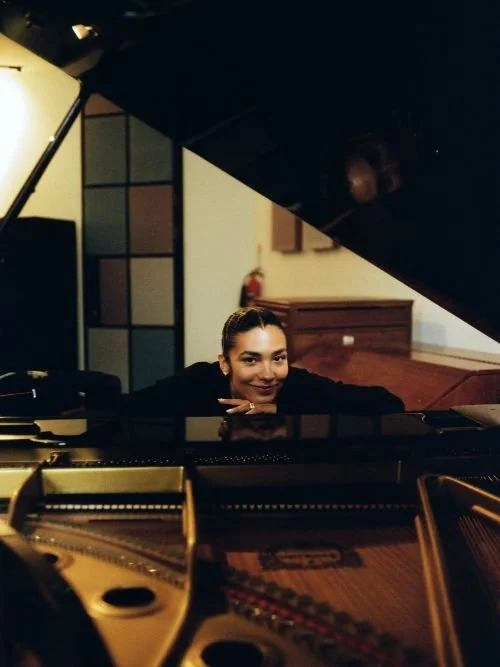
IN THIS PHOTO: Olivia Dean
Predicting the Mercury Prize Winner
_________
ON 22nd October…
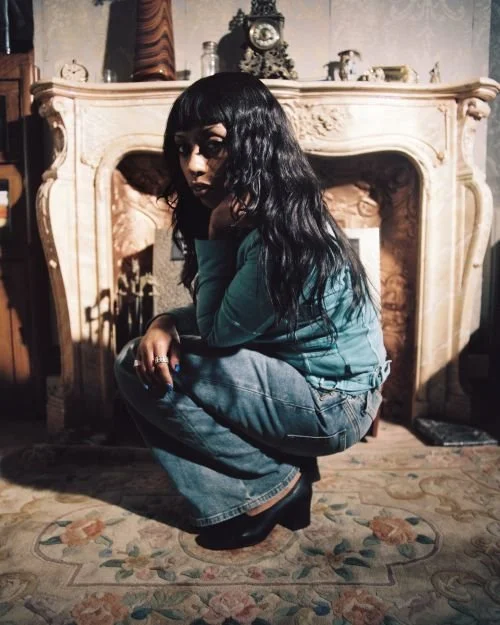
IN THIS PHOTO: Nia Archives/PHOTO CREDIT: Stuart Nimmo
the winner of this year’s Mercury Prize will be announced. Taking place at the Utilita Arena in Newcastle, it is going to be a wonderful event. There has been criticism that this year’s dozen shortlisted albums is largely comprised of mainstream artists. Rather than spotlight debut albums and rising artists, this year is very much about established artists. Many asking whether this year’s Mercury Prize has lost its way and is betraying its roots. It has always mixed bigger and smaller artists in its shortlist, though you have to ask whether many of the artists shortlisted need the award and what it says if they win. The twelve albums are Dave – The Boy Who Played the Harp, Dove Ellis – Blizzard, Florence + The Machine – Everybody Scream, JADE – THAT'S SHOWBIZ BABY!, Knats – A Great Day in Newcastle, Kojey Radical – Don't Look Down, Nia Archives – Emotional Junglist, Olivia Dean – The Art of Loving, Paul McCartney – The Boys of Dungeon Lane, RAYE – THIS MUSIC MAY CONTAIN HOPE., Suede – Antidepressants and War Child Records – HELP(2). It is broad in terms of genres though, aside from Dove Ellis, Knats and possibly Nia Archives, the rest of the dozen artists are firmly established. There are albums that I know definitely will not win. Of course, you can never predict who will win, though I am pretty sure Paul McCartney will not. It is great he is nominated, though his latest album is fantastic, yet there are stronger in the list. He is also extremely wealthy and famous, so I think there would be some outrage if he won! Though it is great that a Beatle is shortlisted! I also don’t think War Child Records will win. Perhaps Knats, Dave and Suede are outsiders. Even though Dave released a masterpiece in The Boy Who Played the Harp, I have a feeling he will not win a second time (he won in 2019 for his debut, PSYCHODRAMA).
Florence + the Machine are a lot of people’s favourite, though I feel they will be overlooked. Everybody Scream is an incredible album. Again, artists more worthy and albums that are stronger. It would be great to see Dove Ellis win. Not least because Blizzard is his debut album and he is an Irish artist. Keeping the Mercury Prize out of London and giving it to a debut album would be a popular choice. I just feel there are three albums that are going to be fighting it out. Two that I feel will go head to head for the prize. There were reaction pieces to the shortlist. Still Listening asking, if an award that should be championing independent artists is dominated by major-label albums, can we still hold the Mercury Prize in high esteem? It is an interesting question:
“Between them, Universal, Sony and Warner are involved in 10 of the 12 shortlisted releases. BMG accounts for the remaining major-backed nominee.
That's a remarkable level of concentration. Of course, being signed to a major label doesn't make an album bad. Plenty of fantastic records are released through Universal, Sony and Warner every year. Nor is there any rule saying Mercury nominees should be independent. The prize has never been exclusively for indie labels. It exists to reward the best British and Irish album, regardless of genre or commercial performance.
But it does raise an uncomfortable question. If Britain's most prestigious music prize is almost entirely populated by artists backed by billion-pound corporations, who's championing genuinely independent artists? Where are the self-funded breakthroughs? Where are the tiny labels taking creative risks? Where are the albums that don't arrive with global marketing campaigns and international distribution networks already behind them?
Perhaps that's exactly the problem. If the Mercury Prize simply mirrors the industry's existing power structures, then it inevitably becomes less useful as a platform for artists operating outside them. Independent labels have increasingly become acquisition targets. Distribution deals have blurred the line between indie and major, while the biggest companies now control many of the pathways that once allowed genuinely independent artists to break through.
The Mercury Prize has never promised to reward independent artists. But when almost every shortlisted record is backed by one of the biggest music companies on Earth, it's fair to ask whether something has been lost. It should still be the place where people discover their next favourite artist, not simply another celebration of the companies that already dominate the industry”.
Even though I would love Dove Ellis, Nia Archives or Knats to win this year, I feel there are three artists that are going to be favourites. All three are women from or based in London. I do feel it is important that a female artists wins, as they have been dominating music for years, so it would reflect that quality and contribution. All three women are signed to major labels or are mainstream artists. JADE is going to be in the running. I do feel that the main focus will be on Olivia Dean and RAYE. Dean’s The Art of Loving is a hugely commercial success and won critical praise. It has scooped awards and is definitely one of the best albums of the past year. Given her momentum and success, I feel The Art of Loving might just nip RAYE with THIS MUSIC MAY CONTAIN HOPE. Again, another huge album that received huge applause and was a fan favourite. Even if each artist is established and has a massive following, you cannot deny the impact their albums made. I will come to a review of each. Ending by considering, if my two favourites are these massive artists, what course the Mercury Prize needs to take next year. And whether it indeed will. RAYE’s THIS MUSIC MAY CONTAIN HOPE. is a statement of independence and strength from RAYE. This is what NME wrote in their five-star review:
“Grandeur is at the core of ‘This Music May Contain Hope’, RAYE’s second album, and it’s awe-inspiring. To deliver this glory, the artist born Rachel Keen can be found making her way through a smorgasbord of sounds across the ambitious record’s 73-minute runtime, from melodramatic ballads to exhilarating funk tunes and, of course, the jazz-pop she’s become so known for. It’s admittedly a lot to take in, but the brilliance that comes from RAYE’s unrestrained, all-in approach is worth the journey.
‘This Music May Contain Hope’, a concept album focused on overcoming insecurities and heartbreak, is framed like an extravagant theatre performance. Here, RAYE is both the subject and the omnipresent narrator. “Allow me to set the scene. Our story begins at 2:27am on a rainy night in Paris. Cue the thunder,” she says on opener ‘Girl Under The Grey Cloud’ set to orchestral strings. There are more bits of spoken word strewn throughout, ones that smartly give the album a bit more structure and grounding – almost like listening to the cast recording of a Broadway musical.
With that foundation, the South London singer gives herself the room to be indulgent with the album’s wide-reaching sonics, which pays off far more often than not. At times she leans into the show tune-ness of the concept – such as on the outro of the otherwise slinky R&B of ‘The WhatsApp Shakespeare’ – and at others she plays it straight, like the slow burning power ballad of ‘I Know You’re Hurting’. She even returns to her club sound of yore on the spectacular house banger ‘Life Boat’.
Throughout it all, two things are very evident: RAYE’s agile voice has never sounded so good, and her pen has never been so strong. Just take cheeky album standout ‘I Hate The Way I Look Today’, a swing-jazz tune that recalls Ella Fitzgerald where she sings “I’m okay to be lonely / If I’m lonely and skinny / I have such silly self-loathing thoughts, it seems”, or the heartbreaking details of ‘Nightingale Lane’: “It was right there, early June / Next to Old Park Avenue / Standing in the rain, I watched him walk away”.
For all the self-doubt and heartache that RAYE takes us through, in the end, she does come out the other side and delivers on the title: this album does indeed contain hope. She summons her girlfriends on ‘Click Clack Symphony’ (aided by Hans Zimmer), learns how to move on with the help of Al Green on silky ’70s soul mid-tempo ‘Goodbye Henry’, and calls on the heavens (and her sisters Amma and Absolutely) in order to be “free of all the pain and every fear” on the foot-stomping ‘Joy’. After the “rainy night” and “thunder” of the spoken word opener, RAYE discovers that “the sun exists behind the clouds”, as she says on ‘Happier Times Ahead’.
‘This Music May Contain Hope’ is RAYE firing on all cylinders – and then some. It’s showstopping musical maximalism at its grandest, while still being grounded in relatable experiences and unbridled emotions. Again, it’s admittedly a lot to take in – but that’s also why it’s so glorious, every theatrical flourish and stylistic detour a declaration from RAYE that she is finally making music for herself”.
I am going to come to a review of the world-conquering The Art of Loving. The Guardian said of The Art of Loving that “this exceptionally well-made record is full of diaristic detail and sweetly understated vocals”. Since it was released last September, it has gone double platinum in the U.K. It is a colossus of an album. One that might be too big and popular to not win the Mercury Prize:
“If you have been paying any attention to the UK singles chart recently, it can hardly have escaped your notice that for the last couple of months it has been utterly dominated by the soundtrack for the Netflix smash KPop Demon Hunters. At the time of writing, Golden, by the cartoon’s chief protagonists Huntr/x, is enjoying its seventh week at No 1: a couple of weeks back, songs from the film would have occupied seven places in the Top 10 had chart rules not limited artists to three appearances in the Top 40.
“The most striking challenge to its supremacy has been mounted by London singer-songwriter Olivia Dean. Her single Man I Need has been dug in at No 2 for the last month and has been joined in the Top 10 by its predecessor, Nice to Each Other, and her collaboration with Sam Fender, Rein Me In. Further down the Top 20, her old single Dive is enjoying an unexpected new lease of life. Were it not for a made-up K-pop band, one suspects we’d be talking about Dean’s ongoing success as the pop phenomenon of the moment, and not just in the UK: Man I Need is the fifth most played song in the world on Spotify at the time of writing.
Dean’s 2023 debut album, Messy, attracted respectful but mixed reviews and did respectable, rather than remarkable, business. It spawned a hit single in Dive, but seemed very much standard-issue stuff – tasteful neo-soul replete with vintage horn arrangements, ballads accompanied by lo-fi, slightly out-of-tune piano, tracks that opened with the sound of crackly old vinyl. Its author did the type of things that tasteful British neo-soul artists do: appearing on Jools Holland’s Hootenanny belting out You Can’t Hurry Love, covering The Christmas Song as part of a seasonal Amazon campaign, turning up on the soundtrack for the new Bridget Jones film alongside Jamie Cullum and George Ezra. Of course, there’s nothing wrong with any of that, but nor did any of it suggest that Dean was the kind of artist built to contest the dominance of a $100m (£74m) smash-hit animation, the soundtrack of which has topped the charts in 16 countries.
So how has it happened? High-profile support slots on Sam Fender and Sabrina Carpenter’s stadium shows early in the summer probably helped broaden her audience, but the real answer seems to lie on The Art of Loving. While you wouldn’t describe it as a complete reinvention, it certainly constitutes a noticeable rethink. It expunges most of the cliches of Dean’s debut album – or rather quarantines them on a track called Close Up – and instead looks for inspiration to music that emanated from recording studios in 70s LA. The Art of Loving dabbles in both Rumours-adjacent soft rock – you’re never far from a sun-dappled electric piano line or a breezy acoustic guitar; Baby Steps offers up slick, yacht rock-y funk – and, on So Easy (To Fall in Love), Carpenters-style MOR pop that would once have been considered entirely beyond the pale.
It’s a sound that’s familiar without feeling hackneyed or self-consciously retro: Something Inbetween is powered by a muffled rhythm that sounds like someone playing a techstep drum’n’bass track with a duvet over the speakers; lurking in the depths of Nice to Each Other there’s a wash of shoegaze-y guitar noise and gusts of ambient synth drone. Airy and inviting, it suits Dean’s sweetly understated vocals – mercifully lacking affectation, either of the post-Winehouse “jazzy” variety or the weird, consonant-mangling “indie voice” that’s supposed to connote intimacy in 21st-century pop – and adds a cinematic gloss to her lyrics. Dean is big on diaristic detail as she navigates ex-related angst and tentative new relationships: “I don’t know where the switches are, or where you keep your cutlery.”
Perhaps more importantly, Dean and her co-authors – including Tobias Jesso Jr, and Matt Hales, who once plied his trade as singer-songwriter Aqualung – have significantly upped their game. Every chorus has been polished until it catches the light (Baby Steps offers a particularly gleaming example), while one suspects that an enormous amount of effort has been expended on making the melodies of Nice to Each Other and I’ve Seen It sound as effortlessly charming as they do.
So the album breezes past. It’s exceptionally well made but feels entirely natural; it’s mainstream commercial pop, but laudably devoid of obvious cliches. If Dean’s debut seemed like an artist trying to find their place in the landscape by ticking relevant boxes, The Art of Loving seems like someone finding their own voice. The sight of Olivia Dean battling a cartoon K-pop band in the charts’ upper echelons is proof that pop in 2025 is a business you can’t really predict, but still, The Art of Loving’s success seems a foregone conclusion”.
Although I think it is likely that the Mercury Prize will come back to London, it will not stay there too long. One of the worst traits is that, for so long, it was London artists winning. Last year, Sam Fender won for People Watching. He is from the North East. The year before, English Teacher won for This Could Be Texas. The band are from Leeds. There has been a huge London dominance the past decade or so. It would be great if it were to stay out of the capital, as it is now being stayed in the North East, whereas before it was hosted in London. You can never predict which way the Mercury judges will go on the night, but I feel Olivia Dean will win. RAYE is her biggest challenger. When the winner is announced, I do feel that questions needs to be asked. People will ask why heavyweight artist need to be nominated for an award that should be for artists who will not be included in the BRIT Awards, GRAMMYs and major ceremonies. It is for the outsiders and independent artists. I want to end with Drowned in Sound and their reaction to this year’s shortlist:
“The Mercury Prize is undoubtedly a stamp of greatness that sees the winner’s sales and streams skyrocket; the prestige matters. Could it not be more useful therefore to spotlight an album that’s recognisable at least to some degree, perhaps with some critical acclaim, a cult following, or word-of-mouth buzz, but that hasn’t had much of a mainstream boost but could still cross over? Many of these artists or albums don’t ‘need’ that extra nod that the Mercury Prize provides, unlike artists who genuinely flourished further as the result of their nomination or win like Young Fathers, Ezra Collective or English Teacher in recent years.
This is what I mean by a lack of ‘outsider art’. Keep to the mainstream (mostly) and lists start looking homogenous. Reaching further out, especially to artists on the rise or on independent labels, ensures a freshness and unpredictability can be maintained. There are a few albums I had in mind that could have been great Mercury nominees, which had both done well in their own right but deserved a larger audience and could be appreciated by a wider range of people.
This year, if it were up to me, I’d have slotted the Loathe album A Stranger To You into the nominations. It's an album album, experiential and cerebral, and though it has a metal pulse I envision it as a record that could become that one metal album for people who don’t think metal is for them. In fact, its introduction and interludes borrow from hip-hop and spoken word, thanks to the rhymes of their collaborator bucki sugar. Meanwhile, it eschews metal’s dark tones for technicolour, emotional but with many shades of positivity and hope encased within it. It’s beautifully unique, an album that could reasonably be quantified as art.
When I refer to ‘outsider art’, metal is one of the music forms I am thinking of. My thoughts on the Mercury Prize’s indifference to metal could form an entire newsletter in itself, but its continued lack of inclusion is certainly reflective of how music that’s in the margins, or coming away from the margins, is ignored. A metal album has never won, after all. Though its chair of judges Simon Frith once dismissed it as a ‘niche’ rather than a genre in its own right, that point fails to wash in an era where metal has affirmed it is standing up ready to be counted. And if jazz can be a part of the Mercury Prize as it so often is - not shirking it of course - why can't metal be?
To quote Keith Kahn-Harris in my current read, The Beautiful Death of Ozzy Osbourne: "Metal is beginning to take its place in the diverse firmament of established human cultures with longstanding traditions. To ignore it, to treat it as ephemeral, increasingly means to be blind to the existence of part of the cultural foundation of modern life."
The Mercury Prize doesn’t need to become a celebration of the obscure and make itself stuffy and elitist. What it can do is cast its net wider. It can let people discover something they might not otherwise have heard. It can make the field open for anyone, from any career point or any genre, and make itself more exciting than ever”.
On 22nd October, we will discover which album walks away with the Mercury Prize. Despite there being the odd smaller artist who is worthy of the award, the sheer number of major artists means it is likely that one will win. Though never count out the likes of Dove Ellis or Knats. I do feel it will either by RAYE or Olivia Dean; the latter would be my prediction. The Art of Loving is a juggernaut album that keeps on gathering praise and success, so I feel the judges will acknowledge that when they make their division. Whoever wins the Mercury Prize, 2027 needs to be a year when there is a pivot back. Not completely comprised of debut albums and smaller acts, there needs to be more balance, as this year’s shortlist has rightly earned criticism. That said, the thought of Paul McCartney sitting alongside Kojey Radical as everyone holds their breath is…
KIND of cool.