
FEATURE:
Burn Baby Burn
Looking Ahead to the Twenty-Fifth Birthday of BBC Radio 6 Music
__________
THAT song title…
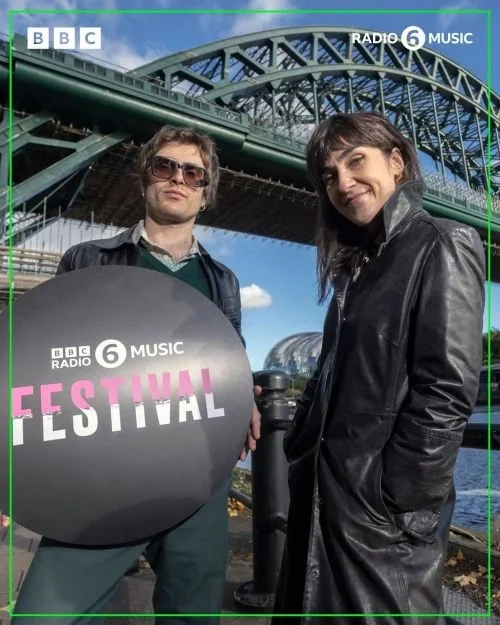
IN THIS PHOTO: Nathan Shepherd and Deb Grant/PHOTO CREDIT: BBC
that I have me mentioned at the top was the first song that was played on BBC Radio 6 Music on 11th March, 2002. A classic song by Ash. Phill Jupitus was the first voice heard on the station at 7 a.m. It is a few months or so away, though this is a birthday that will get massive celebration. The station marked its twentieth birthday in 2022 but, as the pandemic was still with us and it was a bit strange, they could not do too much. What is significant is, since 2022, the ratings continue to rise. I am going to come to some background and history about the station. Suffice to say, it is my favourite radio station. I will expand on that too. Incredible broadcasters like Lauren Laverne, Nick Grimshaw, Chris Hawkins, Mary Anne Hobbs, Mark Radcliffe, Stuart Maconie, Deb Grant and so many more are part of this family. Whilst other stations can feel homogenised and a little stale, BBC Radio 6 Music is always moving. Every presenter and show offers something unique. The station dedicates entire days to great albums celebrating big anniversaries. Their passion and curiosity is one reason why it is such a beloved station. In terms of ratings climbs, it has been stable for BBC Radio 6 Music, as we discover here: “BBC Radio 6 Music – also Music Week Awards winners – had a stable quarter at 2.59m (unchanged from a year ago). As you’d expect with those numbers, it continues to be the most popular digital station. The 6 Music Breakfast Show with Nick Grimshaw reached 1.29 million listeners, up 3% year-on-year and 2% quarter on quarter”. This year, BBC Radio 6 Music launched its sister station, Radio 6 Indie Forever. Whilst it has drawn some criticism, it does show this expansion. Remember, BBC Radio 6 Music was threatened with closure in 2010. Given the importance of the station, it would have been a massive mistake ditching it. You can follow the station on Instagram. In terms of events, their annual festival takes place in March. A matter of days after their twenty-fifth birthday, they head to Newcastle and play host to some fantastic artists:
“BBC Radio 6 Music has announced that the next 6 Music Festival will take place in Newcastle from Monday 15 March until Friday 19 March 2027.
The station’s annual, flagship event will be held at some of Newcastle’s most loved independent and grassroots venues, bringing our audience five days of performances and DJ sets from a range of both new and established artists, including a night in collaboration with BBC Introducing.
Samantha Moy, Head of BBC Radio 6 Music, says: “For the next chapter of the 6 Music Festival, we will take our celebration of independent and grassroots venues to Newcastle. The city and the region have such a rich musical legacy and a thriving creative community, which will make for another wonderful setting. We look forward to sharing more details in the months ahead.
“Greater Manchester has been a huge part of the 6 Music Festival story - particularly over the last three years. We've welcomed artists, audiences and the 6 Music presenters for some truly memorable moments, and we'd like to say a heartfelt thank you to the people and the places who have hosted us.”
Lauren Laverne says: “Fresh from the Mercury Prize taking place in Newcastle for the second year, I'm thrilled that the 6 Music Festival will be heading back to the city in March. Having grown up in the North East, I know just how much music means to people here and the important role it plays in local culture and communities. It's fantastic to see the festival return to the North East, and I can't wait to join listeners, artists and presenters for what promises to be a brilliant celebration of live music.”
North East Mayor Kim McGuinness says: "Music runs through the North East. It's part of who we are, part of our economy and part of what makes people proud to call this region home. I'm delighted that BBC Radio 6 Music Festival is coming to Newcastle. From grassroots venues nurturing local talent to artists from our region performing on some of the world's biggest stages, the North East has an incredible music story to tell, and this festival is a chance to showcase it to the country."
Jim Mawdsley, Principal Advisor, Events and Culture, Newcastle City Council says: “It’s fantastic that the 6 Music Festival is returning to Newcastle once again. Since it was last here, Newcastle has become a true music city with many of our artists being recognised not least by awards like the Mercury Prize which has shortlisted Sam Fender, Jade and Knats in the last two years, but there is a real collaborative spirit in the City and North East region that is definitely making us stronger, and we believe that our moment is now.
"The 6 Music Festival will shine a light on the amazing grass roots venues and promoters we have in the city that are a vital and essential part of both the eco and artist support systems. Music is a vital element of our cultural lifeblood, and we can’t wait to welcome 6 Music listeners to learn more about how vibrant the city has become.”
The full line-up and venues will be announced in 2027.
Highlights will also be broadcast on BBC Radio 6 Music and BBC Sounds, as well as on BBC Music’s YouTube channel.
Since it began in 2014, the 6 Music Festival has taken place all over the UK, including Greater Manchester, Tyneside, Bristol, Glasgow, Liverpool, Camden (London) and Cardiff and has seen performances from artists including Anna Calvi, Arlo Parks, Bombay Bicycle Club, Christine and the Queens, Depeche Mode, Ezra Collective, Goldfrapp, Gossip, Hot Chip, Johnny Marr, Kae Tempest, Khruangbin, Little Simz, Loyle Carner, Mogwai, Pixies, Primal Scream, Róisín Murphy, Self Esteem, The Smile, Wet Leg, Young Fathers and many more.
In 2026, the festival saw performances from Bloc Party, Courtney Barnett, Jacob Alon, Kelly Lee Owens, Lynks, Mandy, Indiana, SILVERWINGKILLER, Sorry, The Horrors, Tiberius b, Wesley Joseph and Yard Act, alongside a BBC Introducing showcase and club nights across Greater Manchester”.
I wanted to bring in a couple of articles before I conclude with my thoughts about an upcoming huge birthday. In 2025, Music Week spoke with the station’s head, Samantha Moy, and broadcasters Nick Grimshaw and Steve Lamacq about future-proofing an award-winning station. One that I feel will reign for decades more. Given its humble start in 2002, it has grown into this huge thing. Though no station is immune from closure or cutbacks:
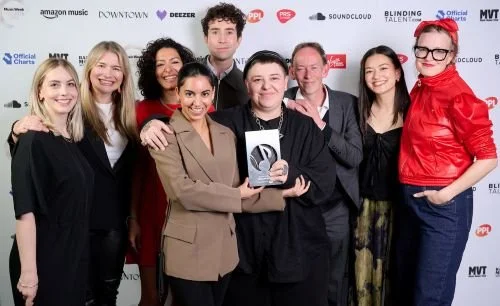
“BBC Radio 6 Music reclaimed its Radio Station title at the Music Week Awards last week.
The digital station has dominated the category in recent years, though it lost out to Radio 1 in 2024.
The Music Week Awards win was followed by another good RAJARs result for Q1, which showed that 6 Music remains the biggest digital-only station on 2.57 million listeners.
It’s been a busy year for the station with the 6 Music Festival and a schedule shake-up in the mornings, with Nick Grimshaw taking over at breakfast as Lauren Laverne moved to the later morning slot. And there’s more to come at the end of this month.
Here, station head Samantha Moy, veteran presenter and Music Week Awards nominee Steve Lamacq and new recruit Nick Grimshaw speak about what makes 6 Music so important for artists…
Congratulations. How does it feel to reclaim this award?
Samantha Moy: “Oh, it's always a treat, isn't it, when you win an award. But we don't do it for the awards. We do it for the love of playing music on the radio, that's the truth.”
How’s the new schedule shaping up?
Samantha Moy: “I think schedules always evolve over time. It's amazing that we still have Steve – who wanted to make a change in his life – on air. The Monday show is incredible. He's still playing the best music that he has ever played, still has as many sessions [as possible] and he was nominated for an award.”
Steve Lamacq: “Here's the thing about 6 Music, when it first started there was an idea of what it was going to be, which was somewhere between Radio 2 and Radio 1. And over the years, it found a new audience. 6 Music has had a profound effect on the British music industry in its inclusivity of people from all different musical backgrounds, but age as well; the whole demographic that you see at gigs now has completely changed. I think that's partly down to 6 Music. And the thing that 6 Music does is it sells records, it sells tickets and it supports artists who are trying to be adventurous, and it's about an enthusiasm for music.
“And the changes that have been made over the course of the last five years are all to almost future-proof the station, to show that we're not the sort of station that just does the same thing and becomes complacent. The fact that Nick's joined us is one of the most amazing things that's happened to us. Because you can see that we're taking the enthusiasts and the people from different generations who have different musical knowledge bases and skills and relationships with listeners. But we’re always bringing people into the gang, and I think that's what 6 Music has always been and will continue to be, which is a gang.”
If people once thought of 6 Music as an indie radio station, that doesn’t feel like it’s the case any more…
Steve Lamacq: “No, the only reason it was an indie station in the early days was they were the only bands that would ever talk to us.” [laughter]
Samantha Moy: “Also, because the foundation of 6 Music was Peel Sessions, really, so it’s that spirit in terms of music and things that are alternative and different. You can be an alternative R&B or rap act, you don’t need to play in bands”.
Steve Lamacq: “The thing that 6 Music retains is this authority really. When you get free choices to play something you want, you feel the responsibility to get it right, because the trust with the listener is the really important thing – and if you break that trust, then you're nothing. I think we're very conscious of that, and particularly ever since we were threatened with closure. I've never worked on a radio station that's been closer to its listenership than 6 Music, and I think that’s because we know at some point that they helped save the network. And even now, our relationship with the listeners is so much closer and so much more intimate in a way.”
It does feel like 6 Music has that connection with the live music, including the festival and the grassroots sector during Independent Venue Week. Has that been quite central to your thinking for the station recently?
Samantha Moy: “We celebrate independent venues with Steve and Huw at the beginning of the year. We actually explore the real issues – it’s not simple, it's complex and it's part of a much bigger picture. But it's important that we shine a light on it, because it's a training ground for artists. If they're not there, how are they going to develop their craft?”
Steve Lamacq: “I mean I’m biased, because I’m also chair of the live music trade body LIVE now. Our commitment is to try and make sure that there are grassroots venues open for the next generation. But, again, I think it comes down to the fact that we are so integral to some of the young artists and what they can achieve. Nick will play a new record by a new band on a breakfast show on a Monday, and that will help sell 30 to 40 tickets for their gig on a Wednesday night in Hull or Leeds or somewhere. We are so integral to young artists and emerging artists and how they connect with an audience. That's why 6 Music is really key – whatever the genre, whatever the age group, whatever sound the artist is making, we're the pointer in the middle that takes it to whichever fans will like it. That's what we deliver, that's the amazing thing. That's why we’ve become a bedrock for the record industry.
Finally, as the new recruit at breakfast, Nick, how are you enjoying life at 6 Music as a permanent presenter?
Nick Grimshaw: “Honestly, I can't get over how much I love it. I always listened to 6 and I got asked to cover at Glastonbury for three days. And two days were with Annie Mac, and then one of the days she forgot she booked a gig. So I was charged with finding a co-host in the form of Beth Ditto, who I wanted to take it quite seriously and do a good job, because I'd never been on 6 before. It was live at Glastonbury and the pressure was on, but Beth Ditto didn't give a shit in the best way possible. So I thought I’d never, ever be asked back again; I thought maybe that was that”.
I do want to drop in an article from 2022 that The Guardian ran. Celebrating twenty years of BBC Radio 6 Music, they spoke to established presenters and new alike. A station that rose from the dead to become the go-to for the best new music, the station has grown and strengthened since then. Included in the names of those discussing the station are Matt Everitt and Shaun Keaveny. Keaveny presented Indie Icons Forever on the station. Everitt presents on the station. Including the brilliant The First Time with…:
“In 2002, the BBC launched a scrappy new radio station, aimed at highlighting its massive archive of live music sessions, “on a thing called DAB, which no one had really heard of”, says early morning presenter Chris Hawkins. Twenty years on, 6 Music is the biggest digital station in the UK, with 2.6 million listeners. It survived a serious threat of closure in 2010. Its audience has grown up with it (breakfast show host Lauren Laverne even DJed at the wedding of a couple who met discussing the station). The presence of independent acts that it championed such as Dry Cleaning and Yard Act in the UK album chart – and Little Simz winning a Brit award – reflects its impact.
Sign up to our Inside Saturday newsletter for an exclusive behind-the-scenes look at the making of the magazine’s biggest features, as well as a curated list of our weekly highlights.
But a lot has changed in 20 years. 6 Music positions itself as “beyond the mainstream” – but indie and alternative music have become central to British culture: while 1.5 million people applied to attend Wimbledon this year, 2.5 million tried for Glastonbury tickets. The independent music scene has become markedly more diverse, and music fandom is no longer the sole preserve of the young. Taylor Swift collaborates with the National now. Is 6 Music too cosy to reflect these shifts? And how does it handle change when – as they discovered when DJ Shaun Keaveny left last September – many of its listeners would quite like things to remain exactly the same?
That tension speaks to its place in its loyal listeners’ lives. 6 Music became a lifeline for many during the pandemic, and its role will surely continue, licence fee cuts not withstanding. I spoke to Laverne on the morning Russia invaded Ukraine. “Days like today are a challenge because people wake up feeling anxious, sad, overwhelmed,” she said. “They need us to be a soft place to land.”
“Alternative to what?
Everitt At the start, the public perception was: it’s kind of indie. That wasn’t really true at the start, but over time that inclusivity has become more apparent.
Samantha Moy, 6 Music head I want this station to be as representative of all music lovers as possible. We still play indie and alternative, that is part of our USP, but so is Sherelle and Little Simz.
Lauren Laverne, presenter The breakfast show is traditionally described as the shop window of the station. When I started doing it I was keen that all the genres that have a place on 6 were represented in the show. I wanted to open the doors.
Peterson I approach my show quite differently to all the other shows, in that I don’t have a script. I won’t even pick the first songs until seconds before the show starts sometimes. It’s a very volatile show, a bit like free jazz.
Lamacq: I still get tons of actual post – vinyl and CDs, which I really delight in. If somebody has sent you a 7-inch single, you know how committed they are to their project.
Lauren Brennan, music team editor Deciding what goes on the playlist is an enormous balancing act. We’re looking at the strength of the track, what we think will interest the audience, but also the playlist as a whole to make sure there’s a diversity of voices – that we’re representing as many genres as we can.
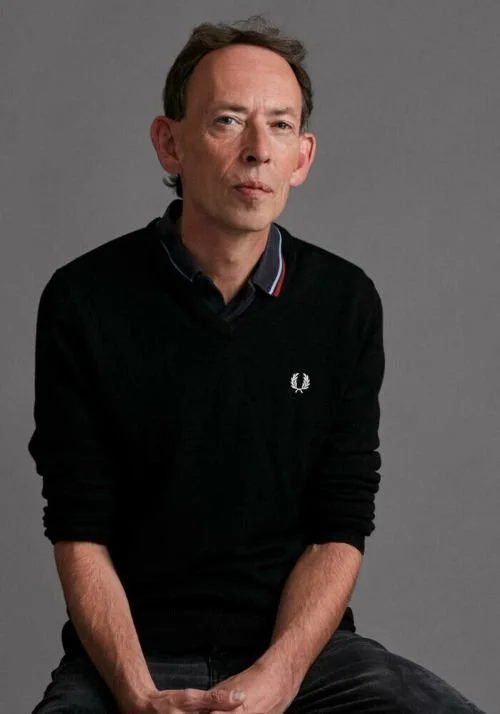
IN THIS PHOTO: Steve Lamacq/PHOTO CREDIT: BBC/Leigh Keily
Matthew Maxey, radio plugger 6 feels like a genuine meritocracy in that metrics like social media following, music video views have little to no influence on what gets played. An artist with a relatively small profile on a DIY label will be heavily supported and even playlisted if the song’s good enough.
Simon Hallyday, 4AD 6 is a really important factor in how we set up a release in the UK. We speak to them early on and roughly tell them our plan and see if the timing works with their playlist. We will juggle [release] times so it’s convenient for the band and the station. They’re that important.
Brennan A lot of it is gut instinct. When Wet Leg’s Chaise Longue was sent to us, we put that on the playlist straight away – it had barely any time on air to build but everybody in the team knew we had to play this now.
Lamacq: If your record doesn’t go on and somebody else’s record does go on, it all boils down to: my band’s better than your band. It’s not malicious and it’s not overly competitive. But you feel the need to wave the flag. and if they take notice of somebody else’s flag this week, then next week, you’re going to come back with an even bigger flag.
Jeff Bell, Partisan Records The success of Idles and Fontaines DC – and the fact that every other week now there is an artist in that [post-punk] vein appearing at the top end of the [album] charts – just goes to show how the work that someone like Steve has done has permeated wider music culture in the UK.
James Smith, Yard Act 6 has managed to revive interest in new indie guitar music again by rebranding it as post-punk. Although us and our contemporaries may be bound by certain traits – semi-spoken lyrics and angular sounds – for the most part the bands coming through do sound completely different from each other.
Scott Devendorf, the National 6 Music has been incredibly important for us – we grew up together over the past 20 years.
Martin Mills, Beggars Group Does it affect what we sign? Exposure on 6 is a factor in what we can achieve – but the majors shape records to get on the radio. We make the records the artists want to make.
Lamacq On average, just by email, I get 200 singles a week. And there are a lot of very generic records. You could get annoyed by it. But you can’t stop because something amazing will eventually come along. I listened to that Wet Leg single 19 times the day I got it. That’s what a teenager does.
Laverne I think I was the first person to have Lizzo in session in this country, then you see her at Glastonbury or Little Simz at the Brit awards. It’s not like I would overstate it – they’re the artists, it’s all their own work – but to be able to share their music is so exciting.
Peterson I’m discovering music from around the world but fitting that into the context of clubbing and electronic music. That taste has become more normalised now, so in a way my job is done.
Moy John Peel’s spirit goes the whole way through 6. John played the cornerstones of 6 Music – Bowie, Nick Cave, PJ Harvey. But he was progressive, always looking out for the next thing. In his later years, it was White Stripes, DJ Scotch Egg, grime. I think you see that coming through with our presenters, and it felt like it showed how future-facing he was and how that spirit is still alive in pop culture. That’s one of my proudest commissions”.
Perhaps they already have a trail for their twenty-fifth birthday. You do get promotional clips on BBC for stations like BBC Radio 2. Because BBC Radio 6 Music is twenty-five on March, there needs to be this extravaganza. I sort of envisage something Michel Gondry would direct. A combination of his videos for Massive Attack’s Protection and maybe Daft Punk’s Around the World (or even Patrick Daughters’s video for Feist’s 1234). Inspired by a celebrated scene in the 2025 film, Sinners, where there is this one-shot. It is a juke joint musical sequence featuring Sammie (Miles Caton) performing I Lied to You (co-written by Ludwig Göransson and Raphael Saadiq). I have included it above. Maybe it would require too large a budget, but the scene would end with someone on a train listening to BBC Radio 6 Music. Similar to that Sinners scene – maybe not a one-shot, mind -, we would be in a large space and see music from the past and present interact. Perhaps guided by presenters Lauren Laverne and Nick Grimshaw, start with audio of part of the first link by Phill Jupitus on 11th March, 2002, there would be projections of famous gigs and music videos. Artists that are played on the station feature. So we might go from a projection of a Beatles clip or documentary where modern-day Paul McCartney plays a song and is sort of projected into that scene with the three other Beatles as they were. A new act like Antony Szmierek performing or moving around a legacy act such as Pulp. Everyone from Phobe Bridgers, Charli xcx, Madonna, Harry Styles and The Kinks represented. No A.I. would be used at all. Instead, it would be in-person artists and projections. So we sort of get this blend of the old and new. Like Sinners and that incredible scene, the artists all interact. Genres splice. Music from each played and assembled so it becomes like a Hip-Hop track with lots of samples. As we move through and around the room, perhaps Nick Grimshaw and Lauren Laverne take a back seat and are with us at the ‘exit’ – before they coming into a train carriage with a woman listening on headphones (it would be her projected into the train scene from A Hard Day’s Night, in black and white and then she takes off her sunglasses and it is colour as we see an artist opposite her who delivers a great final clip or quip).
Within the scenes of artists are people. A couple kissing as they share music on their phone. A celebration of the wide and loyal array of listeners. Scenes of presenters chatting with artists or mixed together (so Craig Charles might be chatting with Jamz Supernova or past presenters like Adam Buxton). It would be this 3 or 4-minute clip that would be dazzling and represent the weight and importance of BBC Radio 6 Music. Maybe a little jab at 2010 and threat of closure. Someone eating fish and chips and it is wrapped in newspaper. It would be ideal to hire Abbey Road Studio 1 and start outside on the zebra crossing as Laverne,. Grimshaw and two actors cross to replicate the iconic cover of The Beatles’ Abbey Road. We then merge into the reception and into Studio 1 and start with McCaretney. The camera moves around the space and takes in all these scenes. Maybe Hannah Peel with an orchestra. Thinking about Ringo Starr at the end. Or would be in the train and the black and white would show The Beatles. When the sunglasses are taken off, it is colour but maybe a woman dr4esse din 1960s clothes. It would be in the 1960s and she is listening to a portable radio. Ringo Starr saying something around having a ticket to ride (referencing their 1965 single, Ticket to Ride). But cheesy! Even the promotion seems like Michel Gondry could direct, we’re simply be paying tribute. It would be great to have a tremendous female director helm it. Melina Matsoukas or Sarah Dattani Tucker. Even an acclaimed filmmaker like Emerald Fennel. This is me trying to manifest, and I realise my concept may cost somewhere over £100,000. Hiring Abbey Road Studio 1 for a couple of days, hiring the musicians and talent and crew. Getting music and video clearance and everything may cost a small fortune, though it is something I would direct to Samantha Moy. A dazzling and fitting clip to showcase everything BBC Radio 6 Music stands for. Some brilliant actors included in the clip (Anne Hathaway, Ayo Edebiri or Saoirse Ronan appearing). Maybe having ten songs played and mixed together. Steely Dan’s Kid Charlemagne among them. The lines, “Is there gas in the car?/Yes there’s gas in the car” form part of a small gig or played in a car (it would be a Michel Gondry-esque model where the radio would be playing). Anyway, I will stop jabbering on! I wanted to be the first to look ahead to 11th March and wish BBC Radio 6 Music a happy twenty-fifth birthday. Let’s hope this mighty station continues strong…
FOR another quarter-century!