
FEATURE:
The First Critic
The Importance and Brilliance of Robert Christgau
__________
THIS is my second…
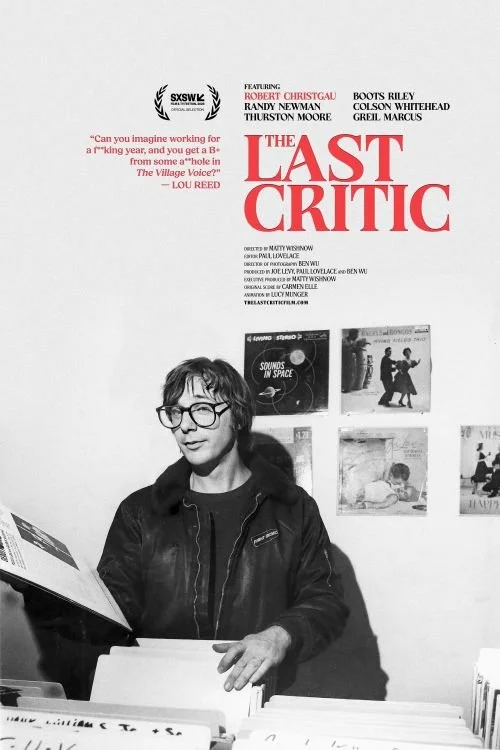
feature about Robert Christgau this year. People might know him, but he is a legendary American music writer and critic. He has been writing most of his adult life. He is in his eighties, but he is still producing reviews and articles. He has this unending passion for music. I have said this in a recent feature, and it is something alluded to in an interview I am going to come to, but there is this assumption that social media means anyone and everyone can be a critic. Having an opinion does not a music journalist make. What social media does it make it accessible for anyone to share music and their opinions. It does not reproduce or replace music journalism. Genuine music journalists can provide depth, analysis and angles that non-journalists cannot. They produce these pieces of music website and not as brief posts on Instagram and Twitter. It does annoy me that people think music journalism is pointless in this age! There are few journalists like Robert Cbhristgau. In the sense that he gets paid quite a bit and has been writing for many decades. There are quite a few professional journalists, though most of us, me included, do not get paid. It is rare to get paid for music journalism. Almost impossible to endure for sixty or seventy years. You feel Christgau will keep writing for many years now. He is in my mind because of a recent feature from The Guardian. They were looking at the documentary, The Last Critic. It is getting a wider release soon, but at the moment it playing at Doc NYC (or was recently playing there). Here are some more details:
“The Last Critic is the first documentary feature about Robert Christgau, a pioneer of music criticism. The self-proclaimed Dean of American Rock Critics, Christgau helped invent the form in 1967 while covering the Monterey Pop Festival for Esquire, then redefined the form in 1969 with his Consumer Guide at The Village Voice—letter-graded, capsule reviews, 18 thousand of them over more than 50 years, and continuing to this day at Substack, where Christgau has been a best selling author since 2019.
A contributor to Rolling Stone, Creem, Spin, and The New York Times, Christgau made his greatest impact at The Village Voice as both an editor and writer. In the ‘70s, when pop music was defined by Fleetwood Mac and Billy Joel (who disliked Christgau almost as much as Christgau disliked him), he championed not just the punk of CBGB, but the funk of George Clinton and the soul of Al Green. He helped start the careers of generation after generation of gifted writers, among them Greg Tate, Colson Whitehead, Ann Powers, Joe Levy, Chuck Eddy, Nelson George, and Eric Weisbard. Now in his eighties, Bob is still at it, writing with the same vigor, concision and craft. From Thelonious Monk to James Brown, from The Ramones to Sleater-Kinney, from Aretha Franklin to Olivia Rodrigo, from Second Avenue to Soweto, no writer has considered Pop music with the force and flair as Christgau”.
So many music journalists look up to Robert Christgau. You can see his work here. On 18th April, he turns eighty-five. Beginning his career in the 1960s, he has written numerous essays, articles and books. Known for his capsule reviews, you can also learn more about him here. I do hope that one day there is a film where he is featured. By which I mean an actor playing him and we build a story around him and his career in the 1960s. The famous artists from the time and this young critic taking it all in. I would urge anyone who has even a passing interest in music journalism to seek out The Last Critic. Robert Christgau is one of the first. In terms of professional Rock critics, there were not many before him. In terms of being seen as one and having this prolific career. The first of two interviews I want to come to is from Rolling Stone. Robert Christgau and Carola Dibbell (who is a music journalist, critics and novelist… and is married to Christgau) spoke about this Rock and Roll marriage that has lasted over half a century:
“The Last Critic is one of the year’s most fascinating rock documentaries — even though it’s not about a musician. It’s a portrait of the legendary writer Robert Christgau, the self-proclaimed “Dean of American Rock Critics.” He was one of the pioneers who invented pop-music criticism in the Sixties — but six decades later, at 83, he’s still at the top of the game. He began his Consumer Guide column in the Village Voice in 1969, and has kept cranking it out ever since, now on Substack. For generations of music fanatics, Christgau’s voice hits like Bob Dylan or Neil Young — two artists his age who are still doing it with the same fiercely independent spirit he brings to his writing.
The debut feature from director Matty Wishnow, The Last Critic won the jury prize at the South by Southwest and Oak Cliff Film festivals, as well as the 2026 Screen Dallas grand prize. It gets its New York premiere tomorrow. The film, which is co-produced by longtime Rolling Stone contributor and editor Joe Levy, goes beyond music, because it’s also the portrait of a marriage. Christgau and his wife, novelist Carola Dibbell, have been together more than 50 years. Over the decades, they’ve shared an intellectual life, raised their daughter, collected way too much vinyl, and — the weirdest part — remained crazy in love.
Christgau has a fearsome rep for never pulling his punches, with his own savage wit. Lou Reed spent a chunk of his live album Take No Prisoners complaining about getting a B+ grade for _Street Hassl_e; when U2 won the Grammy Award for Album of the Year in 1988 for The Joshua Tree, Bono jokily groused in his speech about his band’s reviews in the Village Voice. Christgau’s inspired more songs attacking him than any other journalist, from Sonic Youth (“Kill Yr Idols”) to Public Enemy (“Bring the Noise”).
But there’s something obsessive about his lifelong quest to chronicle the music, still going strong after 60 years — he’s heard more albums than anyone on the planet. When he reviewed Prince’s Dirty Mind in 1980, he dropped one of the most-quoted one-liners in critical history: “Mick Jagger can fold up his penis and go home.”
The Last Critic features artists Christgau has reviewed, as well as writers he’s inspired, from Sonic Youth’s Thurston Moore to Pulitzer-winning novelist Colson Whitehead. (I make an appearance as well.) There’s a touching interlude with his lifelong friend Greil Marcus, the only other OG rock critic who’s kept doing it this long (or this well). In one of the most surprising moments, the legendary songwriter Randy Newman recalls their friendship, and admits he wrote a song about Christgau and Dibbell, “Lost Without You,” inspired by the closeness of their marriage. It’s the kind of movie where you come for the rock, stay for the romance.
Rolling Stone met up with the couple at the same East Village pad they’ve called home for 50 years. The place is packed with albums, books, art — the first thing that greets you at the door is a painting of the Shirelles. They talked about the doc, seeing their marriage up on the big screen, the art of arguing, playing hoops with Randy Newman, and the strange college semester when Christgau was Gene Simmons’ professor.
Congratulations on the movie.
Robert Christgau: It came out really well. When [director] Matty [Wishlow] called me up and asked if I would do it, the first thing I said was, “Yes, if you include my marriage,” which at the time I think took him aback. However, he came to feel that it was the marriage that made the movie, which is what I believe.
It is the marriage that makes the movie.
Carola Dibbell: But it’s still about you. I’m a co-star.
When I first saw it, I told the director, “This is a love story. A very strange love story.”
Christgau: Well, I agree. I think that’s the best thing about the movie. The relationship really has a kind of vitality to it that you can see. And that’s exactly how I feel about Carola, and that’s the most important thing in my life. And it’s really nice that it actually comes through in the imagery of the film. I think that’s the reason people like the movie, too.
Dibbell: It’s the combination.
When you began writing in the Sixties, there wasn’t a lot of serious attention paid to pop music.
Christgau: But Rolling Stone was doing that a lot. Rolling Stone was a crucial part of why all of that happened. Jann Wenner had a head for finding the most interesting writers, many from the Boston college scene, and that was a really important factor in why I got to do what I did. No question about it.
And also the fact that I was already friends with Greil Marcus. That was a crucial part of it as well. He was at Rolling Stone, and frankly, I think he had Jann Wenner around his little finger. Because Jann was smart enough to know that this guy was really something else.
Early on, you wrote that your biggest influences were Thelonius Monk and Alan Freed.
Christgau: Let me tell you, Monk has lasted. I still play a lot of Thelonious Monk. Carola gets a little tired of it.
Dibbell: I finally say, “Can we listen to The Clash?”
But you always had an appreciation for AM radio. You were open to tawdry pop trash.
Christgau: It wasn’t “tawdry.” Come on”.
Many might know Robert Christgau as the legendary Village Voice critic. However, The Last Critic provides a deeper and wider picture of a fascinating human. The Last Critic’s director Matty Wishnow spoke with The Guardian about a giant of music journalism. In terms of the longest-running music critics, there are few who can equal Christgau. I do hope that he has many years left, as it would be brilliant to see what he makes of the music coming along. Even though he reviews a lot of contemporary music, I am curious how much of that makes it into his collection:
“Wishnow says he was inspired to make the documentary by the formative influence Christgau had on his taste growing up. “I would open his collections of Consumer Guides and wonder: ‘Why is Queen a C- and Billy Joel a B- while this group called the Roches is an A+?’ It scrambled my brain and made me think of the idea of commercial versus credible and popular versus sub-popular,” he says. “When people ask me why I’m not into Yes or James Taylor, I think 30% of my answer is personal and 70% is something Bob wrote that imprinted itself on me.”
When he approached Christgau about making the film, Wishnow says it was hard at first to get him to commit the time. “Anything that takes Bob away from listening or writing or editing, his initial reaction is to bristle,” Wishnow says. “He’s visibly more comfortable listening than when the music is off.”
That helps explain why he hasn’t done interviews to promote the film, though the director said his subject is flattered and moved by it. The way Wishnow brought Christgau around reveals a crucial part of the critic’s character and also functions as the film’s heart. Key parts of the doc focus on Christgau’s relationship with his wife, Carola Dibbell, a critic, novelist and editor whom the director refers to as Bob’s esthetic partner. “She’s like a supplemental brain and response machine. On some level, the Consumer Guide represents Bob’s love letters to Carola.”
The two met in the late 1960s through a mutual friend in the East Village. Dibbell had been up all night doing mescaline, and within minutes, the two got into an argument about Jean-Luc Godard’s 1968 movie with the Rolling Stones, Sympathy for the Devil. In the doc, Dibbell says she immediately recognized that “this is the guy one has arguments with.”
As an aspiring journalist raised in Queens, New York, Christgau didn’t set out to become a critic. He wanted to be a sportswriter and his first story that got attention was on another subject entirely: a young woman who died on a macrobiotic diet. Not only did the piece win awards, but it also became a hallmark of the emerging “new journalism”. That success led to a column for Christgau at Esquire called Secular Music, which was wry code for “rock”, a form few over the age of 30 took seriously at the time. In 1969, when he started the Consumer Guide, the name was a kind of tease. “The idea of consumption was very far out of favor within bohemian culture,” Wishnow says. “Bob was challenging that idea, but he was also demonstrating his awareness that the music industry was both high art and big business.”
The idea of using a grading system for the Guide seemed equally off-putting to his youthful readers. Christgau responded to that in the film with, “If they can put a price on it, I can put a grade on it.”
The idea of calling himself “the dean of American rock critics” started as a drunken joke at a party after someone asked him who he was. The term stuck because of the clarity and authority of his opinions, as well as his aloof demeanor and merciless candor. In the film, a bevy of critics who have been edited by Christgau attest to the latter. “He’s blunt as fuck,” the late critic Greg Tate says on screen. “He’ll make you feel like the dumbest person in the world – but you will live,” reports Tricia Romano, the author of an oral history about the Village Voice, in the film.
Having been edited by Christgau myself decades ago, I can concur that the process can feel like a cross between a reality show elimination sequence and a frat house hazing. At the same time, the critics in the film, as well as yours truly, regard Christgau as one of the most generous and attentive editors a writer could hope for. He earned that reputation by cleanly separating his opinions from the writer’s. “As an editor, he was very clear that his job was to help the writer find the best version of their voice,” Wishnow says. “Even [the famed critic] Lester Bangs acknowledged that Bob was a great editor. And Lester was famously un-editable!”
Some of the artists Christgau has written most harshly about retain a certain respect for him as well. In the 1980s, Sonic Youth’s Thurston Moore was so frustrated by his coverage that he wrote a song called I Killed Christgau With My Big Fucking Dick. Even so, Wishnow says, “Thurston can blind recite some of Bob’s reviews. He’s a frenemy of Bob’s because they’re both New Yorkers and intellectuals. There’s a strange kind of warmth there.”
Context also matters. Critics from the 1960s through the internet age were often read as much for their entertainment value and their bracing honesty as their erudition. And the audience generally accepted, and even enjoyed, a certain element of bloodsport in the endeavor. Christgau used to exemplify that each November with his famous “Turkey Shoot” takedowns. But he stopped publishing negative reviews in 2005 because the task of listening repeatedly to albums he hated “became too taxing on him”, Wishnow says. “Today Bob’s negative biases are present by omission. If he doesn’t review it, you can assume he doesn’t like it.”
Friends of Christgau’s say that, over the years, he has mellowed some, aided by his role, along with Dibbell’s, as adoptive parents of their daughter Nina, who’s now 41. More, Nina opened him up to music he might have dismissed before, including Queen, whose T-shirt she sports in the film. Regardless, certain genres continue to irk and elude him, including prog rock, which he considers a “stupid” attempt to marry older notions of European music to rock, and heavy metal, which he barely considers at all. Of Black Sabbath’s world-changing 1970 debut, he wrote “the worst of the counterculture on a plastic platter. I’ve been worried something like this was going to happen ever since the first time I saw a numerology column in an underground newspaper.”
If pans like that sear into the reader’s consciousness, his raves have proven just as memorable. In an A assessment of Prince’s Dirty Mind in 1980, he noted the star’s sexual, as well as artistic, potency with the deathless kicker: “Mick Jagger should fold up his penis and go home”.
I did want to use this feature to point people in the direction of The Last Critic. But in a wider sense, to show that modern social media users cannot replicate the work and brilliance of Robert Christgau. But also, for people to appreciate music journalism. How vital it is. In that interview with The Guardian, Matty Whisnon says that when Robert Christgau stops working, it will be the end of a vocation. The end of an era: “You could argue that today there are more music critics than ever, on X and Instagram and TikTok,” he allows. “But very few of them get paid for their work. Bob’s career as a professional critic represents the beginning, middle and end of something. He really is one of one”. I do think it would be wonderful to see an actor portray a young Robert Christgau and his early career. Artists of the 1960s and 1970s and this eager and unique journalist navigating a wonderful time. In 2026, he must look back at everything has written with a sense of amazement! But he has seen how things have changed in terms of what music journalism means and how it is it valued. The supreme Robert Christgau is..
A giant with no equal.