
FEATURE:
Groovelines
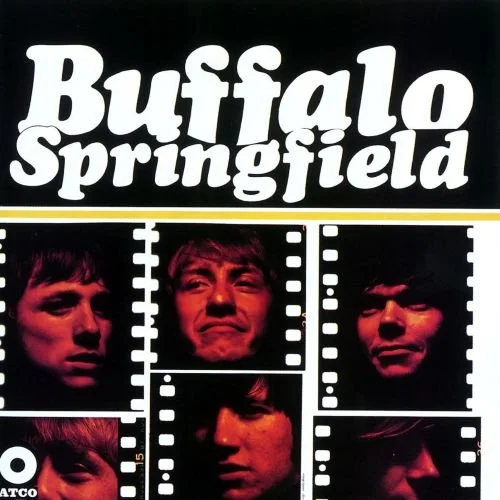
Buffalo Springfield - For What It's Worth
_________
BECAUSE this classic song…
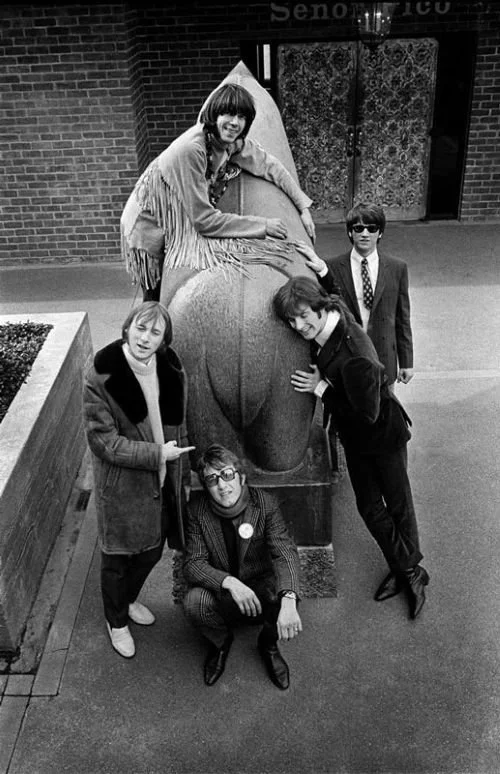
IN THIS PHOTO: Buffalo Springfield photographed at Ghirardelli Square, San Francisco in 1967/PHOTO CREDIT: Jim Marshall
has a big anniversary coming up, I wanted to spotlight it. There is a generation (or two) who have never heard Buffalo Springfield’s For What It’s Worth. It was recorded on 5th December, 1966, so we mark sixty years of this classic. Written by Stephen Stills (of Crosby, Stills & Nash), the track is tied to the Vietnam War. Although it was a single in 1966, it was not until March 1967, when it was included on the second pressing of the debut album from Buffalo Springfield. It is one of these songs where the title does not feature in the lyrics. Buffalo Springfield were a band that released three incredible albums but only operated for a short period of time. Though they left a huge legacy. Formed by Canadians Neil Young, Bruce Palmer, and Dewey Martin and Americans Stephen Stills and Richie Furay, For What It’s Worth is one of the greatest and most important songs ever. It is hard to mark the exact release date of For What It’s Worth as it was rush-released as a single. So I will mark its recording. I have been researching the story behind For What It’s Worth. In 2016, Rolling Stone took us inside the story of a song that was motivated by anti-curfew protest on the Sunset Strip in Hollywood. A song that captured a Sixties malaise, it still resonates sixty years later:
“Fifty years ago this Saturday, Stephen Stills, then in Buffalo Springfield, was on his way into Hollywood to hear live music on the Sunset Strip. But in one of those defining rock & roll moments, what he encountered was a rally: hundreds, if not thousands, of kids protesting a new curfew and the imminent closing of one club, Pandora’s Box, by way of a fake “funeral” for it.
“The commercial merchants on Sunset Boulevard in a certain area decided that the element of young people on the street every night was not conducive to commercial enterprise,” Stills said in a 1971 interview. “A bunch of kids got together on a street corner and said we aren’t moving. About three busloads of Los Angeles police showed up, who looked very much like storm troopers. … And I looked at it and said, ‘Jesus, America is in great danger.'”
Within weeks, Stills had written – and Buffalo Springfield had recorded – a song inspired by that night, “For What It’s Worth.” With its emphasis on Stills’ spooked voice, drummer Dewey Martin’s ominous snare drum and Neil Young‘s warning-bell two-note guitar part in the verse, the track became the band’s only hit, peaking at Number Seven in the spring of 1967. Yet equally striking was its sound: The eerily quiet song captured the uneasy mood of the moment that extended beyond Los Angeles to Vietnam, and lyrics about “a man with a gun over there” and “young people speaking their minds/Getting so much resistance from behind” were the sound of the rock counterculture cementing its socially conscious voice.
“For What It’s Worth” has transcended its origin story to become one of pop’s most-covered protest songs – a sort of “We Shall Overcome” of its time, its references to police, guns and paranoia remaining continually relevant. The Staple Singers were among the first to cover it, in 1967, but since then, it’s been recorded by a mind-bendingly diverse number of acts: Ozzy Osbourne turned it into a grim stomper, Lucinda Williams into a ghostly ballad, Kid Rock into a classic-rock homage, Rush into a swirling soundscape, Led Zeppelin (in live bootlegs) into languid blues. (Robert Plant also cut a version with his pre-Zep band, Band of Joy.) Public Enemy even sampled it on 1996’s “He Got Game.”
According to BMI, the song’s publishing house, “For What It’s Worth” been played 8 million times on TV and radio since its release. In 2014, it came in at number three on Rolling Stone‘s readers poll of the best protest songs. “The way it’s written, it’s so open to interpretation,” says Heart’s Ann Wilson, who released a cover last year on her first EP with side project the Ann Wilson Thing. “It’s so open that it’s brand new today. The main hook, ‘Everybody look what’s going down’ – you can apply that, to say, the current election. The song is going, ‘What the hell is this?’ You can apply the song to any situation in any decade.”
By 1966, the situation in Los Angeles was tense. An increasing number of clubgoers was descending on the Strip, irritating area residents and upscale boutiques, and the LAPD instigated a 10 p.m. curfew for anyone under 18. On the night of November 12th, a local radio station announced there would be a protest at Pandora’s Box. According to reports, a fight broke out for reasons having nothing to do with the curfew; a car carrying a group of Marines was bumped by another vehicle. Egged on by that fight, the protesters (some of whom carried placards that read “We’re Your Children! Don’t Destroy Us”) trashed a city bus and threw bottles and rocks at storefronts.
“It was really four different things intertwined, including the war and the absurdity of what was happening on the Strip,” Stills later told The Los Angeles Times. “But I knew I had to skedaddle and headed back to Topanga, where I wrote my song in about 15 minutes.” The folk-blues feel of the song harked back to Stills’ days in the Greenwich Village folk scene.
As anyone who’s heard it knows, the phrase “for what it’s worth” appears nowhere in the song. According to one legend, Stills played it for one of the group’s managers, prefacing it with, “Let me play you a song, for what it’s worth.” Springfield singer-guitarist Richie Furay recalls he, Stills, and Young playing new material for Atlantic’s Ahmet Ertegun, a major supporter of the Springfield. “Ahmet had come to Los Angeles and we were at Stephen’s house,” Furay recalls. “At the end of the day, Stephen said, ‘I have another one, for what it’s worth.'”
On December 5th, only a few weeks after the Strip mayhem, the Springfield went into an L.A. studio to lay down the song in a one-day session. Young credited engineer Stan Ross with the song’s spare, almost sinister arrangement. “Stan came in and said, ‘You gotta do this one thing to the drum, the snare,'” Young said in Jimmy McDonough’s Shakey. “Took a broom, a guitar pick and mixed that in so it’s got that sound – of a guitar pick going through a broom, on the straw. That was it.” Added Stills later, “Neil came up with the wonderful harmonics part with the vibrato. The combination of the two guitar parts, with my scared little voice, made the record.”
Furay admits he didn’t hear anything special in the song at first: “I was more into the electric work, like ‘Bluebird’ and ‘Rock & Roll Woman,’ that phase of where we were,” he says. “I didn’t hear it, but Stephen felt the pulse of it and there you go.”
Everyone else knew the song was special, and the single was rush-released with an amended title, “(Stop, Hey What’s That Sound) For What It’s Worth,” at Ertegun’s suggestion. The song was also added into new pressings of the band’s first album, replacing another Stills original, “Baby Don’t Scold Me”.
There is not a lot written about this song. It is a shame. Aside from the odd feature, you would think that more would approach the track. If it was relevant to riots in the U.S. in 1966, cast forward sixty years and we can see the corruption and dissent. Even if President Trump is seeing people turn and America voted in the Midterms vastly in favour of the Democrats, we can still see how For What It’s Worth applies to the U.S. It has resounded through the decades. There was a resurgence in the summer of 2020 where there were protests in the U.S. These protests rose from police brutality and the murder of George Floyd. Rather than it being co-opted or used out of context, the lyrics perhaps had more relevance and potency then compared to 1966. Some of the lines struck with a punch that definitely connected with those in 2020 protesting police violence and corruption: “A thousand people in the street/Singing songs and a-carrying signs”. Since 2020, For What It’s Worth continues to feature in public consciousness. In 2025, Dawes (a Los Angeles Rock group) performed the song alongside Stephen Stills and Mike Campbell. It was performed for FireAid, in order to help with relief efforts for the January 2025 Southern California wildfires. In June, CBS News included For What It’s Worth in their list of the 250 essential American songs of the past 250 years. There are protest songs from the 1960s that remain there and have not been adopted, adapted and given new lease. For What It’s Worth is not one of them. On 5th December, it will be sixty years since this track was recorded. Little did Buffalo Springfield know that it would be performed and discussed six decades later. It’s sense of calm and composure makes it so powerful. Rather than it being this fast and angry protest song, it has this air of restraint. The lyrics allowed to seep into the mind. It is epic in its concision and brevity. One of the most stirring songs ever written. Sixty years later, and the stunning and moving For What It’s Worth…
HAS lost none of its meaning.