
FEATURE:
In the Flesh
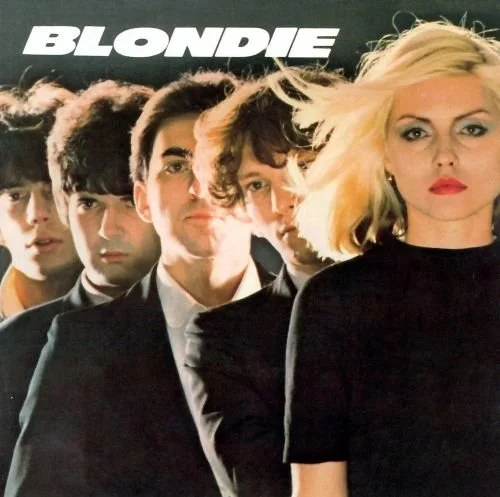
Blondie's Eponymous Debut Album at Fifty
_________
EVEN if people…

think Blondie hit their peak with 1978’s Parallel Lines, there is no denying how important their 1976 debut is. Blondie was released in December 1976. It is one of these anniversary features that is marred by the fact nobody seems to know exactly when an album was released. It is not like we’re talking about something that is hundreds of years old. However, there does not seem to be an available release date for Blondie, other than the fact it came out in December 1976. I did want to celebrate fifty years of an album that introduced this legendary bands. They are still releasing music and High Noon, their twelfth studio album, comes out on 26th February, 2027. Let’s go back fifty years to this incredible debut. Featuring the singles, X Offender, In the Flesh, and Rip Her to Shreds, it was a masterful and stunning debut. The band line-up consisted of Debbie Harry, Chris Stein, Gary Valentine, Jimmy Destri and the late Clem Burke. Even if Blondie did not hit their stride until a couple of albums later, there is no denying that their eponymous debut of December 1976 was underrated at the time. Some critics calling it dumb and uninspired. It has gained more love later on, considering its legacy and how influential it is. Earlier in the year, Classic Rock provided a buyer’s guide to Blondie’s albums. This is what they said about their eponymous debut: “A scene had formed around NYC’s CBGB, comprising Blondie, Television, Ramones, Talking Heads and the Heartbreakers. Blondie played a show every week while they lived on the breadline in a nearby loft space with bullet holes in the windows and homeless bums dying outside in the snow. But they practised daily, and their passionate debut came out of that destitution, connecting their love of retro pop with the emergent punk scene. Bassist Gary Valentine wrote their debut US single/album opener X-Offender with Harry, while she and Stein wrote the Velvet Underground-influenced Rip Her To Shreds”.
In 2021, to mark forty-five years of Blondie, Pop Matters reflected on a powerful debut. One that brought together genres as wide-ranging as Disco, Punk and Surf Pop. A lot of people do not discuss Blondie’s debut when they think of their greatest work. I think that Blondie is one of the most significant debuts of the 1970s. Maybe not as exciting and fresh as it would have sounded in 1976, I do feel that it gets less admiration than it deserves:
“In the early ’70s, Blondie went through various incarnations and name changes before settling on the five-piece lineup of Debbie Harry (vocals), Chris Stein (guitar), Gary Valentine (bass), Jimmy Destri (keyboards), and Clem Burke (drums). Destri was the last to join in the fall of 1975. After playing regular gigs at CBGB for the better part of a year, the group started work on their debut album in August 1976. They had signed with a production company called Instant Records, co-owned by Richard Gottehrer (who would produce the LP and its 1977 follow-up, Plastic Letters).
Blondie was recorded at Plaza Sound, a capacious studio built in the 1930s in the same building as Radio City Music Hall. With Gottehrer at the helm, the band recorded the songs they’d been honing for two years onstage. One day, legendary Brill Building veteran Ellie Greenwich visited the session. Greenwich wrote “Out in the Streets”, a song popularized by the Shangi-Las in 1965 and later recorded by Blondie as a demo. She’d also penned such hits as “Be My Baby” and “River Deep – Mountain High”, so the group were thrilled when her trio sang backup on “In the Flesh”. With the women’s tight harmonies and the ringing chimes in the bridge, the composition emulates the girl group sound so well that it could have been a Shingdig Pick of the Week (if it weren’t for the sexual double entendre).
“In the Flesh” would also prove to be the band’s first number-one single—in Australia anyway—after it was played on Molly Meldrum’s Countdown, a popular music TV show. As for Blondie’s original demo of “Out in the Streets”, it was eventually released on the 2001 Blondie CD re-issue.
In Face It, Harry writes about the subversiveness of Blondie’s music: “We felt that we were Bohemians and performance artists, avant-garde. And when you add to the mix this very New York DIY street-rock attitude that we had, you got punk.” Blondie hardly sounds like a punk record, though. The album is full of catchy, mid-tempo melodies and hooks, but the band’s pop sensibilities are undercut by their lyrics. The wry innuendos of “X Offender”, “In the Flesh”, and “Look Good in Blue” were no doubt partly fueled by adolescent prurience, but they can also be read as an attempt to subvert gender norms.
Harry’s stage presence and persona are part of the stratagem. Fully aware that sex sells, she nevertheless tried to challenge double standards by “being a cartoon fantasy onstage”, as she puts it. “The Blondie character I created was sort of androgynous. Even when I was singing songs that were written from a man’s point of view… I had to be kind of gender-neutral, so it seemed that I wanted (the girl)”. On songs like “Kung Fu Girls”, that neutrality is convincing, as Harry sings: “Kung Fu, Cindy Sue / Oh, I want to get close to you / You’re my Kung Fu girl.”
Unfortunately, much of Harry’s cultural commentary is lost on the listener. “Rip Her to Shreds”, for example, is supposed to be about gossip columnists and their callous criticisms of women in the public eye. Harry’s not singing “rip her to shreds”; she’s saying that’s what the media does. But the nuance is obliterated by the jubilant, sing-along chorus that only seems to encourage mob mentality misogyny. Still, it’s one of the LP’s stand-outs, with a driving beat, raunchy organ, and Harry’s campy delivery.
Speaking of camp, before 1976 disco was still mostly played in underground clubs frequented by gays and minorities. In only a few years, though, it began to infiltrate the establishment, with traditional rock bands incorporating disco elements into their music. In fact, “Silly Love Songs” is an early example (just listen to McCartney’s bass line). Yet, a backlash came quickly, and by 1979, anti-disco sentiment reached a fever pitch with the infamous Comiskey Park “Disco Demolition Night” spectacle.
The conventional narrative, then, is that punk came along and saved music from the wretched pablum of disco. But, that interpretation is rooted in misogyny and homophobia. Punk’s raw energy was seen as earnest and masculine, while disco was perceived as frivolous, pre-fab music enjoyed mostly by women and queer people. The gap between disco and punk wasn’t as wide as it would appear, however, and Blondie managed to embrace both. Each form, in its earliest iteration anyway, bucked convention and promoted inclusion.
Before coming to a review of Blondie, there is another feature I want to highlight. It is amazing how quickly things started for Blondie. In terms of signing a deal with the New York label, Private Stock, and recording their debut album with producer Richard Gottehrer. I would love to see a Blondie biopic that starts when they were playing Punk clubs like CBGB, that takes us up to the release of their debut album. In 2021, Albumism discussed Blondie on its forty-fifth anniversary:
“The album kicks off with the bouncy, rhythmic, organ-fueled “X Offender,” a perfect example of a new wave pop-punk song, filled with catchy melodies, rapid beat, Debbie Harry’s undeniable vocals, and idiosyncratic chord progression that characterizes Blondie’s trademark sound.
A leading classic rock electric guitar line, distinctive bass section, upbeat tempo accompany the lyrics of “Little Girl Lies.” In the song, Debbie Harry delivers the words with clever humor and sarcasm, warning an unnamed boy not to disregard his girlfriend, because “She'll be talking and laughing with six other guys / Flirtatious and cute, she'll take you the route.”
The retro-flavored “In the Flesh” is the album’s first mid-tempo doo-wop ballad, adorned with enticing harmonies, prominent drumbeat, syncopated staccato piano chords, and lush vocals expressing the melancholia of an unpropitious love story.
The ingeniously crafted speed-up tango “Look Good in Blue” is perhaps one of the catchiest pieces on the album, presenting a dynamic rhythm and thumping piano, jazzed up by electro-synthesizer and electric guitar solo.
Like “X Offender,” “In the Sun” is an up-tempo, cheerful track with peppy prominent drum and legato electric guitars layering the leading harmonies, switching for keyboards during the chorus.
“A Shark in Jets Clothing” is a nod to West Side Story’s rival gangs: The Jets and The Sharks. The song is a blend of a poppy beat, electric guitar solos, fresh synthesizer, and keyboard flourishes, showcasing Debbie Harry’s impressive range stretching from lower to higher notes on the vocal register.
Next, “Man Overboard” is the most spirited, danceable tune on the album. The track, filled with a speed-lightning psychedelic keyboard section, hypnotic reggae-kissed basslines, and sizzling percussions, which accompany the lead singer’s—speaking from experience—reprimanding tone as she tells the story of a man who wore his heart on his sleeve and got it broken eventually “sinking in a sea of love.”
Harry and guitarist Stein collaborated on “Rip Her to Shreds,” bringing together new lyrics for the song’s pop-rock melodies. Across the track, Harry—with her typical ironic sense of humor—addresses the issue of misogyny, posing as a gossip columnist making sexist remarks about a woman and inciting the public to “rip her to shreds.”
The spaghetti western-nuanced guitar riff and keyboard chord progressions of “Rifle Range” make up the central harmonies of the song. The slick drumbeats and Harry’s charming delivery—perhaps hinting at her love story with a woman—complete the piece.
The infectious opening of “Kung Fu Girls,” with full-blown electric guitar lines, perfectly soundtracks the singer’s sweeping vocals.
On “The Attack of the Giant Ants” the band explores Latin-influenced rhythms, merging them with a goofy sci-fi horror story, rife with mock-apocalyptic cinematographic sound-effects in the middle section of the piece, and Debbie Harry singing the same riff repeatedly”.
I will wrap things up with Treble Zine and their thoughts on Blondie. It is a brilliant album that captures the New York City band right at the start. I do wonder if the band will post anything to their Instagram on the anniversary. We do not know the exact date the album was released, though we know it was some time in December:
“Punk” is surely one of the most widely abused words in the English language—though I will grant that a lot of that is due to discussions between misanthropic teenagers, barley old enough to draw a line between Good Charlotte and The Clash. But back in the mid-70s, before The Ramones overshadowed the much-maligned word, it became the amorphous title to an entire burgeoning scene. And while it seemed like every band in the five boroughs had its own take on the evolution of rock, the members of Blondie decided to walk the well-tread path of pop.
While the etymology of that last word has left it on par with “punk,” it shouldn’t induce any cringing. There’s nothing wrong with good pop, and Blondie aspired to the best of it. Though their sound would later evolve and crystallize into the well-known, radio-friendly gems on Parallel Lines, their self-titled debut tends to get overlooked as a masterpiece in its own right. The former album guaranteed the band’s commercial success by hopping on the musical bandwagon, adding a slicker bent toward New Wave, and even delving into disco with “Heart of Glass.”
Blondie, however, planted its roots in the all-American rock of yesteryear. Debbie Harry’s mellifluous lament on the intro to “X Offender” harkens back to the days when melodramatic teen dialogue opened songs like “Leader of the Pack.” Just listen to the twangy, surf-guitar solo, or Harry’s lilting sighs—this is what American Bandstand would have played if synthesizers were more popular in the mid-60s and Dick Clark had taste.
Chances are, America’s most elderly teenager would have had an early stroke watching the vampy, pouty-lipped Harry calling herself a “sex offender” or offering “some head and shoulders to lie on,” as she does on the feisty “Look Good in Blue.” A former Playboy bunny, Harry could have been another lovely face waiting to become a marketing tool if not for her actual talent. The difference lies in her personality: She can play the cute poster girl, crooning out doo-wop ballads like “In the Flesh,” the sultry seductress eyeing her prey on “Man Overboard,” or a vicious bitch on “Rip Her to Shreds.”
“Rip Her” ravages the rabid fashion-sense of hipsters in a feast of crunchy guitar and pounding synth notes, but it’s the lyrics that really sting. “Her nose job is real atomic,” Harry spits, “all she needs is an old knife scar.” Even when she’s taking jabs at the shallow, there’s an underlying humor that propels every song, lending a general sense of fun to the whole album.
Two songs probably capture that playfulness perfectly: “In the Sun” and Blondie‘s closer, “The Attack of the Killer Ants.” The first is possibly the greatest song ever written for summer, surf and sand. After opening with a cascade of drum rolls, Chris Stein’s guitar does its best Ventures impersonation, twisting and rushing over James Destri’s synthesizer warblings while Harry calls for her “paka lola luau love.” I’m not exactly sure who or what that is, but I do know this song makes me want to do the Watusi at the beach with Gidget.
“Killer Ants” has a similarly infectious rhythm section, and you’ll find yourself wearing the largest grin an apocalyptic tale about giant insects can inspire (which is pretty damn wide, if you’re like me). “Giant ants from space / waste the human race / then they eat your face / never leave a trace!” Cheerful, no? There’s even an interlude that includes sirens, bombings, and some rather unsettling roaring that could only be issued from the maws of fire-breathing space ants.
The fact is, Blondie does sound a little dated now—and, outside of a few grating keyboard solos, it’s supposed to. It’s a send-up and tribute to everything old-school pop offered us, but modern enough to cut whatever schmaltz was packaged in the genre. It may not be the hardcore thrashings or artsy experimentalism we’ve come to expect from “legitimate” punk, but creating an amalgamation of modern stylings and pop didn’t dilute Blondie’s originality, either. And if that’s not punk, I’m not sure what is”.
I do hope that there are new features written about Blondie as it turns fifty next month. The first salvo from the legendary group, you can feel that many bands who have come since have been influenced by that album. Debbie Harry’s vocals particularly are so memorable and make the album what it is. Sure, they may have recorded better albums, yet Blondie is where it started. It is a brilliant album in its own right. A 1976 missile from…
THE brilliant Blondie.