
FEATURE:
Groovelines
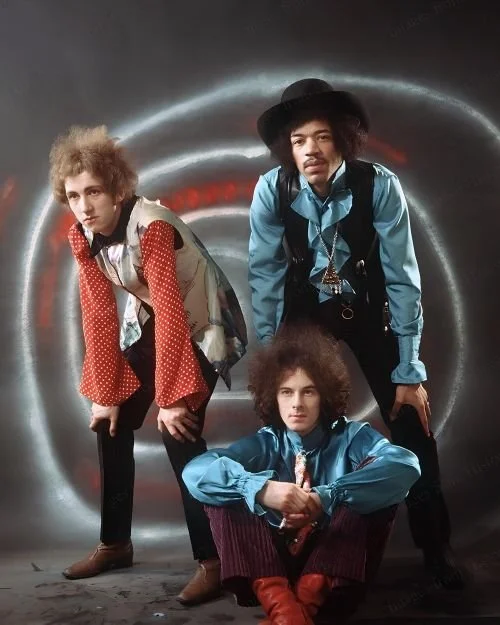
IN THIS PHOTO: The Jimi Hendrix Experience in 1967/PHOTO CREDIT: GAB Archive
The Jimi Hendrix Experience - Hey Joe
_________
MANY might assume that this…
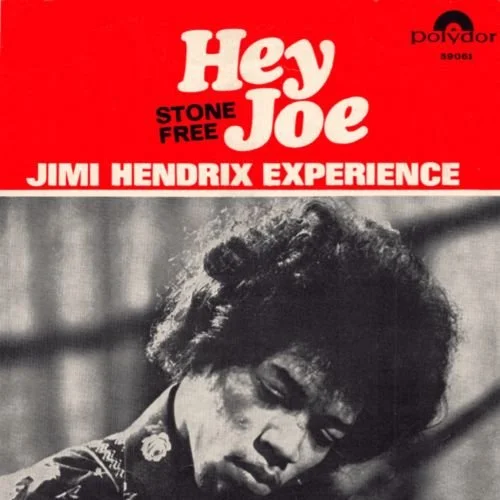
is an original from The Jimi Hendrix Experience. However, Hey Joe is a cover version. Though I feel that the version that The Jimi Hendrix Experience released in 1966 is the best. Because it was released on 16th December 1966, I did want to mark sixty years of this classic. It is hard to overstate how seismic Hey Joe is in terms of Jimi Hendrix and his legendary. A month after arriving in London, he and his band laid down an unbeatable rendition of Hey Joe. In terms of the chronology, on 5th October, 1966, having moved to and living in London, Jimi Hendrix, Mitch Mitchell and Noel Redding played together for the first time - The Jimi Hendrix Experience were formed. It was 23rd October, 1966 when The Jimi Hendrix Experience recorded Hey Joe, at De Lane Lea studios in London. 25th November, 1966 and The Jimi Hendrix Experience made their U.K. live debut at the Bag O'Nails Club, London, where they played using the clubs DJ booth. Eric Clapton, Pete Townshend, The Beatles, Mick Jagger, Brian Jones, Jeff Beck, Jimmy Page, The Hollies, and the Small Faces would all hang out at the club. This Day in Music provide that useful timeline. Let’s start with this article that documents the birth of an experience. This seismic recording of Hey Joe:
“The Jimi Hendrix Experience made their meteoric debut with the release of the single “Hey Joe” b/w “Stone Free” on Friday, December 16, 1966. While Billy Roberts penned the original lyrics to “Hey Joe” in the late 1950s and performed it regularly through the early 1960s while busking on the streets of New York’s Greenwich Village and later while based in San Francisco; he never took the chance to formally record the track himself.
The Byrds were known to perform the song at the LA hotspot Ciro’s which is where The Leaves discovered the track, and eventually became the first group to record and release the song commercially. Debuting as “Hey Joe, Where You Gonna Go” in November 1965, it found limited commercial success. The Leaves eventually re-recorded the song again in 1966 and released the new version “Hey Joe” alongside the B-Side single for “Girl From The East” which found moderate commercial success as the group’s fifth single and as the title track to their eponymous debut release.
Singer Tim Rose recorded the song in 1966, taking a slower, almost bluesy ballad approach as opposed to the faster renditions made by others. Rose’s rendition was perhaps the most successful commercial release of the song up to that time becoming a regional hit on both the west and east coast while also receiving radio airplay. It also became a mainstay of Tim Rose’s stage repertoire.
As New York City braced for the forthcoming snows in the Fall of 1966, Chas Chandler, bassist for The Animals, was looking to move into the business side of the music industry. A consummate fan of Tim Rose’s rendition of “Hey Joe,” Chandler was looking for his own, bright up-and-coming musician to record an adaptation of the popular track.
By stroke of luck, a young Jimmy Hendrix, who was performing regularly in Greenwich Village, was also inspired by Rose’s same rendition. With the prodding of friend Linda Keith, and a break in his own touring schedule while staying in New York City, Chandler happened to catch Hendrix in action on stage at the famed Café Wha? in the heart of the East Village where he was performing. It took only a few of seconds for Chandler to decide right then and there that this player, performing under the guise of Jimmy Hendrix (performing the lead role in Jimmy James & The Blue Flames), would be whisked away to London, quickly paired with bassist, Noel Redding and drummer, Mitch Mitchell and released to an unsuspecting public as The Jimi Hendrix Experience in September 1966.
The newly formed Experience went to France to garner some quick audience exposure and help to earn some needed funds. As part of a four-show supporting spot on a tour with legendary French singer Johnny Hallyday, The Jimi Hendrix Experience mesmerized the sell-out crowd at L’Olympia in Paris during final tour stop on October 18, 1966. Performing “Killing Floor,” “Hey Joe” and “Wild Thing,” the band’s performance was recorded by RTE and marked the first time the band was professionally saved to tape. [Ed. This version of “Hey Joe” was eventually released as part of The Jimi Hendrix Experience deluxe box set in 2000.]
Back in London and wanting to get Hendrix into the studio quickly to record “Hey Joe,” Chandler had scrapped together enough cash to get the first studio session booked for October 23, 1966, at De Lane Lea Music Ltd. [aka., Kingsway Studio]. These were familiar confines for Chandler as this is where The Animals had completed most of their recordings. “I knew the studio well, that’s why I took him there,” explained Chas Chandler to John McDermott in the Ultimate Hendrix book.
As Hendrix and Chandler tried to figure each other out, the two butted heads. Jimi, weary of his vocal capabilities, looked for ways to bury his voice in the mix and keep the focus on the guitar; while Chandler, who learned during rehearsals that Hendrix’s voice was far stronger than he was giving himself credit for, wanted the vocals to be more up front. Jimi even threatened that “if I can’t play as loud as I want, I might as well go back to New York.” To which Chandler threw down Hendrix’s travel papers and said, “Well, here you go. Piss off!!” Jimi looked at Chandler, started laughing and said, “All right, you called my bluff!” and that was it; Jimi was ready, and Chandler knew they were about to take everyone by storm.
In a mere two hours, all that Chandler could afford at the studio, The Experience completed more than 30 different takes before a completed basic track met approval.
With master tape in hand, Chas Chandler moved recording to both Pye and Regent Studios in early November. “Although we had completed the backing track, we still weren’t finished because we couldn’t get the girl’s vocals right,” recounted Chandler in Ultimate Hendrix. “I ended up going from one studio to another, trying to get different girls to put the vocals on. Initially I went to De Lane Lea, but they were booked, so I had to go elsewhere. I nearly screwed it all up because my master tape was one-inch four-track, and it took sessions at three different studios to complete.” In the end, the trio of Gloria George, Magaret Stedder, and Barbara Moore who performed under the framework, The Breakaways served as the final backing track to the single”.
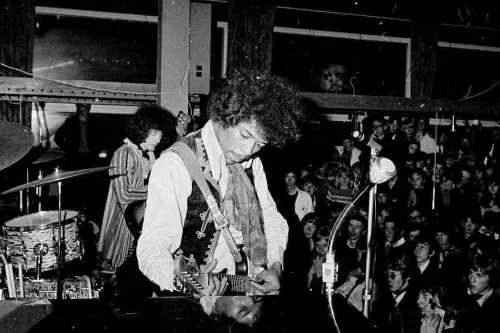
IN THIS PHOTO: 25th November, 1966: The Jimi Hendrix Experience made their U.K. live debut at the Bag O'Nails Club, London, where they played using the club’s D.J. booth
Earlier this year, Classic Rock looked inside a song that demonstrates and displayed Jimi Hendrix’s otherworld abilities. Hey Joe was not the only cover version that was supremely better than the original. Tackling All Along the Watchtower in 1968, no doubt it is a more impactful and powerful version than the 1966 Bob Dylan original:
“You’ll have heard the stories of how British guitar potentates such as Pete Townshend and Eric Clapton were awe-struck by Hendrix’s otherworldly abilities when they saw this new American kid play his first, low-key shows in London. Now imagine what the public at large, most of whom couldn’t tell the front end of a Fender from the back end of a frying pan in those far-off days, felt like when they first heard the scintillating solos on Hey Joe.
Not to mention the lyrics, which concern the confession of the titular Joe as he plans to murder his ‘old lady’ after he ‘caught her messing ’round with another man’. By the song’s end, the crime has been committed, which must have been something of a shock for the average British rock listener. It was as if the sound of ancient blues had been reborn in hard-rock form; the ghost of Robert Johnson, reanimated.
Hey Joe was released in December 1966 on Track Records, the label owned by The Who’s managers, Kit Lambert and Chris Stamp. It was backed with Stone Free, a Hendrix original, and distributed by RCA. Appearances on the TV shows Ready Steady Go! and Top Of The Pops helped the single to climb to Number Six in the UK, although, sadly, no known footage of either performance exists, as UK broadcasters routinely wiped and taped over master reels, believing them to have no historical value.
"It was amazing to watch him for the first time," said Marc Bolan, who was in the room when Hendrix appeared on Ready Steady Go! "Everyone else used to use backing tracks, but he was going to play live, because they got him on the show the same day.
"I was in the control room with the producer, just sitting about, when they started Hey Joe, and this old lady really freaked out and said: 'Turn the backing track down!' Because it was really loud. All the machines were shaking. And they said: 'But there is no backing track.'"
Hey Joe is not Hendrix’s most incendiary performance, musically or politically – consider Fire and All Along The Watchtower or even his Woodstock attack on The Star Spangled Banner for that. It’s not his most psychedelic, most subversive, or his most epoch-shaping song, depending on your point of view.
But Hey Joe was the gateway to his artistry for the public of 1966, and as a vehicle for the total summation of Hendrix’s skills at this early point in his career, it’s unbeatable”.
In 2018, Financial Times explored a song that had murky origins. Though we maybe forget that when talking about it and what The Jimi Hendrix Experience created in 1966. As 16th December marks sixty years since their single came out, I do wonder if anything will be written. I think that Hey Joe is one of the best recordings of the 1960s. I can only imagine how people felt hearing it for the first time in 1966:
“Yet all of these authorship squabbles were rendered insignificant by Jimi Hendrix’s seismic reworking of the tune. Hearing Rose play the song at Café Wha? in Greenwich Village, Hendrix took it and rocketed it into the stratosphere.
Gone was the nervy, lo-fi angst of the original. Instead, Hendrix slowed down and elongated “Hey Joe”, morphed it into something darker and wilder, invested it with vast psychological trauma and tension. In his magic hands, it became crazed, twisted, delirious.
It sounded as if Hendrix didn’t just empathise with the plight of the troubled Joe: he was actively encouraging his friend’s murderous actions. “Shoot her one more time!” he urged in the middle-eight as his Fender wailed, a law and a galaxy unto itself.
Hendrix’s annexing of “Hey Joe” was so colossal, it should by rights have scared off other artists from approaching the song for decades. Instead, the opposite happened. It has been covered hundreds of times, with hugely varying degrees of success. Cher’s shrill, strident 1966 version sounded as if she was giving the killer a miffed ticking-off for his transgression. Marmalade’s puny version was psychedelia-by-numbers. Deep Purple, then still prog rockers and not heavy metal headbangers, got closer to the restless spirit of the song.
Wilson Pickett ladled Stax horns all over it and turned it into a deep R&B cut. Patti Smith’s raw, visceral reworking was almost as radical as Hendrix’s: her new, freeform-poetry lyrics referenced kidnapped heiress Patty Hearst.
Marc Almond’s teasing vocal added sexual ambiguity to Soft Cell’s version, while Nick Cave’s sombre growl on his 1986 Kicking Against the Pricks covers album wasn’t his finest moment. Black Uhuru sounded so stoned on their 1990 album Now that it seemed unlikely Joe would have had the energy to pull the trigger.
Robert Plant gave it some serious welly with his Band of Joy; less likely half-decent covers came from rapper Ice T’s rock side-project Body Count, and from Seal. After hearing Charlotte Gainsbourg’s sultry 2013 murmur through the song, you needed a cold shower.
Ultimately, though, it’s impossible to see past the transcendent glory of Hendrix’s astral ramble. Many authors have laid claim to “Hey Joe”, but it truly belongs to just one man”.
It is hard to think of a guitarist since Jimi Hendrix’s death in 1970 who had the same ability and genius. Naturally, there are phenomenal players. Jimi Hendrix had some extra. A fire and unparalleled ability that still resounds today. Hearing Hey Joe in 2026 is so thrilling. Six decades on from its release as a single, and The Jimi Hendrix Experience’s version of Hey Joe remains masterful and unstoppable. It is a recording that is among the greatest ever. A sheer moment…
OF mesmerising brilliance.