FEATURE:
Modern-Day Queens
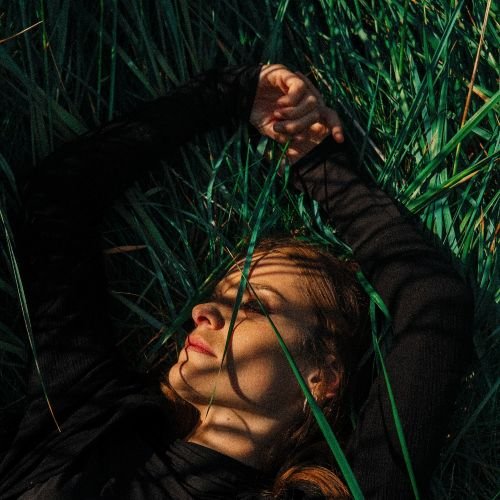
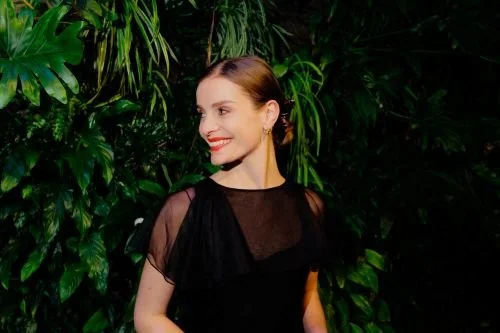
to see her live, but Eydís Evensen is heading to the U.K. to perform. She plays in Bristol on 25th of this month and London the following day. She is in Manchester on 27th and then heads off to Europe. Evensen is an Icelandic composer, pianist, vocalist, and former model. Her 2021 debut album, Bylur, is a remarkable listen. She was listed on The Line of Best Fit's 2021 Artists on the Rise as well as on Classic FM's 30 under 30 stars on the Rise list. I am keen to see her on the stage, as she is a phenomenal composer and musician. Someone whose music I instantly fell in love with. Before getting to some interviews, here is some background about someone you need to know:
“Evensen’s music is guided by emotion above all else. Her compositions are raw, graceful expressions of what it means to feel deeply — to mourn, to hope, to reflect, to move forward. There is an honesty to her work that’s increasingly rare: she writes from experience, from memory, from pain and joy alike, with no attempt to dilute or disguise it. Each piece carries a story, and every performance is a new telling of it.
Live, Evensen’s concerts are quietly breathtaking. Her shows are immersive, intimate, and atmospheric — the kind of experience that holds a room in stillness, she creates a world that invites listeners in, allowing them to feel their way through the music rather than just hear it. Her presence at the piano is both gentle and commanding, and no two performances are ever the same — shaped by the space, the moment, and the energy of those present.
With millions of streams worldwide and a growing international following, Evensen has quickly become a unique and vital voice in the modern classical landscape. Yet what sets her apart isn’t just her technical ability or compositional flair — it’s her unwavering emotional clarity. Her music doesn’t strive to impress, it simply exists to connect.
This is music that lingers. Music that comforts. Music that heals”.
I am going to come to some recent interviews with Eydís Evensen. I am starting with this one from Austin Town Hall. Oceanic Mirror was her album from last year. It is a masterpiece. In 2023, she released the phenomenal The Light. I do not think that female composers are given enough exposure and opportunities. Still an area of music where sexism and misogyny exists. In terms of their work being recognised, they do seem to be fighting a fight that has gone on for so many years.
“Describe your group’s sound using only adjectives or superlatives.
I am a classically trained pianist and my music sits within the genre, post-classical music.
I compose mostly for piano, but also compose music for string instruments, brass, woodwind and vocals. My music is deeply personal and inspired by Icelandic landscapes as well as my personal emotions and experiences. It’s honest, raw, and an emotional rollercoaster ride.
What was your most recent release? Any planned releases for 2023?
I just released a piece called ‘Tephra Horizon’, which will be included on my upcoming sophomore album called ‘The Light’ which will be out in May this year.
There are tons of bands coming into town, but if you could create your own perfect festival, who would you have playing? Would it have a sick name? Where would it take place? Feel free to disregard the rules of time and space.
I’d love to be able to create a genre-fluid festival which I think I’d like to call ‘Flow Festival’. Ideally it would take place upstate New York, whereas electrical, americana, post-classical and classical artists would take us on a flowing journey with their performances. There’d also be yoga classes, meditation sessions and vegan food feasts shared with like minded people throughout the festival.
What has everyone in the band been listening to, or, what plays in the tour van/car/bus?
My musical taste spans from jazz, ambient, classical, electronical, rock and other – Therefore there’d always be different music playing each day compared to my personal mood of each day.
To mention a few artists that are my current go to, that would have to be Led Zeppelin, St. Germain, Pink Floyd, John Coltrane, Miles Davis, Rachmaninoff, Philip Glass and Johann Johannson.
Obviously you have seen or heard about the issues coming up this year about fair pay for artists at SXSW? Care to offer any insight or comment?
I strongly believe that all artists participating should have equal pay during all showcase festivals, but I have not introduced myself enough to this particular discussion for SXSW to be able to make further comments”.
I will move on to 2025 interviews soon. However, this Fifteen Questions interview caught my eye. I am interested to see what comes from Eydís Evensen. I am a recent convert to her music. However, it is someone who has instantly captured my imagination. I hope that more people turn onto her music. A truly wonderous composer that I know will get a massive amount of love when she plays here:
“How do you see the relationship between the 'sound' aspects of music and the 'composition' aspects? How do you work with sound and timbre to meet certain production ideas and in which way can certain sounds already take on compositional qualities?
I personally like warm and soft textures within the sound world at the moment and I feel inspired by different sounds in daily life which bring life to perhaps a melody within a piece.
Collaborations can take on many forms. What role do they play in your approach and what are your preferred ways of engaging with other creatives?
I have mostly been collaborating with other instrumentalists for recordings and live performances - My current aim is to create an atmosphere in which everyone can feel comfortable as themselves and from there to focus on how we communicate and perform music as one voice together.
Take us through a day in your life, from a possible morning routine through to your work, please. Do you have a fixed schedule? How do music and other aspects of your life feed back into each other - do you separate them or instead try to make them blend seamlessly?
Everyday for me is different compared to different moods. Sometimes I wake up feeling such an urge to start my day with a cup of coffee and by starting with my technical warmups on the piano, versus other days I feel a greater sense of need to evoke inspiration by taking hikes and writing down anything that I feel or notice in my surroundings.
Despite that, I always try to find a certain balance within each mood each day which presents itself in the forms of practising meditation, exercising and tending to different music projects.
Music and sounds can heal, but they can also hurt. Do you personally have experiences with either or both of these? Where do you personally see the biggest need and potential for music as a tool for healing?
I can say that I have experienced both. I feel as if everybody has a different association of which pieces of music makes us feel within the headspace of healing, acceptance, hurt and grief to mention a few.
I feel that there is much need for peaceful and honest music as a tool within the journey of healing, whereas it can hopefully ease one's mind.
There is a fine line between cultural exchange and appropriation. What are your thoughts on the limits of copying, using cultural signs and symbols and the cultural/social/gender specificity of art?
I don't feel that there should be such a thing as a limit both in arts and within our existence.
Our sense of hearing shares intriguing connections to other senses. From your experience, what are some of the most inspiring overlaps between different senses - and what do they tell us about the way our senses work?
I feel the overlap of hearing and experiencing visual art during a concert has felt inspiring lately. In our modern world where social media has narrowed most of our attention spans that a visual element can perhaps aid the audience to experience the concert more presently”.
Let’s get to some chats with Eydís Evensen from last year. That is when she released Oceanic Mirror. In fact, there is just one. The Sonic Antler went deep with the Icelandic composer and artist. Go and listen to Oceanic Mirror, as it is definitely one of the standout albums of last year. Such an engrossing and mesmeric thing to behold:
“What influences do you feel are most deeply rooted in your language? Are there composers, sound aesthetics, or even musical experiences that have shaped your way of thinking and writing music?
My biggest source of inspiration is undoubtedly Icelandic nature. I always return to the present moment, rewinding in my mind to landscapes that moved me when I was a child in Iceland. That connection to place is fundamental, it shapes not only my music, but also the emotional state from which I allow myself to improvise.
In terms of artists, Nils Frahm has been a major influence. His way of improvising, both on stage and in the studio, is incredibly inspiring to me because it breaks boundaries, he creates something entirely new in the moment. Watching that process taught me a lot about flow: visiting past memories or visions in your mind, channeling them into the present, and asking yourself, how do I feel today?
Sometimes, if you don’t have the answer, you just start to play, and the piano tells you how you’re feeling. So for me it’s a combination of nature, memory, and the conscious state of being present, with improvisation, especially as I’ve seen it in Frahm’s work, as a guiding force.
Have you ever composed music for images, or would you like to? If so, how would you approach this kind of writing compared to your non-filmic music? Do you think the visual context would change your way of shaping sound and form?
Definitely. Earlier this year, in January, I worked on my very first score: an Icelandic two-part documentary called Útkall (Rescue). It tells a true story through a mix of reenactments and interviews with the people who were directly involved in a tragic accident and rescue mission on Iceland’s glaciers. Three jeeps were crossing the ice when one of them fell into a massive crevasse, about thirty meters deep. One person lost their life, another survived, and the film explores both the rescue and its impact on the families and the wider community.
This project felt very close to home for me. My mother is a surgical nurse at the main hospital in Reykjavík, and my father used to be a volunteer with Iceland’s National Rescue Team in the North of Iceland, he would go out in the middle of the night to help people in these extreme situations. So composing music for this documentary was more than just a commission; it became personal. Of course, it’s very different from writing my own pieces at home, where I might start with a feeling or a fleeting notion and let it flow into music. Here, the task was to capture and amplify the emotions of people actually living through these experiences, while also weaving in my own personal connection to the story.
I composed most of the score with the Osmose by Expressive E, an incredible synthesizer, and worked in Ableton Live for the first time on my own. I ended up recording over sixty tracks, layering textures and sound worlds. It was a magical process, and it made me realize: this is exactly where I want to go.
Now I’m about to start working on a short Icelandic film, and hopefully later this year I’ll move on to a TV series. What I love most is the collaboration, the marriage between director and composer. When you write for yourself, you’re telling your own story. In film, you’re telling a story together. I worked with director Daníel Bjarnason, who specializes in true stories and documentaries, and his honesty deeply shaped the process. Being part of that dialogue, helping to sculpt the emotional arc through the edit and the music, opened up a whole new world for me. It’s incredibly exciting.
What is your relationship with music technology? For example, what role does the DAW play in your creative process? Is it a compositional space in itself, or mainly a tool to finalize ideas born elsewhere?
For me it’s both a tool and a way of composing. Usually, once I’ve sketched an initial structure, maybe something I’ve recorded, I bring it into the DAW and start adding elements. At first it feels like a tool, but as I begin layering textures, mixing, and shaping the sound, new ideas often emerge. It becomes a compositional space in its own right.
That’s something I really discovered while working on the film score. I’ve never considered myself a technical person, I’ve always written my music on paper or simply recorded it on my phone. Until recently I didn’t use software at all. But about six months ago I learned how to work with Ableton Live, and it opened up a whole new world for me.
So now I’d say it’s both: still a tool, but also a space where I can actually compose and experiment. Being in the studio and opening up those possibilities feels like stepping into a completely new universe.
What do you think about labels such as “modern classical” or “neoclassical”? Do you feel these terms are close to your artistic world?
Definitely. I think they relate 100% to a different way of thinking, a different extension of classical music, almost like another arm or branch of the tradition. If you look at pioneers like John Adams or Philip Glass, for example, they opened up this path that feels very fitting to what we now call “neoclassical.”
Of course, it’s also a very broad umbrella. Some people are very opinionated about labels, whether it should be called neoclassical, modern classical, ambient, or something else entirely. Personally, I don’t mind. For me, it’s simply a broad and flexible term that can cover many different approaches. In that sense, I think it works perfectly.
Imagine you are scoring a scene where a figure walks across a snowy landscape. Where would you begin, what material, what compositional gesture, what production technique?
The very first thing I hear when I picture this scene is the wind, the howling wind. The question is how to translate that into musical elements. Could it be woodwinds? Or perhaps the sound of the wind itself, gradually transforming into an icy arrangement for string quartet? Maybe even a solo violin playing over that backdrop. There are so many possible directions, and I always like to explore them.
Whether I’d use high or low registers would really depend on the visual mood. If the scene shows a bright winter’s day, minus ten degrees but with sunlight sparkling on the snow, I imagine something high and crystalline, a piece full of clarity. But if it’s a storm, with snow falling heavily and the wind howling, then I’d go for darker tones, closer, drier sounds.
In either case, I’d want the music to feel crisp and cold, almost like icy needles cutting through the air, airy, windy, sharp. That’s where I would begin”.
I will leave things there. I am sorry that Eydís Evensen will be met with some decidedly rough weather when she plays at Bristol Beacon on 25th (though it is winter I guess). I live in London, so I would have loved to have seen on 26th, but I have something else on. I shall make a note to catch her the next time she is back in London. This is someone that you…
CANNOT afford to miss!
__________
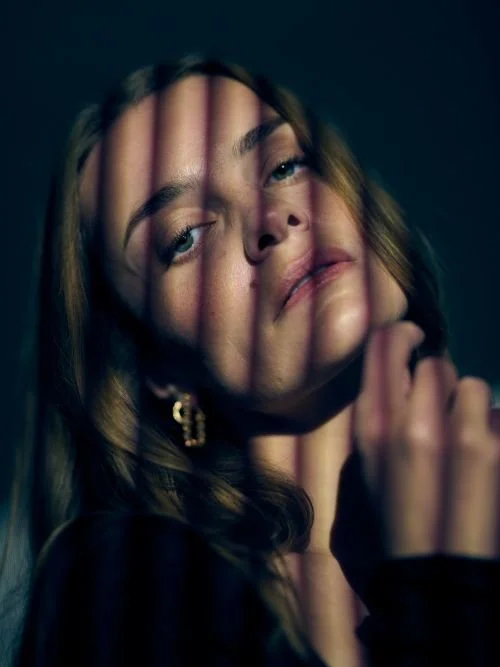
Follow Eydís Evensen
Official:
Instagram:
https://www.instagram.com/eydisevensen
Twitter:
YouTube:
https://www.youtube.com/@eydisevensen/videos
Spotify:
https://open.spotify.com/artist/2SMBaAG61s9mtyJ0eeXSWx?si=-cY2cuZMTxu1szSweo5H6w
Facebook: