FEATURE:
One for the Road
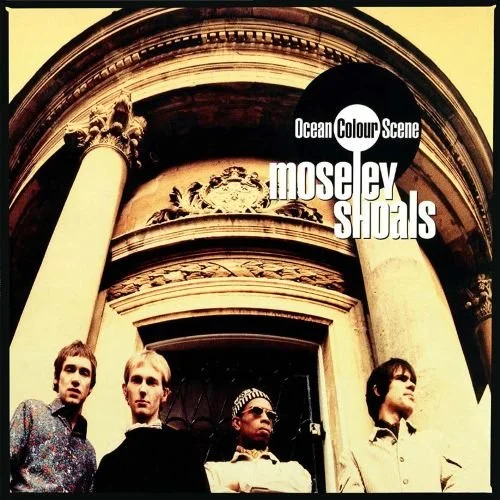
Ocean Colour Scene's Moseley Shoals at Thirty
__________
PERHAPS not as discussed…
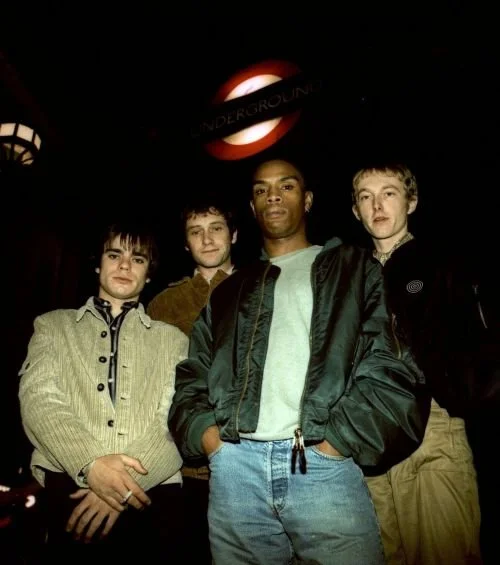
IN THIS PHOTO: Ocean Colour Scene (L-R: Damon Minchella, Simon Fowler, Oscar Harrison, Steve Cradock) in London in 1996/PHOTO CREDIT: Martyn Godacre/Getty Images
and celebrated as many albums from the 1990s, Ocean Colour Scene's Moseley Shoals turns thirty on 8th April. I wanted to spend time with it as it is a fantastic album and one that definitely has a legacy. It contains classics like The Riverboat Song and The Day We Caught the Train. Songs most of you will know, Moseley Shoals is much more than that. It is, in my view, one of the best albums of the 1990s. Given the strength of the album, it is amazing that some were mixed and critical in 1996. NME were not that kind towards it. I have seen some one, two and three-star reviews for an album that is a lot stronger than that! I will bring in some features that reassess an album that arrived in a really strong year for music. Maybe critics reacting to what was around it at the time. 1996 would see everyone from Manic Street Preachers, Beck, Fugees, and DJ Shadow release classics. Let’s get inside Moseley Shoals. The band, led by Simon Fowler, alongside Steve Cradock, Damon Michella and Oscar Harrison (Paul Weller pops up on a few tracks), delivered a remarkable album. It is worth reassessing and reframing this album. Pete Paphides wrote an article for Medium in 2020 about the mighty Moseley Shoals:
“As with Oasis, comparisons with Paul Weller haven’t always been helpful to Ocean Colour Scene, but in the case of Moseley Shoals, it isn’t hard to see what would have reminded Weller of himself in these songs. Fowler was going through a version of what Weller himself had gone through at the turn of the decade: feeling like the world had left him behind and wondering what it might possibly take for him to catch up again. Just as Weller wrote it all down with the songs on his first two albums, Fowler poured it all out into the songs on Moseley Shoals. When Weller’s then-producer Brendan Lynch heard them, he volunteered his services. Lynch hadn’t accrued a huge amount of experience until that point. At his lowest point, after losing his Polydor deal, Weller fell in with The Young Disciples and the extended Acid Jazz family. As Weller is wont to do from time to time (see also: Simon Dine, Stan Khybert) he eschewed a more seasoned hand in order to see what a young untried producer might bring to his sound. Lynch clearly rose to the challenge. Further to his work on Weller’s eponymous set and Wild Wood, Lynch inverted a handful of Weller songs into epic space dub odysseys that numbered among the most adventurous music to bear Weller’s imprint. In particular, his SX2000 Dub version of Kosmos is easily the match of anything you’ll find on contemporaneous albums by kindred spirits such as Primal Scream and Future Sound Of London.
Moseley Shoals was never going to be that sort of album. By the same token, Lynch and Ocean Colour Scene were quick to reach a mutual accommodation that played to all of their strengths. At its core, what you’re hearing is the synergy of an electrifying band and a producer who knows when to get out of the way. It was one of the four songs featured on a tape sent to journalists in advance of the album’s release — for many, the first indication that Ocean Colour Scene hadn’t dissolved with the passing of baggy. Along with The Stone Roses’ Love Spreads, it was pretty much the only single by a band of that generation — certainly from an indie background — to assimilate the influence of Led Zeppelin (and remember that it was Led Zep’s rhythmic irresistibility as much as their heaviness that distinguished them from all the other heavy bands). In doing so, The Riverboat Song picks up from Zeppelin’s Four Sticks, deploying the same 6/8 swing time with an uptight intensity that suggests something has to give. When the release comes it’s thanks in part to Oscar Harrison’s halving of the tempo on the chorus, one of a series of excellent decisions undertaken by him throughout the song. Prior to joining The Fanatics and then Ocean Colour Scene, Harrison had spent years in a Birmingham reggae band Echo Base, and even before that, learned to play by aping the Jamaican syncopations of Steel Pulse. You can hear all of that throughout The Riverboat Song: a delayed landing on the snare and cymbal here; a string of deft half-fills to accentuate key lines. You could listen to Harrison’s drum track alone and still feel your heart racing.
And yet even on this song — the one which had detractors quickest to dismiss the band as retro-fetishists — there are flourishes from Brendan Lynch which don’t really belong in any recognisable era: the delicious scaling down of the arrangement before the second verse, which makes the first verse almost seem like a false start; the staccato bursts of interference at the beginning of the instrumental break; the way Cradock’s lead guitar seems to do something entirely different in each section, in particular the extended notes at 3:50 and then, subsequently, nothing at all, leaving the entire space open for just the occasional organ stab. Nuances of Brian Auger and Graham Bond are detectable alongside the obvious Zeppelin nod. Everything you hear is deliberate and immaculately executed, down to the final surge of feedback dissipates to reveal the first strummed chords of the song that follows right after it.
The Day We Caught The Train sat in the top ten for much of the summer of 1996. It pulled off the same illusion that Come On Eileen and Our House managed in the previous decade, creating a vicarious longing for the events it was describing. And like those songs, its almost immediate emotional pull distracts you from the unconventional manner in which it goes about its work: the sudden descent from those angelic opening lines into murky memories of half-forgotten plans and then, before you can properly get your bearings, up a semitone (“Stepping through the door like a troubadour…”) before the moment when the song really reveals its hand. Why can’t things just be like they were? Even for a little while?
“You and I should ride the coast/And wind up in our favourite coats just miles away…”
It’s moving for all sorts of reasons. It’s moving because you suspect the person being addressed doesn’t feel the same way. It’s moving because the sudden shift into those lines suggests that the protagonist has just decided to blurt out the thing he’d been too shy to say all along. It’s moving because when Cradock lands onto Em on the word “miles”, you realise that this is just one more daydream on an album that’s actually full of them. And finally, it’s somehow really moving when, Fowler vents his inner Marriott on “Roll a number…” and finally succumbs to unguarded longing for a more carefree time.
Moseley Shoals is studded with these remorseful reveries, and perhaps none more bereft of hope than The Downstream. It’s one of those songs that, in another era — when soul singers used to cherry-pick and reinterpret the best of what sat outside their immediate genre — Otis Redding, Solomon Burke or The Isley Brothers could have absolutely turned into a standard. For all of that though, it’s Fowler’s creation and he really digs deep for it. Over a smoulderingly empathetic accompaniment from the rest of the band, he cuts a solitary presence. “Sell me a river/And I’ll skate away/To the downstream/Where I did play/So easy minded/Like a hill on the skyline/Tripped up and blinded/Getting lost on the sidelines.”
And yet, for all of that, the record’s reputation remains tarnished hampered by critical ambivalence about the era and milieu in which it emerged. At Time Out, where I was employed as a staff writer in the mid-90s, I was only finally allowed (by a music section who were appalled at the prospect) to write about the band when an interview with Underworld’s Karl Hyde dropped out at the eleventh hour and the only other option in the time available was an interview with Fowler. A look at the end of year Top 50 albums lists in Melody Maker and NME for that year shows that there was no place in either for a record whose creators were regarded as mere passengers on a bandwagon which had Oasis’ logo painted on it. But this doesn’t tell you as much about the qualitative merits of Moseley Shoals as it does about the dialectic that was prevalent in the music press at the time: an assumption that if you liked guitar music, you were a classicist who had no interest in dance music; and that if you liked dance music, then you couldn’t abide guitars.
Of course, beyond the offices of the music press, this sort of tribalism was itself becoming an anachronism. Ex-ravers were going to Oasis gigs and indie kids were packing out Prodigy gigs. In a world where the observation of aesthetic battle lines was getting to be a thing of the past, Moseley Shoals found its audience. It’s the sound of a band coming to terms with its place outside the circle and realising that with failure comes a kind of freedom. The freedom to tell the truest story you know. And maybe, just, maybe, if you tell it well enough, you’ll never want for an audience again”.
A lot of the press really didn’t take to Ocean Colour Scene. Slating an album that in years since has been given far kinder words, Moseley Shoals perhaps was subjected to tribalism and snobs in the press. Britpop Memories celebrated twenty-five years of Ocean Colour Scene’s second album in 2020. A Britpop classic as they say, I wonder what others will say to mark thirty years. How this album has endured. Reaching number two in the U.K. upon its release and having sold over a million copies. It has received accolades. In 1998, Q readers voted Moseley Shoals the thirty-third greatest album of all time. Pitchfork ranked it forty-second in their 2017 poll of The 50 Best Britpop Albums:
“Why didn’t the press like them? No idea. Was it that the band stayed in Birmingham and didn’t come down to London to hang out in the good Mixer? Even the Gallagher brothers had come down to London Town when the time was right. Maybe the fact that they were such good mates with Weller who was himself the subject of some fairly petty and insulting treatment by the weekly music press. The fact that they’d had the guts to reinvent themselves by playing the music they wanted to after the debut was more of a label driven baggy album to try and cash in on the then fading scene. But frankly by the mid 90’s the weekly music press had gone power mad and out of control. OCS have had the last laugh as they’ve outlasted the Melody Maker completely and the NME has been reduced to an online gossip website taking more interest in the fashion choices of Harry Styles than music.
Moseley Shoals doesn’t really need me to go track by track offering a review of each song and giving my in depth analysis, the songs are well known and speak for themselves, what I will say is that there are no bad tracks, not a single bar of music on the whole album is superfluous or could be deemed “filler”. Looking at the replies to my 25th anniversary post on Twitter earlier today every track has had a pretty fair share of the love, although unsurprisingly “The Day We Caught The Train” has probably had the most mentions by fans when asked for their favourite track.
The band are easily the best musicians of the Britpop era, each of the four members being a master of his chosen instrument, some are well known for their skill, Cradock is often cited as one of the best guitarists of his generation. But even the quiet man at the back Oscar Harrison is a drummer of exceptional and sadly over-looked talent. Combine that with Minchella’s grooving bass lines and the vocal range of Foxy Fowler and your looking at a band that took the musicianship of Britpop to new heights.
The whole package of Moseley Shoals was perfection. Tony Briggs’ photos inside the inlay are beautifully shot black and white portraits, the cover itself is one of the most iconic images of any Britpop band and any fan worth their salt will at some point have called in at the Jephson Gardens in Leamington Spa to have a go at recreating the image either alone or with friends and family. Lastly the music videos were all amazing. Cool as you like with lots of nods to the past. “Riverboat Song” and “You’ve Got It Bad” both looking like Mod/Northern Soul homages, “The Day We Caught The Train” with the band in Ben Sherman’s and bucket hats, “The Circle” with its Scooter ride out in obvious debt to Quadrophenia and with Oscar looking like a reggae superstar.
The band would go on to release more great albums, more great singles and play big arenas, but for me they peaked musically with Moseley Shoals just because the tracks are all perfect, every subsequent album would have a track that didn’t quite live up to this body of work. In fact the b-sides of this album cycle were also so strong that a compilation album called “B-sides, Seasides, and Freerides” was released and is another set of tracks that any OCS fan will wax lyrical about if asked.
This is an album and band that today generates huge social media stats, has a dedicated and passionate following and stands the test of time far better than many of its 90’s contemporaries, but then as the saying goes “form is temporary, class is permanent”. Sadly the damage done by the weekly music press is still evident and if you try to discuss the band online you can bet your bottom dollar that at some point you’ll get a response including phrases such as “Dad Rock”, “Lad Rock”, “Noel Rock”, etc. The irony is I loved them as a lad, I now love them as a Dad, I don’t see the problem. And being compared to one of the country’s most successful songwriters? Well, there are worse comparisons aren’t there?”.
I am going to end with words from Glide Magazine. They shared their positive review in 2011. That is when a remastered version appeared with the original album tracks in addition to the B-sides from the singles released. I would say to anyone who has never heard of this album to go and listen to it. Maybe it has this reputation as being about TFI Friday and soundtracking that. Only having a couple of decent singles, when in reality Moseley Shoals is an incredible album from start to finish:
“After hearing a demo, Oasis’ Noel Gallagher invited the band to support his tour. With this recognition, major labels came calling and Moseley Shoals was released to critical acclaim from the famously hypercritical Brit press. The name of the album, of course, is a play on Muscle Shoals, the legendary Alabama town that housed a recording studio which began in 1969 and produced epic soul and rock music. Moseley is the name of a Birmingham suburb where three of the group’s original members were born. This title plays warmly with the music inside, a combination of a little 90s brit-pop, big hearted classic rock, and blue eyed soul.
Immediately kicking things into high gear with “The Riverboat Song’s" Zeppelin-esque guitar and bass interplay, the band arrives with intention and a soulful force. This music is not a match for Oasis’s bombast or even Blur’s punchy, quirk-pop. However, Moseley Shoals shines with a refined, timeless sound; a deep, melodic accessibility with songs arranged naturally and played with passion. Lyrics are earthy yet poetic, elegant and stylishly grounded. The most alluring element of all may be the understatement with which the band is able to play. Dripping with emotion, staying rooted in traditional song arrangements, they creatively play with melody and make Moseley Shoals a revelation for those of us struggling to remember what exemplary melodic rock sounds like. A song like “Lining Your Pockets” is one of a few slow burners on Shoals that captivates with a Rod Stewart-era Faces feel. “The Day we Caught the Train” is stylized like Revolver-era Beatles with a gorgeous chorus. It’s no wonder the song reached number 4 on British charts, a place where the appreciation for well played pop rock has never wavered. “One for the Road” is the best Bob Seger ballad he never played. In the vein of “Night Moves”, this one focuses on natural production, loose yet crisp playing, and gorgeous vocals from Simon Fowler.
“40 Past Midnight” possesses the most obvious overture to Moseley Shoals with bar room piano and agile guitar stabs from Steve Cradock that hook and dive. There is an organic liveliness to the song and all of Moseley Shoals that allows the music to shine and flow naturally, as if it was recorded live and in one take. The album is blessed by iconic Brit Paul Weller’s (The Jam, The Style Council) presence on organ, piano, and backing vocals for three songs. With Weller and Gallagher’s stamp of approval Moseley Shoals was afforded an instant loudspeaker to all of Britain. “Policeman and Pirates” is a quintessential example of OCS’s ability to create gorgeous blue-eyed soul melodies inside classic rock structures. There is a sweet affection to the song, one that can only come from a labor of love. "You’ve Got it Bad” uses a filtered synth sound for texture, allowing it to play off and with punchy piano runs and a kinetically understated guitar solo. Coupled with Beatles-esque melodies, the band keeps finding gold in every song.
The album finishes with “Get Away”, the longest song on the album at almost eight minutes. Beginning with harmonica and acoustic guitar for two verses and then voraciously jumping into wah guitar and angry vocals, the band turns up the heat. Cradock plays a liquid solo, and the song slows to a crawl again. These organic twists and turns make Moseley Shoals feel warm and welcoming, like the product of a real band full of heart. Soon the song turns into a rambunctious exploration of vibrant drums and refined yet ragged guitar noise. Moseley Shoals breathes to a close with guitar feedback fading.
Albeit with some lineup changes, Ocean Colour Scene remains a stalwart in the British music scene. Celebrating their 21st anniversary with a 4 CD box set and recently releasing a deluxe edition of Moseley Shoals, the band has embarked on an extensive tour playing the nationally famous album in its entirety. Perhaps the album’s greatest strength is its ageless sound. Sounding as if it could have been made in 1969, 1996, or 2009, Ocean Colour Scene produced an unwavering testament to quality songwriting and the power of British melodic rock”.
On 8th April, it will be thirty years since Moseley Shoals was released. Despite press criticism, it was a big commercial success. It still holds up today. Even if its biggest songs are at the top and there are not many hits or bigger songs lower down the order – always a risk when it comes to an album -, there is this consistency throughout. Strong and interesting songs from a band who would release its follow-up in 1997. Marchin' Already received similar lukewarm reaction. That album contains Hundred Mile High City. A band I really like and feel are one of the best, go and listen to the superb Moseley Shoals. Thirty years later, and this phenomenal album still…
SOUNDS utterly superb.