FEATURE:
Spotlight
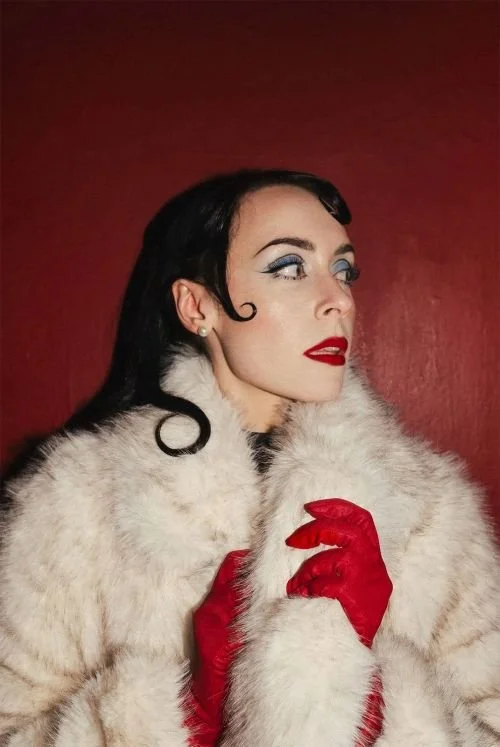
Lola Wild
__________
THIS is an artist that…
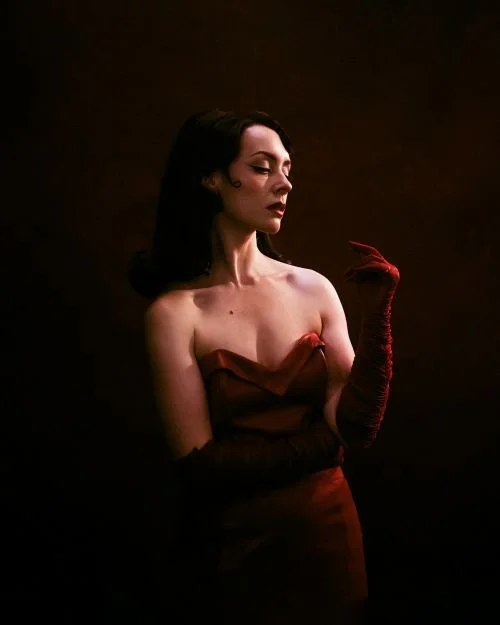
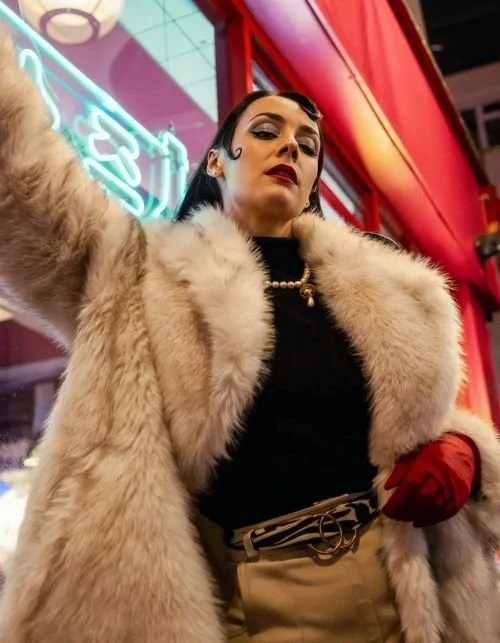
you will need to check out. Last year was a busy one for her. In November, she released the E.P., Lost Signal. It is a remarkable E.P. I would urge you to check out. Before getting to a selection of interviews from last year, I want to come to some biography about the sensational Lola Wild:
“Lola Wild is a London-based singer-songwriter whose music conjures a cinematic dreamscape where nostalgia meets modern artistry. Seamlessly blending dream-pop, folk, and alternative indie, her sound is both timeless and contemporary, drawing listeners into an intimate world of haunting melodies and evocative storytelling.
With influences ranging from PJ Harvey and Nina Simone, Lola’s music resonates with a raw, emotional depth. Her rich, crooning vocal style nods to legends like Roy Orbison, David Bowie, while maintaining a uniquely feminine modern edge.
Lola’s debut EP, Get Up, released early 2024, introduced her as a compelling voice in indie music. The record, steeped in lush arrangements and poignant melancholic lyricism, explores themes of longing and resilience, offering a sound that feels both otherworldly and deeply personal. The release has garnered critical acclaim, with features in Under the Radar, Clout, and AmericanaUK, as well as national airplay on Radio X, BBC Introducing, BBC Radio 6, and Amazing Radio”.
I am going to lead on to an interview from last February. The Lunar Collective spoke to Lola Wild about her single, Jump the Gun. A song where she “delves into the restless energy of instinctive actions, regret, and self-reflection, capturing the duality of impulse and introspection with striking honesty”. I am quite new to her music, though I was instantly captivated and invested:
“LUNA: Is there a particular story or concept tying the EP together?
LOLA: The title itself kind of sums it up—this feeling of isolation, of voices trying to reach each other but never quite connecting. It’s that melancholy of chasing something familiar, only to be met with static. Sonically, it’s got that nostalgic, cinematic feel, but each track has its own space, shifting between intimate moments and bigger, more atmospheric sounds.
LUNA: How does “Jump the Gun” fit within the overall narrative or sonic landscape of Lost Signal?
LOLA: “Jump the Gun” sits right at the heart of Lost Signal, both in sound and in what it’s about. The whole EP is tied to this idea of searching for clarity, whether that’s misunderstandings, regrets, or just that feeling of being slightly out of sync with everything around you. “Jump the Gun” taps into that impulsive side of it, acting before you’ve had time to think, then dealing with the fallout. It’s a bit restless, a bit dreamy, like reaching for something you’re not sure you can ever quite hold onto, which pretty much sums up the whole record.
LUNA: If you had to describe “Lost Signal” in three words, what would they be?
LOLA: Camp, cinematic and nostalgic.
LUNA: Your vocal delivery has drawn comparisons to legends like Roy Orbison and David Bowie. Who are some of your biggest musical influences?
LOLA: Roy Orbison and Bowie are proper icons. As for my influences, there’s a real mix of classic and modern artists that have shaped what I do. I’ve listened to a lot of classic ‘50s and ‘60s artists like Connie Francis and The Beatles. Fleetwood Mac’s storytelling and that dreamy, atmospheric vibe has always stuck with me too. I’m also a big fan of PJ Harvey for her raw energy, and Blondie’s mix of punk and pop definitely inspired me. Nina Simone’s voice is just so powerful, and Billie Holiday has this beautiful, heartbreaking way of singing that really connects with me. It’s all these voices and styles mashed together really. Honestly, though, the list is forever changing and growing as time goes on!
LUNA: What do you hope listeners take away from “Jump the Gun?”
LOLA: I really hope “Jump the Gun” helps people feel like they’re not alone with the type of treacherous thoughts I tackle on a daily basis—the ones where you act impulsively, even when you know there might be consequences. It’s about those raw, messy moments we all have, and I think if listeners can hear it and go, "I’ve felt that too," then that’s a win. We're all just trying to make sense of our instincts, and sometimes it’s nice to know someone else gets it.
LUNA: Beyond music, are there any other art forms—film, fashion, or literature—that influence your aesthetic and storytelling?
LOLA: Oh, absolutely! I draw a lot of inspiration from all sorts of art beyond music. Alfred Hitchcock’s films have always stuck with me, once you look past the blatant misogyny of course—his knack for building suspense and creating an atmosphere is something otherworldly. There’s something about the dark, twisted side of his stories that I just love. Oscar Wilde’s writing is another big influence. Also David Lynch—his surreal, dreamlike worlds pull you in and make you think. He has this way of challenging what we think of as "normal," and I think that kind of boundary-pushing is something I try to channel in my work too. I’m also a big fashion historian too. I’ve been collecting and researching fashion from the 1920s to the 1980s since I left college—there’s something about that bold, rebellious spirit that happened in those 60 years that I love. Modern designers like Vivienne Westwood and Mugler definitely influence me too. Westwood’s punk aesthetic and how she challenges norms, while Mugler’s designs have this powerful, sculptural vibe that feels timeless to me.
LUNA: You’ve been honing your craft for years now—what has been the biggest lesson you’ve learned along the way?
LOLA: If I had to pick the biggest one, it’s probably that nothing ever goes to plan and that’s actually a good thing. You can’t force creativity, and if you try, you’ll end up with a lot of frustration. I’ve also learned to embrace the messy bits...those “Oops, didn’t see that coming” moments can sometimes turn into the best parts of a song or even your career. And if you make a mistake, just blame it on being “experimental” and move on”.
Getting to a deep and interesting interview from Medium. They spoke to Lola Young about finding her voice and balancing artistry with glamour. This is someone whose aesthetic and look is very much intertwined. She discussed her start and growing up. It is remarkable reading about Wild’s early life and how she transitioned into music. You can tell that she was very much born to do this:
“Based in Hackney, Wild folds retro color into contemporary moods. Her recordings nod to 60s pop and the foggy synth textures of the 80s. Press comparisons have placed her croon near Roy Orbison, David Bowie, and Connie Francis, while recent write-ups lined her up beside artists like Angel Olsen and Sharon Van Etten. Since debuting in 2023 she has sold out rooms including SJQ, Crazy Coqs, and The Waiting Room, and stepped onto the O2 Academy Islington stage. A live session for “Rendezvous” at Paul Weller’s Black Barn Studios came through a collaboration with Tom Hill, Weller’s keyboardist, who co-wrote the track and helped bring in players from the band. The filmed session opened doors and led to more live work.
Her new single “Girls in Hollywood” dives into the faded glamour and cost of chasing a dream. Co-produced with multi-instrumentalist Jim Wallis at Strong Room Studios, the track sets a brooding arpeggiated synth over a steady pulse and follows a young woman who gets lost in the industry machine. The visualiser, directed and edited by Jack Satchell and Mars Washington, features showgirl Roxy Van Plume alongside Wild, and leans into the cinematic tone she favors. The song fits her broader interest in storytelling that sits between nostalgia and unease.
Wild’s lyrics often look backward, not to escape but to examine. “It’s very reminiscent, very nostalgic,” she says. She loves old cinema, Westerns, and stage choreography, from Cabaret to Bob Fosse. Asked which era she would choose to live in, she opts to stay in the present. The 60s fascinate her for the fashion and the music, but not for the politics. The 80s hold a pull for the birth of electronic pop and Prince, yet she will take modern medicine and today’s hard-won gains.
Offstage, she writes at the keyboard, strums enough guitar to sketch chords, and shares instruments with her partner, who plays bass and guitar. An Omnichord from the 80s sits nearby for textures that hum in the margins. Her self-care is simple. “Dancing will always be something that helps me,” she says. Laughter is her cure. Community in Hackney keeps her grounded. She is an introvert at heart who likes to stay in, listen to records, and spend time with her cat.
Looking ahead, Wild is finishing her first album, planned for next year, and will release one more single this year. She is lining up collaborations and remixes with producers she admires, and wants to take the show on the festival circuit with a UK tour as a starting point. America is on the wish list. The message she hopes listeners carry is the same advice she would have given her younger self. Believe in yourself. Trust your gut. “Be authentic. Be weird, be crazy.” Be loud, not only in volume, but in presence. Above all, be honest about what the music makes you feel.
Lola Wild, it’s an honor to meet you. Before we dive in deep, our readers would love to learn about Lola Wild’s personal origin story. Can you share with us the story of your childhood, how you grew up, and the seeds for all the great things that have come since then?
Lola: Amazing. So, I was actually brought up in a small village in the Midlands in the UK. Very much out in the sticks. We call it the flatlands because there are literally no hills — just fields. It’s like a farmer’s paradise.
I was the youngest of four kids, raised by a single mom. So I’ve definitely been brought up to be a strong lady for that very reason. My childhood was filled with a lot of music. Since there wasn’t much money, we kept ourselves entertained with music and imagination. My mom loved singing. She wasn’t a professional singer, she just loved it. She listened to a lot of music — mostly 80s, a lot of rock — even though I’m not a rock artist myself. She was into Led Zeppelin, soul music like Aretha Franklin and Donna Summer. So I grew up with a pretty broad taste in music.
She definitely wanted me to pursue singing at one point, but she didn’t want to be a stage mom. So she kind of left it to me and said, “If you want to do this, do it on your own terms.” And I just kept doing it.
Eventually, I fell in love with jazz — got into Billie Holiday and Sarah Vaughan. As time went on, I went to college to study music, taught myself a lot, got into production. That’s when the evolution of Lola Wild started to come into play.
It didn’t stay with jazz or soul, which is where I originally came from. I started listening to the Beatles, Beach Boys, Connie Francis, and shifted toward melodies, harmonies, and really leaned into songwriting more than just singing.
So here I am, from that whole evolution. That’s where Lola Wild came into play. And as you probably know from the press release, I’m also a burlesque dancer — or at least I used to be more involved in the showgirl world. That definitely influenced how the music changed. It became more narrative-driven, more performative.
With burlesque, you have to perform without saying a word, which is different from singing, where everything is a bit more on the surface. It made me think more about how the music feels — how it makes me feel and how it’s going to make someone else feel.
Long-winded answer to your question, but that’s kind of where it all started. And just to throw it in there, film plays a huge role too. I’m really into cinema — old-school cinema, Westerns, theatrical styles, even musicals like Cabaret, 60s musicals, Bob Fosse. There are lots of theatrical embellishments in my work that come from all kinds of genres.
We love hearing stories where someone a bit further ahead opens a door or creates an opportunity that changes someone’s career trajectory. Do you have a story where you did that for someone else, or where someone did that for you?
Lola: I’d say for me personally, since I’m still at the early stages of my career, I’m not sure I’ve been able to open too many doors for someone else just yet.
But I’ve definitely had a couple of experiences where someone opened a door for me. One of them was with my friend Tom Hill, who’s Paul Weller’s keyboard player from The Jam. He actually co-wrote Rendezvous with me, which is a song I wrote about two years ago.
I asked him if he wanted to do a live session, and I was just expecting something low-key — maybe at my house or a local venue. Then he gets back to me and says, “I’ve asked Paul Weller if we can use his studio in Woking, near London, to film the session.” He even invited Paul Weller’s sax player to join us.
That moment really opened a lot of doors. I got to meet and play with some incredible musicians in such a legendary space. It was filmed too, and once that video went out, things started picking up. I started getting opportunities like the Crazy Coqs gig at Zédel, and others like SJQ and more.
So if you could take all of your lyrics, all of your melodies, put them all together in a bucket and blend them up, what would be the overall message that comes out of the music?
Lola: I would say… oh, that’s a very good question. A lot of what my lyrics point to is the past, and also the future. It’s very introspective, and I think that’s just how my brain works. I’d say it’s very reminiscent, very nostalgic.
You know how when you think about something that happened years ago — even if it’s narrative-driven — for me, that’s probably why I focus so much on vintage aesthetics and retro, old things. It makes you feel something when you think about something that already happened, even if you weren’t present at the time.
So if I compared past and future, I’d say more past. More retrospective, more nostalgic. I hope that was a good answer”.
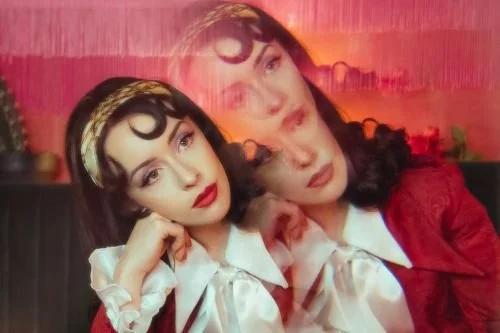
I am ending with an interview from Unclear Magazine from November. After putting out the Lost Signal E.P. and touring, I wonder what this year holds. Keep an eye out at her social channels for gigs and news. Lola Wild is being tipped as a name to watch closely. I feel that she will ascend to incredible heights and have this very long and successful career. If you are new to Lola Wild then do make sure that you connect with her:
“You draw musical inspiration from the 60s and 80s. Have these decades always meant a lot to you?
Lola: “I'd say for most of my adult life it has been influenced by those eras. I used to work in a vintage shop, so I was constantly surrounded by those worlds — the clothes, the colors, the sounds playing through the speakers all day. It definitely seeped into the way I see and hear things now. The interesting thing about the ’80s is how it took such a clear nod to the ’60s — not just in the fashion, but in the sound too. Both eras share this obsession with melody and harmony, that sense of something lush and cinematic.”
Considering you navigate in your lyrics a narrative landscape, what do you enjoy most of your songwriting process?
Lola: “I think what I enjoy most is building a little world around a feeling. Usually it starts with an image or a moment in my head, like a scene from a film and then I just start to fill in the details. I love figuring out who the character is, what they’re thinking, what they’re running from. It isn't always about being literal. I like hiding bits of truth in metaphor, or saying something real in a slightly surreal way. It keeps it interesting, like you’re telling a story, but through a dream lens.”
In general terms, what do you want people to take away from your music?
Lola: “My music tends to live in that space between nostalgia and daydream, so if it gives someone a bit of comfort or escape for a few minutes, that’s enough for me. I think it’s just really special when people find their own stories in the songs. Once it’s out in the world, it doesn’t really belong to the artist anymore... it becomes whatever someone needs it to be, and I love that.”
In terms of music production, what are you always aiming to achieve?
Lola: “In production, I’m always trying to create tension between control and chaos. I want every sound to feel deliberate, but I also want it to have life, not be too polished or stale, little unpredictabilities that keep it from feeling static. I’m fascinated by texture and space, how silence and noise can interact, and how a song can exist somewhere between intimacy and spectacle.”
How does your music reflect your personality?
Lola: “I think my music reflects the way I process the world. It's a mix of observation, chaos and unpredictability. I like contrasts — beauty and discomfort, intimacy and spectacle. In a way, the songs are an extension of how I see and react to things, filtered through a lens that’s performative”.
I am going to end there. Such a distinct and consistently brilliant artist, Lola Wild is primed for a very long career. A lot of people are very excited about what she is putting out and where she might head. Even though I have recently discovered her, I am going to follow her work and see where she heads. In terms of the artists coming through, the superb Lola Wild is…
ONE of our best.
_________
Follow Lola Wild
Official:
Instagram:
https://www.instagram.com/itslolawild/
TikTok:
https://www.tiktok.com/@lolawildmusic
Twitter:
Facebook:
https://www.facebook.com/lolawildofficial
YouTube:
https://www.youtube.com/channel/UCeTb53hJ6kb-M2uKlUGdUGQ
Spotify:
https://open.spotify.com/artist/5E2OVlWdhLdDpxY6JS2ljb?si=6hQRvNO9SYqKzeqXS6rxnw