
FEATURE:
Kate Bush: Something Like a Song
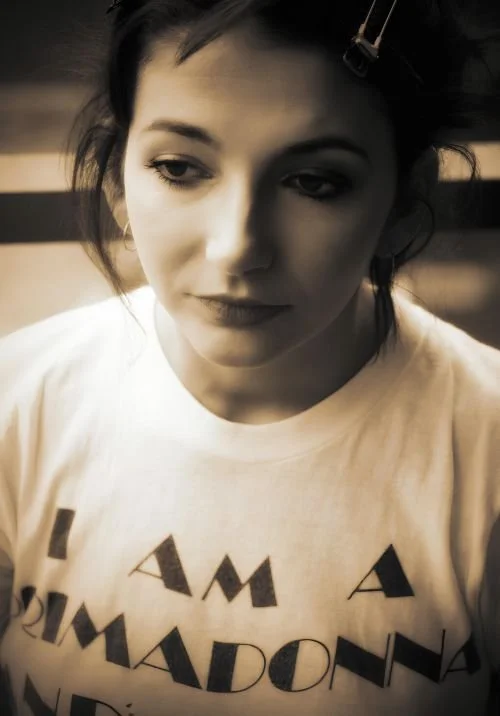
IN THIS PHOTO: Kate Bush in 1993/PHOTO CREDIT: Guido Harari
The Song of Solomon (The Red Shoes/Director’s Cut)
__________
I am sort of linking two things…

IN THIS PHOTO: Kate Bush in a promotional image for Director’s Cut/PHOTO CREDIT: John Carder Bush
together for this feature. I have written about Kate Bush’s Director’s Cut and its fifteenth anniversary. That happens on 16th May. I do wonder if there are Kate Bush songs that appear on two different albums that are practically unknown. The Song of Solomon originally appeared on 1993’s The Red Shoes. I have seen barely anything written about it. I want to explore some of the lyrics and the vocal performance from Kate Bush. I may have written about this song in some form previously. However, I do not think there have been standalone pieces about it. I have been searching. You can say that about a lot of Bush’s tracks. However, The Song of Solomon appeared on two albums. I am not sure if Kate Bush needed to reapproach it, as I think The Red Shoes’ version is wonderful. This is an album that divides people, yet there is a lot to love about it. In terms of the energy that runs through tracks like Rubberband Girl, Eat the Music, and The Red Shoes. I think the sequencing is odd. You go from highs to lows without too much balance. Rubberband Girl into And So Is Love to Eat the Music to Moments of Pleasure. Ups and downs there. I feel that The Song of Solomon is a gem that doesn’t get written about. Sandwiched between classics, Moments of Pleasure and Lily, I wonder if people forget about it because of those huge songs either side. It was not included on the setlist for 2014’s Before the Dawn. I wonder if the first three tracks on Director’s Cut were the three songs Bush wanted to rework the most. Flower of the Mountain, titled The Sensual World on the 1989 album of the same name. Bush got the permission to use text from James Joyce’s Ulysses that was a big reason she recorded Director’s Cut. The Song of Solomon is the track two. The Director’s Cut version is gorgeous and features the beauty and spark of Bush’s voice. Stripped back and perhaps more emotionally rich and emotive than the version on The Red Shoes, I do think that the original is starling and worthy of a listen.
I think that The Song of Solomon effortlessly sits next to Moments of Pleasure on The Red Shoes. They have a similar sound and sense of drama. I think the 1993 version is really lush and warm. It has this intensity to it. Raw emotions on display. On Director’s Cut, you retain some of that, though maybe Bush felt the production was a bit artificial or it drained something from the song. Interesting to see how she approached this song in 2011. One could argue it is a song that she liked. Suggestions that any song from The Sensual World and The Red Shoes not re-explored for Director’s Cut is one Bush loved and did not want to change. It could also be true she did not want to spend more time with the track. A mix of the two. I personally think that Bush loved The Song of Solomon and wanted to correct things that she was unhappy about. I have never heard The Song of Solomon on the radio. It seems that be one of these quintessential Kate Bush songs. In terms of her songwriting brilliance and its origin. Baby Bushka, who are an American tribute band who have covered Kate Bush’s songs, tackled The Song of Solomon. I will include it below this section of text. There are some players that feature on both versions. Facts Bush kept. The Trio Bulgarka providing vocals. They featured on some wonderful songs from The Sensual World and The Red Shoes. They are magnificent on The Song of Solomon. Danny McIntosh on guitar. The percussion switch is noticeable. Charlie Morgan and Stuart Elliott on the version from The Red Shoes. The legendary Steve Gadd adds new dimensions and brings something different from the song in 2011. Even if the 1993 version seems bigger and fuller, there are fewer players and elements. I was going to include Solomon in my Them Heavy People… feature and work around that. However, I do wonder why Bush chose this biblical figure. Solomon, son of David and Bathsheba, was the third king of Israel (reigning c. 970–931 BCE), renowned for his immense wisdom, wealth, and the construction of the First Temple in Jerusalem. As the last king of a united Israel, he brought great prosperity but later fell into idolatry due to his many foreign wives, leading to the kingdom's eventual division.
I am not sure why religion was especially on Bush’s mind for The Red Shoes. Not that religious imagery and iconography is all over this album. Lily name-checks Gabriel, Raphael, Michael and Uriel. Though Solomon is the title character but never named or mentioned in the song. Well, Bush does mention that this is “The Song of Solomon”. However, never explanation why that biblical figure or the relevance. Bush mentions “I’ll be Isolde or Marion for you”. Isolde (or Iseult) is the tragic Irish princess from the Arthurian legend of Tristan and Isolde, while Marion (Maid Marian) is the courageous, independent counterpart to Robin Hood. There is this mix of classic, poetry and wisdom with something quite bold and raw. Bush sings “Don’t want your bullshit, yeah/Just want your sexuality/Don’t want excuses, yeah/Write me your poetry in motion/Write it just for me, yeah/And sing it with a kiss”. I do love the intrigue of the lines “This is the Song of Solomon/Here’s a woman singing”. Almost Kate Bush casting herself in a fable, tale or something real and grand. I have heard the song over and over and am trying to get to the bottom of it. I cannot find interviews where Bush discussed The Song of Solomon. Reviews around The Red Shoes and Director’s Cut do not spend a lot of time with it. There are so many lines that I am stunned by and wonder what Bush is referring to. One example is “I’ll be the Rose of Sharon for you/I’ll do it for you/I’ll be the Lily of the Valley for you/I’ll do it for you”. In terms of streams, the version on Director’s Cut is more popular than the one on The Red Shoes, in the sense that it did well compared to the other tracks on the albums. The way Bush’s voice can go from being gentle and almost trembling to this full-bodied thing. When Bush sings “Just being alive/It can really hurt” on Moments of Pleasure, we get this similar sound and vocal affectation on The Song of Solomon.
I am going to end up soon. I do wonder if there are tracks from Kate Bush that have appeared on two albums – there are not many examples – that are pretty much anonymous. Big Kate Bush fans know about this song, but how many people away from that?! I think that The Song of Solomon is this gorgeous song that boasts amazing vocal work from Bush and the Trio Bulgarka. Perhaps the production is not as good as it could have been. I am not a musicologist or know much about what makes a good production. To my ears, The Red Shoes’ The Song of Solomon sounds atmospheric and epic in places. Bush might have wanted to remove some of the gloss or pare it down a bit. I do love the version on Director’s Cut, and I feel it is important to mention that album, as it turns fifteen on 16th May. However, I would recommend people go and listen to The Red Shoes and how it fits there. So many of the deep cuts miss out on wider exposure. The Song of Solomon is not something I suggest gets a viral moment. However, it is a track that could score a film or T.V. scene. I would love to see it brought to a wider audience. There is actually one article about The Song of Solomon I found whilst typing now and want to end with. In terms of reviews, The Song of Solomon was mentioned by The Quietus when they revisited The Red Shoes in 2018: “The steamy ‘The Song Of Solomon’, meanwhile, mixes a literary text and desire in the same way that ‘The Sensual World’ let Ulysses’ Molly Boom step off the page and experience physical pleasure. This time, there was no-one stopping Bush lifting lines from her chosen book, the Hebrew Bible, although the erotic charge of the chorus is all hers: “Don’t want your bullshit, yeah/ Just want your sexuality.” Music Street Journal observed this in their review of The Red Shoes: “As the mellower, artsy vibe brings this into being, it again feels more like the Kate Bush with which we're familiar. As her voice joins, that effect is augmented. There is a definitely an artsy vibe to this. The cut feels a little classical and also jazzy. This is a magical piece. It definitely stands far above the first three songs of the album. I'd consider this a highlight of the disc. It does earn a very minor parental warning depending on your tolerance level for the lyrics. I'm sure for most of us it's not an issue, but for some it might be”.
Whilst I was wondering what role Solomon played in this song and how the biblical figure figured into this song, the Financial Times spotlighted a gem and showed love for a track that is “A poem from the Bible’s most unusual book that takes the form of a duet between lovers”. It is good that at least there is one bit of focus and affection for an under-loved Kate Bush diamond of a song:
“Any biblical scholars listening in 2006 to Robbie Williams’ disastrous electro-rap experiment Rudebox (“career suicide” in his words) would have been surprised to discover, amid the album’s terrible raps and laboured Pet Shop Boys tributes, a passage of choruses lifted from the Old Testament. “Kiss me with your mouth/ Your love is better than wine,” Williams sings in “Kiss Me”. The song is a cover of a 1985 hit by Stephen “Tin Tin” Duffy and the reference is to the opening lines of “The Song of Solomon”: “Let him kiss me with the kisses of his mouth: for thy love is better than wine.” It is a suitably incongruous context in which to find the Bible’s most unusual book, “Song of Songs”, which has left a rich trail in pop music. “The Song of Solomon”, or the “Song of Songs”, is a poem that takes the form of a duet between lovers. The language is erotic, a symphony of allusions to touch, sight and smell. Lips resemble “a thread of scarlet”, tongues taste of “honey and milk”, breasts are like “two young roes that are twins”. (Perhaps you have to be an Aramaean shepherd to really get that last one.) As there is no mention of God, much exegetical energy has been spent trying to distance the verses from associations with “worldly” love. In Judaic tradition they are understood as an allegory of God’s love for the Jewish people. Christians treat them as an account of Christ’s love for the Church or God’s love for the Virgin Mary. But none of these pious interpretations can hide the simple truth about “The Song of Solomon”. It’s about sex. “Kiss Me” by Stephen “Tin Tin” Duffy A tasteful veil falls over its carnal nature in popular music, too. The crooner Perry Como adopted its alternative title in “Song of Songs”, crooning about a “night of bliss” amid the roses; sappy orchestral pop made the bliss sound as risqué as holding hands. The 1929 film Lady of the Pavements featured racy Lupe Vélez, the “Mexican Spitfire”, starring as a prostitute. In one scene she warbles the Irving Berlin-penned waltz, “Where is the ‘Song of Songs’ for Me?”, a romantic ditty in Hollywood’s tart-with-a-heart lineage.
To the Scottish poet Robert Burns, “The Song of Solomon” was “the smuttiest sang that e’er was sung/ His Sang o’ Sangs is a’ that.” Nick Cave, who balances a keen interest in smut with an equally keen interest in Christianity, has spoken of it having “a massive impact” on him, an entrée into a “world of pure imagination”. Leonard Cohen in 1979 © Getty Leonard Cohen’s work is deeply imbued with its sensual, mystical spirit. Yet Cohen carefully treads around “The Song of Solomon”. His poem “The Traitor” cast Solomon’s “black, but comely” female protagonist as a “sun-tanned woman” upon whose thighs Cohen lingers “a fatal moment”. Yet when he turned the poem into a song in 1979, a reference to Solomon’s “rose of Sharon” was changed to “the rose of high romance”, as though rejecting too insistent an influence. Its apotheosis in pop lies in Kate Bush’s “The Song of Solomon”. Released on her 1993 album The Red Shoes and revisited on 2011’s The Director’s Cut, the song is a masterpiece of desire. Harp and piano circle with seductive deliberation around Bush as she calls out to a lover, phrasing the word “sexuality” with such drawn-out longing it becomes a mini-song in its own right. She is accompanied by female voices, the Trio Bulgarka from Bulgaria, whose murmured chants add a numinous backing to her expression of physical yearning. In an aggressively sexualised culture, it sounds as calm and dignifying as devotional music”.
As Director’s Cut turns fifteen on 16th May, I wanted to use this as an opportunity to talk about as track that appears on that album originally from 1993’s The Red Shoes. Even if the original means more to me and I feel is better, the reversioned 2011 take is great too. I hope that more people listen to this track, as it is rarely discussed, played or really seen as one of her best. One for the diehards. On an album that is seen as one of her weakest (which could either apply to The Red Shoes or Director’s Cut), perhaps people skip by this. If many see this as inessential Kate Bush, I do think that The Song of Solomon is…
ACTUALLY a lot better than that.