FEATURE:
Remembering the Legendary Prince
Which Is His Best Album?
__________
IT might be impossible…
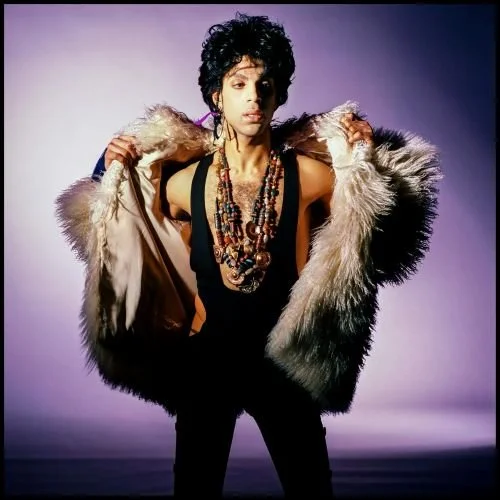
IN THIS PHOTO: Prince during the Sign o’ the Times photoshoot in 1987/PHOTO CREDIT: Jeff Katz
to narrow down to one Prince album. The one that is seen as his best. In terms of commercial performance and critical acclaim, I guess the likes of 1999 (1982) and Purple Rain (1984). He ruled the 1980s and was one of those artists that stood alongside other icons like Madonna. This really fertile, innovative and enduring time. Where massive Pop artists were releasing masterpieces and there wasd this enormously focus around them. Things have changed today, and we do not really have artists like Prince anymore. I don’t think that there is one album that you can say defined him. In terms of his best, of course that is subjective. I do think that there are objectively a few of his albums that stand above the rest when it comes to quality and significance. To me, I think his best album is 1987’s Sign o’ the Times. Turning forty next year, I feel everything hits the right notes. In terms of the cover and its design. Following up 1986’s Parade, and the first album since disbanding The Revolution, I want to go inside an album that I feel is Prince’s strongest. The reason I am assessing and revisiting is because we are approaching the tenth anniversary since his death. He died on 21st April, 2016. It was such a blow to his fans and the music world. The loss of a musical giant. I am going to get to some features around Sign o’ the Times. In 2020, the BBC provided an oral history of Sign o’ the Times. Releasing an album at a time when his stock was not as high as it was in 1984, there was a sense that he has to produce something better than Parade. The film it was a soundtrack for, Under the Cherry Moon, was panned and was not up to his standard. However, Sign o’ the Times was this sense of Prince hitting a peak and everything coming together:
“Recorded in 1985 and 1986, Dream Factory was a collaborative songwriting project with The Revolution's Lisa Coleman and Wendy Melvoin (Susannah's sister). Light and playful, it contained early versions of songs like Strange Relationship, external and Starfish And Coffee, external.
Wendy Melvoin [Guitarist, The Revolution]: "It was such a beautiful time of exploration."
Lisa Coleman [Keyboards, The Revolution]: "Sometimes the work was just work. But this? It was like kindergarten for songwriters. As musicians, as songwriters, we were a little bit nuts."
Matt Fink [Prince's keyboard player 1978 - 1990]: "I love all that Dream Factory material that he did with Wendy and Lisa. Songs like In A Dark Room With No Light, or All My Dreams. I loved the the throwback to the 1930s movie soundtrack vibe. It was like when Paul McCartney would write songs like Lady Madonna. An interesting departure for him."
Susannah Melvoin [writing on Facebook, 2017, external]: "Prince wanted me to come up with some ideas for the Dream Factory album artwork... which was originally The Flesh / Dream Factory. He chose my third attempt [which] has me opening the door to his dream world... or as it will be forever known 'The Dream Factory'."
Duane Tudahl: "Dream Factory would have been a great Prince and The Revolution album but he moved on from there."
The Revolution is over
On 17 October, 1986, Prince's publicist issued a press release announcing the dissolution of The Revolution. It began with a quote from one of Prince's all-time idols, Joni Mitchell.
Joni Mitchell: "He's driven like an artist. His motivations are growth and experimentation as opposed to formula and hits."
Susan Rogers: "Wendy and Lisa mattered so greatly to Prince - but they were really eager to stretch out and express what they could do musically, aside from Prince, so those tensions were there. And those tensions were exacerbated when Prince and Susannah became engaged, because it seemed to be tying Wendy with an even stronger chain to Prince, whether she was going to remain in his band or not.
Duane Tudahl: "Wendy and Lisa weren't fighting Prince - they were fighting to stay with him. I don't think they had intentions of leaving. But I think once he realised that they could leave, he got protective and said, 'I'm not going to allow you to hurt me, I'll hurt you first.'"
Matt Fink: "I tried to dissuade him [but] he didn't want to listen to me. I stayed friends with all of them, obviously, but it was a difficult time."
Robyn Riggs [Prince's publicist, speaking to the Associated Press in 1986]: "It was mutual as far as I understand it. He's coming up with something different. Nothing's definite at this point."
Duane Tudahl: "You want to lose a friend, ask for money... The unfortunate thing is they deserved it [because] what they were bringing to Prince was almost incalculable. They were making 800 bucks a week. That's no money."
Prince [singing on Rebirth Of The Flesh, recorded days after firing his band]: "It isn't about the money, we just wanna play."
Wendy Melvoin: "Once we were gone, he turned into a different person. And that's the nature of who he was. He became someone else in every phase - and the previous phase would disappear."
Forever in my life?
In November 1985, Prince moved into a yellow, three-storey mansion in Galpin Boulevard, Minnesota, with Susannah Melvoin. She had designed the house and its dedicated recording studio while he was in France shooting Under The Cherry Moon.
Susannah Melvoin: "Wendy and Lisa and I lived together and we would have [Prince] stay at our place. We became really close. He got to be in a family of three women, and we got to have our Prince. Not many people had that kind of relationship with him."
Prince [speaking to MTV in 1985]: "One thing I'd like to say is that I don't live in a prison. I haven't built any walls around myself, and I am just like anyone else. I need love and water. I don't really consider myself a superstar. I live in a small town, and I always will. I can walk around and be me."
Susan Rogers: "In the studio there was this rich, deep royal purple carpet, and on the back wall of the control room Susannah Melvoin had designed these stained glass windows. When the setting sun would come in at the end of the day, we'd have these beautiful prisms on the floors. It was really gorgeous."
At this point, Prince and Susannah were engaged, and several of the songs on Sign O' The Times discuss their relationship. Among them is the love-struck devotional Forever In My Life, which Prince recorded twice in August 1986.
Duane Tudahl: "The first take sounds like a heartfelt demo that a guy's playing on acoustic guitar. Just strumming it for his love."
Susan Rogers: "The very first version is a young man, expressing the kind of sentiment he might on his wedding day. He sounds happy and optimistic. The version that ended up on the album is more serious. This is a tone that says, 'Yeah, I think I'm going to do this and it'll be hard.' It's a more mature perspective."
The BBC is not responsible for the content of external sites. YouTube content may contain adverts.
End of youtube video by Prince - Topic
Robyn [pop star / fan]: "I don't know if you know the story about how the background vocals happened the way they did? He recorded all these vocals and something went wrong - so when you listen, the background vocals sing the lyrics before the lead vocal does. That was a mistake [but] he ended up keeping it because he really liked it. The unexpectedness of those backing vocals makes it a little bit like it's coming from a subconscious place."
Another song about Susannah was If I Was Your Girlfriend. In the lyrics, Prince imagined being her platonic best friend - and gaining access to her most intimate secrets.
Susan Rogers: "Being Wendy's twin sister she's very close to Wendy. It was a way of asking, 'Why can't I have the closeness you have with your sister? Why can't we be friends, too?'"
Alicia Keys [pop star / fan]: "If I Was Your Girlfriend - come on, man, how are you going to write that? It is so exact - you can hear a guy thinking like that. 'Man, maybe I'll never be as close to her as her girlfriends are... So could I be your girlfriend?' It's deep man. He was so profound, so prolific”.
I am going to move to this article, that takes us inside Sign o’ the Times. Prince’s insiders discuss this timeless album that many see as the greatest of all time. It is this staggering double album with no filler tracks. It could have been a mess or come across as bloated. However, I do feel that it is such a consistent album where every track is essential:
“A lot of musicians end up doing the same song over and over. Sign O’ the Times sounds like nothing he’d ever done before,” Prince archivist Duane Tudahl says. “It is staggering.”
“Tell them that!” he exclaimed. “We need to bring it up to the industry standard!”
It wasn’t the first or last time Prince leapt to his feet during our hour-long talk, but it was his most emotional. Sign O’ the Times (Super Deluxe) is a glorious remaster transferred from the analog master tapes, including B-sides, alternate versions, wholly unreleased songs and a live show. The outtakes aren’t leftovers; they are polished, fully realized prime-era Prince. They just simply didn’t make the album.
“If an element doesn’t fit, the element goes away,” Tudahl says. “That’s amazing self-discipline: ‘I have three hits on here, but they don’t fit the tone.’”
Melvoin got to revisit that prolific period of time when she, her sister Wendy Melvoin and Lisa Coleman were Prince’s go-to musicians.
“It’s been a really interesting time because it has enmeshed me in a period of my history that was kind of weird—all sorts of experiences,” says Melvoin. “It wasn’t just work. On an emotional level, on a personal level, there was a lot going on at once.”
Prince’s finest love songs—“Forever in My Life,” “Adore” and “Nothing Compares 2 U” among them—were written for Melvoin. She even shares a rare co-writing credit on “Starfish and Coffee,” a song about her childhood friend Cynthia Rose, but with no royalties. Money talk “starts rifts, and I don’t think any of us wanted to start it,” she says.
Sign O’ the Times started as a double album called Dream Factory, and evolved into the triple-disc, 23-song, unreleased album Crystal Ball.
“I grew up when albums came out every three or four months. I wanted to make a lot of music,” Prince said in 2004. However, Prince’s label, Warner Bros. Records, hated it. Too long, too expensive. Too much Prince.
“Crystal Ball was something he loved. He was super tapped-in to the part of himself that he wanted to share,” Melvoin says. “When he turned that record in, Warners didn’t like it. It was way too long, and they didn’t respond to the music. He was not happy about that in the slightest.”
Thus the seeds were sown for Prince’s eventual ’90s uprising, that led to the legendary name-change and “slave” talk. He left Warner Bros. to be a trailblazer and sell his own music online.
“My life got real serious there for a second, getting out of the record industry. You have to realize that I was told I couldn’t leave. Excuse me? What did you say?” Prince said. “With the mergers and revolving door of executives, it was like musical chairs or something.”
Going online was a risk, but he was confident. “It’s almost like hearing a weather report and knowing it’s going to rain. You can tell people and they either believe you or not.”
Warner Bros. had put great faith in him early in his career, but wavered as the years went on, despite the many millions of dollars his work had earned the company.
“It just means they weren’t enlightened enough or had the same faith that I had. If you love somebody, you should always love them,” Prince said. The downside, he added, was, “You’re just worried how you’re going to get out of this and not look like exactly what I eventually ended up looking like—this spoiled, pampered baby.”
Jesse Esparza, a Prince uber-fan since he was a child, has become a close confidant of Wendy, Lisa and Susannah. Like most fans, he’s thrilled to see what’s in the vaults. He sees this as a continuation of Prince’s determination to release as much music as possible.
“He always found a way,” Esparza says. “That’s what was so exciting about being a fan. He’d find a way to get as much music to you as he could. We literally knew every year that there would be a new album.”
Otherworldly Creativity
“It’s almost an otherworldly creative energy that was in abundance in this time,” Melvoin continues. “Who has this profound period in their lives where they’re in love, working, being creative, establishing a future and being involved with the most profoundly creative artist?”
Tudahl is archivist for the Prince estate, going through thousands of hours of music to meticulously research what’s in there; he first attracted the attention of the estate due to his exhaustive research for his book, Prince and the Purple Rain Era Studio Sessions, 500-plus pages of details.
“Every day I’m humbled. Every day I’m blown away to have a small piece of his legacy,” Tudahl says. “He was always about music, even when he wasn’t recording music. I didn’t realize how much he recorded until I did the book. The entire month of September of ’83, he was in the studio every day. Then he did a tour, he’s recording concerts all the time, then he’d be in the studio with Sheila E., recording all the time. He’d record the soundcheck, then record the concert, then record in the studio, then fly out to the next show. He did the work of five people”.
The BBC asked in their 2020 feature whether Prince’s Sign o’ the Times is the greatest album ever. There would be an argument for that, though I can appreciate Prince fans might see other albums as his best. If you have not heard Sign o’ the Times before, then do go and check it out:
“So much of Sign O’ the Times tells the story of Prince changing and searching. Part of the way through its creation he sacked most of his band The Revolution, with whom he had conquered radio and MTV. His relationship with his fiancée also ended. This incident in particular birthed perhaps the most sought-after unreleased song of all: Wally. It’s a song in which Prince laments a failing relationship by singing to his confidant and bodyguard at the time, Wally Safford.
The story of why Wally was never released has made fans ache for decades. Prince had recorded the ballad, engineered by Susan Rogers, only to demand that she erase the track. Rogers refused and asked him to sleep on it. Undeterred, Prince turned up all the faders on the console and hit the record button, destroying the song and his outpouring of grief. Rogers describes the incident as “heartbreaking”, the sense of loss evident in her voice as she tells the story all these years later. Prince did walk out of the session with a mono cassette of the mix, which, officially at least, remains lost to this day.
A second version of Wally recorded a few days later is featured on the new release. When Rogers heard it recently she describes it as “same song, different attitude”. “The original Wally was a cry of pain,” she explains. “It was vulnerable and just beautiful. But he didn’t like showing weakness. Even having a cold or flu was something he didn’t want to admit to. In this version of Wally, he’s saying ‘I’ll be fine’. That’s not the Wally I remember.”
Regardless of any individual track omissions and the online gripes of some Prince ultra-fans who believe Sign O’ the Times: Deluxe should feature an even more extensive track list, the scale of this new release is monumental. Duane Tudahl, senior researcher for the Prince estate, describes the process of assembling a new version of what many fans consider the holy grail of Prince albums. “We went through everything we could find for this period. It took a year of hard work, focus and dedication. We lost sleep. We wanted it to be so right. The chronology of the track list aims to match when the songs were recorded. It’s his story, about being in love or being angry or being spiritual.”
Indeed, the first of the vault tracks on this release is a jaunty, hyperactive 1979 version of I Could Never Take the Place of Your Man, recorded a year after Prince released his debut album and eight years before Sign O’ the Times came out. Susan Rogers explains that both I Could Never Take the Place of Your Man and Slow Love had extended gestation periods. They were songs that Prince took out of his vault and updated when deciding on a track list for Sign O’ the Times. Not only did Prince assemble an album from the bank of material recorded in 1986 going into 1987, he also borrowed from his own history.
‘A singular talent’
The result was 16 songs that many consider to be the greatest album of all time, although greatness is, of course, subjective. As Duane Tudahl laughingly points out: “There are some Prince fans who will say Sign O’ the Times isn’t even Prince’s greatest album!”
The impact and longevity of a record, however, can help separate great from merely good albums. Eric Leeds believes Prince changed the trajectory of pop music. “I would put a Ray Charles record or a James Brown record on that list,” he tells BBC Culture. “People talk about Sgt Pepper. Think about impact. Of all of those icons of the ’80s, Prince was the most remarkable musician. Madonna or Michael Jackson are not in the same league as even the most basic version of Prince. I can’t imagine how pop music would develop from the ’80s onwards without Prince. Take Madonna and Michael out of the mix and not that much would change.”
The new, expanded Sign O’ the Times presents glimpses of a parallel purple timeline, which invites the world to reassess what this work means.
“Music and culture are a living dynamic,” says Susan Rogers. Perhaps we are yet unable to adequately draw conclusions about the impact of the album and of Prince more broadly. To this day he is remembered by many as a pop star. Sign O’ the Times and its expanded deluxe incarnation make a compelling case for Prince as a leviathan multi-instrumentalist, composer and songwriter. There is more range on the original album and on the deluxe edition than most pop stars explore in their entire careers. There are powerful invitations to dance, meditate on the carnal and to find God. The songs are consistently brilliant: it is a vision of an artist searching for gold – and finding it.
Rogers suggests that 33 years after its original release, Sign O’ the Times still has something new to tell us about the greatness of Prince. “Van Gogh was not considered particularly creative in his lifetime. It was future generations that made reassessments. Then these people were seen as geniuses. The idea of ‘best’ or ‘greatest’ is recreation. It’s a prize at the fair. What is more important is ‘will something stand up?’ My hunch is Sign O’ the Times will. It exemplifies the work of a singular talent at his heights”.
I am going to end with this GQ feature from 2017. Turning thirty a year after Prince died, many were looking at Sign o’ the Times with new eyes and ears. How Prince’s death affecting the listen and meaning of the album. GQ heralded a masterpiece and said “This postmodern magnum opus obsessed with sex, death and faith remains a milestone of 1980s culture – and Prince's ultimate legacy”:
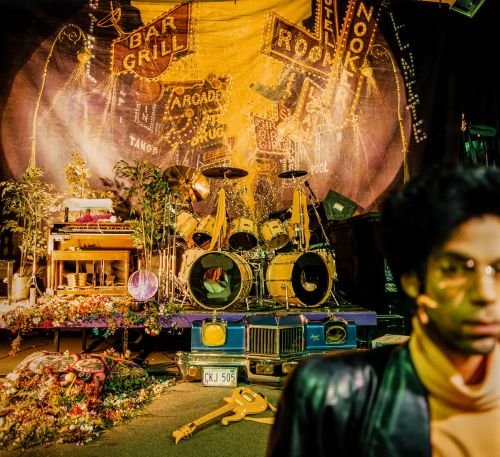
“It is not a concept album, but more like a piece of postmodern architecture, reflecting how 1980s styles converged in a distinctive and sometimes brazen new way in art, design, film and TV. The album cover was suitably mysterious, with only part of Prince's out-of-focus face in the foreground and a seedy stage behind, the drums perched on an old Pontiac Grand Prix, everything in peach and black (his designated colours for the project). "Prince looks at all his music, in his whole life, as a movie, and everybody who's involved with him on whatever level is a character in his movie," said Eric Leeds.
It is easy to forget that this was a major album by one of pop music's biggest global stars, not some experimental outrider. What was the competition? Rick Astley? And 1987 was the year the wheels came off pop music in Britain, with adverts driving a rash of tired Sixties soul rereleases. In the US the big beasts remained, but more troubling for Prince was the start of house music and the proliferation of hip hop.
After Sign O’ The Times, in striving for freedom, he found himself trapped in a prison of his own making
The bludgeoning libido of The Black Album was recorded then ditched immediately after Sign O' The Times, its reputation as a great lost album undermined once it was heard in full. Prince supposedly abandoned it because he thought it was "evil". It seems he was being overwhelmed by the weight of his own concupiscence and complained of a spirit called "Spooky Electric" amid rumours he had himself been spooked after a bad experience with ecstasy. His tenth official album, Lovesexy, was him turning away from the darkness and into the light. He was never quite the same again.
Prince always had an uneasy relationship with hip hop. He felt threatened by it, both as a style that would overrun his territory and as a sign of his own vulnerability and age. He regularly turned down requests for permission to sample his older work, his attitude determined by his religion, commercial paranoia and an increasingly eremitic existence in Paisley Park. "Some of these acts I really dig but I don't want my music used that way," he said in 1997.
Can it be coincidence that, as so often happens to great men, the retreat to Xanadu brings about a kind of madness in which awestruck acolytes exist only to serve – to bend to the will and whim of their master – and that the achievements of the past become impossible to repeat? That's not to say Prince was a tyrant, but that, after Sign O' The Times, in striving for freedom he found himself trapped in a prison of his own making. By the late Nineties it seemed Prince wasn't quite Prince any more. He was like a Japanese soldier, still fighting the last war.
Susan Rogers says, "Prince was smart enough, as a young man, to know that he'd need to let people in if he wanted to have a long career, so he did it. But, to the outside world, he appeared as a big enigma."
What is left is art and art endures. At his induction to the Rock And Roll Hall Of Fame in 2004 he said, seemingly unaware of the irony, "Too much freedom can lead to the soul's decay." Then he went on to not just steal the show but take it, frame it and mount it on his wall with his embarrassingly brilliant guitar solo on "While My Guitar Gently Weeps".
By today's standards, Sign O' The Times may seem a cold album. But all things being cyclical, Prince and the plastic, superficial 1980s followed the sincerity of folk-rock and the ideological purity of punk. In this context, Prince was the successor to David Bowie, in that the art and artifice were the point. Heart for heart's sake was not an issue. It was the ideas that mattered. Now we value emotional nakedness above all else, in a culture where workaday honesty is judged to be "real" while around us songs, radio, TV and films become reflections of Facebook status updates.
He was different then and he's different now. He is just different. And Sign O' The Times is as wondrously, deliciously different as he ever got. Prince believed he was engaged in a cosmic war between good and evil, but for us his most important fight was against an evil somewhat closer to home. The evil of banality. Thankfully, he won”.
On 21st April, we remember Prince a decade after his death. He is this artist that will never be equalled. In terms of his workload, talent and what he achieved. We will never see anyone like him again! I asked what his greatest album is. Everyone will have their own opinions, though Sign o’ the Times comes top for me. I wanted to show love for Prince’s…
1987 masterpiece.