FEATURE:
Spotlight
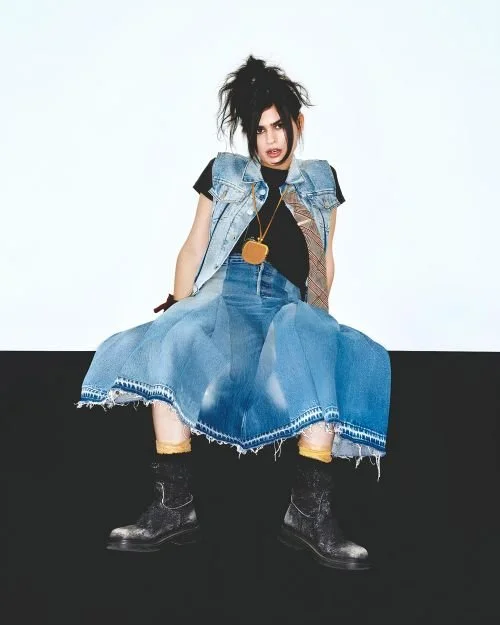
this artist is not new on the block, I feel underscores can still be seen as a rising talent. The moniker of April Harper Grey, she just released the extraordinary U. One of the most interesting, original and brilliant Pop artists in many years, this is a period where underscores is building her fanbase and being discussed as among the finest and most promising artists of the moment. I am going to end with a review of U. I will come to some interviews before that. However, here is some brief background of underscores. If you have not heard her music yet then you will do soon enough. So many people talking about underscores as a major name in the making:
“Origin stories reenact familiar myths; this one begins with a kid alone in a bedroom, trying to make something no one has heard before. Hailing from San Francisco, Filipino-American artist April Harper Grey started making music as underscores in middle school, when years of noodling around on GarageBand culminated in the realization that, if taken seriously enough, this whole “trying to be like Skrillex” thing might amount to something great.
For years, underscores released a steady stream of one-offs via SoundCloud, which endeared her to like minded artists and a burgeoning community of fans, but it wasn’t until 2017, with the release of EP skin purifying treatment, that the project stepped out of its solitary origins and began to capture the attention of a much larger audience. In 2021, underscores released the debut underscores album, fishmonger, which was written and recorded in that same childhood bedroom amidst the COVID-19 pandemic.
That collection launched underscores from recording vocals in a car to opening for 100 Gecs on the U.S. leg of the 10,000 Gecs tour. Before hitting the road, underscores released yet another collection, boneyard aka fearmonger, a collection of seven tracks that manages to sound like both the climax of and the morning after the craziest night of your life. On the heels of 10,000 Gecs, the first underscores mini-tour sold out in NY, LA, Chicago, and underscores’s hometown of San Francisco. Since then, underscores has played Lollapalooza’s Main Stage, Electric Forest, FVDED in the Park, and Corona Capital CDMX”.
I want to start out with one of the most recent interviews with underscores. NME. The Hyperpop artist spoke with them abut her escapist and phenomenal Dance-Pop gem, U, “amid industry pressures and the trappings of fame”. I am not sure whether she is planning on coming to the U.K. There are a strong of U.S. tour dates coming up, though I wonder whether there will be some dates here anytime soon:
“As a child, April Harper Grey didn’t play with toys. Instead, she had two main obsessions. The first was hotels: six-year-old Grey would pore over interior design books, and when she visited her grandparents in New York, her grandmother convinced the Hotel Gansevoort to let them peek inside a room. “That was one of the best days of my life,” she grins.
The second was her father’s computer. She’d create YouTube videos and mess about on GarageBand, eventually starting a small dubstep project called Underscores aged 12. Now 25, Underscores has become one of the biggest names from the online hyperpop community thanks to her 2021 debut ‘Fishmonger’ and 2023’s ‘Wallsocket’. On her upcoming third album ‘U’, she’s blending all the sounds from her last two albums to create an escapist “pop bible”.
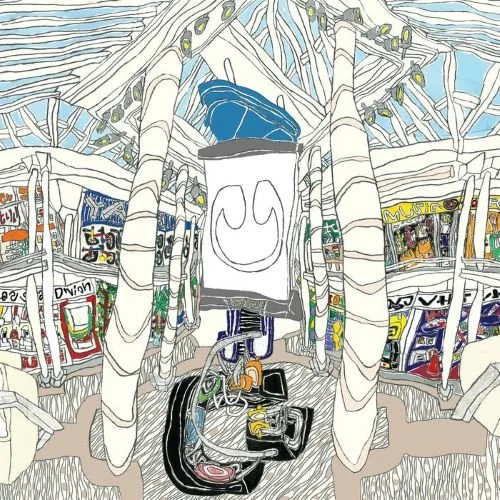
‘U’ was written among the hoi polloi of megamalls, ritzy hotels and posh airports, as Grey attempted to “connect with what I was feeling really inspired [by] as a six-year-old”. “I knew at some point I would make a project that made sense in this fluorescent, consumerist architecture,” she tells NME. “I don’t want to glamorise this kind of architecture, but it has always inspired me since before I knew what its connotations were. And I don’t know – I like the luxurious vibe right now.”
When we spoke to Grey last year for The Cover, she was basking in the success of ‘Wallsocket’ and its intricately woven narrative. Since the record’s release in 2023, Grey has toured with EDM legend Porter Robinson and contributed to fellow Cover star Oklou’s breakout debut album, ‘Choke Enough’. Grey’s albums even revived Danny Brown’s love for electronic music, going on to collaborate with the rapper for his last album, ‘Stardust’. But despite these milestones, she told NME at the time that she was “fucking terrified” of making music, worried she was “going to constantly let down” her fans.
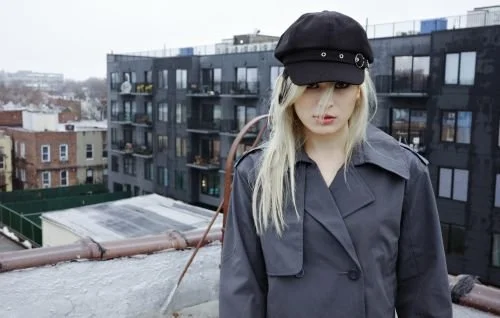
PHOTO CREDIT: Bailey Krawczyk
Exhausted from the labyrinthine lore of ‘Wallsocket’, Grey wrote ‘U’ – a self-titled of sorts, combining elements of her past albums to create a defining “thesis statement” on Underscores’ M.O. There’s storytelling, but no story, leaving Grey all the energy to indulge in her favourite pop sounds: “This time I wanted to focus on the music, because that’s what people come here for the most.”
The singles released from ‘U’ seem to establish a quintessential Underscores sound. Over a juddering, jackhammer bass, Grey coos on the cheeky but sincere ‘Music’: “Last night, I had a wet dream ’bout the perfect song”. It’s no surprise, then, when she reels off Jane Remover, 2hollis and Osamason as equally inspiring as Brandy, Britney Spears and Justin Timberlake while making ‘U’.
eing a popstar has always required some level of financial and reputational power, and on ‘U’, that relationship doesn’t go unnoticed. Grey playfully assumes the role of a celebrity negotiating a hookup on ‘Do It’ (which NME named one of the best songs of 2025), telling their prospective partner: “I’m tryna run a business here – come on, babe”. But they retreat from the relationship, justifying that they’re “married to the music”. Clearly, there’s more to marriage than just love.
Grey has consistently satirised the rich and the famous, even years before her come up as an unknown 21-year-old on ‘Fishmonger’. On one level, her fascination with celebrity culture was a form of wish fulfilment – “that’s where I saw myself, and I was confident about that,” she admits – but it also comes from a darkly psychological place. “I’ve always scrutinised myself like I was famous. I’ve always been like, ‘someone’s gonna pick my life apart to pieces someday, so I need to prepare for that’. But obviously some of that is some mental shit.”
Grey might be a star in the underground realm, but ‘U’ makes clear that being in that position isn’t all it’s cracked up to be. On ‘Spoiled Little Brat’, her biggest hit from ‘Fishmonger’, Grey proudly professes: “I get what I want”. Now, album opener ‘Tell Me (U Want It)” sees her backtrack: “I get what I want and then find out right after I get it, I don’t even want it”.
“‘Wallsocket’ was super conceptual, but it was still very personal – this feels more like I’m telling you upfront”
“I do think my relationship with making music has changed after being able to do it for a living,” Underscores professes. “There’s 10 other jobs that you have to do along with your dream job – which I’m perfectly fine with, but it does sometimes suck the fun out of it a little.”
Grey could choose to become complacent and pump out left-field dance-pop hits. But culture moves fast, and she predicts pop will experience a “twee revival” in three years’ time, citing artists like Brat Star as examples (think The Moldy Peaches, if they were “Bladee at the same time”).
“I think the true Kimya Dawson twee is impossible for our generation to access because we’re just so ironic and self-aware, but I do think some attempt to get to this millennial twee will result in something new,” she estimates. Grey says she plans to become a hipster when that happens: she’ll go to bars, get into speciality coffee, maybe make a record reflecting her new life. For now, she’s going to savour the glory of ‘U’ and its full-circle vindication of hyperpop – just not for too long.
“I started [Underscores] when I was 12, and it’s gone through a lot of iterations over the years,” Grey tells us. “I tried to encapsulate as much as I could of [my] previous music, but I’ll probably switch up again after this – I tend to wring the sonic identity of each album dry until there’s nothing left. Then, I’ll move on”.
A couple of other new interviews before I get to a glowing review of one of the best albums of the year. Wonderland. explored how underscores mutates with each album. Always remarkable but never the same, this is an artist constantly evolving, questioning and searching. In terms of what U represents, Wonderland. muse that this is underscore’s “unadulterated pop era”. Such an exciting time for an artist primed to blow up very soon. Already she has this loyal fanbase, though U will see a lot of new people come her way:
“November 2025’s “Do It”, a second glimpse at the forthcoming LP, took April’s budding pop-fanaticism to a new acme. The choreography-heavy video would make Britney herself proud. Sonically, it borrows from K-pop and hyper-pop – amplified by January’s remix with Korean rising star Yves – fusing crowd-pleasing sheen with something sharper and more knowingly sexual. She interrogates her subject’s finances, their car, and if they like rough sex, before dismissing them entirely: she’s married to the music. For 25-year-old April, it reads as more than a sonic pivot, but a playful flex of sexuality and self-possession.
From the early SoundCloud-era electronic productions to the raw indie experimentation of her 2021 debut record fishmonger, to her second full-length, Wallsocket, a complex and challenging concept album, galvanic and restless jumps in April’s artistic core are nothing new. Much of this coming album’s shift in style lies in a stripping back of her creative process – embodied by the short, sharp song titles, and the use of a singular letter as the album’s title. “I liked the idea of doing a self-titled [project], but I don’t know if I’d call an album ‘underscores’,” she explains. “But I got obsessed with the idea of calling itU.”
The work is a trimming of musical indulgence and a decluttering of technical complication. It’s made in its entirety by April alone – from the writing to the production to the mixing and mastering. Because “my biggest tenet right now is to do it myself even if it’s a worse product. Like – this is as much from mybrain as it could be. If people don’t like my voice or they don’t like the production or the videos, at least it was all from me. At least I was being earnest.”
Much of the work was written nomadically, as she toured with DJ/producer Porter Robinson in the spring and during a stint supporting her mercurial collaborator Danny Brown at the backend of 2025. “Usually if I’mon the road, I don’t make music at all. I just wait until I get home to make everything,” she says. “But there’ve been many times where I didn’t know why I wasn’t just making music on the road. My setup has gotten way simpler: I reverted back to a [Focusrite] Scarlett interface and an SM7B [microphone] instead of anything too fancy, just because it’s easy to bring around and it’s rugged. It’ll survive in my backpack.”

PHOTO CREDIT: Brendan Wixted
A group of songs that she’s proud of but now feels difficult to revisit, April’s previous album Wallsocket is a dark and daring descent into the crevices of middle America. It was made in a “pretty good time” in her life, but “when things get good, that’s when philosophical thoughts start creeping in. You start asking, ‘Why am I here?’” U flips this instinct. Written against a more anxious world, it rejects the idea that profundity must equal heaviness. There’s power in lightness. In pleasure. In escape.
“Art has served different purposes for me over my life,” April says. “But there are certain times when people really want to escape into something and be out of the world for a minute. And I definitely feel that right now. On [Wallsocket], I wanted to reckon with the world through art. Whereas with [U], there feels like a need to step into something nice to be in, and that doesn’t make you feel bad about existing in the world. You don’t have to always ask these big questions; sometimes you just want something nice to put on.”
April’s soon-to-be-shared third album completes a trifecta tapestry of taste and influence that feels wholeheartedly unique in tone and approach. To listeners, the trilogy forms a shapeshifting tapestry. To her, they’re branches of the same tree. “Each project has a different sound, world, geographical location or architecture,” she murmurs, as if thinking aloud. “But I don’t know, for me it almost feels like I’m kind of making the same album every time. Taking another crack at the same thing and getting closer.”
Closer to what?
“I don’t know,” she contemplates. “Some kind of perfect package.” The search for artistic enlightenment is endless, and for April, defining her own version of pop stardom is the current driving force. Making music that’sboth inspired and inspiring is one thing, but bigger forces are at play. Mr Boyle, for instance. Aqua Dots, too – small plastic beads she once ate as a child and survived to tell the tale. But mainly, eyebrows.
“I wish more people would ask about my eyebrows,” she sighs.
Really? Why?
“Because I want to make a statement. We’re in a thin eyebrow – or no eyebrow–apocalypse. These,” she gestures to her thick, dark brows, “need to come back.”
You heard it here first. Vive la revolution!”.
The final interview I want to highlight is from CRACK. They open by saying (of U) “Inspired by the synthetic gloss of airports, hotels and shopping malls, underscores’ latest album… transports her glitchy electro-pop to liminal, urban spaces where dreams and waking life coalesce”. I am quite new to underscores. However, it only took a couple of songs from U to make me realise all the praise and proclamation are very much justified:
“Her lyrics on U – exploring love, desire and consumerism – feel playful and tongue-in-cheek, delivered in pitch-shifted vocals or quiet whispers. Even at its most polished, the record doesn’t abandon Grey’s signature experimentation. If U is a pop bible, then it’s one with flickering lights and scuffed edges. Its maelstrom of ornate hyperpop textures collide as Grey constructs feelings of confused desire from grating percussion, pixelated ripples and Auto-Tuned vocals.
" I wanted to be a little more shameless with this record. It feels way more luxurious”
Elsewhere, digital artifice is offset by the raw reproduction of ‘real-world’ sounds. The album ricochets from the brash confidence of opener Tell Me (U Want It) to the soft vulnerability of chiming synths that mimic the sound of plucked strings on Lovefield. Album closer Wish U Well merges wistful, strummed acoustic guitar with electronic intercom beeps, radio static and dial tones.
There is an ambivalence on this record that feels like a departure from the teen angst of her previous outings. “Now that I’m 25, I just want something that’s nice to be in and escape to,” she says. “I wanted to be a little more shameless with this record. It feels way more luxurious.”
Throughout underscores’ music, there is this tension between fantasy and reality, shame and desire. She is enjoying inhabiting this silver-plated dream of commercial perfection for now, using it as a canvas to stretch the limits of her pop imagination.
To Grey, hyperpop might feel more “designer” now, but her music still carries the messy, maximalist spirit of the internet music scenes she grew up with. Her sound shifts unpredictably, like moving through interconnected rooms in a recurring dream, following curiosity down strange hallways or across sprawling terrain – then, upon waking, striking out with total clarity”.
Let’s end with a review from The Guardian for U. Perhaps the greatest and most memorable work from underscores so far, you know this artist will continue to grow stronger and put out sensational work. Not that the Pop scene is repetitive or lacking standout artists. However, it is clear that artists like underscores are more compelling, richer and stand out more than many of the biggest mainstream Pop acts:
“There was no getting around the heavily-caffeinated pop thrills provoked by her best work, but while Wallsocket was bombarding you with distorted guitars, stammering vocal samples, dive-bombing brostep basslines, honking rave electronics, nu-metal riffs, heaving shoegaze textures, gunshot sound effects, vintage video-game bleeps, drums that split the difference between dancefloor pulse and the double-time thunder of hardcore punk, and vocals alternately delivered in a bratty drawl or a full-throated, heavily distorted scream, there were definitely moments when you wished Grey might consider the wisdom of the old adage about less sometimes being more.
Maybe she has done. No one is going to call the contents of U a masterclass in opaque subtlety. In the first few minutes alone you get fizzing EDM synth noise, vocals that are heavily AutoTuned and cut up, the sound of a DJ backspinning a record, plunges into silence punctuated by laughter, and booming drums dosed with reverse echo over which Grey repeats the title of opening track Tell Me (U Want It) in the kind of hoarse menacing whisper with which teenage campers tend to be addressed in horror films, shortly before the owner of said whisper impales them with a garden implement. Notice is thus served that we’re still dealing with an artist with a thing for maximalism and overload.
But nonetheless, a certain degree of paring back has taken place. U sounds substantially less hair-raising than her previous work, perhaps as the result of a distinct musical shift. The emo/punk influence is more-or-less absent: a faint suggestion of it lingers around the chugging rhythm of Bodyfeeling and The Peace, the latter a song you can somehow imagine set to distorted guitars, rather than its beatless, Imogen Heap-ish assemblage of sampled voices. Instead, U’s musical north star seems to be late 90s/early 00s R&B, the fertile, experimental period dominated by Timbaland, the Neptunes and Rodney “Darkchild” Jerkins. You can pick out echoes of the era everywhere, from the bright, No Scrubs-y acoustic guitar samples that weave through Hollywood Forever and Wish U Well, to the staccato vocals of Music and the spare, bumping rhythm of Innuendo (I Get U) to Do It’s grinding synth blare, a distant, noisier relation of the sound that powers Justin Timberlake’s Sexyback.
Grey certainly isn’t the only artist to look to that genre, in that era, for inspiration, but her take on it works incredibly well: further tricked out with AutoTune-overloaded vocals, dubstep electronics, beats that keep changing gear into speedy pop-house and chattering acid lines, it feels entirely modern, resolutely not a retro recreation. Moreover, dialling her sound down at least a little reveals more clearly how skilled a pop songwriter Grey is, something it was easy to overlook amid the aural bombardment of her past work. A genuine auteur – everything on U was written, performed and produced by her – you find yourself musing that Bodyfeeling or Do It are the kind of songs other pop artists would happily pay vast teams of professional songwriters vast sums of money for.
The lyrics too feel a little dialled down compared to her previous work. The story behind Wallsocket was so complex that its construction apparently required the use of flowcharts and whiteboards – or “some corkboard detective shit”, as Grey put it – but here the songs stick pretty fast to the theme of love, albeit expressed via some winningly original conceits. The Peace charts the progress of a relationship through a series of shared cigarettes; Hollywood Forever and Do It wittily ponder the topic of dating while at least moderately famous: “Am I in your playlist?” demands the latter. “Do you have Spotify?”
It would be nice to suggest that dialling everything down from 11 has resulted in an album that could shift April Grey from the realms of the moderately famous – a critically acclaimed artist deep in pop’s leftfield – towards a more mainstream kind of stardom. But trying to predict those shifts is a fool’s errand in 2026, and, besides, perhaps she’s happy where she is, entirely in charge and working to her own plan. It’s a plan that appears to be coming off: U is certainly a more interesting, accomplished and better-written pop album than most major pop artists have dished up of late”.
I am going to leave it there. Go and follow underscores and listen to U. There are a lot of fans in the U.K., so it would be wonderful it she played here at some point. The musical alter ego of the compelling and hugely inspiring April Harper Grey, I wonder what the rest of this year holds for her. After some American tour dates, perhaps there will be thoughts of more music or new dates announced. U is rightly being hailed as this modern masterpiece. You cannot argue with that. Those Pop artists who are stagnating, lacking real flair and distinction, really do need to…
FOLLOW her lead.
__________
Follow underscores