FEATURE:
Groovelines
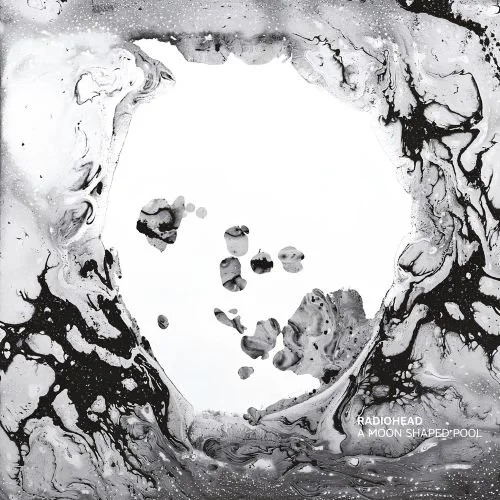
Radiohead – Burn the Witch
__________
ON 8th May…
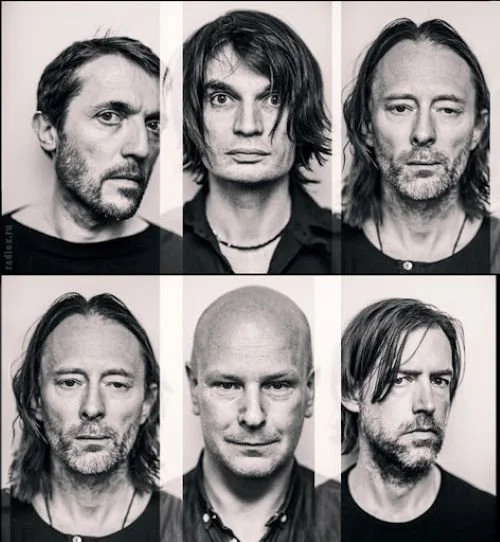
PHOTO CREDIT: Alex Lake
Radiohead’s most recent album, A Moon Shaped Pool, turns ten. Its lead single, Burn the Witch, was released five days earlier. To mark a decade of this powerful single, I wanted to explore it more for this Groovelines. Radiohead worked on Burn the Witch during the sessions for their albums Kid A (2000), Hail to the Thief (2003) and In Rainbows (2007). Thom Yorke mentioned the song in a 2005 post on Radiohead's blog and posted lyrics in 2007. On 3rd May, 2016, the world got this first taste of a new Radiohead album. The video for Burn the Witch is even more striking than the song itself. I will come to reviews of the single. To start, this Medium article provided some background to Burn the Witch; a song that had been in the making for a while:
“Radiohead spread Inklings of “Burn the Witch” in 2003 when the song’s title appeared on the cover artwork of Hail to the Thief, reports one Radiohead fan website. This, of course, means the song was in development as early as 2002 when the cover artwork for Hail to the Thief was painted by Stanley Donwood, Radiohead’s longtime album cover artist and college friend of frontman Thom Yorke. According to a 2006 article published in The Guardian, Donwood’s main concept for the album artwork came from various roadside advertisements in Los Angeles, though he did have some additional input from a mysterious collaborator called “Dr. Tchock,” a name many believe is a pseudonym for Thom Yorke.
Over the next five or so years, the band released more teasers of the single, posting excerpts of lyrics, short blog updates from Thom York regarding the status of the song, and even playing snippets of the intro at a few live shows. After 2008, however, it seemed that the trail had gone cold– until May 1, 2016, that is.
Just three days ago on May 1st, fans were shocked to discover that Radiohead had effectively erased their Internet presence. The band’s website was whited out, and all posts from the band’s social media accounts were deleted, including posts on Thom Yorke’s accounts. On Saturday, April 30 some fans reportedly received bizarre leaflets in the mail featuring artwork, the Radiohead logo, and the cryptic message, “Sing the song of sixpence that goes ‘Burn the Witch.’ We know where you live,” Billboard reported on May 1. While many suspected an imminent announcement, for the time being it would seem that Radiohead had dropped off the face of the earth.
Finally, on May 3, the culmination of thirteen years of waiting resulted in a claymation music video posted to Radiohead’s official YouTube channel featuring the single “Burn the Witch.” Rumors are spreading about a ninth studio album to be released later this year, but so far nothing is confirmed”.
You can get a sense of what the song is about when you hear it without a video. However, it is the video that visualises the powerful messages. The Guardian published an article in 2016 where they analysed the video. We live in a time when there is huge anti-immigrant sentiment. Burn the Witch seems more relevant now than it did in 2016:
“The animator of Radiohead’s Camberwick-Green-meets-The-Wicker-Man video for Burn the Witch has suggested the clip might have been a commentary on Europe’s refugee crisis.
In an interview with Billboard, Virpi Kettu said the band may have wanted to increase awareness of the issue, especially “the blaming of different people … the blaming of Muslims” that leads people to want to metaphorically “burn the witch”.
Kettu also referred to the postcard sent to Radiohead fans bearing the words: “We know where you live,” which she suggested reflected the insecurity promoted by politicians demanding a clampdown on the movement of refugees.
However, Radiohead – never ones to be second-guessed – appear to be damping down speculation. Billboard’s interview with Kettu is headed with a disclaimer insisting: “The opinions expressed in this article about Burn the Witch do not necessarily reflect those of the band, the video’s director or any of the band’s representatives.”
As of Thursday morning, the Burn the Witch video – launched at 4pm BST on Tuesday – had chalked up more than 6.6m views on YouTube. Using animation in the style of the Trumptonshire trilogy, the children’s animations made between 1966 and 1969 and set in an all-white, happy rural England, the video portrays a community where paranoia and rage go hand in hand with bucolic peace – the clip ends, seemingly, with an outsider being burned alive in a giant wicker man.
Kettu said the clip took two weeks to make from start to finish, with the team producing an average of 30 seconds of animation per day, compared with the 12 seconds that was typical when she worked at Aardman. She only learned the video had been released on Tuesday, the same time as the rest of the world”.
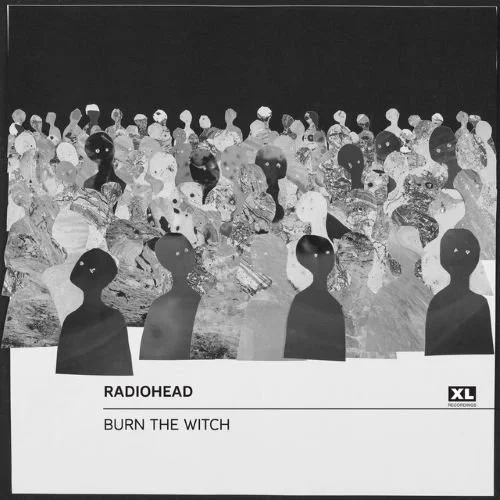
There are a few more things I want to include before wrapping up. For All Songs Considered, NPR spoke with Radiohead’s Jonny Greenwood. They labelled A Moon Shaped Pool as Radiohead’s “quietest” record. That said, Burn the Witch has a tension, terror and sense of drama that is maybe not reflected across the album:
“A Moon Shaped Pool, Radiohead's ninth and quietest record, owes much of its sound to the band's visionary guitarist, violist, electronics wiz and arranger Jonny Greenwood. On this week's All Songs +1 podcast I talk with him about how A Moon Shaped Pool came to be.
Jonny Greenwood explains that Radiohead approaches each record with a different recording style or new technique. For this latest record, the group traded in "traditional Pro Tools" for an analog 8-track tape machine. "It's kind of a miracle," he says. "This is going to sound very conceited, but it's a surprise to me how well so many of these songs came out and the one or two frustrations I have are nothing compared to the eight or nine key things I'm just amazed we got good recordings of. We all feel really lucky and happy to have this as a record."
Greenwood on why Radiohead changes its process with each album:
"I guess it feels like every record we make, we finish and have a collective thought that we didn't quite mean to do it like that and the next one will be different and then we'll get it right. It's kind of like rewriting the same letter and getting each draft slightly wrong. So it's a good motivation force — it keeps us going."
On why he loves recording string sections:
"Our string days are just the most exciting days to record. I live for them. It's amazing, the whole excitement in the morning of putting out music on these empty stands and, you know, an orchestra are coming later that day and you'll only have them for four hours and you've got to make the most of it. It's really just the most exciting thing and then to sit in a room and hear them play it's really like nothing else".
There are a couple of reviews I want to get to. The Guardian provided praise for a song from a band who put out their first new single in about five years. It was a big moment when Burn the Witch was released in 2016. A Moon Shaped Pool received a huge amount of praise. I wonder how people will assess the album a decade after its release:
“And finally the first music arrived. What seems to be the first track from Radiohead’s new album was launched on their website on Tuesday afternoon, accompanied by a video featuring animation in the style of Bob Bura and John Hardwick, the creators of Trumpton, Chigley and Camberwick Green. Burn the Witch had been trailed on Instagram, but the brief clips didn’t give much clue as to what music we might expect. But what arrived was thrilling – a burst of taut, tense music, driven by pizzicato strings, that had more in common with conventional rock than some hints had led us to believe – Brian Message, from their management firm, had claimed the new album will sound “like nothing you’ve ever heard”.
The rest of the album would have to be very different indeed from Burn the Witch for that claim to be true. Because Burn the Witch is like nothing you’ve ever heard only if you’ve never heard a rock band use a string section whose members have been ordered to convey brooding menace, or a two-chord pattern, or a voice jump to falsetto over a vaguely euphoric chord. There’s even a refrain – though Thom Yorke’s wailing admittedly lacks the kind of immediacy you get in the choruses of singles by, say, Olly Murs – in which the brooding menace descends into fully-fledged did-you-ever-hear-anyone-so-moody art rock.
As one might expect, then, Yorke hasn’t been raiding the poetry of Pam Ayres for songwriting inspiration: “Stay in the shadows / Cheer the gallows / This is a round-up,” he opens. The lyrics appear to be skirting around the surveillance society, but equally they might be meditating on the difficulties of open discussion in an age where thought is scrutinised and policed by the public itself on social media, where any idle thought runs the risk of seeing one condemned as #problematic: “Loose talk around tables / Abandon all reason / Avoid all eye contact / Do not react / Shoot the messenger / This is a low-flying panic attack.”
The dissonance between the pretty conventional music – no electronic skronk here, nothing to scare off the crowds at their festival headline slots this summer – and the mood of incipient dread is heightened by the video, in which it becomes apparent that the band haven’t remade Trumpton, but The Wicker Man.
The intriguing question now is whether this foreshadows the new album, or whether Message was right. It’s certainly the kind of return – bold and expansive, as well as dark and claustrophobic – that the world might have hoped for”.
I am going to finish off with this review for Burn the Witch. Radiohead played shows in the U.K. and Europe last year. Their first since 2018. They recently announced how they are playing a lot more from next year on. There is talk whether there is going to be another album. Will A Moon Shaped Pool be their final album together? It will be interesting to see where they head, musically and lyrically, if there is another album:
“Brisk strings attack the ears from the start. The musicians are using a technique called col legno which traditionally involves hitting the strings briskly with the back of the bow. But according to Jonny Greenwood, they are using guitar plectrums to do it. This is very Radiohead: do something almost unheard-of to create something brilliant.
So you prepare yourself for an orchestral piece. But this being Radiohead, it’s only a few seconds before a strange electronic texture joins underneath and then what seems like a voice that has been sampled and sped up to create a weird, slightly disturbing, strangely beguiling or comforting ‘eerrrrrr’ sound. Whether the drums are programmed or actually played by Phil Selway is unclear – they have also been affected in some subtle way.
Thom Yorke starts singing, warning us of the dangers of standing up for what’s right and what’s just. Don’t stand out, scream along with the crowd at the persecuted innocent, for fear of being singled out yourself.
There’s a variety of phrases used that evoke the time of witch-hunts:
Cheer at the gallows
Red crosses on wooden doors
If you float you burn
And my particular favourite, Yorke sings earlier on:
Sing a song on the jukebox that goes…
The witch-hunts are going on today, as well as in the past. Later, he changes it to:
Sing the song of sixpence that goes…
Considering Radiohead have made some of the most unsettling rock music of the last 20 years, Thom Yorke’s voice is an extraordinarily beautiful instrument in its own right. Here, this beautiful, angelic voice narrates a horror film, and when it gets to the economic chorus, his voice soars to the heavens as he sings “burn the witch” twice.
The second time he sings it, he adds syllables to it that makes it less recognizable but more affecting. He follows it with:
We know where you live
Just in case you were still thinking of speaking out for what’s right.
During the choruses the strings become more traditionally played in order for the arrangement of the song to keep you on your toes. At the end of the second chorus, the strings take over, building to an urgent, shrieking crescendo before an abrupt stop.
Radiohead have long been purveyors of the problems in society. With “Burn the Witch,” they managed to get a flawless balance of lyric, mood, and delivery that is as listenable as it is unsettling. The lyrics are a nursery rhyme, the arrangement is uneasy, queasily leading you to a worrying conclusion without answers.
The song would be enough without the video using the visual style of a beloved UK children’s TV program. With it, the outcome is one of the best collective artistic endeavors of the last 20 years.
“Burn the Witch” is urgent, catchy, different, and brilliantly conceived. It’s up there as one of Radiohead’s greatest moments”.
Radiohead themselves faced criticism for not condemning Israel and genocide. Seen as supporting the country. They issued a statement later to say they would never play in the country again. I do think they lost a lot of fans and respect for their initial position. However, no matter what you think of the band and their politics, there is no denying how their music is among the greatest ever released. On 3rd May, it will be ten years since Radiohead released Burn the Witch. It is a chilling masterpiece that is among…
THEIR greatest songs.