
FEATURE:
Come Into My World
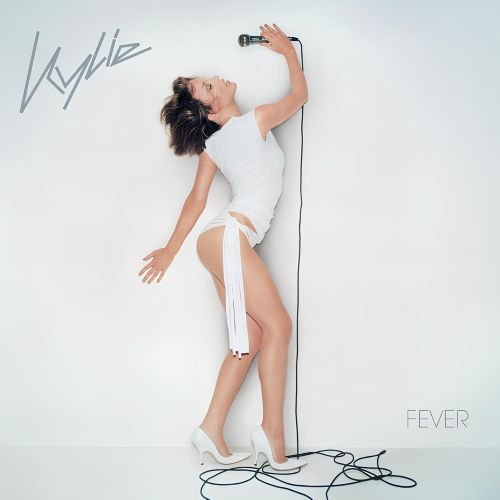
Is Kylie Minogue's Fever One of the Most Underrated Classics Ever?
__________
SOME might say…

PHOTO CREDIT: Vincent Peters
that Kylie Minogue’s 2001 album, Fever, is a confirmed masterpiece. One of the most commercial successful and popular albums of the 2000s. It is exciting this year, as Fever turns twenty-five on 1st October. Its lead single, Can’t Get You Out of My Head, is twenty-five on 8th September. Reaching number one in the U.K., this song confirmed the continued relevance of Kylie Minogue in the twenty-first century. After the success of 2000’s Light Years, Fever was this remarkable follow-up. Can’t Get You Out of My Head was written by Cathy Dennis and Rob Davis. I will come to some reviews of Fever. In spite of the fact Fever contains some of Kylie Minogue’s best songs – including Come Into My World, In Your Eyes and Love at First Sight -, there were some critics who were cold and mixed towards the album. Come Into My World will gain new focus as it soundtrack the CHANEL 25 Handbag Campaign. Starring Margot Robbie (with direction by Michel Gondry and Kylie Minogue appearing), the iconic and stunning video for Come Into My World is recreated. You can read more about the campaign here. I cannot understand any of the apathy towards this Fever! Maybe 2001 was a strange year for Pop. Fever was released a few weeks after the 9/11 attacks. There was a sombre mood. Realising Can’t Get You Out of My Head came out three days before the attacks. In spite of quite a few positive reviews, there were some mixed ones. I feel Fever is one of the best Pop albums ever. It should have won five-star reviews across the board. It is a faultless album where the deep cuts are superb too. In terms of the videos for the singles too. It was this incredible period for Minogue. On Metacritic, Fever has a score of 68/100. I know it is a faulty metric, as it does not include every review. Even so, that is a remarkably low score for an album that was a massive worldwide success. In terms of its legacy, I am going to source Wikipedia and their page about the legacy of Fever:
“Fever is considered to be a prominent example of Minogue's constant "reinventions”. The image she adopted during this period was described by Baker as "slick, minimalist and postmodern", and it was seen as a step forward from the "camp-infused" tone of Light Years. Larissa Dubecki from The Age used the term "nu-disco diva" to describe Minogue during this period. Andy Battaglia from The A.V. Club opined that Minogue's public image and her persona in her music videos "presented herself as a mechanical muse whose every gesture snapped and locked into place with the sound of a vacuum seal". He further remarked that the singer's "hygienic coo summoned a cool sort of cyborg soul, and her videos showed her gliding through sleek futurescapes, tonguing the sweet-and-sour tang of a techno kiss"
Adrien Begrand from PopMatters felt that the simplicity of the album made it a "classy piece of work" and commented that Minogue's experience and choice of collaborators resulted in "the thirtysomething Minogue upstaging soulless, brainless music by younger American pop tarts like Britney [Spears] and Christina [Aguilera]". Robbie Daw from Idolator pointed out that Britney Spears's recording of her 2004 hit "Toxic", Madonna's comeback album Confessions on a Dance Floor (2005), Paris Hilton's musical debut Paris (2006), and radio stations' shift towards playing "more groove-oriented sounds" all followed the release of Fever, although he mentioned that "we have no way of knowing whether [Fever] was directly responsible for these pop happenings". Nick Levine from NME ranked Fever as the greatest album of Minogue's career, noting "the project’s effortless confidence and strength in depth."
I am going to bring in some of the reviews that were not completely effusive. In terms of influence, you can feel Fever resonating with artists such as Dua Lipa and Sabrina Carpenter. This is what The Guardian opinioned in their review of Fever in 2001:
“Let us imagine we have travelled back in time. It is September 1991. Your hair is hanging either side of your face in the currently modish "curtains" style. Your jeans are the handiwork of Joe Bloggs. You chuckle at the Mary Whitehouse Experience and worry that Bryan Adams's Everything I Do (I Do It for You) will be number one for the rest of your life. That aside, you goggle with excitement at music's future. Primal Scream's Screamadelica has just been released. So has Nirvana's Nevermind. The Happy Mondays' Pills 'n' Thrills & Bellyaches is seldom far from your CD player. The second Stone Roses album should arrive soon. The world is one of boundless musical possibilities.
But what if you were told that Primal Scream were about to stall, Kurt Cobain would be dead in three years and the Happy Mondays and Stone Roses would never make another decent record? How would you react to the suggestion that all those bands would be commercially outlived by Kylie Minogue? That in 10 years' time, the British media would be speculating not about Sean Ryder, but whether the Australian pop moppet's 33rd single would be another number one? You'd laugh so hard, your heat-sensitive Global Hypercolour t-shirt would turn a virulent shade of puce.
Back then, it was impossible to believe that Kylie Minogue was a harbinger. Before Kylie, female pop stars were tough R&B singers, squeaky pubescents or Madonna. Minogue was different: antiseptically sexy and curiously devoid of public personality, the puppet of all-powerful producers and songwriters, a media celebrity first and singer second.
If Minogue seemed lost during Britpop - her eponymous 1997 "indie" album flopped - she fitted in perfectly when Oasis's appeal faded. Camp, disposable pop, performed by antiseptically sexy media celebrities, the puppets of all-powerful producers and songwriters, now has a stranglehold on the charts. British music has come round to Kylie's way of thinking.
Her recent battle with Victoria Beckham has even afforded her artisitic credibility. Critics have fallen over themselves to garland her eighth album Fever and bash Posh's VB. One broadsheet proclaimed Minogue "a genuine artiste" discovering "a muse of her own". It's easy to see how judgments have become distorted. Compared with Beckham's malnourished R&B, Fever sounds as experimental as Captain Beefheart jamming with Can. Remove Posh's album from the equation, however, and you're left not with a challenging work of art, but a polished, radio-friendly pop album and a sense that some journalists should calm down a bit.
Fever is written and produced by a crack team of pop songwriters. Their motley ranks include former Mud guitarist Rob Davis, 1980s starlet Cathy Dennis and erstwhile New Radicals singer Gregg Alexander, still at large in society despite contributing to Geri Halliwell's last album. Their work here is startlingly slick, a combination of house beats, fashionable electronic effects largely borrowed from Daft Punk, and choruses designed to lodge in the brain after one listen.
Like Robbie Williams's songs, the tracks on Fever are big on easily digestible pop references. Love at First Sight features the same stuttering disco samples as Stardust's number one Music Sounds Better with You. Give It to Me sounds like Moloko. The lyrics of In Your Eyes cheekily tip a wink to Minogue's comeback hit Spinning Around. You can easily picture any of Fever's 12 tracks in the current top 10. A backhanded compliment, certainly - the current top 10 is hardly overburdened with works of musical genius - but you can only marvel at Fever's money-making efficiency.
Nevertheless, the album is not without flaws. The relentless four-to-the-floor beats eventually become numbing. Minogue's voice, meanwhile, is devoid of emotion. Her videos may flash acres of flesh - Minogue publicly exposes her buttocks with the fervour of a rugby-club drinking society - yet her actual records are curiously unsexy. A robot could deliver the lyrics to the come-hither title track more passionately.
But perhaps such criticisms are beside the point. No one buys a Kylie Minogue album expecting grit and passion. Complaining that Fever is soulless and manufactured is like complaining that Radiohead are kind of mopey. It's a mature pop album only in that it's aimed at the boozy girl's night out rather than the school disco. Mercifully, however, it has no pretensions to be anything else. Audibly packed with hits, Fever achieves exactly what it sets out to achieve. The odds on Kylie Minogue's career long outliving 2001's critically lauded rock bands must be as minuscule as the lady herself”.
I will come to some more respectable opinions. Fever is undeniably one of the biggest and most successful albums of the 2000s. I disagree that there is too much repetitiveness or lack of invention. Some truly iconic songs and videos. This is what SLANT wrote for their review of an album that I first in 2001. I was pretty much starting out at university:
“It’s a shame that Australia’s Kylie Minogue was sent back to the land of mindless dance-pop after the critical and commerical disappointment of 1997’s experimental Impossible Princess. The result was 2000’s Light Years and, now, the terminally cheesy Fever.
The album’s first single, the aptly titled “Can’t Get You Out of My Head,” has already topped the charts in 22 countries and is set to invade brains this side of the Atlantic. Co-penned by former dance pop songstress Cathy Dennis, the track is cheeky, soul-sucking fun, its la la la’s waiting and willing to lodge themselves in your psyche. Similarly, “In Your Eyes” and the bleepy “Give It to Me” are contagious potential club hits.
A trio of tracks take their titles from older, more famous songs; the neo-disco shuffler “More More More,” the campy “Fever” (“Hey doctor, just what do you diagnose…So now, shall I take off my clothes?”), and the acoustic guitar-infused “Burning Up” all make one yearn for their older, superior siblings (by Andrea True Connection, Peggy Lee, and Madonna, respectively). Minogue’s chirpy coos leave much to be desired and her articulation is painfully precise on tracks like “Love Affair”; what should be playful and sexy is often rendered mechanical and hollow. Armed with 10 producers, you’d think Minogue would be able to serve up something a little less monotonous”.
Before ending with some positive reviews, there is a promotional interview with The Guardian - who were happy to praise Kylie Minogue when they interviewed her and talk up Fever, but they also overlooked and almost dismissed it when they reviewed it! -, that is quite insightful. It was a whirlwind time for Minogue:
“She's here today to promote her eighth album, Fever, and what will be her thirty-fourth consecutive UK hit single, the hypnotic 'Can't Get You Out of My Head'.
Kylie knows it's good. With the previous album - her first for her new label, Parlophone - she was struggling to re-establish herself as a pop princess after a relatively disastrous period working with credible rock names such as The Manic Street Preachers. When the first Parlophone single, 'Spinning Around', went to number one last year, she cried with relief. But this time, there's just a quiet confidence.
'I feel like I'm on a wave and I actually know how to stand on the board at this point,' she says. 'I feel quite solid. I don't know where it's taking me, but everything feels really good.'
She's 33, and she's been famous for half her life. We talk about the way she'll turn on and 'become' Kylie. 'You have to,' she says. 'There's no way you could maintain that all the time. If you get up and do a Saturday morning kids show, you don't wake up and be that person. You go, you get ready, and 20 minutes beforehand, you start to become... It's no different to anyone else. I go to work as well.'
Her close friends don't call her Kylie. They call her Min. She says she sometimes feels guilty about those friends - how others get smiley Kylie, and they have to settle for grumpy Min. When you're always performing, she explains, 'home is the only place you can have a long face and really mope about'.
I point out that stroppy pop stars are the norm, that we like our celebrities to have attitude and angst. But Kylie is a trouper, an old-fashioned professional who believes that the show must go on: 'Perhaps I'm more old-school than my years in that respect. It's just where I came from, working in TV, where it's not about you, where you don't get anything done without everyone else.'
Kylie was 11 when she appeared in her first TV soap, 17 when she left school and entered our living rooms as the feisty mechanic Charlene in Neighbours . We've watched her grow up - making shiny, infectious production-line pop for Stock, Aitken and Waterman's south London Hit Factory, ditching the froufrou frocks for sleeker, sexier clothes, and finally taking control of her music as well as her image by leaving the SAW stable and signing to hip dance label DeConstruction.
Frequently derided in her early career, she has now become something of a national treasure, sitting next to Prince Charles at a charity dinner one night, hanging out in cool clubs the next, equally at home on the covers of Vogue and Smash Hits. We've seen her change her looks, change her music, change her boyfriends, change her record label (three times), reinvent herself. But through it all, Kylie has been careful to keep a little mystery back. Part of her appeal is that she has always been something of a blank canvas, a screen on which we can all project our Kylie fantasies.
This is why so many big-name artists and photographers agreed to contribute to her 1999 art-book, Kylie. Why designer Patrick Cox recently told Vogue: 'She's a living Barbie doll. All gay men want to play with her, dress her up, comb her hair.' Why there barely seems to be a band, songwriter or producer in Britain who hasn't clamoured to work with her at some point.
If you ask her about them, she will tell you about her relationships with Michael Hutchence and later with the photographer/director Stephane Sedanoui, but she tends to tell the same anecdotes each time. She has decided exactly how much to reveal. 'I'm aware that you have to give so much, because if you make yourself unavailable, people want it so much more. It's a very fine line. You have to hand over some of your private life, but pretty much the same stories get rehashed. People want to know if you've got a boyfriend, who he is, what he does.'
Her current relationship is with James Gooding, a 26-year-old model who has no interest in being part of any Kylie media circus. Which is why she is unwilling to talk too much about him, beyond saying that they are happy together. 'As far as being able to keep a lot of my private life private, I don't use any of that to exploit my career, and in a very subtle way, I think, the media understands that,' she says.
What she does enjoy talking about is the technicalities of her job. About how, in her last tour, she descended from the roof on a dazzling silver anchor that was actually 'a bit of MDF with shiny sticky-backed plastic on it'. After one of the London shows, the fashion designer Matthew Williamson came backstage wanting to know how she'd managed the frequent fast costume changes. They happily discussed press-studs and poppers and how she'd walk calmly to the side of the stage, then be enveloped by frantic dressers trying to strip off her outfit and fit the next one, like mechanics in a Grand Prix pit stop. 'I could have talked for ages about it,' she says, 'because here was someone who understood.'
Similarly, on another night a friend from the film world asked about the barely visible harness fixing her to the anchor. 'The rest of the world went away while I talked about how the harness was made in LA and was only two inches wide. These things are major triumphs in the show - you have no idea how many hours were spent talking about the harness, safety regulations, how we'd disguise it.'
Her last tour was a camp extravaganza, with elaborate choreography, glitzy costumes and sets straight out of a Fifties musical. Kylie has never seemed more at ease on stage. 'I will always be a bit camp. I call it being a showgirl, because what we call camp is what used to be called showy. Marilyn Monroe and Jane Russell doing their Gentlemen Prefer Blondes kind of thing. And I still happen to be a big fan of it.'
Australians tend to be good at this kind of unabashed homage - take Baz Luhrmann's new film, Moulin Rouge , an energetic, Technicolor tribute to classic musicals and contemporary pop in which Kylie makes a short but memorable appearance as the green absinthe fairy. A huge fan of Luhrmann's work, Kylie was thrilled to be part of it. But then she tells me about seeing it for the first time, and you see that her new confidence is still mixed in with the old self-consciousness.
She'd flown out to Los Angeles for the premiere the day after her tour finished. Even though her part is brief, she says, 'I was just so nervous'. She knew that a lot of people involved in the project were sitting in the row behind her, and since they'd already seen the film, she thought they might be looking at her instead, to gauge her reactions. So she sat rigid throughout, taking none of it in. 'I was too scared to do anything. It's like when you're starving and you look at a menu and you can't focus on anything - I just wasn't completely there.'
She gets sent a lot of bad film scripts. 'And I've made really bad choices as well, but you learn that way.' Among the bad choices was the 1995 film-of-the-computer-game Streetfighter, and Bio-Dome, an unbelievably awful 1998 film starring Pauly Shore, who at the time seemed like America's next comic genius. Kylie claims she's never even seen the finished film. 'You know how with parents, you can do something that's not so great, and they'll tell you they loved it? My dad said, "I can't believe that you did that. That was just diabolical!" So I never watched it.'
At the age of 19, Kylie suffered what she now calls 'a kind of mini-breakdown'. Her schedule on Neighbours was punishing. They filmed all week, and then at weekends the younger cast members would plaster on their smiles and make appearances in shopping malls across Australia to boost the show's ratings. After she'd been ill, her dad sat her down and said, 'You can say no and the world's not going to fall apart. You don't have to please all these people.' She revisits those words from time to time. 'Saying no has never been that easy, but I'm starting to get better at it.'
She has always worked hard, in the belief that she'd eventually reach a point where things would get easier, but she's finally starting to see that success doesn't work that way. 'You actually have more opportunities available to you, so you have more things to say no to.' So she's starting to rethink. 'At the moment work's great, everything's going great, but I need to find more balance in my life. What am I doing all this for? Am I going to keep doing this till I'm 50? I don't know. I'm at this odd place where I couldn't wish for more in my career”.
There are a couple of features to illuminate. Stereogum wrote about Fever on its twentieth anniversary in 2021. I wonder whether Kylie Minogue will release an expended edition of Fever closer to its twenty-fifth anniversary on 1st October. I do genuinely think it is one of the most underrated albums ever. One that has influenced so many artists and has epic singles and these incredible album tracks:
“By 2000 she was resurgent. Minogue adapted to the Y2K-era global pop landscape on her seventh album Light Years, which critics hailed for introducing disco-pop to a younger crowd with a sophisticated edge. Light Years topped the Australian albums chart and became the design that launched Minogue toward her 2001 statement album. Fever would be the definitive release of her career, a euphoric metamorphosis so compelling that Americans couldn’t ignore it -- including me.
Before discovering that the foundations of disco were originated by queer Black artists during the 1970s, as a child, Fever was my second taste of the genre. (Ironically, my first was another Fever from Down Under: the Saturday Night Fever soundtrack by fellow Aussies the Bee Gees.) When I saw the Fever album cover on a promotional billboard outside my local, now-defunct Virgin Megastore, I was hypnotized by its minimalism and Minogue’s smoldering, icy gaze; like the song says, it was love at first sight. As a young Black girl who regularly opted for early-2000s hip-hop and R&B, Minogue was the first white artist I remember listening to unapologetically. While dance and electronica were worlds away from the genres I was used to, Fever opened my ears to a spectrum of experimental soundscapes from early-2000s international dance acts like Daft Punk, Jamiroquai, Basement Jaxx, and Röyksopp.
Though repetitive at times in production and lyrical content, Fever was an ultra-sleek turn into the wonders of millennial pop futurism. The aesthetic was best reflected by Fever’s rhapsodic lead single "Can’t Get You Out of My Head," the song that sent the dance-pop world into Minogue mania. Co-produced and co-written by former Mud glam-rock guitarist Rob Davis and British pop singer-songwriter Cathy Dennis, "Can't Get You Out of My Head" began in Davis' garage-turned-makeshift studio in South East England. They initially offered it to former British pop group S Club 7 and indie pop singer Sophie Ellis-Bextor, both of whom passed on the demo. It thus serendipitously landed on Minogue, who wanted the song within 20 seconds of hearing it.
Balancing in-your-face ubiquity with a more elusive seduction as it built to an infectious "la la la" refrain, "Can't Get You Out of My Head" launched Minogue into icon status. The song became her biggest hit in the US since "The Loco-Motion," peaking at #7, and her bestselling single overall, with worldwide sales of over five million copies. The visual for "Can’t Get You Out of My Head" looked just as glossy as the song sounded -- Minogue's razor-sharp jawline stole the show alongside robotic choreography by an army of clones with cutout tops that would give Mean Girls' Regina George a run for her money.
There was more where that came from. Veering towards discotheque futurism, Fever arguably made Minogue the global queen of nightclubbing. Opening track "More More More" throbbed with a rapturous, tech-y hotline tone and a deep house bassline courtesy of British producer Tommy D. Second track (and third single) "Love At First Sight" pulsated with an adrenaline rush of optimism as Minogue cooed about passionate reverie. The title track was an alluring, flirtatious escapade that brought the steamy album cover full circle.
Breathy vocals ran rampant throughout Fever, notably on the lush, nearly-inebriated sounding "In Your Eyes" and "Come Into My World," which won Best Dance Recording at the Grammys three years later. (It was released as a single in November 2002, placing it within the eligibility window for the February 2004 ceremony.) "Come Into My World" was a follow-up collaboration between Davis and Dennis, who spun it out into a hallucinogenic disco utopia, paving the way for releases decades in the future like Dua Lipa's Future Nostalgia”.
I am finishing off with Classic Pop and their incredible feature. I want to include their track-by-track guide to a classic. I am baffled by any reviews that were less than glowing and rapturous! There was definitely some misogyny in some of them. The media not respecting this Pop titan. Even if one or two songs are not as strong as the best moments, Fever has plenty of range and diversity to keep the listener engaged and engrossed from start to finish:
“1. More More More
Fun, frothy and flirty, More More More sets the agenda for the rest of the album. Spiritual brethren of the dirty disco of Andrea True Connection’s risqué track of the same name, the house-inflected opener, written and produced by Tommy D, sees Kylie at her most alluring. Very much capturing the carefree abandon of disco in its lyrics, the production gives it a modern twist.
2. Love At First Sight
Co-written by Kylie, Love At First Sight is a standout on the album, one of her personal favourites and a regular highlight of live shows. A breezy ode to the feeling of being in a new relationship, the song is elevated by its state-of-the-art dance production which evoked recent hits from Daft Punk, Modjo and Stardust’s Music Sounds Better With You. Released as the third single from Fever, Love At First Sight reached No.2 and became her third ever US hit.
3. Can’t Get You Out Of My Head
Thirteen years into her pop career and Kylie scored her biggest hit. The track saw Minogue embraced by the dance world, not only for the song in its minimal electro form, but in various remixes – the most popular of which was Erol Alkan’s mash-up of the vocal over the backing track of New Order’s Blue Monday, which was a staple of his sets at celebrated club night Trash. Kylie took the mix mainstream when she performed it at the BRITs in 2002. Stuart Crichton created an official remix of the track for the B-side of Love At First Sight.
4. Fever
Written by Greg Fitzgerald and Tom Nichols, Fever’s title track is a departure from the dance-pop sound that dominates much of the album, instead being an updated electro track inspired by the New Romantic sound of the early 80s. Lyrically, the song’s tongue-in-cheek flirtation between a ‘lovesick’ Kylie and her doctor gives it an air of ‘Carry On Kylie’, a narrative brought to life on ITV’s An Audience With Kylie, in which she performed it in a campy doctors and nurses scenario before an audience of bemused-looking celebs.
5. Give It To Me
Fever’s weakest song, Give It To Me’s hard electro-funk sounds out of place on the album and could have been replaced with some of the strong tracks relegated to B-side/bonus track status such as Tightrope (a hidden gem of her discography), Good Like That or Boy. Heavily treated with chopped-up vocals and an annoying recurrent telephone ringing, the song is an experiment that didn’t quite hit the mark.
6. Fragile
After the sonic chaos of Give It To Me, the soothing Fragile is a beautiful mid-tempo track with a dreamy vocal from Kylie perfectly capturing the essence of the song which details the feeling of vulnerability in a relationship, singing: “’Cause I’m fragile when I hear your name/ Fragile when you call/ This could be the nearest thing to love/ And I’m fragile when I hear you speak/ Fragile feeling small/ This could be the closest thing to love,” over a hypnotic soundscape.
7. Come Into My World
A last-minute addition to Fever and another triumph from Rob Davis and Cathy Dennis, Come Into My World treads a similar sonic path to Can’t Get You Out Of My Head. The fourth and final single from the album, it was re-recorded for the album’s deluxe edition and single release (apparently as Cathy Dennis’ backing vocal was too prominent on the original) though Kylie’s breathy vocal sounds flimsy in contrast to the stronger original. In 2004, Kylie won her first Grammy for this song for Best Dance Recording. Come Into My World was also the basis for one of Kylie’s best ever remixes when it was given an electroclash reworking by Fischerspooner.
8. In Your Eyes
A dance anthem, In Your Eyes is a sultry ode to lust across a crowded nightclub with an aggressive beat and infectious chorus and the perfect follow-up to Can’t Get You Out Of My Head. However, despite its release being pushed back by a month due to the endurance of its predecessor, In Your Eyes was still somewhat overshadowed. It was also notable for self-referencing, with Kylie imploring: “Is the world still Spinning Around?” The album’s second single, it reached No.3 in the UK and No.1 in Australia where it was also released as her first DVD single.
9. Dancefloor
Written by Cathy Dennis and long-time Kylie collaborator Steve Anderson, Dancefloor is the song that sounds most like a continuation of the classic disco sound of Light Years. A breakup track on which Kylie berates an ex for not treating her as well as she deserved and getting over him by hitting the dancefloor, the song’s message is fairly universal.
10. Love Affair
If Fever had produced a fifth single, Love Affair would almost certainly have been the main contender for release. A perfectly crafted slice of dance-pop with Kylie at her seductive best, Love Affair is a continuation of the narrative from In Your Eyes with a similar clubby style with trance-like inflections. An undeniable album highlight.
11. Your Love
Winding down the album, Your Love is another stunning mid-tempo number. Similar to Fragile, a lilting guitar lends the song a blissed-out Balearic feel. The sole track on the LP from Pascal Gabriel and Paul Statham, Your Love is from the same sonic palette as some of the other tracks on the album which, had they been recorded by other artists with a lesser identity than Kylie, risked sounded same-y rather than succeeding as a cohesive body of work.
12. Burning Up
An anomaly to close the album, Burning Up was again penned by Greg Fitzgerald and Tom Nichols who with this, along with the title track, provided two of the record’s best moments. Burning Up’s unusual teaming of an acoustic verse with an upbeat, dance-y chorus has been revived recently by Kylie who has deployed a similar structure to her recent hit Dancing. With its gentle, hazy chorus bursting into a bassline and chorus reminiscent of Nile Rodgers’ best work, Burning Up was a standout performance of her Fever Tour”.
I was excited when Fever arrived in 2001. I had heard Can’t Get You Out of My Head and there was this fascination. One of these singles and videos that created such an impact. I do associate Fever with a terrible year for world events. Whilst it did provide a lift and relief, maybe it was unfortunate timing. However, in years since its release, you can see all these artists impacted by Fever. I Wonder if Kylie Minogue plays any songs from the album on her tours. It is going to be exciting to see if there are anniversary celebrations later in the year. A phenomenal album that did remarkably get some two or three-star reviews. It is a masterful and astonishing album that still hits and gets into the heart…
A quarter-century later.