
INTERVIEW:
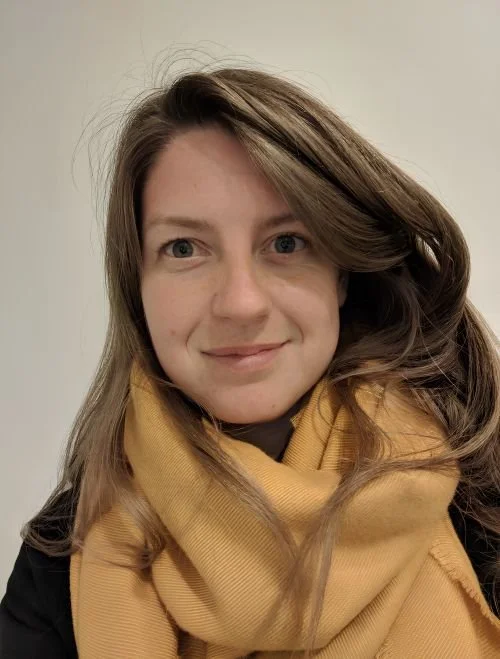
Ellie Clement
__________
WHILST I usually interview…
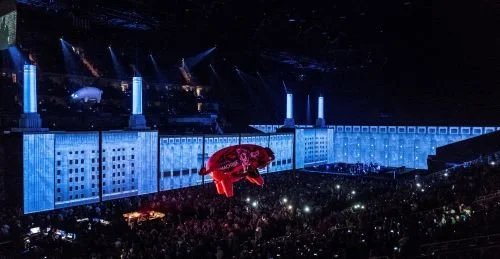
IN THIS PHOTO: A shot from a Roger Waters gig
artists, it is always nice and important to look at those who are more behind the scenes. That sounds dismissive. What I mean is that we do not spotlight those who are just as important as artists. Here, I have been speaking with Ellie Clement. Here is someone who has this incredible career that I was keen to know more about:
“Ellie Clement is a video director and Disguise Media Server specialist whose career spans television, film, live events and global arena and stadium touring. She has worked on major event and broadcast productions worldwide, combining creative vision with technical expertise in large-scale video systems.
While studying Film Production Technology, Ellie began her career in 2008 working in local theatre and club venues, alongside a placement at BBC Radio Stoke assisting with broadcasts for its live music programming. After relocating to London, she entered into television at Envy Post Production before moving on to large-scale live events with Done and Dusted. Working under Executive Producer Melanie Fletcher, she contributed to major productions including the UAE National Day celebrations and the London 2012 Olympic Opening Ceremony. These projects introduced her to the complexity of globally broadcast events and large multi-camera production environments.
Ellie later joined Creative Director Richard Turner on arena and stadium tours. During this time she designed systems and programmed media servers for artists including One Direction and Roger Waters, gaining extensive international touring experience while developing expertise in live multicamera camera systems, projection mapping, real time tracking and large-format LED video design.
During the pandemic, Ellie founded her own company, XYZ Video Ltd, returning to television and film production with a focus on real time virtual production volumes utilising unreal & notch workflows within the Disguise infrastructure. Since then she has moved into leadership roles that draw on her combined background in broadcast and touring video design working for major artists including Phil Collins, Genesis, AC/DC and Radiohead.
Ellie facilitates artists' most ambitious concepts bringing a practical and technical approach to turn the boldest ideas into compelling world recognisable visual experiences”.
It has been great interviewing Ellie Clement. I do feel that we are in a time when women in technical roles are not spoken about. There are fewer opportunities and still this imbalance. Especially in professional studios. However, incredible people like Clement are paving the way and opening doors. Maybe she will not see it that way, though it is clear that she is definitely inspiring other women to follow it her footsteps. Learning more about Ellie Clement makes it clear that she is…
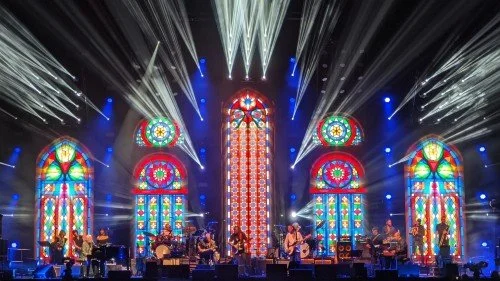
IN THIS PHOTO: The Music for the Marsden benefit concert at London’s 02 in 2020
A remarkable talent.
___________
Hi Ellie. As a video director and Disguise Media Server specialist, can you tell me how your career began and what drew you to these mediums?
Since I can remember, music has had a big influence on me and I've always loved photography and creating images. I didn't really know what I wanted to do, but when I saw the broadcast of The Who’s 2010 Super Bowl performance, that was the light bulb moment of, that's what I want to do.
I started out at a small club venue running sound and lighting for local bands and the occasional chart act on promo tours.
I later spent some time working in television with Done and Dusted under then-Executive Producer and now CEO, Melanie Fletcher, contributing to major events including the UAE National Day celebrations and the London Olympic Ceremonies. Around that time I met Richard Turner, who later offered me a role as his assistant on tour. That opportunity allowed me to combine my previous experiences and channel it into directing and programming media servers for concerts, leading me to contribute to major tours such as Roger Waters, One Direction, Genesis and Radiohead.
You work on major event and broadcast productions worldwide, combining creative vision with technical expertise in large-scale video systems. Can you talk to me what that consists of on a typical day, and how do you get to work with the artists you do? How does that partnership begin life?
No two projects are the same; there's so many elements to video, and the technology trends evolve so quickly that to keep up I spend a lot of time learning and experimenting with different techniques and equipment.
After establishing what the creative is for a show and how the video surface will be used, I’ll create the project in 3-D and using Disguise designer. I’ll preview any content and test any complex ideas in advance of any rehearsal time. Designer allows me to pre-program and test all the features in Disguise with minimal equipment, usually just my laptop and a handful of software, meaning I can be pretty mobile and flexible.
Early on in my career, I pursued companies and people I’d admired to get a foot in the door. Since starting XYZ, I’ve been really lucky and grateful that I've had jobs come to me mostly through word of mouth or from people I've already worked with, that thankfully want to work with me again.
“I think, like most women, I've always had to work harder to prove myself both professionally and socially amongst colleagues, which is really tiring when you feel like you're constantly battling”
How important was relocating to London when it came to your career? Even though events like the BRITs and Mercury Prize (music award ceremonies) have moved to the north, do you feel most opportunities and focus is on London?
I grew up just north of London, so it wasn't a big unknown upheaval. I’d been living and working in the Midlands and felt like I needed bigger challenges. It was a couple of years before the BBC had moved to Salford, and the only other hub I knew of at the time that had things going on that I was interested in was Bristol. There's so many clusters throughout the U.K. where technology and creativity collide, but I had very little connection to any of them so London just felt like the right place to return to. It also had the production companies I wanted to work for, so it just seemed the most logical decision to be around that.
Absolutely now, there are so many more opportunities all over the country. More venues are springing up. Places like Production Park in Yorkshire and organisations like Screen Scotland have done such a fantastic job at bringing more opportunities to the north of the U.K.
Although I’m still based in North London, I spend most of my time far from it.
Before talking about the highlights of your work, it does seem that women in technical roles and, in fact, across music in general still are underrepresented and subjected to sexism and a lack of opportunities compared to their male peers. Did you experience challenges and barriers as a woman in the entertainment industry, especially on the technical and production side?
I’ve had some really difficult experiences with sexism. Starting out, I came across it regularly. Now, when it does happen, it tends to be in the form of unconscious bias. If anything it always made me more determined. I think, like most women, I've always had to work harder to prove myself both professionally and socially amongst colleagues, which is really tiring when you feel like you're constantly battling.
Thankfully, as I've progressed in my career, I've encountered it less. I don't know if that’s because I’m older with more confidence, attitudes are gradually changing or I’m just tolerating it less, but I’ve built myself a network of people who are inclusive and value skill and potential rather than gender. There are still big pockets of the industry where we have to compete against the old-fashioned boys’ club mentality. But at the same time, I have some fantastic male colleagues that have recognised my capabilities and been incredibly supportive.
“It’s great to see a woman in the production manager role on tour. It's so important for girls to be able to see that it is possible to hold that top leadership position”
The figures regarding representation of women in technical and production roles is stark. In terms of imbalance and perhaps this sense that the fields are male-dominated. Do you think enough is being done to change this, and who are some of the other amazing women we should be looking at when it comes to changing the conversation?
I think it’s evolving. More women are coming through. For a long time, I’d be the only girl in the room. Now, most productions I’ve been on have at least one other woman in one of the tech departments. It's still unbalanced and very male-dominated; there is definitely a lack of women in leadership roles. That's where we need rapid change. There needs to be more opportunities and a clearer route to progress into those positions.
It’s complicated, because I don't think it's necessarily just a case of get girls interested and open up the opportunities. Elements of this industry are such a lifestyle choice. It makes the typical expectation of the house, family, dog and birthdays together a lot more difficult. You can be away from home for such a big chunk of time that that just doesn't work for everyone. I've seen many talented women hit a point in their life where they leave their roles and the industry because it just doesn't fit with starting a family. There's very little to no support for that as a freelancer across the board. Addressing that would help in retaining talent.
Done and Dusted CEO Melanie Fletcher was my first inspirational woman. She knew exactly what she wanted, had such an eye for detail, and was able to spin so many plates at the same time. She gave me a chance that set me on the path I am now which, although I've worked hard for, I am forever grateful.
Production Manager Nicole Massey - Billie Eilish’s production manager - is obviously another industry force. It’s great to see a woman in the production manager role on tour. It's so important for girls to be able to see that it is possible to hold that top leadership position.
Musician RAYE had some brilliantly simple YouTube videos of her in front of a computer showing how she created mixes of one of her tracks. I loved that it showed the more technical side of her creative process, and in turn hopefully gave young girls inspiration to have a go at that side of things.
In music, you have worked alongside artists like Phil Collins, Radiohead and Roger Waters. You have programmed media servers, developing expertise in live multicamera camera systems, projection mapping, real-time tracking and large-format LED video design. How does it change between artists in terms of requirements or how you work? Do the artists themselves have much input or requirements?
Different artists definitely have different levels of involvement with the video elements. Some are more focused on the music and others enjoy having a huge canvas to play with. Most of the time, I’ll be in contact with the creative director or artist management rather than the artist themselves, and then it's trying to interpret what works with the artist based on their performance and the direction from management to create something that reflects their vibe and identity. This can at times mean I have the freedom to just do something that looks cool. Other times I’ll work with an established creative, and the artist may come and sit and work through elements of the show, tweaking things to their preference. I always watch previous performances to try and anticipate what may be wanted that hasn't been asked for, as well as leaving plenty of overhead in a system to deal with the ‘can you just’s’.
“The recent Radiohead tour is my most recent highlight”
What have been your highlights or favourite artists to work with so far?
I love a spectacle and the technology, so my favourite ones are always the shows where we get to do something technically challenging and different. It's definitely a bonus if I'm into the music, but that's not what drives me. I really dig the visual aspect.
Beyoncé’s Chime for Change charity concert. She held an incredible presence. She was so in tune with the technical elements on what should be happening when and where. Her timing was amazing. Seeing someone that can command such a large stadium the way she did was awesome.
Roger Waters shows are always an immense experience. The content is stunning, and the boundaries of what is technically possible is always pushed to its limits. The Wall was probably hands down one of the best concerts to watch. I never got tired of seeing it. His shows have been some of the biggest crowds I've seen. Mexico City Zócalo square saw 200,000 people. They lined the streets and there was just no end in sight. The energy was phenomenal.
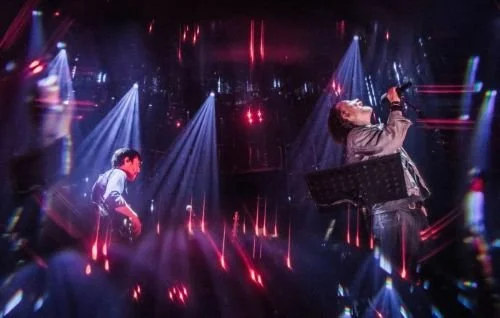
IN THIS PHOTO: Radiohead live in London, November 2025/PHOTO CREDIT: Alex Lake
The recent Radiohead tour is my most recent highlight. It was a technological beast and loads of fun to operate, as it was all manual cues utilising Disguise’s Sockpuppet feature. We got to experiment lots, and as the visuals were real-time-generated, everything was being created and manipulated along with the band’s performance. I've never been a part of something that raw and kinetic before. We were taken on a journey with the audience, juxtaposing massive sound and energy against intimate moments that suck people into the centre of the room. It was so uniquely special.
Tours and big live experiences have become more ambitious and multimedia-focused compared to decades ago. It is almost like a cinematic experience. Whilst the audiences might not think too much about it, how challenging is it behind the scenes regarding realising these bold concepts?
Hopefully it always looks effortless to the audience, but to get there can take months of working on theories, then experimenting and testing, leading into lots of high-pressure long nights of rehearsals, trying to realise what was something in someone's imagination.
It takes an army of highly-skilled engineers, fabricators, riggers and technicians to take that abstract idea and turn it into a reality. I guess that the most complicated part is co-ordinating across departments so we all click together. The video department and media servers are increasingly becoming the central link integrating across all aspects of a production - lighting, sound and automation. It requires being quite adaptable and versatile in your knowledge.
The show I'm currently working on has been over two years in the making so far, and we've just entered the final phase where everything comes together for programming and rehearsals. Ultimately, it’s a balance between ambition and reliability. You’re constantly pushing for something visually exciting and new, while making sure it’s robust enough to run night after night around the world.
“There are lots of free courses, tutorials and communities online, so get hands-on and build your knowledge up enough to be dangerous”
Tell me about XYZ VIDEO LTD. A company of leading video screen specialists across television, film, theatre, concerts and touring, what are you plans and aims for the next few years? What was the reason for setting up XYZ VIDEO LTD?
Like with many people in the industry, the pandemic brought along situations that we all had to adapt to and that led me to the opportunity of setting out and starting my own company.
I'd already established myself in real-time tracking and 3-D environments with projection mapping, so I was lucky enough to transfer that skillset into film and LED volumes by working with Unreal and Disguise’s RenderStream workflow, which allows for the real-time streaming of the Unreal game engine. I’d love to bring elements of Unreal real-time control and navigation into a live events environment. I think the progression into interactive generative content is really exciting.
For those wanting to follow in your footsteps and are interested in what you do, where is the best place to start?
Download the software and just have a go. There are lots of free courses, tutorials and communities online, so get hands-on and build your knowledge up enough to be dangerous. Make yourself visible and available; positioning yourself where the opportunities will be, so when it’s the right time, you’ll be in the right place.
I always ask interviewees to name a song they would like to finish with and I will play it here. What would you like to go with?
The Smile - Bending Hectic. There's no meaning or message behind the choice. It's just got a banging climax. Tough tie with Led Zeppelin’s Ramble On.