FEATURE:
Celebrating a Music Giant…
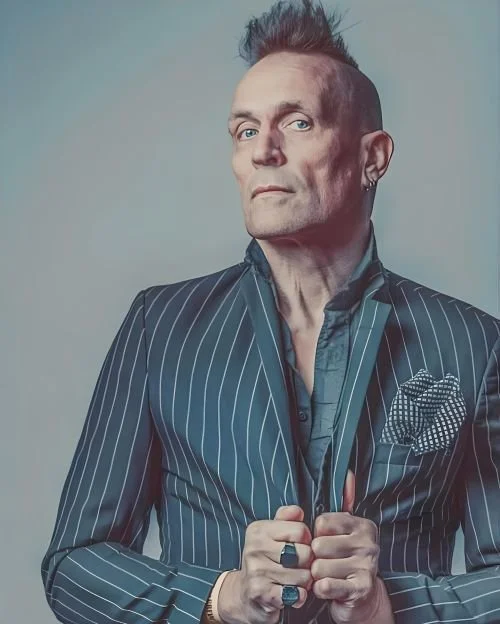
John Robb at Sixty-Five
__________
I normally write about…
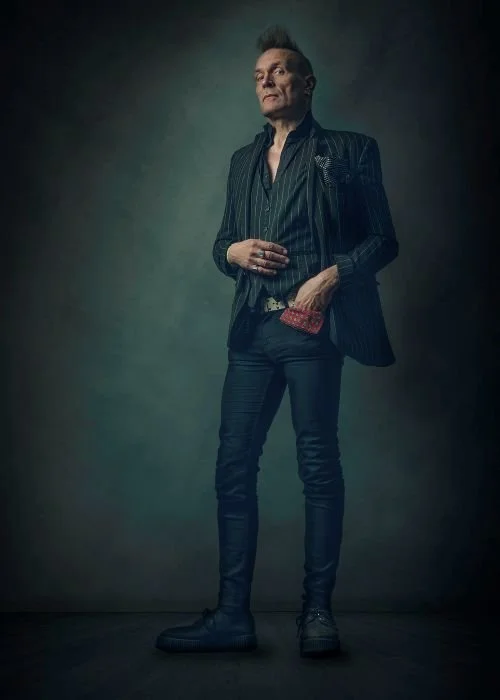
artists for my blog. However, I do sometimes focus on those outside of that sphere. Important journalists and figures in the industry. Few are as important as John Robb. I will talk about him and why I want to include him here. However, here is some biography about a music great:
“Not just a well known face from TV but also a best selling author, musician, journalist, presenter and pundit, music website boss, publisher, festival boss, Eco champion vegan behemoth and punk rock warlord as well as TV and radio talking head plus singer from post-punk critically acclaimed mainstays The Membranes.
John Robb is all these things and more.
His recently released book ‘The Art Of Darkness – the History Of Goth’ is a worldwide pop culture best seller and his soon to be launched ground-breaking new scheme – the Green Britain Academy, is set to train up people in thousands of Eco jobs whilst Borders Blurred is a gaming and music agency with a twist.
He grew up in Blackpool before punk rock came along and saved his life and he formed the Membranes – the highly influential post punk band whose current albums keep pushing forward with added choirs and textures and are critically acclaimed.
He was one of the leading post-punk fanzine writers in the UK with ‘Rox’ before he went on to write for the rock press with Sounds in the 80s. He was the first person to interview Nirvana and coined the expression Britpop and was instrumental in kick starting and documenting the Madchester scene with his writing. His music and culture website louderthanwar.com is currently one of the top 3 most read music and culture sites in the UK and at the front of diverse modern culture.
He is a constant on TV and radio commenting on music, culture and politics and one of the UK’s leading in conversation hosts who has his own successful youtube channel and his own books and music festival in Manchester every year called Louder Than Words.
He has written many books like best sellers like ‘Punk Rock – an Oral History’ and The Stone Roses and the Resurrection of British Pop’ and in 2022 a book about the leading Eco energy boss Dale Vince from Ecotricity called ‘Manifesto’ and a collected works of his journalism”.
As an independent journalist, I am quite prolific and have put out quite a bit for almost fifteen years. However, John Robb is one of the most respected, prolific and important music journalists ever. “From the post punk fanzine era to the music press era of Sounds to running his own website Louder than War John Robb has remained at the forefront of pop culture. He was the first person to interview Nirvana, was key in launching the Stone Roses and made up the word Britpop and so much more. Louder Than War is a music and culture website and magazine focusing on mainly alternative arts news, reviews, and features. The site is an editorially independent publication that was started by the English musician and journalist John Robb in 2010 and is now co-run by a team of other journalists with a worldwide team of freelancers. There has been a print edition since 2015”. He is someone I look up to. He turns sixty-five on 4th May, so I wanted to salute him prior to that date. I hope that others in the music world will shout out this legend. You can buy John Robb’s books here. On 12th May, he releases his latest book, Punk Rock Ruined My Life: And Other Stories: “The irresistible story of a one-man cultural phenomenon. Minister for the Counterculture, Mancunian mainstay and alternative national treasure John Robb has lived a life in music. In this book he charts his adventures on the cultural frontline, chronicling the making of a DIY icon. Robb’s quest began in his hometown of Blackpool – where punk was a battle against the odds – and went international when he toured the world with his band. The first person to interview Nirvana, he also discovered The Stone Roses for weekly newspaper Sounds and did early interviews with The Jesus and Mary Chain and The Manics, before moving on to legends such as Mark E. Smith, Nick Cave and Patti Smith. Along the way, he became an on-screen commentator and author of bestselling books. Robb’s memoir tells of deep friendships with figures from Poly Styrene to Chris Packham. Packed with riotous stories, it provides an alternative account of British musical and cultural history and a triumphant blueprint for a punk rock life”.
I will move to RESOUND, who chatted with John Robb during his Do You Believe In The Power of Rock n Roll? spoken word tour. He discussed, among other things, being at the forefront of music for over four decades. I have taken selected exerts, though I would urge everyone to read the full interview:
“Around the late ’70s John also began writing about music “to try to understand why I liked some stuff I shouldn’t have”, setting his up his own fanzine, writing for various publications including SOUNDS and MELODY MAKER, and penning numerous books on music and culture including Punk Rock: An Oral History, The Stone Roses And The Resurrection of British Pop, The North Will Rise Again: Manchester Music City 1976-1996 and latest tome The Art Of Darkness: The History Of Goth. Now running music website Louder Than War, he says,
there’s something about the vibrations and sounds of music that are very powerful…it constantly takes you by surprise and you can overthink it, but sometimes you have to just cut the crap and admit that it sounds f**king great to you!”
One memory of his time at SOUNDS John won’t forget is interviewing Nirvana’s Kurt Cobain, the first interview the band had done. He laughs as he tells us “I remember going to my friend’s record shop to order the first Nirvana single (1988’s Love Buzz) and everyone saying ‘oh no, this isn’t a good as Mudhoney!’” But that didn’t faze John, who was drawn to Kurt’s vocals.
After arranging the interview, he rang Kurt up at his mum’s house, which in turn led to another interview with the band in New York nine months later when they were supporting fellow Sub Pop grunge outfit Tad, Nirvana unaware of the impact they were about to make on the music world.
John grins as he tells us he ended up crashing on the floor of the tiny flat the two bands were sharing and at the time thought it was all a bit of a drag, the Tad guys taking up most the the space. Of course, looking back he realises just how well he got to know Nirvana and how lucky he was to have a birds-eye view of their early days. But despite his pleas, and the fact that Nirvana’s record company were saying that they could be as big as Sonic Youth, Tad appeared on the cover of SOUNDS, taking precedence over Nirvana… Nevermind, the rest, as they say, is history.
Chatting about Kurt Cobain gets us on to the subject of Mark Lanegan, who The Membranes supported in 2019. During that tour John and Mark spoke about Kurt, who was a close friend of Mark’s, John recalling Mark telling him that on the day Kurt died, he’d gone round to his house and had never forgiven himself for not kicking his door down when he didn’t answer. “Mark said Kurt would always answer the door. They shared a house together when they lived in Seattle, all on heroin, listening to blues records and decked out in wedding dresses!” Ah, picture the scene…
If things had turned out differently, John reckons that Kurt’s musical style and path would have been similar to that of Mark’s. “His voice would’ve been similar as he got older, and I imagine he would have played more acoustically,” something which was hinted at in the infamous Nirvana MTV unplugged session. “I imagine he would’ve played intimate, powerful music – similar to Mark’s but to bigger crowds because of the Nirvana influence, but effectively occupying the same space.”
Around the late ‘80s John also coined the term Britpop, before the ’90s scene as we know it had even taken off, though writer and DJ Stuart Maconie also claims to have come up with the term. However, John acknowledges that Stuart “probably did make it up, unawares” a few years later, using it in SELECT magazine… maybe they should just put it down to a case of great minds and all that!
John confesses that he’d previously used ‘Britpop’ as a joke, going on to say “SOUNDS did a thing about a new British punk scene called Punk Core and I used the word Britpop as a joke on that really. Music’s really hard to describe, as Frank Zappa said. I mean, you can describe it but sometimes the words aren’t normal words. Anyway Britpop became a thing, as these things tend to…It’s the same with ‘goth’, it was coined by the NME as a joke, referring to the alternative music scene of the time in alternative clubs”.
Of course not every musician wants to be pigeonholed like this but as John explains, there are benefits to belonging to a certain scene. “There’s a duality to it… I don’t think bands mind being part of a scene which gets them out of the local pub and onto the national circuit but at the same time they don’t want to be imprisoned by that scene.” He goes on to say.
Of course, goth is a subject close to John’s heart, with the publication last year of his latest book The Art Of Darkness: The History of Goth, which has seen fans of the darker side of post-punk unite up and down the country to listen to him talk through the ins and outs of the scene. Inevitably this has led to some heated debates on what’s goth and what’s not, and it’s fair to say it’s not an argument that will be settled any time soon unless you’re a member of Fields Of The Nephilim. But anyone who went along to one of his chats on the book, which he’s still out touring in Europe, will be drawn into his latest tour which will no doubt have a dark flavour at times”.
In 2024, Sheffield Magazine sat down with John Robb for a great conversation. They spoke to him “about his latest book “Do You Believe in the Power of Rock & Roll?: Forty Years of Music Writing from the Frontline.” During our chat he told us, in great detail, about his love for this city of ours, along with his best stories from his time as a writer”:
“Keeping with the DIY ethos, do you think there has been a big shift across music in general and that in some cases maybe the DIY element has been lost?
"No, I don’t think that. Nobody who was truly DIY ever really ‘broke through.’ Some people did of course, but not many! It’s always been the underground of people creating this little network of music venues and music scenes of the music they want to listen too. That’s still there, it’s still here now, and it’s as strong as it ever was, if not stronger. I was thinking about this the other day, people were talking about all these venues closing down, but weirdly I’ve found there to be more venues now than there ever was. I don’t think it’s easy running a venue though, there are a lot of problems involved in it, but in the '80s you’d go to Birmingham for example and there would be one venue that you could perform at!"
"Now you have a choice, I think that now there’s more people in more bands and there’s more space for people to do stuff in. I do think now the problem is that there’s too many people in too many bands so therefore people’s expectations can’t be realised. You can’t have 10,000 bands all sustaining themselves. I do think it’s great though that everyone’s in a band, and it’s great that there’s still people creating this culture and stuff, but it makes it difficult if they all expect to make a living out of it you know, because it can’t stretch that far."
What’s your best story from your time as a writer? Whether that be when you ran your fanzine Rox or when you wrote for the music papers.
"I guess the story everyone always wants to hear is from when I interviewed Nirvana. I was the first person in the UK to interview them! I phoned them up at his (Kurt Cobain's) mum’s house before the first single came out, and I had no idea they hadn’t done an interview, but I also had no idea that anyone was going to like them! They were just a local band, they were signed to Subpop Records and most people though that they (Subpop Records) had done a misstep, as this band was not as good as the other bands."
"But I was sort of captivated by his (Cobain's) voice, he sounds like an 80-year-old man singing in an 18-year-olds body, it just sounded wise and teenage at the same time – that’s the first thing I thought was amazing. 9 months after this interview we flew out to New York to do a feature on them, and we went to the flat they were staying in at the time as they were supporting TAD on tour, and they were all staying in this one room, punk rock DIY style! We said to the PR guys, where are we staying? And they said you’re staying here. So, we slept on a floor for 5 days next to Nirvana – I didn’t have any sleeping stuff, so I had to sleep under my coat with my rucksack as a pillow! We got to know them pretty well as we were helping them carry the gear in and out the flat, and we went to the gigs. We saw them play at Maxwell’s in Hoboken and there was about 20 people watching, they were amazing! They trashed all the gear, and it was really exciting."
"But there was no idea that this band were going to be more than a weird cult band that I would write about in Sounds. There was no idea that they were going to be the biggest band in the world. Within 2 years, ‘Smells Like Teen Spirit’ comes out and it just goes insane. Looking back, you kind of get used to these things happening, it’s like of course Nirvana is massive, but at the time the jump they did was massive! Where I live in Manchester, I live right next to the University. I still see students wearing Nirvana T-shirts, and he does just look like a sort of Rock’n’roll Jesus, doesn’t he? I always think it’s funny as I walk past them as they have no idea that this weird looking old dude was the first person to interview that band on their T-shirt. It’s mad how well American bands do, like The Offspring sold 12 million albums which is just madness. But none of those bands could touch Nirvana, they were way way better than all those other bands. He just wrote really great songs, and they were just quite rough sounding, and his voice was amazing”.
I am going to end with an NME interview from last year. When Oasis reformed and performed that run of acclaimed international dates, there were books published about them. John Robb discussed his Oasis book with NME. You can tell that was more of a labour of love than anything. Someone who has a deep respect for and fascination of Oasis:
“Robb recently published Live Forever: The Rise, Fall And Resurrection Of Oasis – featuring a new and exclusive interview with Noel Gallagher. After the returning Britpop legends kicked off their Live ’25 reunion tour in Cardiff last week, tonight (Friday July 11) sees the band continue with the first of their homecoming residency nights at Manchester’s Heaton Park.
Robb, himself a Manchester native, told us about the importance of the city in shaping the band and a vibrant music scene.
“There’s an attitude in Manchester. It’s there in the music scene as well,” he told NME. “The bands that were key stepping stones to Oasis were all Manchester bands: The Smiths, The Stone Roses, that lineage. What you have to think about Noel is that he’s almost like Johnny Marr’s younger brother in a way; they’re very similar. I always found it odd that Johnny Marr didn’t end up being their producer.”
NME: Hello John. Your book is pretty definitive, comprehensive and all-encompassing. You can’t be accused of throwing together a last-minute cash-in project…
“It was a pretty intense period of writing, with six months of 15-hour days. But then again, I’d already done the research in having being around from the beginning. I was next door at The Boardwalk and at the early gigs. I’d seen Noel around town when he was the Inspiral Carpets’ roadie. I knew what the vibe was around town and at gigs, so it was quite easy to describe.
“I didn’t have to interview anyone else for that stuff, I just had to remember.”
It was interesting when your 2024 interview with Noel ran just days before the reunion was announced, and his attitude towards Liam appeared to have visibly softened…
“Well it’s interesting, actually. That interview was filmed three months before. It looked like it was done with the reformation all in one block, but it was done back in June at Sifters [Records, Manchester]. I did put down a stipulation that it would be nice if he said nice things about Liam. The banter is funny, but it kinda gets in the way of the band sometimes.
“The stuff he said about Liam was great, and it was really heartfelt. At the end of the day, brothers fall out and they fight, but they still love each other. Siblings have complex relationships. The only problem is when you’re that famous, it becomes your only story. Everything about Oasis gets reduced to a tabloid story. I deal with that in the book, but the point is that’s just the tip of the iceberg. There’s something far more creative and interesting going on underneath the bonnet.”
Pulp and Blur have both pulled off very impressive records as more mature bands. You can’t help but wonder what ‘old man Oasis’ would sound like….
“Yes, it’s intriguing. Liam still feels like the eternal teenager. You don’t buy into Liam for songs about getting old. Maybe they could be the introspective Noel tracks and Liam’s could be raging against the light?
“It’s brilliant that Pulp got a Number One album [with ‘More’], but there’s a pressure on Oasis because they were so much bigger. People always forget that the last Oasis album got to Number Five in America, and they were getting quite big over there towards the end of their career. You don’t want to blemish that either. I was just hoping there would have been more gigs, weren’t you?”
As an Oasis biographer, how do you feel about the band’s post-2000 output that a lot of people see as a decline?
“I think their later albums are really underrated and overlooked. By the time you get to the last album [‘Dig Out Your Soul’, 2008], they’re doing something really interesting – it’s like an art-rock record. They would never say that, but they’ve got drum’n’bass loops, backwards guitars and bits of kraut-rock. A lot of people would just say, ‘Oh, they’re just doing The Beatles again’, but they’re not really. There’s a lot of different stuff on there. Rock’n’roll isn’t a fashionable form of music, but when bands are good at it, it’s really good.
“Put all that through the filter of pop, and no matter how off-piste they go, it’s always going to be a good record”.
On 4th May, John Robb turns sixty-five. I am not sure what he has planned for the day but, with a new book coming out days later, he will be busy prespring for that. As a journalist, I have so much respect for his work and legacy. One of the most important authors too. He is such a prolific and fascinating figure who you feel needs to be represented himself in terms of a documentary – or someone playing him on the screen. This is a salute and early happy birthday to the amazing John Robb. Let’s hope that we see many more books, work and words from a true great. Someone who has inspired countless artists and journalists through the decades. Through journalism and the music world, there are few that are…
AS important as him.