
FEATURE:
Kate Bush: Them Heavy People: The Extraordinary Characters in Her Songs
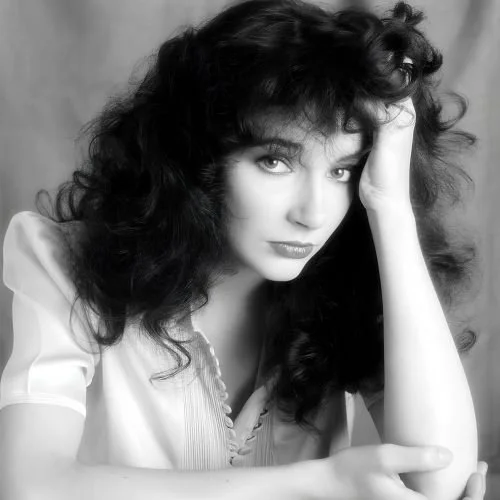
IN THIS PHOTO: Kate Bush in 1978/PHOTO CREDIT: Gered Mankowitz
Your Sister/Zeus (The Kick Inside)/Snowflake (Lake Tahoe)
__________
THIS is an interesting pairing…
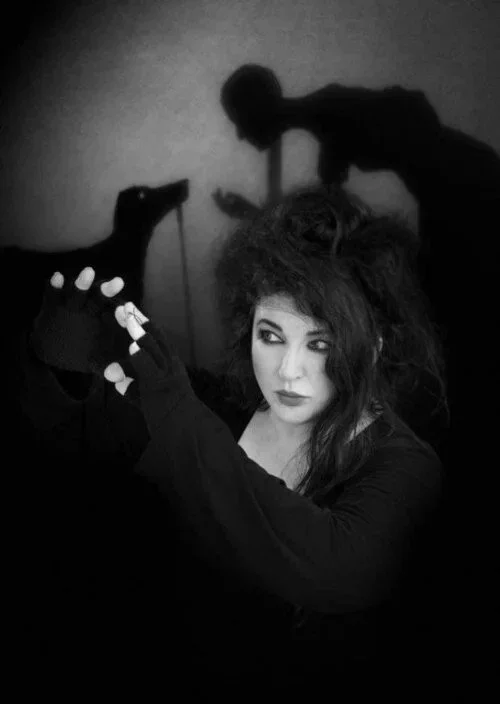
IN THIS PHOTO: Kate Bush in a publicity photo for 2011’s 50 Words for Snow, creating Lake Tahoe/PHOTO CREDIT: John Carder Bush
as I am combining characters from The Kick Inside (1978) and 50 Words for Snow (2011). Kate Bush’s debut and most recent studio albums, there are similarities between then. How, for 50 Words for Snow, Bush went back to the piano more and wrote songs in a way she would have done for her debut. Even though 50 Words for Snow is a different-sounding album and maybe steps into different genres, it is interesting that she sort of went full circle. I will come to an animal character from 50 Words for Snow that also shares the name of a song title from the album. Connections there. Before that, there are two characters from the title track of The Kick Inside I need to cover. One of those albums with a fair few characters – at least two more songs from the album I need to cover off -, Your Sister and Zeus are in my mind. I am going to investigate this more for a future feature, so I will not try to repeat it too much. I am going to come to some words from Kate Bush regarding a remarkable title track. I think it is unusual that a title track ends an album. Or perhaps not. However, Bush ended her debut album with a song that could only end an album. As it is emotional, heavy and brilliantly ends. This lingering and haunting note that finishes her debut. I want to first cover the live performances from 1978. The Kick Inside was memorably performed during Kate Bush’s appearance during the Efteling T.V. special:
“On 12 May 1978 at 7.12pm, the Dutch broadcaster TROS broadcast a 20 minute Kate Bush television special, recorded at the Dutch amusement park Efteling. On 10 May 1978, Efteling was ready to open the Haunted Castle, the most expensive attraction it had ever constructed, and they wanted to promote it as much as they could. Ton van der Ven, who designed the castle, appeared in a popular talk show and in April a documentary featuring the Haunted Castle was made by filmmaker Rien van Wijk, who was eager to shoot in the latest attraction before it officially opened. Kate, who just had a big hit with Wuthering Heights, was approached for a television special that would promote both Efteling and her songs. The special was filmed in April, a month before the official opening of the castle”.
I am going to first discuss the live performances of 1978 and this very special…well, special. For this performance, Kate Bush was filmed on the lake, lying in a death-barge. I guess having to show different areas of the amusement park, it was a fascinating moment! How that offer came to her and what attracted her to it. I guess the exposure was useful but, in a busy year, it was also quite a commitment! During The Kick inside, Bush sails down the river, which evokes images of Elaine and The Lady of Shalott, classic poetical figures of Arthurian legend. The sense of legend in the song. I will come to that. However, that idea of Bush as an ill-fated heroine on the water. Cast forward to 1985’s Hounds of Love and The Ninth Wave. Another stricken woman. Different circumstances, though Bush’s connection to and fascination with water present. Obviously, the title of The Kick Inside refers to pregnancy and there is that water link too. Amniotic fluid, often called the ‘water’ surrounding a baby in the uterus, is a crucial protective layer that cushions the foetus from impact, maintains a steady, warm temperature, and keeps the umbilical cord from being squeezed.
I am fascinated by touring commitments and live performances. Bush would not tour until 1979, though she was pulled to all sorts of places in 1978. Japan and the U.S. among them. You think of an album like The Kick Inside and its maturity and brilliance. If an artist released an album like that today, there would be great reviews and praise, though there would not be subjected to the demands placed on Kate Bush. Nineteen when the album was released, she undertook so many interviews and promotional duties. How taxing and draining that would have been. I am not sure whether Bush ever came to love T.V. appearances. Mainly in Europe, Bush was performing – or miming – her songs in front of audiences who perhaps didn’t know who she was. That translation issue. Especially evident and striking in Japan. However, her Efteling outing might be my favourite live appearances. She would perform The Kick Inside during 1979’s The Tour of Life. However, there is something unique about her in this Dutch amusement park. From the colour of her hair to the concept behind the performance, it is this fascinating thing that actually gives new meaning and insight into the song. Prior to moving to specific insight into the song and what Bush was thinking. However, this article highlights the energy, professionalism and work-rate of Kate Bush in 1978:
“The special starts with a tombstone bearing the name Kate Bush. This tombstone was the subject of a lot of speculation among Dutch Kate Bush fans, since it disappeared from view between 1978 and 2003. The tombstone suddenly resurfaced in 2003 at the 25th anniversary of the Haunted Castle, and stood there at the entrance. Since 2007 the tombstone could be seen in the catacombs of the main show in the castle. The Haunted Castle was knocked down in 2022 and the tombstone has moved to the depot of the Efteling.
Light designer Bert Klos recounted about the recording of the special in 2014. “They were very heady days. There were so many different locations and I wanted to support the actions of Bush as well as possible with light. She was a short woman with a thin voice, but very professional. That woman couldn’t be stopped, she just kept on going. When we wanted to sit down for a while, she already stood up and said: ‘come on guys!’. I can even recall a soundman tripping across his own feet from sleep at 1am!” Henk Gulikers, who did camera during these days, recalled: “We didn’t sleep until 3am and at 6.30am we were back around the table with Kate and a cup of tea. We stayed in Hotel De Swaen in Oisterwijk. I got an LP from her, on which she’d written: ‘For dear Henk, the one who is very much alive behind the dead camera.’ Very nice, I liked that. Apparently she felt very much at ease”.
I have mentioned how The Kick Inside is this brave and bold album. A teenage artist releasing a debut in 1978. A woman in the industry. It was a time when there was male dominance and other styles of music were heralded and favoured by the press. Kate Bush’s incredibly original and unusual – compared to what was around it – music received criticism and mockery. Sexism and misogyny from the start. It could have been easy for her to write lyrics about love and keep things commercial and simple. However, a song like The Kick Inside showed how different she was from her peers:
“The song The Kick Inside, the title track, was inspired by a traditional folk song and it was an area that I wanted to explore because it’s one that is really untouched and that is one of incest. There are so many songs about love, but they are always on such an obvious level. This song is about a brother and a sister who are in love, and the sister becomes pregnant by her brother. And because it is so taboo and unheard of, she kills herself in order to preserve her brother’s name in the family. The actual song is in fact the suicide note. The sister is saying ‘I’m doing it for you’ and ‘Don’t worry, I’ll come back to you someday.’
That’s inspired by an old traditional song called ‘Lucy Wan.’ It’s about a young girl and her brother who fall desperately in love. It’s an incredibly taboo thing. She becomes pregnant by her brother and it’s completely against all morals. She doesn’t want him to be hurt, she doesn’t want her family to be ashamed or disgusted, so she kills herself. The song is a suicide note. She says to her brother, ‘Don’t worry. I’m doing it for you.’
Jon Young, Kate Bush gets her kicks. Trouser Press, July 1978”.
I couldn’t think of an artist today who would write and perform a song like this. Maybe Ethel Cain (just the first name that came to mind!). Maybe seen as taboo or not something people could share, this tale of an incestuous pregnancy and suicide would really create some division! If many male journalists felt Bush was toothless or lacked Punk rebellion and importance in 1978, they clearly didn’t listen to her debut album! How many Punk artists were writing songs like The Kick Inside?! She was as compelling and provocative as any around her, though her music was beautiful and sophisticated. Maybe seen as odd or too soft, we really need to reappraise an album that stands alongside the greatest and most important debuts ever.
It is the bravery of the lyrics. How they tackle subjects very few others were discussing. The sister and brother are not named in the song. However, you sympathise with the sister. Never sure how that pregnancy happened – whether it was consensual or not -, to avoid shame on her family and any issues, she takes her own life. I am not sure whether an artist could write about this in the modern day. Even if this is fictionalised and based on old traditional song, it still mentions topics that would be seen as inappropriate or controversial. However, this is one reason why Kate Bush is such a remarkable and relevant artist. She was so far ahead of her time. That idea of her being inspired by folk tales, traditional songs, film, T.V. and literature. I cannot speak for other artists in 1978. However, think about the scene and her contemporaries. I do love how Kate Bush was tackling subjects and themes that went beyond love and politics. Not to say music was narrow in 1978. Though you did not get too many artists going beyond that in any striking or inventive way. It is not the only song in Kate Bush’s catalogue where a pregnant woman takes her own life. In The Wedding List (from 1980’s Never for Ever), a bride whose husband-to-be is assassinated, and she avenges his death by going after the killer, kills herself and we discover she was pregnant at the time. Another song where Bush took inspiration from an unexpected source. On that occasion, it was the 1968 film, The Bride Wore Black. I do love how worldly and sophisticated Kate Bush was and is! This perception that she was this rich girl from a middle-class family and there was this stereotyped and insulting view of her. a traditional English murder ballad focusing on incest, adultery, and murder. In the song, a woman named Lucy (or Lizzie) becomes pregnant by her brother, who then murders her, attempts to hide the deed from their mother, and flees. How do you even discover that?! Her brother John/Jay is a poet, and he might have brought it to her attention. Bringing that into popular music. Darker elements than what one would associate with a Pop artist. However, Bush grew up loving artists like Captain Beefheart, David Bowie and The Beatles. It is not a great leap to imagine why she would go beyond the normal and write a song like this. I do love The Kick Inside. It is a song that is so heartbreaking. It is also very beautiful. One of her finest vocal performances. The sister in the song is this poor woman who seems to have no choice. Rather than face punishment or judgment from her family, she finds no other way out. Rather than glorify or sensationalise this, Bush handles the subject matter wonderfully and maturely. The end of the song (and the album) is the sister saying that she has left a (suicide) note and, by the time you read this, she will be gone forever. It is so sad and poetic.
Although not really integral to the song, Zeus is mentioned. I have written before also how Kate Bush had this fascination with mythology. The ancient world. Zeus is the king of the gods in Greek mythology, ruling as the sky and thunder deity from Mount Olympus. As the son of Titans Cronus and Rhea, he overthrew his father to lead the Olympians. Known for his power, scandals, and justice, he is associated with the lightning bolt and is considered the ‘father’ of both gods and humans. You can see why Kate Bush chose Zeus to mention in the song. It is an intriguing inclusion. How does he fit into the song? The opening lines are like poetry that warrant scrutiny: “I’ve pulled down my lace and the chintz/Oh, do you know you have the face of a genius?/I’ll send your love to Zeus/Oh, by the time you read this/I’ll be well in touch”. The peculiarity and brilliance of those lines. Maybe it is Bush portraying this sister who knows she is going to die and reach the heavens and join Zeus. The lyrics also mention “No more under the quilt to keep you warm”. That young sibling relationship and how that innocence cannot be reclaimed. I actually have lines from The Kick Inside tattooed on my arm: “You must lose me like an arrow/Shot into the killer storm”. Such exquisite imagery! There is drama and turbulence. This idea of a killer storm rumbling. Zeus is this powerful God that plays a part. Kate Bush saying in an interview how she was bored of ordinary love songs. The Kick Inside is about love, though it is this complex sibling relationship and situation. That mythological mention. Almost like a Greek tragedy in a sense. This once carefree brother and sister who had all the great times are now divided. A sense of shame befalling their family. The sister unable to come back, but she feels that, once she has died, she will see her brother again. The domestic and everyday combining with mythology and something somewhat ancient. The Ballad of Lucy Wan was first published in Herd's Scottish Songs in 1776. Two-hundred years later, this young modern artist inspired by this tale for the title track that ends a sublime album.
There are unnamed characters through 50 Words for Snow. We have the lover that Elton John plays on Snowed in at Wheeler Street. Lake Tahoe has one character that is alluded to but never really named. It is this lady in the lake. It sort of connects to The Kick Inside. Water once more. How Bush performed The Kick Inside at Efteling and was on a boat and evoked The Lady of Shalott. Lake Tahoe about a woman that died in the river and was this ghostly figure. I will write about her. I cannot help but focus on water once more. So crucial and key throughout her career. From The Kick Inside’s title track and other songs on that album – Wuthering Heights evokes this storm-lashed night -, right through to Hounds of Love’s The Ninth Wave and Aerial’s (2005) A Coral Room the example there. Bush has always been fascinated by water. The fear of being trapped on it, or the mystery and potential wonder under the water. I do really love the story behind Lake Tahoe:
“It was because a friend told me about the story that goes with Lake Tahoe so it had to be set there. Apparently people occasionally see a woman who fell into the lake in the Victorian era who rises up and then disappears again. It is an incredibly cold lake so the idea, as I understand it, is that she fell in and is still kind of preserved. Do you know what I mean?
John Doran, ‘A Demon In The Drift: Kate Bush Interviewed’. The Quietus, 2011”.
Lake Tahoe is situated by the Sierra Nevada mountains, directly on the border between California and Nevada, in the Western United States. 50 Words for Snow takes us to the U.S. on more than one occasion. In fact, it is one of the most globe-straddling albums. Wild Man mentions various locations. The Garo Hills by Dipu Marak among them. Snowed in at Wheeler Street recalls a photograph taking in New York on 9/11 (“Have we been in love forever?/9/11 in New York, I took your photograph”). I guess The Ninth Wave might have taken place near the U.S. Somewhere in the Atlantic. However, it is interesting that we have this Victorian legend from the U.S. Ghosts, spirits and the otherworldly have also been key from throughout Kate Bush’s career. What I love about Lake Tahoe is that we never know who this Victorian woman was and how she got into the lake. A whole story there. There is something to be written about that. However, I did want to mention an animal. Bush warns in the song that nobody should step near Lake Tahoe. The danger. This Victorian woman whose eyes were fixed or dead. This pale apparition. “She was calling her pet, "Snowflake! Snowflake!”/Tumbling like a cloud that has drowned in the lake”.
Animals have featured in Kate Bush’s music. Her cat, Rocket, in Rocket’s Tail. I do love how this dog called Snowflake shares the same name as the opening track of 50 Words for Snow. Although the songs are not connected, it is interesting that we get this story of an animal who has lost their owner. I am going to mention another animal, Little Shrew, and the symbolism of that creature and how it plays into the song and gives it power. There is something more heartbreaking about an animal being lost or distressed than a human. There shouldn’t be, though that is human nature I guess! “No-one's home/Her old dog is sleeping/His legs are frail now/But when he dreams/He runs.../Along long beaches and sticky fields/Through the Spooky Wood looking for her/The beds are made. The table is laid”. This dog that may be old or he is just deprived of warmth and food. It is quite a tragic story. Maybe the woman was walking the dog and went into the water. I am not sure whether the dog dies and they are reunited or the ghostly figure of the woman “The door is open/someone is calling: It's a woman/"Here boy, here boy! You've come home!/I've got an old bone and a biscuit and so much love/Miss me? Did you miss me?/Here's the kitchen - There's your basket/Here's the hall - That's where you wait for me/Here's the bedroom - You're not allowed in there/Here's my lap - That's where you lay your head/Here boy, oh you're a good boy/You've come home/You've come home”. You sort of picture this home where they used to live. When the woman died in the lake, Snowflake wandering and looking out for her. Now she is back. Maybe the dog did die, and they are reunited in another world. This is Bush and her curiosity beyond the human realm. Exploring the mysterious and unexplained. Wild Man has that sort of curiosity too. Another way of tying back to The Kick Inside. Think of Wuthering Heights. Catherine Earnshaw as this ghostly figure outside the window at Wuthering Heights trying to get to Heathcliff.: “My one dream, my only master”.
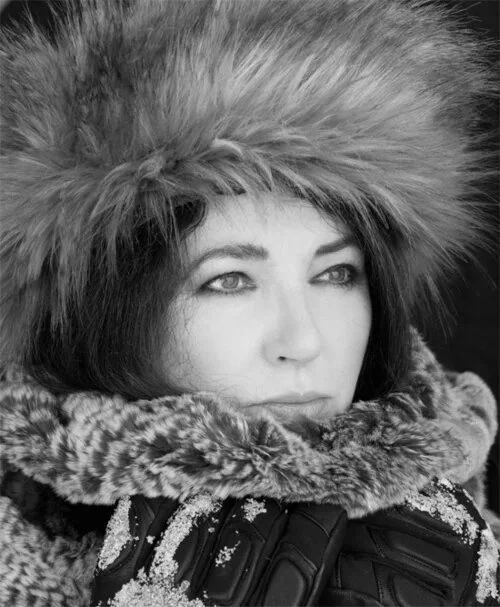
IN THIS PHOTO: Kate Bush in promotional photograph for 50 Words for Snow/PHOTO CREDIT: John Carder Bush
I am going to get to some reactions to Lake Tahoe and some of the unfair criticism of 50 Words for Snow. This is an album that was not made for singles. Wild Man was released and we had a radio edit. However, this was a song that Bush loved. Maybe an unofficial single, she actually wrote and directed a short animated video to accompany Lake Tahoe called Eider Falls at Lake Tahoe. It features five minutes from the eleven-minute track, and contains elegant shadow-puppetry. It is this dramatic and wonderous song that feeds into an album that feels like a film or short story. Maybe each song that seems like a short film in itself. Very few musicians in the mix. Steve Gadd and his brilliant percussion. Never too imposing, he creates this nuanced mood. So many different shades and emotions in his percussion. Bush on the piano. One of the most divisive element was the vocals from Stefan Roberts and Michael Wood. I do think that they create this heavenly aspect. An ethereal nature. It has this choral angle that seems to fit with the Victorian inspiration. Something classical and old-world. Look at the animated video for the song. Bush would direct more than one animated video. Eider Falls at Lake Tahoe focuses on Snowflake. The dog that gambles and runs along. We see this frail woman come down the steps of a house whilst her dog waits. The combination of the song, the video and the haunting vocals from Stefan Roberts and Michael Wood is phenomenal. Lake Tahoe was released as a picture disc 10″ single, made exclusively for Record Store Day in 2012, in a limited edition of just two-thousand copies. Among Angels was a B-side. One of the absolute highlights from 50 Words for Snow. I love everything about Lake Tahoe. How we do go to America and this great lake, but also tie it to a Victorian legend. Maybe people visit there now and feel they see this woman rise from the water. Rather than it being all about that idea, it is more about Snowflake and this bereft or lost pet trying to find their way back to the woman. Like The Kick Inside’s title track, such a fascinating and different subject to write about. How many other artists in 2011 were writing songs like this?!
I do feel that 50 Words for Snow got a lot of unfair criticism. People not willing to listen to seven longer songs, rather than shorter numbers. This idea that Kate Bush was a Pop artist who was going to write shorter tracks or something more commercial! Beyond the fringe of the mainstream, this was an artist always changing and doing something new. Chamber Jazz you might call 50 Words for Snow. Bush also released Director’s Cut in 2011. She wanted to release 50 Words for Snow in 2011, otherwise she would have to wait until winter 2012. It was this hectic time of releasing two albums. She started it as a winter piece but, as she wrote, it was honed down to being about snow. She wanted to explore the longer structure of songs, so that the storytelling and journey would be more expansive. Bush feeling her music needed that exploration and detail. Allowing it more space and ambition. Perhaps this idea that songs that run so long are stretching people’s patience. I feel 50 Words for Snow is one of Kate Bush’s underrated and misunderstood albums. Lake Tahoe is one of the gems on the album. There were some mentions of Lake Tahoe in reviews. This is what The Guardian noted:
“Then there's "Lake Tahoe", which tells of a legend in which a drowned woman seems to rise up out of the lake. "Is your kitchen as you left it?" Bush wonders, making the domestic poignantly romantic as she did on Aerial's "Mrs Bartolozzi" ("Washing machine/ Washing machine… "). But despite some sylph-like singing from Bush, and arresting atonal passages, "Lake Tahoe" never quite electrifies; guest chorister Stefan Roberts is just too churchy”
The sense of the outside world and atmosphere. Rather than it being about the intimacy of home or love or something more focused. 50 Words for Snow is so widespread and expansive. Snow is the common theme, yet the geographical spread is immense. Snowed in at Wheeler Street takes us to the U.S. and Ancient Rome. Lake Tahoe to this very distinct and evocative space. Collapse Board had this to say when they discussed Lake Tahoe:
“This album is no exception; the great majority of tracks are strongly evocative of natural environments. Yet despite settings often as specific as Delaney’s teeming grey Salford – Kangchenjunga’s caves, buried beneath the snow in the roof of the world; glacial Lake Tahoe, where Cousteau is said to have found his white forest of perfectly-preserved lost swimmers – Bush nonetheless keeps these real places at one remove. She seems less preoccupied with location than with dislocation, as though the snow, in hiding the land, revealed a land beyond the land – and in particular the lost, occupied land of the indigenous people Bush invokes here, the Wahoe, the Yupik, the Inuit and the Sami.
50 Words For Snow’s multitude of characters and voices fall from the sky, rise from lakes, wind around trees, are rolled into golems, thick with twigs and stones. Its architecture is granular: the songs borrow ideas, names and settings from one another, crystallising into pairs, triplets, drifts. In the thick of this exchange, people aren’t so recognisable”.
Kate Bush was aware of the long periods it takes to record album. 50 Words for Snow is perhaps less structured and honed than many of her albums. Bush said there is this divine intervention that is part of the creative process. When speaking with John Wilson in 2011, this is what she said. How she was getting near the end Lake Tahoe and she was playing so lightly that there was this space. She felt like she should keep going. This little hole. Almost like a live take. I want to come to a review from The Quietus and their approach to Lake Tahoe. What they say about the vocals on the song:
“Just as Benjamin Britten blended the voices of a tenor and a countertenor in his second canticle – singing together in perfect and still unison, they represented the voice of God advising Abraham to sacrifice his own son – fifty-nine years later Kate Bush scored Lake Tahoe for a tenor and a countertenor. Singing together they become the voice of a ghostly narrator. “Cold mountain water, don’t ever swim there”, they warn. Lake Tahoe is 1,645 feet deep. Lake Tahoe is filled with mosquito fish, bluegill, cutthroat trout, the bodies of Chinese railroad workers from the 1870s and a drowned Victorian woman still dressed in white satin. The dead don’t float in Lake Tahoe, the cold preserves them. A thousand feet down their blue eyes are open but once a year they walk the shore. Kate Bush sees her Victorian woman searching for a dog. “Snowflake! Snowflake!” she calls out. Kate Bush becomes a Victorian woman. “Snowflake! Snowflake!” she sings out. Her dog is warm at home sleeping in the kitchen. Kate Bush’s skin and hair are wet, her eyes blue, underneath her fingernails is Tahoe silt. We cannot save her. And the snow is falling – softly at first but soon in deep plodding flurries like the heavy walking chords of her piano as she climbs the keyboard out of Lake Tahoe. Quavers of snow crown the surrounding peaks, melting into the chilled water. Lake Tahoe doesn’t freeze. You cannot walk across it, unless you are Snowflake running towards his ghostly mistress – ears flailing, curly white hair windswept behind him. – Richard Scott”.
This song about a woman that comes from the depths and rises, fully dressed. Preserved by the icy water. Kate Bush noting how it was such a heavy image. How she was so proud of 50 Words for Snow, in a way she had not felt since The Kick Inside. The piano-led approach. Bush consciously or not linking to that album. Lake Tahoe exists because Bush was arguing for the importance of the album. 50 Words for Snow very much this complete work that was intended to be this full work that you would listen to in a single go and not separate tracks. Snowflake, the canine character from Lake Tahoe, one of the most interesting I think. Even if we feel the song is about the woman who died in a lake and can be seen rising, it seems like a story about a dog who is looking to reunite with its owner. Something that holds on but is lost and scared. Maybe I am reading that wrong! 50 Words for Snow, named or not, has this broad and fascinating cast of characters. Snowflake up there with the most compelling. That is why I wanted to examine him for…
THIS Kate Bush feature.