
FEATURE:
And Here I Am Again, My Girl

IN THIS PHOTO: Kate Bush in 1978/PHOTO CREDIT: Brian Aris
Kate Bush’s The Man with the Child in His Eyes at Forty-Eight
__________
THERE is still…
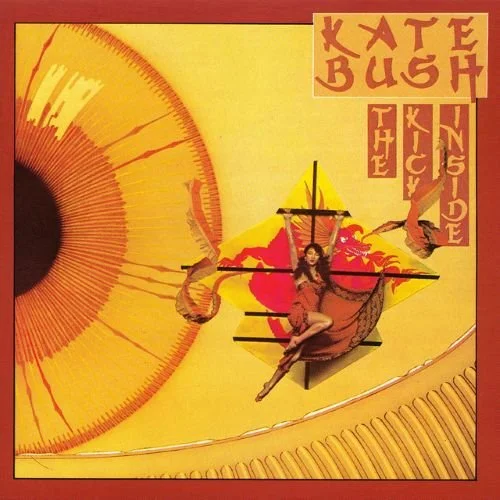
uncertainty around when exactly Kate Bush wrote The Man with the Child in His Eyes. She says when she was sixteen, though most people say it was when she was thirteen. Either way, it does not take away from the extraordinary beauty and maturity of the song. The second U.K. single released from The Kick Inside, following Wuthering Heights, I wanted to revisit this track. It turns forty-eight on 26th May. This is a song that Bush performed live quite a bit, including during her only appearance on the U.S. show, Saturday Night Live. That was introduced by Eric Idle. I have written about The Man with the Child in His Eyes, though I will need to repat myself a little when it comes to the inspiration and backstory. Reaching number six in the U.K., it did remain on the charts for eleven weeks. This is one of the songs that was recorded in June 1975 at AIR Studios with David Gilmour as Executive Producer. The other album track, The Saxophone Song, was recorded during that session. Bush recalled how nervous she was recording alongside an orchestra. More used to piano, drums, bass and guitar prior to that, this was a moment when she got to record with a larger ensemble. However, listen to the version we hear on The Kick Inside – which was unchanged from its 1975 recording – and it sound faultless. No nerves from Kate Bush at all! There is a difference between the single mix and the album version. The single mix has Bush repeating “He’s here!”. A little giggle too. I am not sure why that was not part of the album version. I suppose it was an inclusion thought of post-1975. Many people prefer the single mix and that addition. This extraordinary song received Ivor Novello Award for Outstanding British Lyric in 1979.
It is fascinating what influenced the song. Many people misinterpreted the title and what that meant. Also, who inspired the song. Thinking it was a specific person. However, Kate Bush explained how The Man with the Child in His Eyes was about men in general. The Kate Bush Encyclopedia provide some interview archive:
“The inspiration for ‘The Man With the Child in His Eyes’ was really just a particular thing that happened when I went to the piano. The piano just started speaking to me. It was a theory that I had had for a while that I just observed in most of the men that I know: the fact that they just are little boys inside and how wonderful it is that they manage to retain this magic. I, myself, am attracted to older men, I guess, but I think that’s the same with every female. I think it’s a very natural, basic instinct that you look continually for your father for the rest of your life, as do men continually look for their mother in the women that they meet. I don’t think we’re all aware of it, but I think it is basically true. You look for that security that the opposite sex in your parenthood gave you as a child.
I have said before how it is a shame that the handwritten lyrics for the song, which Bush wrote in hot pink felt-tip pen, were sold an an auction. Steve Blacknell – perhaps her first serious boyfriend who many (including him) felt the song was written about – gave it away. This is the item of Bush memorabilia that I would want to posses more than any. Just holding that paper Kate Bush was writing on perhaps as early as 1971. That would be truly something to behold!
Also, The Man with the Child in His Eyes was performed by Kate Bush. Steve Harley and Peter Gabriel at Bill Duffield’s memorial concert on 12th May, 1979. It was renamed The Woman with the Child in Her Eyes. Duffield was part of Kate Bush’s crew for The Tour of Life who tragically died following an accident after the warm-up gig in Poole. Forty-eight years after its release and I still think that it is one of the most beautiful songs ever recorded. I am surprised it was not a biggest chart success. When we discuss The Man with the Child in His Eyes, we mention how young Kate Bush was when she wrote it. However, that sort of takes away from the fact that she wrote it. Artists that young recorded hits, but very few wrote them at that age. Think about the history of music and the age at which major artists wrote their earliest hits. I guess The Beatles might be an exception with Love Me Do. John Lennon and Paul McCartney only seventeen when they wrote that. Other Beatles songs written when they were even younger. I feel McCartney was fourteen when he wrote When I’m Sixty-Four. That song was not really a hit. In general, artists did not write songs that young. Dreams of Orgonon highlighted how spectacular it is that Kate Bush had this song in her mind when she was a teenager:
“The answer presents itself immediately—most young artists in the Seventies didn’t write their own hits, and their hits were rarely so good. The only other UK hit single written by an under-18 female artist by the time of “Child” that I can find is “Terry,” an a lugubrious piece of grimdark pop from 1964 by 16-year-old Twinkle. Apart than that, young singers didn’t (and probably weren’t permitted to) write their own songs. The lack of songwriting royalties certainly didn’t hurt precocious young stars—Helen Shapiro recorded hits without writing them, and Little Jimmy Osmond hit number 1 at the age of nine with the agonizing “Long Haired Lover from Liverpool.” Picking on these young artists who sang some micromanaged mediocre hits four to five decades ago would be petty at best and mean-spirited at worst, so we’ll eschew that, but all this shows just how odd “The Man with the Child in His Eyes” was. It was as far from micromanaged as possible. Its inception and recording predate its public release by about three years, and Kate was mostly left to her own devices while creating it (her family helped her procure business deals that would basically allow her to do whatever she wanted creatively).
So what we’re given with “Child” is that ever-so-rare thing in pop music: a young person’s vision of the world, undiluted by executive interference. In it Kate sings about a strange, wonderful man, older than herself but with an adolescent spirit that’s not unlike hers. The song is somewhat impenetrable, like any artistic work by a young person beginning to navigate the world, and it’s accessible and applicable and gorgeous. It’s rare for artists to pull this off successfully so early on, which may account for the limited amount of in-depth analysis on “Child”—Ron Moy finds little to say on the song in his book Kate Bush and Hounds of Love, and Deborah M. Withers’ classic Bushology text Adventures in Kate Bush and Theory skips the song altogether (frankly the best reading of the song hails from this Tumblr post). The most useful critical take comes from Graeme Thomson’s seminal biography Under the Ivy:
“[Kate] is surely unique among female songwriters in that her canon contains not a single song that puts down, castigates, or generally gives men the brush off. She has never been feminist in the bluntest sense — she wants to preserve and embrace the differences between the sexes and understand the male of the species. Many songs display a desire to experience fully what it is to be a man; she invests them with power, beauty, and a kind of mystical attraction which is incredibly generous”.
It is interesting too how Kate Bush portrayed men. Many teenage artists would be quite naïve or immature. There would be recrimination and some anger. It happens today. Young artists talking about men and relationships with some anger and regret. Not to say Bush was heartbreak-free even aged thirteen. Through her career, she maintained this positive attitude towards men. The positive role that they played in her life. The Man with the Child in His Eyes is so moving and unique because it is written by a teen prodigy. Instead of it being a simple love song or regretful break-up, there is this sense of wonder. Teenage artists of the 1970s were not writing songs that had this sort of approach to men. Commending the child-like quality they retain.
I will move on in a minute, though I want to stay with this Dreams of Orgonon article, as there are some really insightful observations made. The Man with the Child in His Eyes has not been dissected and discussed enough through the year:
“There’s a nice lack of dependence to the song as well. Kate leans on no one here—the song’s protagonist places themselves at a safe distance from the Man, and Kate herself has even more control of the affair than she’s probably aware of. She doesn’t lean on male-pioneered rock or ballads—she offers her spin on the genre by discussing her experiences as a woman. As we’ll see, Kate Bush isn’t above gender essentialism—she’s written countless songs about the supposed central human dynamic of relationships between men and women. But she walks a strange line—she mediates a discussion between poptimism and rockism. Kate Bush is that relatively unusual thing in 1970s popular music—a creator of bestselling singles who immediately moves into the role of albums artist.
Musically, MWCIHE is Kate’s most significant accomplishment to date. It’s easy to see why Dave Gilmour wanted it released. It’s the first Kate song to really work melodically—it’s cleanly structured, gorgeous, organic, and uncanny. She manages to balance ethereality and hummable melodies while keeping her more experimental drive. She finally develops a memorable hook, an arpeggiated E minor chord (B-G-E-E). The song continues by displaying Kate’s propensity for unorthodox key changes. The first part of the verse (“I hear him before I go to sleep” through “when I turn the light off and turn over”) in E minor with a progression of i-III-VI-III-iv (E minor-G-C-A minor). The second half of the verse moves to E minor’s dominant key, B minor, before shifting to Bb major, doing some things in G, and shifting to a chorus in C. The song is not static—it’s organic, it breathes like a person”.
What is interesting is how The Man with the Child in His Eyes has this simplicity. In terms of the arrangement and the music video. I think that is one of its greatest strengths. It is a song that could only have been sung by a very young woman. Older artists like Hue and Cry and Dusty Springfield covered the song, and it is not one Bush could have performed later in her life and made work. It is the purity of her voice and the fact that she was this teenager writing and recording this song which made it so powerful. Even though the song weas recorded almost three years before it was released as a single, I did want to mark forty-eight years of this outstanding and beguiling track. In 2022, when highlighting ten Kate Bush tracks to delight new listeners, Alexis Petridis for The Guardian rightly observed this: “Bush wrote The Man With the Child in His Eyes when she was 13, which frankly beggars belief: eerie, sexually charged and astonishingly beautiful, it would be an incredible achievement for an adult. As it was, it offered the first sign that Bush wasn’t merely a prodigiously talented writer, but an actual genius”. It is clear that Bush felt strongly about The Man with the Child in His Eyes and wanted it to succeed. She was determined for this to be the single. EMI wanted to go with another choice. Mirroring that battle she had to get Wuthering Heights released as her debut single when EMI wanted the more commercial James and the Cold Gun. I think Them Heavy People was suggested as the next U.K. single – though it was released in Japan under the title of Rolling the Ball. When speaking with Melody Maker in 1978, Kate Bush did say how much she wanted this new single to succeed:
“Dave Gilmour, of Pink Floyd, was impressed enough by her potential to put up the money for proper demos, and Andrew Powell, usually noted for his orchestral arrangements, stepped in to produce her album. With all the business taken care of, Kate was able to "educate" herself.
"Train myself for the ...ah...Coming, I guess. I really felt that I wanted to get some sort of bodily expression together to go with the music. Music is a very emotional thing, and there's always a message, and your purpose as a performer is to get it across to the people in as many ways as you can."
The "Coming" came and Kate Bush took everybody by surprise, including herself and EMI, by breaking through immediately. She had insisted that "Wuthering Heights" be the first single, as much for business reasons as artistic ones.
"I felt that to actually get your name anywhere, you've got to do something that is unusual, because there's so much good music around and it's all in a similar vein. It was, musically, for me, one of my strongest songs. It had the high pitch and it also had a very English story-line which everyone would know because it was a classic book."
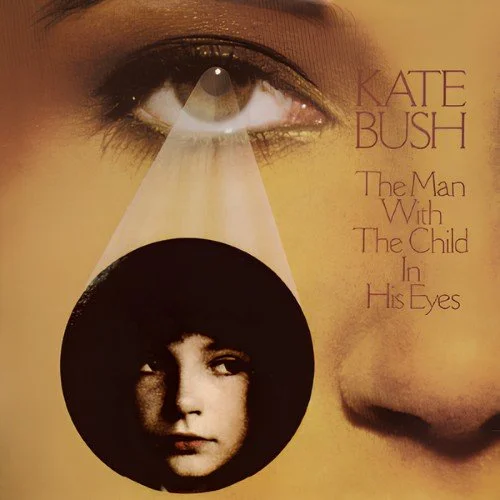
EMI had wanted to go with another track, "James and the Cold Gun," a more traditional rock'n'roll song. But Kate was reluctant, just as they were with the new single, "The Man With the Child In His Eyes," which, musically, is a complete contrast to her first hit. The record company would have opted for a more obvious follow-up in "Them Heavy People."
"I so want "The Man With the Child In His Eyes" to do well. I'd like people to listen to it as a songwriting song, as opposed to something weird, which was the reaction to 'Wuthering Heights.' That's why it's important. If the next song had been similar, straight away I would have been labeled, and that's something I really don't want. As soon as you've got a label, you can't do anything. I prefer to take a risk”.
I am going to wrap up. On 26th May, it will be forty-eight years since The Man with the Child in His Eyes was released as a single. Wuthering Heights reached number one, but it also labelled Kate Bush as a weird or eccentric artist. She did not want to be defined by that song and its sound. The fact is that her second U.K. single was very different and did establish her as a serious and genuine songwriter who was not a one-hit wonder or this stereotype that was perpetuated by many in the media. It remains this tender, dreamy, sophisticated and hugely accomplished song. We do not discuss it enough. Articles are not written about it. Like so many Kate Bush songs. That needs to change. One of the most beautiful songs ever recorded, forty-eight years after it was released as a single, and The Man with the Child in His Eyes…
STILL captivates.