FEATURE:
Old School Joint
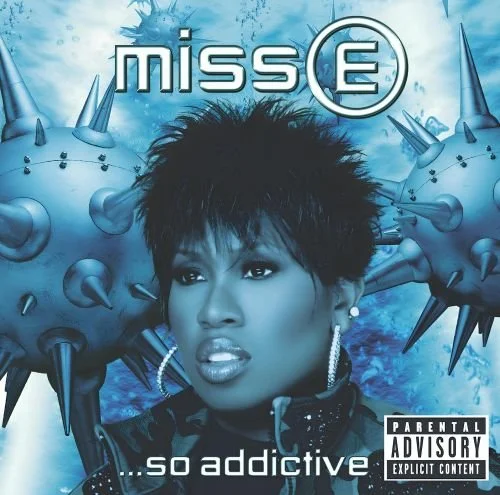
Missy Elliott's Miss E... So Addictive at Twenty-Five
__________
ARGUABLY her finest album…
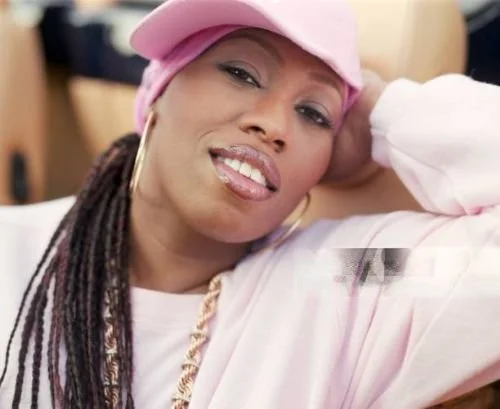
IN THIS PHOTO: Missy Elliott in 2002/PHOTO CREDIT: Gregory Bojorquez/Getty Images
the all-conquering Miss E... So Addictive turns twenty-five on 15th May. I am going to get to some reviews and features for this incredible album. The third studio album from Missy Elliott, it reached number two in the U.S. and ten in the U.K. Its lead single, Get Ur Freak On, one of the defining songs of the 2000s. It is one of my favourite songs of that decade. I hope that there is new celebration and attention given to Miss E... So Addictive ahead of its twenty-fifth anniversary. I am going to start out with an interview from Vibe that was published in June 2001. We learn how this Rap icon “blasts back onto the scene with her third album, the innovative and sexy Miss E…So Addictive. Marc Weingarten bonds with the reborn, self-aware woman in charge and discovers her new style of sexual healing”:
“Supa Dupa Fly’s platinum success, and Elliott’s songwriting and producing track record for artists like Aaliyah (“One In A Million,” “If Your Girl Only Knew”), 702 (“Steelo”), and SWV (“Can We”) among others, enabled the Portsmouth, Va., native to write her own ticket with Elektra. The company gave her a label imprint, The Gold Mind Inc., with a full roster of handpicked talent. At the time, Missy was seemingly bulletproof. She even managed herself. Who needs to give up 20 percent, for Christ’s sake, when there’s so much money rolling in?
Two years later, Elliott released her follow-up, Da Real World, a darker, less playful album that also sold a million copies, but did so in a much quieter fashion than Supa Dupa Fly (read: negligible media buzz, fewer MTV spins). Gold Mind’s inaugural release, Nicole’s Make It Hot, sold anemically, despite bearing the freakishly imaginative thumbprint of Elliott’s songwriting and production skills.
Suddenly, Elliott found her bountiful cash flow hitting rocky shoals. The Supa Dupa Fly clips with which she had universally raised the standard for video production had cost roughly $2 million a pop, and they sat on Elliott’s balance sheet like two-ton weights, dragging down her bottom line. Despite the success of Da Real World’s “Hot Boyz,” which stayed atop Billboard’s rap chart for 18 straight weeks, the album failed to live up to her sales expectations, and she still harbors some residual bitterness about it.
“I was in ‘prove your point’ mode when I made that album,” says Elliott, before heading into the walk-in closet-sized New York City studio where MTV’s Direct Effect tapes. “You know, like, can she do it again? I was more intense on that album. I honestly think it could have done a lot better, but Elektra cut my singles off after three, and ‘Hot Boyz’ broke a record for staying at number one! How can you cut off an album when the last record has done so well?” Sylvia Rhone, chairman/CEO of Elektra Entertainment Group, explains that they were “still able to recover and maintain the kind of sales we achieved with Supa Dupa Fly, and with the tremendous success of ‘Hot Boyz,’ we thought it was best to end on a high note.”
Da Real World’s failure to live up to Elliott’s expectations has spurred her to be more hands-on with every aspect of Miss E…So Addictive, from marketing to single-street dates. “I’m probably more involved with the business side of things now than I am as an artist,” says Elliott. “I spend a lot more time in meetings with my artists and for my own project. I thought I knew a lot then, and you learn more as time goes on, but two years ago, I don’t think I was educated about the business.” That’s why “Get Ur Freak On” is being released now, a full month and a half before the album’s release, so it can “marinate in the clubs for a while, get a street buzz going.”
Elliott may be more involved with biz than show now, but she isn’t spreading herself as thin as she once did—booking massive gobs of studio time, working 24-7 as if her life depended on it. Two years ago, she hired Mona Scott, a partner in Violator, the powerhouse management firm that also handles Nas, LL Cool J, Busta Rhymes, and Maxwell, among others. If a decision has to be made, it’s done by committee now, not a party of one.
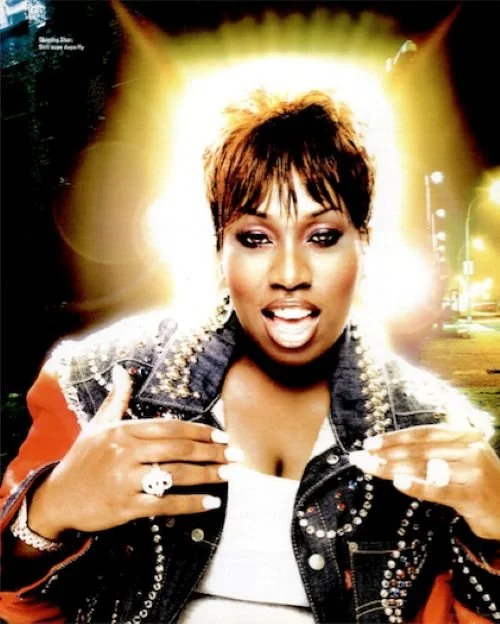
PHOTO CREDIT: Sacha Waldman
“There were situations where I would go into the studio with an artist to lay down a track, and I wouldn’t get a check,” says Elliott. “Mona told me, ‘Look, you’ve gotta get the first half of the check before you do any work.’ The bills were just piling up. A lot of that pressure is off of me now. If there’s a situation where I don’t want to do something, I don’t have to look like the bad guy.”
Elliott was spending too much money and not getting enough back in return. “It was crazy,” she says. “I mean, I’ve got a lot of love for this business, but at the same time, I gotta make sure my mom is taken care of.” Her mother, Pat Elliott, helps Missy manage her money, pay her taxes on time, and invest prudently whenever a $500,000 check rolls in. She’s Missy’s most trusted adviser—the only person, in fact, that she trusts unconditionally. When Pat suffered a massive heart attack in March that required rehabilitative therapy, it cast a black cloud over the prosperous, placid little universe Missy had created for the two of them.
“It really messed with me,” says Elliott. “I’ve always been close to my mother, and it’s hard for me now, knowing I have to go overseas for the album and leave her. She’s all I’ve got. If she was gone, they’d have to put me in a strait-jacket. I’d be messed up for a long, long time. Just seeing her in the intensive care unit, it was so hard.”
When asked how her father—who Pat Elliott divorced when Missy was 14 years old—reacted to her mother’s sickness, Missy says, “I don’t think he knows about it.”
“MAN, I live to take this makeup off!”
Her promotional chores finished at Direct Effect, Elliott leaves MTV’s studios in the Viacom building and hops into a stretch limousine waiting for her on 46th Street by the service entrance. She wipes her glitter mascara off with a box of baby wipes, then fumbles through her pocketbook for a copy of the new album. Popping it into the stereo system, a strident bass thump rattles the limo’s windows, and a strange brew of synth sirens and space-age sound effects begins to cast a spell over Elliott. She’s in a trance state: eyes closed, arms akimbo, mouthing the words like any other fan: “If I give you head, you’ll never leave,” she rhymes on “Lickshots.”
Make no mistake: Elliott’s astonishing new album Miss E… So Addictive is all about sex—how to get it, how to do it, when to spurn it. While she may have touched upon the subject in the past, this represents a subtle shift in Elliott’s persona. Gone are the Supa Dupa Fly days, when Elliott was content to be a jeep-beeping homegirl with a space-age secret identity and leave the heavy breathing to pheromone bombs like Lil’ Kim and Foxy Brown. Missy is tired of being, in her words, “a cartoon.” It was time to peel off the mask, show the world what Missy was really all about. And, as it turns out, she’s all about sex. For virtually any other hip hop performer, this wouldn’t be an unusual development, but for Missy, it’s a stunner.
Consider her background, which was scarred by sexual trauma at a very early age. A teenage relative sexually abused Elliott beginning when she was eight. This went on frequently over the course of a year. Her father also mercilessly beat her mother for years. “Stuff like that never leaves you,” says Elliott. “I’ll never forget walking into the house and seeing my mother crouched in the corner with her arm out of the socket. There isn’t a day that goes by that I don’t think about all of it.”
In high school, Elliott was fast and loose with men. “Did I have relationships? I was bonin’,” she says. “I was going through a time when all that stuff kept playing in my head, and, eventually, you begin to seal yourself off from anything that reminds you of that situation.” Shunning psychiatry, Elliott instead turned to the church for spiritual sustenance and some degree of comfort. “I believe God healed me from a trauma that, for somebody else, would have made them lose their mind.”
As for her attitude toward men today, it’s strictly an arms-length proposition. “I have learned to be happy with myself,” she says. “I’m not saying I’m celibate, but I watch a lot of friends who are unhappy because they feel they have to be with a man, but then they catch them doing whatever. I’m like, I’m happier than ya’ll. I’ve seen so much, that I decided early on that I would never take any sh*t from any man.”
Unlike stars like Madonna, who equate sex with power but really pander to the fantasy life of men, Missy’s new sexual frankness truly is a form of empowerment, because it’s being done on her own terms. When you’re Missy’s kind of beautiful—the kind that doesn’t fit the standard set by mainstream, white America—you can’t be co-opted by a music industry that values the commodification of flesh. When Missy raps “Get Ur Freak On,” it sounds less like an invitation and more like a command, and you’d better obey.
“I don’t trip, because it doesn’t have to be about you getting all butterball naked and singing ‘Oops!…I Did It Again,” says Elliott. “If you’ve got talent, you just have to do you. If they want to take their clothes off and sell those records, fine—just call me to do a song on your album!”
There’s a newfound boldness on Miss E… So Addictive that was only hinted at on Da Real World, a willingness to seize whatever it is that strikes her fancy with blunt bedroom tactics. Check the song titles: “Dog In Heat,” “Ex-sta-sy,” “Get Ur Freak On,” “One Minute Man” (as in “I don’t need no…”).
“As females, we went through our anger moment,” says Elliott. “Then, it was all about ‘Where’s my money? We don’t want no broke dudes.’ Then, before that, it was about love. So for me, it was like, dag, all of the old topics are worn out one way or another! I just wanted to cross the border with this album. When was the last time somebody made records like Prince, or Rick James, or Marvin Gaye’s ‘Sexual Healing?’ I wanted to do what everybody else is scared to do.”
Miss E… So Addictive shifts the paradigm in other ways. With Supa Dupa Fly, Elliott and her childhood friend/partner-in-rhyme Timothy “Timbaland” Mosely introduced a new vocabulary of beats the way Chuck Berry introduced a new way of playing guitar into rock’n’roll’s lexicon 40 years prior. Elliott refers to them as “double beats,” and they do have a kind of double-jointed agility about them. Tim made this bass drum skip and skitter over tracks like a fibrillating heartbeat, liberating hip hop from straitjacketed, four-on-the-floor rhythms.
But admiration soon begat emulation, and countless producers began packing their tracks with rubberband beats. Elliott and Tim started complaining in the press about beat thieves pilfering their stuff and even wrote songs about it (Da Real World’s “Beat Biters”).
Soon, it got to the point where you couldn’t read a Mosely interview without him complaining about being robbed of his rhythms. Those protests quickly grew tiresome. A Spin review of Da Real World began with the pungent line: “Enough about Timbaland’s goddamn beats already”.
I will finish off with a Pitchfork review for the incredible Miss E…So Addictive. Even if many might not view it as being as influential and strong as Supa Dupa Fly, Elliott’s third studio album is seen as one of the most important albums of the 2000s. Rolling Stone voted at seven in their list of the 200 greatest Hip-Hop albums in 2023. Stereogum wrote about Miss E…So Addictive on its twentieth anniversary in 2011:
“There is a particular form of genius involved in producing bugged-out brain-exploding pop music that still functions as pop music -- that elbows its way into radio rotation, sells records, and changes the contours and possibilities of the zeitgeist in real time. It's a rare and difficult thing to accomplish. Throughout history, we've only seen a few producers who can fuck around with the formula while still remaining top of the pops: Joe Meek, Brian Wilson, Lee Hazlewood, Giorgio Moroder, Prince, maybe a few others. In the late '90s, the team of Missy Elliott and Timbaland rose up and took their place within that proud lineage.
In a head-spinning series of records for themselves and for others, Missy and Tim remade rap and R&B as playfully experimental digital cartoon funk, importing ideas and beats from dancehall and house and bhagra and god knows where else, turning those ideas into ecstatic plastic space-pop, reshaping the sound of the radio in the process. By the time Missy and Tim hit their stride in 1997, the same year that Missy released her classic debut Supa Dupa Fly, the rest of rap was scrambling to catch up. Four years later, the duo's evolution was at its peak. They were able to make whatever they wanted, and that's exactly what they did.
By the summer of 2001, Missy and Timbaland were as big as they would ever be. Missy rewrote and co-produced Labelle's disco-funk oldie "Lady Marmalade," turning it into a show-of-force pop posse cut for the movie Moulin Rouge, and it became one of that summer's biggest hits. Timbaland was making hits with people like Jay-Z and Ludacris and Petey Pablo, and he'd helped his young R&B collaborator Aaliyah turn into a dominant crossover pop figure who was already knocking on the door of movie stardom. The Neptunes, another Virginia production team, had risen up with their own spartan take on the Missy/Tim sound. Virtually every song on rap and R&B radio -- and, increasingly, pop radio -- took some element of that vividly warped Virginia sound. Missy and Tim were working with a blank check, and maybe a blank check is how you end up with something like "Get Ur Freak On."
"Get Ur Freak On," the lead single of Missy's third album Miss E... So Addictive, is a deeply strange and sideways anthem. Its six-note riff, played on an Indian instrument called a tumbi, returns again and again, mocking and insistent. Tablas sputter and chatter, surrounding the beat without fully locking into it. Japanese-language exhortations drop in and out. Ominous keyboard drones rise steadily, evoking horror-movie soundtracks. Over all of this, Missy Elliott intones delirious nonsense about spitting in your mouth and the biggie biggie bounce. She plays around with the beat, leaving in long and strange pauses: "Copywritten so... don't copy me!" On the intro, Missy promises "some new shit." For once, that's a crazy understatement.
In its way-out silliness, "Get Ur Freak On" could've lost people. Instead, it was everyone's favorite song to hear while drunk late at night. In 2001, the year of "Get Ur Freak On," I had a short stint as a DJ at a deeply unsuccessful hipster dance night in Syracuse, which is not a place where you should start a hipster dance night. Other than perhaps "Blue Monday," "Get Ur Freak On" was my one great reliable floor-filler. Everyone loved that song.
"Get Ur Freak On" anchored Miss E... So Addictive, which celebrates its 20th anniversary tomorrow. The album went platinum in a couple of months. When the LP came out, club drugs, and ecstasy in particular, had just taken off in the rap world. Giants like Jay-Z and Eminem were rapping about the pill's effects, and fizzy rave textures were appearing in tracks as heavy as Mannie Fresh's Cash Money bounce symphonies. For Miss E... So Addictive, Missy Elliott turned her own name into an MDMA pun, drawing a metaphorical connection between the drug and her own bugged-out and hypnotic sound. Missy and Tim had already been playing around with rave sounds and signifiers for years, and the timing was right for the two of them to take the world on a hallucinatory club odyssey.
Miss E... So Addictive isn't the most revolutionary Missy Elliott album; that's still Supa Dupa Fly. It's not my favorite, either; the old-school double-dutch absurdity of 2002's Under Construction hits me right in all my pleasure centers. But Miss E might be the album where Missy and Tim were most locked-in with the mainstream, ready to push the world in whatever direction they wanted. Miss E is a wild journey of a blockbuster album. Missy and Tim had access to the whole Black-music establishment, and they used it to make some truly new shit.
Casting is important. Superstar guests show up all over Miss E... So Addictive, and they're all deployed to maximum effect. Method Man and Redman huff hungrily on "Dog In Heat." On the monster hip-house jam "4 My People," Eve gives a virtuoso treatise on nightclub etiquette and on what she'll do to the people who violate it. Busta Rhymes appears on one interlude -- not to rap, but to make triumphant declarations. On another, Lil Mo goes into paroxysms of gospel euphoria, just so that Missy can make fun of her: "You singing like you in church, raising money for some new choir robes or something!"
On the delirious smash "One Minute Man," Ludacris gives what might be the single greatest verse of his entire career, surging out of the gate like a greyhound and firing off horny innuendos with dizzy energy. I don't know if I've ever had quite that much fun rapping along with anyone, on anything: "Enough with tips and advice and thangs! I'm big dog, having women seeing stripes and thangs! They go to sleep, start snoring, counting sheep and shit! They so wet that they body started leakin' shit! Just 'cause I'm a all-nighter! Shoot all fire! Ludacris balance and rotate all tires!"
"One Minute Man" would've been a masterpiece of loping computer-funk even without that Ludacris verse. Luda takes it into the stratosphere. In the video, Missy does wire-fu and dances around with her own decapitated head. (Jay-Z's verse on the "One Minute Man" remix is a whiff, a retread of the stuff he'd just been saying on the Tim-produced "Big Pimpin'." It's notable today only for the strange sensation of hearing Jay clown his future wife: "Get ya independent ass out of here, question!" There's a reason why that verse is on a bonus-track remix, not on the song itself.)”.
In 2023, on its twenty-second anniversary, Hot New Hip Hop went inside a Hip-Hop classic. If you have not heard Miss E…So Addictive, then take this opportunity to listen to a phenomenal work from a Hip-Hop pioneer. I heard it when it came out in 2001 and I was struck by it. I knew about Missy Elliott and was not sure what to expect. The album created an instant impression:
“The album Is a fusion of Hip Hop, R&B, and electronic elements. Timbaland's clever beats complement Missy's distinguishable rapping and singing style. It includes hits like "Get Ur Freak On" and "One Minute Man," which became staples on the radio and in clubs worldwide. Other standout tracks include "Lick Shots," "Take Away," and the sensual ballad "X-tasy."
Miss E…So Addictive was met with widespread acclaim from both critics and fans. The album's lead single, "Get Ur Freak On," reached No. 7 on the Billboard Hot 100 and No. 3 on the Hot R&B/Hip-Hop Songs chart. The album itself peaked at No. 2 on the Billboard 200. It was eventually certified Platinum by the Recording Industry Association of America (RIAA).
Miss E…So Addictive remains a seminal work in Elliott's discography, highlighting her fearless creativity and unique artistry. The album's lasting impact is evident in the countless artists who have cited Missy as an inspiration. This includes Rihanna, Lizzo, and Cardi B. By breaking down barriers and pushing the boundaries of what was considered possible in Hip Hop and R&B, Missy Elliott carved out a space for herself and future generations of artists.
Queen Of Innovation
Missy Elliott's innovative impact on music exemplified her experimental approach to songwriting and production. Her often fearless approach to music production paved the way for other women in Hip Hop artists to break into the industry. The inspiration behind Miss E…So Addictive is rooted in Missy's desire to create music that would withstand the tests of time. Drawing on her life experiences and her love for various genres, Missy crafted an album that showcased her versatility as a performer, songwriter, and producer.
In addition to its commercial success, Miss E…So Addictive garnered several award nominations. The album received two Grammy Award nominations, with "Get Ur Freak On" winning Best Rap Solo Performance. Elliott also welcomed several MTV Video Music Awards nominations. She won the Best Hip Hop Video award for "Get Ur Freak On."
Beyond the music itself, Missy Elliott's influence extends to her music videos. These have become an essential part of her artistic legacy. With their futuristic visuals, bold fashion choices, and high-energy choreography, her videos perfectly encapsulate the essence of her music.
A Legend In The Game
Missy career has continued to thrive, with several more albums and countless collaborations with artists from various genres. Additionally, her contributions to the music industry have not gone unnoticed. She was honored with the MTV Video Vanguard Award in 2019 and inducted into the Songwriters Hall of Fame the same year”.
I am ending with a review from Pitchfork. This is a review from 2001. Interesting to see how critics reacted to Miss E…So Addictive when it was released. I think that it is as powerful now as it was in 2001. The songs have not aged at all. Some critics were not sold in 2001. Finding Miss E…So Addictive a little disorientated and Elliott spends too much time dissing detractors. However, with Miss E…So Addictive, Elliott was not playing male rappers at their own game (as The Guardian observed); she was changing the rules and paving the way for other female rappers:
“A lot of albums kick off with the killer track. Some even manage a cool one-two punch. Missy Elliott's third record, on the other hand, opens with a six-track attack that's rare for any genre, especially contemporary R&B.; I find it hard to believe I'm only a third of the way into the record when this first-rate succession ends. But even with this initial run of excellence, So Addictive has much more in store.
Elliott makes good on her intro's promise of "some shit that you never heard before." A range of beats-- from the minimal funk of "Dog in Heat" to the demented tabla of the single, "Get Ur Freak On"-- are punctuated by wild vocal pyrotechnics and tempered by soulful crooning. In fact, there's more singing on this record than rapping. Elliott's low, throaty moans, aerial cooing, and delicious screams demonstrate tremendous restraint and control. In "I've Changed (Interlude)", she rightly berates Lil' Mo for suggesting she sings like "she's in church trying to raise money for choir robes."
"Dog in Heat" starts as a simple lowdown funk track, building gradually upon a simple bass riff and drum thunk. Elliott piles layers of vocals atop Timbaland's multiplying strings and rattles, and eventually veers off into an entirely new direction at the song's end. Redman and Method Man also provide raps, adding comic relief and charisma. Elsewhere, Missy harmonizes with herself on "One Minute Man", again keeping the beat simple under a squeaking synthesizer hook, and this time allowing Ludacris to reprise the record's freak-getting-on theme by promising not a mere pit stop, but a full night's stay at Casa de Intercourse.
Missy finally breaks out the rap on "Lick Shots", twisting her voice around a Southern/Martian accent. "Y'all don't HEAR me/ You've got your guns but you don't SCEEER me/ BRRRRAAGHH!" The crazy phrasings and vocal eruptions that dominate this album are introduced here, and then let loose in the anthemic "Get Ur Freak On", where they halt beats and maneuver labyrinthine rhythm structures like "Lexus Jeeps". Its hook features the sort of Eastern percussion that runs rampant on Top 40 radio, but rarely is it used so effectively. Timbaland's technique is undeniably masterful, too, as he plays with meter, dynamics and expectations, allowing Missy to stop and spit "HOLLA!" and "Shhh..." over surreal stillness and silence.
"Scream (aka Itchin')" shakes its maraca under some prickles of shrill synths while Elliott details a sexual encounter. Rapid-fire rhyme quatrains and triplets spew forth, punctuated by screams like something the Bomb Squad used to blast for Public Enemy. "Old School Joint" comes along to "flip the beat", keeping So Addictive stylistically varied while pushing dance music to euphoric heights. Its "flashlight" and "neon light" references pay homage to P-Funk, but rather than mimicking the seminal funkateers, Missy integrates a heavier disco sound, creating something fresh out of an otherwise tired influence. "Take Away", though, attempts to update early Prince ballads, and instead reveals how those slow R&B; jams depended on The Artist's histrionics to carry the song. And despite having already proven herself more than capable of similar theatricalities, she relies on played-out vocoder, and irrationally allows Ginuwine to dumb things down with "sensitive" crooning.
So Addictive is further held back by sporadic low points during its second half. Not even reversed cymbals, snazzy rim shots and processed soul-girl harmonies can distract from the fact that neither "Step Off" nor "X-tasy" actually go anywhere. Also guilty are the superfluous remix of "One Minute Man", featuring Jay-Z, and a religious bonus track that has its mind, and length, set on eternity.
Still, there are three absolutely killer songs on So Addictive's second half. "4 My People" features Missy at her most sincere, begging, "Put the needle on the track/ Skip that, flip that, bring the beat back." "Slap Slap Slap" is both ferocious and psychedelic, with a backwards guitar and some fierce guest turns by Da Brat and Jade. And, after a pointless but impressive Busta Rhymes interlude, "Whatcha Gon' Do" rolls through with Timbaland's guttural rap and a rumbling beat that loops around itself like a perpetual motion machine set on accelerate. Synthesizers hiss like hydraulic pistons and hover like boomerangs while background guitar sounds wail like ghost cats in heat.
Of course, to say Miss E is addictive is pushing it. Sure, I'm having a great time experimenting with this stuff right now. But I can stop any time I want”.
15th May is when we celebrate twenty-five years of Miss E…So Addictive. It is one of the defining Hip-Hop albums ever. On 18th July, 2001, the album was certified platinum by the Recording Industry Association of America (RIAA). It has influenced scores of other artists and will continue to do so. A truly spellbinding and towering work from…
A queen of Hip-Hop.