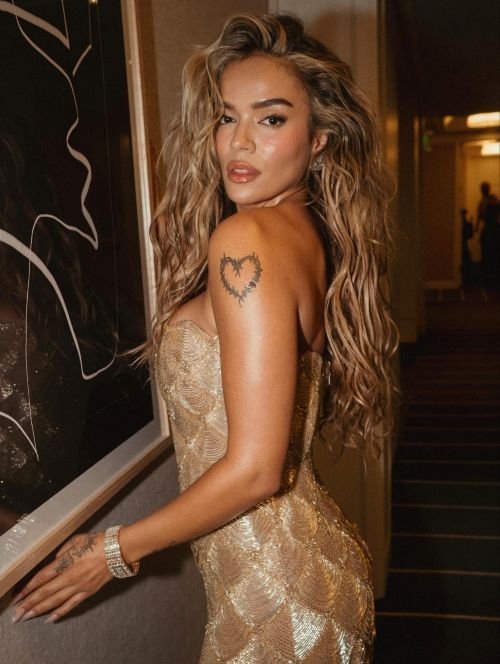
FEATURE:
Modern-Day Queens
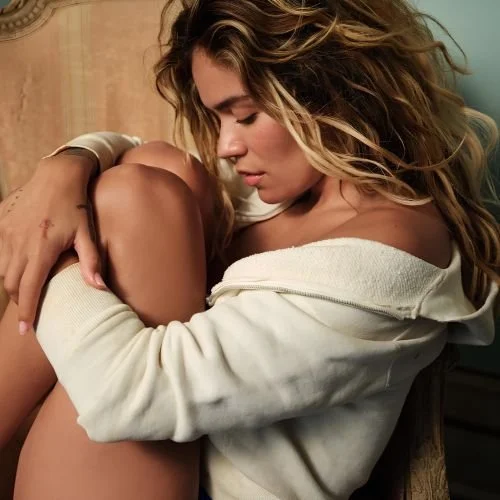
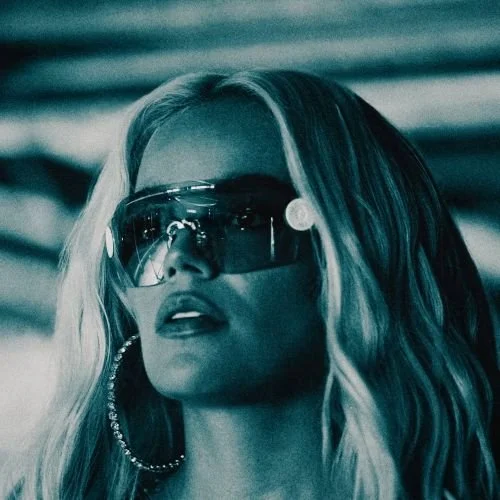
PHOTO CREDIT: Netflix
as Karol G is headlining Coachella on 12th and 19th. She will be joining incredible artists like Wet Leg and FKA twigs during one of the world’s biggest festivals. Alongside headliners Sabrina Carpenter and Justin Bieber, Karol G will deliver spellbinding sets. Her incredible album, Tropicoqueta, last year. I will drop in a review for it. There are a couple of other reasons for highlighting Karol G. She recently was featured in Playboy and asked actor Sofia Vergara if she should do it. Also, she has been warned not to say ‘ICE out’ during her set or risk losing her Visa. Born in Medellín, Colombia, Karol G a pioneering GRAMMY-winning reggaeton and Urban Pop artist. Known as a ‘Bichota’, she broke barriers as the first woman to debut at number one on the Billboard 200 with an all-Spanish album, Mañana Será Bonito (2023). I do want to drop in some interviews. Last year, Karol G spoke with Harper’s Bazaar about her new Netflix documentary, Mañana Fue Bonito (Tomorrow Was Beautiful). One that shows “the highs and lows of being a trailblazing Latina in music”:
“When she released her fourth studio album, Mañana Será Bonito, it evolved from being just the latest in a string of successful projects into something more—a mantra that came to define her entire being. The album was accompanied by numerous accolades: it became the first Spanish-language album by a woman to top the Billboard 200 chart, Karol became the first woman to win the Grammy for Best Música Urbana Album, and it fueled what became a landmark tour. This tour was not only the biggest global outing of Karol G’s career, but also the biggest in history for a Latina artist. To this day, the Mañana Será Bonito tour is the highest-grossing—and the first-ever stadium tour—by a Latina recording artist.
Now, thanks to a new documentary—Mañana Fue Bonito (Tomorrow Was Beautiful)—available on Netflix today, Karol's fans can relive the era that changed everything for the singer, as well as see all that it took to make history and shift the perception of success for Latinas in music.
“The first time that I saw the documentary, the first thing I felt was I really forgot how much effort it took to get here,” Karol G tells Harper's Bazaar. “Every day you wake up thinking about the future, what's gonna be your next step, what's gonna be the next thing to do, and maybe you don't always have the time to stop a little bit and remember how far you've come from the beginning. That was the most beautiful and important thing for me about this documentary—it gave me this different perception of everything that [I'm experiencing] right now. I feel even like more inspired and more motivated for what's come.”
Creating the documentary hit home for the film's director, Cristina Costantini, too. Its release comes at a particularly tense time for Latinos in the United States.
“There’s never been a tougher time to be a Latino. It’s a time when Latinos around the world have been told to shut up, to sit down, to self-deport, to give up. Our leaders have told us they can do whatever they want with us, separate our families, make us live in perpetual fear of deportation, send our loved ones to whatever country or prison they like with impunity,” says Costantini. “During this era of great tragedies, it’s an immense privilege to release a film that brings our community hope. To watch a leader like Karol stand in stark contrast to all the hatred and division around us has been a great source of inspiration for me personally. I wanted to bottle that feeling in this film, and share it with an even wider audience.”
Both Karol and Costantini shared vision of being able to show audiences what it's really like to be women on the road—especially on a tour that many industry gatekeepers initially dismissed as impossible.
“We had this special connection talking about how hard it is for women sometimes to be on the road in different professions,” says the singer. “By the end of filming, there were 22 women [involved]. The cameraperson was a girl and the director was a girl and the producers! We didn't even ask for that but everything ended up that way. This documentary [exemplifies] empowerment for women.”
Amid all the highs that viewers see Karol G accomplish throughout the film—recording the album, collaborating with Colombian icon Shakira, and her first VMAs performance—the singer is never afraid to get vulnerable either. Karol sheds plenty of tears throughout the nearly two-hour feature, but they're never seen as moments of weakness. On the contrary, these are the moments in which Karol is fully processing the highs and lows that come with breaking boundaries, especially as a woman. According to the singer, she wanted to show the full spectrum of what it takes to be a boss. She hasn't deemed herself la bichota for nothing”.
I will come to a review of Tropicoqueta, as it was one of the biggest and best-received albums of last year. It is a tremendous album from one of the world’s best artists. Although she does not have as much acclaim in the U.K. as in the U.S., she is this celebrated artist that we should be talking about more. As a trailblazer and pioneering artist. Rolling Stone spoke with Karol G about the how it is heavy and representing her community – but she is ready to do that. The Colombian superstar made an incredibly adventurous album, and, in the process “overcame criticism, and spoke loudly as an artist and a human being”:
“Despite the many peaks in Karol G ’s career since she broke out of the music scene in Medellín (where she began performing as a teenager and playing the quinceañera circuit with fellow locals like J Balvin), the 34-year-old singer still exudes a near-breathless incredulity when describing a few of the milestones she hit this year. “I’ve done legendary stages that never in my life I imagined I’d perform in, like the Vatican or Crazy Horse or at Victoria’s Secret,” she says, every word vibrating with glee.
Those moments — Karol duetting with Andrea Bocelli in St. Peter’s Square or taking over the legendary Parisian cabaret — were all in some way or another the result of Tropicoqueta, the gamble of an album she released in June. It wasn’t typical of Karol’s albums, which have toggled between happy-go-lucky party queen and tough-talking bad bitch while launching reggaeton hit after reggaeton hit. Tropicoqueta was a deeper excavation of her roots in Colombia. She tried out traditional rhythms like folksy vallenato and ballads about profound heartbreak with Eighties legends like Mexican singer Marco Antonio Solís. “Songs like ‘Coleccionando Heridas’ and ‘Ese Hombre Es Malo’ remind me of the music that I used to listen to when I was in school,” she says. “I wanted this album to get to those feelings and that nostalgia.”
Some people didn’t get it — and still don’t. Tropicoqueta was easily her most polarizing project, one that didn’t fit into the commercial objectives that preceded it. She remembers just how intense the early reactions were: “‘I love the album, it’s crazy.’ ‘I hate the album.’ ‘It’s so special.’ ‘The album is just garbage,’” she recounts.
But once she started focusing on her original intentions — how she wanted to celebrate the novelty dances at family parties called La Hora Loca, and to shout out her tias who used to dance in the kitchen — she saw how emotionally the project landed for so many people. On TikTok, girls posted videos singing the songs with their grandmothers; others proudly did choreography to the anthem “Papasito.” She wasn’t just representing where she comes from, but also inspiring pride and encouraging fans to embrace their Latinidad. “I went back to my memories of being on tour,“ she says, “people bringing their flags in every single concert, flags from Mexico, Argentina, Colombia, Puerto Rico, Dominican Republic, and me feeling that I was bringing a piece of home to every place I went.”
That sense of joy and self-identity felt even more necessary in 2025, when immigration crackdowns and anti-Latino rhetoric pervaded the culture. Karol has been outspoken about what she’s seen in the political arena, issuing a statement on her Instagram amid the ICE protests that swept the U.S. over the summer. How did it feel to shine a light on a community that was engulfed in so much ugliness? She pauses for a second. “Oh, that question made me a little emotional,” she confesses. “This year, I knew a lot of people that started feeling ashamed or shy to show that they were Latinos, and that was super hard to watch.… It felt so hard on my heart.”
In a lot of ways, Karol has always understood the responsibility of being seen as a beacon for fans. Sure, she’s known for her bubbly disposition, but there’s a grit to her that’s come from clawing her way through an unforgiving, male-dominated industry. It’s part of the reason she wanted to dive into nonprofit work with her foundation, Con Cora, which supports women and girls in Latin America who have come from vulnerable or abusive backgrounds. Karol rebuilt her childhood school in Medellín in 2024, with the idea of creating a safe space. She understands that need intimately: Earlier this year, she released a Netflix documentary in which she tearfully recounted being harassed at just 16 by a former, much-older manager. “I can do 105 documentaries and a thousand interviews, and nobody is going to understand how hard it was to be a woman in a room with a lot of people with so much power that can make you feel really small,” she explains.
So much of this year taught her to believe in herself, and it’s ended on a high: Last week, Karol took home the award for Song of the Year at the 2025 Latin Grammys, winning for her chart-topping hit “Si Antes Te Hubiera Conocido.” She used the opportunity to encourage anyone else who might be too afraid of criticism to chase his or her dreams. “There are so many people at home who think they’re not good enough or professional enough to do what they want,” she said onstage, holding the trophy. ”Forget the world, forget the noise… Love and passion over talent, and passion and obsession for what you do.”
And there’s more left to do. Currently, Karol is developing a visual album version of Tropicoqueta, which she expects to come out in December. “I’ve been working on it since March, recording in different places around the world where it’s kind of a movie,” she says. Then, in 2026, she’ll become the first Latina to headline Coachella, another spotlight that will give thousands of people a chance to be seen. Karol admits that at first, she had some trepidation about accepting the offer. “When I got the call, I was like, ‘Am I ready?’” she remembers. “And then I was like, ‘Yeah. I really need to do this.’” She’s been rehearsing the show since the beginning of the year, working on choreography done by Parris Goebel, who also had a hand in Lady Gaga’s Coachella set”.
I will get on to that Playboy article very soon. I want to drop in a review for Tropicoqueta before getting there, as it is an album that I really love. Celebrating a tender and expansive album, Pitchfork noted how Tropicoqueta is “a reverent tribute to generations of Latin music and the Latina entertainers who brought it to life”:
“The album’s historicism goes beyond strictly musical references. Last week, Karol brought iconic Cuban journalist Cristina Saralegui out of retirement to film a special episode of her eponymous talk show, which hosted the biggest Latin musicians from the ’90s until 2010. She name-dropped @ficheraz, an archival project dedicated to preserving the fascinating history of Latin, Caribbean, and diasporic showgirls. Starting as early as the 1940s and continuing into the ’80s, these vedettes—dazzling leading ladies who danced, sang, acted, and even clowned all within one show—took control of their own sensuality through cabaret, burlesque, and film. In the video for “Papasito,” Karol dances Brazilian lambada on a chintzy set reflecting this era of Latina entertainers. The album’s only song partially in English, this galloping, flirty technomerengue evokes archetypal vedettes like Iris and Lourdes Chacón, muses who spoke to international audiences with over-the-top charm and enigmatic, at times absurd, performances. The sumptuous, smouldering bachata of “Ivonny Bonita” embodies these baddies of decades past: bold rumberas who, like Karol G, fell in love with the stage.
You could follow just about every song here into another musical genre or historical tangent. Even the contemporary-sounding songs have lineage, like the slow-whining, old-school flows of “Dile Luna,” an acknowledgment of how much Afro-Panamanians like Eddy Lover have done for reggaeton. Mariah Angeliq singing, “Ya tú sabes quiéne’ son, en un makinon” (“You already know who it is, in a huge machine”) is a shoutout to Puerto Rico. Karol also references the legacies of several Mexican it-girls and artists, recreating Rossy Mendoza’s glittering green two-piece in the “LATINA FOREVA” video and opening the album with a casual, honey-toned duet with Thalía, the “Queen of Latin Pop,” singing her classic “Piel Morena.” Later, Marco Antonio Solís, formerly of Los Bukis, conjures sweeping novela imagery with “Coleccionando Heridas”—picture a male protagonist riding a white horse on a beach at sunset, half-buttoned shirt rippling in the breeze. But the real showstopper is “Ese Hombre Es Malo,” where Karol’s vocals soar over a breathtaking 57-piece mariachi symphony.
With Tropicoqueta, Karol G delivers an album for people who love Latin music and show business as much as she does. Her ambitious vision is shaped by those who’ve come before her and dedicated to the communities who lift her up. The album’s studied combination of traditional and modern sounds underlines what makes today’s urbano so addictive: The cultural references that the Latin diaspora recognize so easily. The way we know which steps to dance within a song’s first five seconds. “¿Será que se quedó el amor en otros tiempos?” (“Could it be that love has stayed in the past?”) Karol asks in “Coleccionando Heridas.” Her fifth album asserts that it’s inside of us at all times, if only you know where to look”.
Before getting to an NME article relating to Karol G being warned not to mention ICE during her Coachella set, I want to focus on an amazing Playboy article and interview. It is interesting reading what Karol G has to say, but she also looks incredible! I am including an abridged version of the interview. However, Karol G does mention ICE in the interview. It is a shame that artists are being threatened and censored at a time when they should be encouraged to speak out:
“Karol G is about to make history—again. The Colombian pop superstar lands on the cover of Playboy‘s Spring 2026 issue just as she becomes the first Latina to headline Coachella. After years of careful cultivation—topping charts, breaking records, and racking up awards—she tells Playboy she’s no longer interested in playing it safe. We are entering a whole new era of her artistry and her womanhood.
Shot by Gray Sorrenti in Los Angeles, our cover story captures Karol G at a turning point: past a devastating and very public breakup, and unapologetically embracing her full self. “Last year…life threw me to the floor, kicked me, pushed me, stood on me, spun me around,” she says. So she flew to Hawaii, chopped her hair off, and did some thinking. Now, she’s on the verge of what could be one of the biggest years of her life.
Posing for Playboy, she tells writer Paola Ramos, was entirely her call:
“Why do I want to do this? Because I want to. Because I grew up inspired by how beautiful the women in the magazine looked and now I have the opportunity to be that beautiful, sexy, mamasota.”
In the interview, Karol opens up about everything from her responsibility to the Latino community to the freedom she’s found being single, and the “wild woman” ethos that’s been fueling her this year.
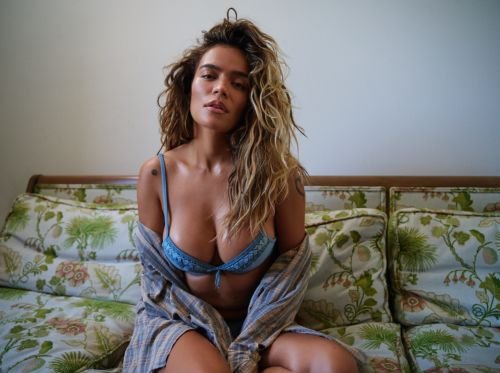
PHOTO CREDIT: Gray Sorrenti
On this weekend’s history-making Coachella performance:
“I thought that this was going to be like my consecration, but I actually feel like it’s the beginning. This is the first time in my life that I feel I’m going to see myself as the artist in the same caliber as the stage that I’m stepping on.”
“When I received the call, I felt like a huge weight fell on me…. I feel very blessed to be part of a generation that is trying to change the narrative and raise our voice for the community… I feel like it’s a show for my community, for the world, but it’s a show that’s very much for me.”
On standing up for her community:
“I don’t want to just say “ICE Out” and have nothing come from it… I’m probably going to go a little harder than that. I just want to represent my community. But what I’m telling you is that, as a human being, I want that to mean more. I’m not saying that I’m not going to do it; what I’m saying is that I would do it and will do it with my soul. But I want to sit down and understand, in my head: Here’s what that meant.”
On being single:
“I’m letting go of everything. I’m single and, to be honest, I’ve always thought that my most evolutionary moments come when I’m alone. As a good Latina from a traditional family, they teach you to give yourself fully to relationships, to a point where you can even lose yourself… I think you have to work a lot on yourself so the relationship can work. You also have to do the work so that you can walk away when you recognize it’s not going to work. When I finished my last relationship, I initially felt like, Wow, I’m here again. But then I saw it as, Wow, how beautiful that I had the courage to say that I no longer wanted to be there.”
On being happy where she is:
“According to my culture, I should have kids by now. But you know what? This year has literally been like, Fuck it. I don’t feel like I’m behind. I actually feel that it’s beautiful that I’m living my process, that I’m evolving, that I’m learning, that I’m not tired of experimenting, that I’m curious.”
On her Playboy cover:
“The only person I asked if I should do it or not was Sofía Vergara. I called her and told her, ‘If you tell me not to do it, I won’t.’ [She said] ‘Mijita, with that body? When you get to this age, you tell yourself, “Fuck, why didn’t I pose that one time? I should have posed more with a thong!” Just one thing: Don’t show your pussy!’ She also said, ‘This moment will have a reason. What is going to be your reason?’”
Playboy’s Spring issue officially hits newsstands on April 14th, but subscribers can access Karol G’s full cover story—including exclusive inside photos—starting today. Plus: Misses January, February, March, and the (unreleased) Miss April; an unforgettable edition of the Playboy Advisor; the Playboy Interview returns; and our favorite writers embark on journeys ranging from swingers’ cruises to the future of artificial intelligence”.
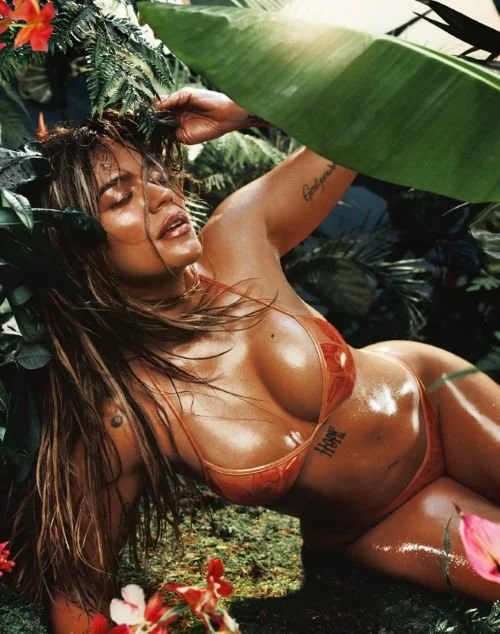
PHOTO CREDIT: Glenn Martens
I am going to end with NME and their article about Karol G’s upcoming Coachella headline slot. Someone who feels strongly about ICE and what they are doing, it is sad that such a phenomenal artist who uses her voice for good and to speak out is being silenced:
“Karol G has said that she has been warned not to say “ICE out”, as doing so could lead to her losing her visa.
The Colombian pop star is set to make history later this week, as she will become the first Latina artist to headline Coachella Festival in California.
In a new interview with Playboy ahead of the slot, the singer said that she is eager to use her platform to speak out against issues she sees across America – in particular, the actions of ICE – but has been warned that this could come with consequences.
Sharing that she wants to call out ICE, Karol went on: “People will say, ‘It’s better you don’t… Because if you say the thing, maybe the next day you’ll get a call: ‘Hey, we are taking your visa away’.”
“You become bait, because some people want to show their power,” she added.
Karol then added that just the popular anti-ICE phrase “ICE out” would be a risky move, and quipped that even though her “team would kill” her if she said it, she isn’t letting that stop her from speaking her mind.
“I’m willing to say it… If I’m being honest with you, it’s something that crosses the line of what I have to do to protect myself. But at the end of the day, what is my role if I’m in this position?” she said, adding that she wants her comments to have a depth to them, rather than being said for the sake of it.
“I don’t want to just say ‘ICE Out’ and have nothing come from it… I’m probably going to go a little harder than that. I just want to represent my community,” she shared. “But what I’m telling you is that, as a human being, I want that to mean more. I’m not saying that I’m not going to do it; what I’m saying is that I would do it and will do it with my soul. But I want to sit down and understand, in my head: Here’s what that meant.”
Karol concluded: “I have a huge stage. That’s why I want to wait, and if someone were ever to do something to me, I want to stand firmly on my stage for my community. So that’s why I may have to be more careful, and wait for my turn, and ensure that, through that opportunity, I can talk and represent something more”.
Even so, Karol G will headline Coachella. She is one of the world’s best artists. I say that about other artists, though it is always true. Following Tropicoqueta, I do wonder what comes next for the Colombian superstar. A beloved artist who has achieved huge success with Spanish-language music and she has empowered women throughout the world. Karol G is a cultural phenomenon who has redefined the Latin Urban genre, paving the way for female artists and cementing her status as a global superstar. This Modern-Day Queens shows love for…
A true icon.
____________
Follow Karol G