FEATURE:
Modern-Day Queens
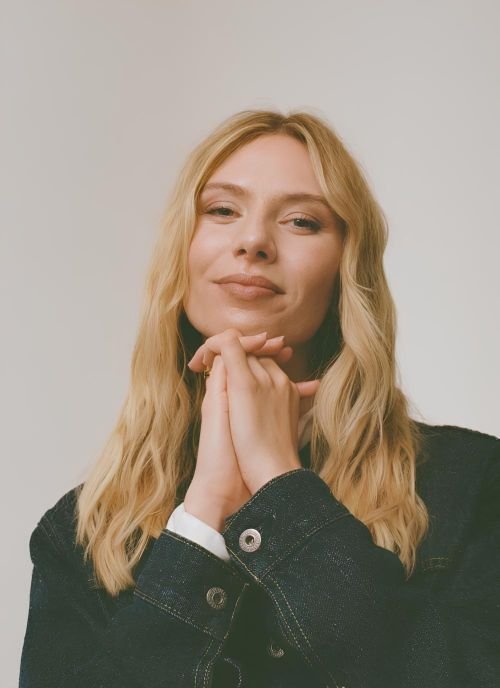
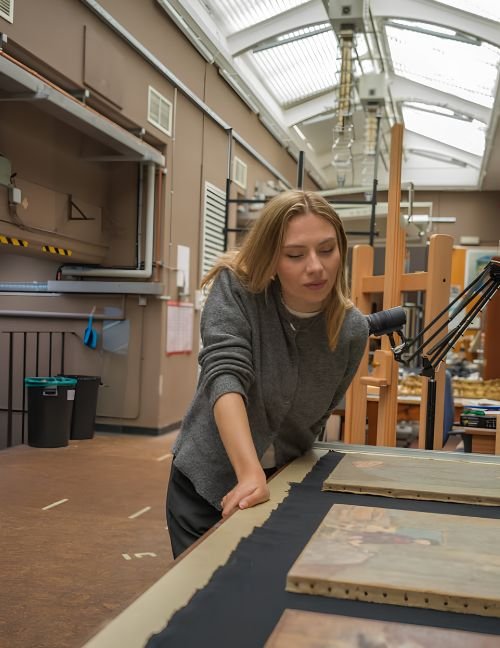
IN THIS PHOTO: Sian Eleri during filming of the documentary, Keep the World Away - Finding Gwen John
the tremendous Sian Eleri before. She is one of my favourite broadcasters and someone who I feel is going to have such a long career. You can follow her on Instagram. On BBC Radio 1, Eleri presents the Chillest Show and the Power Down Playlist. She also presents Future Artists. One of the station’s best and most reputable names, a phenomenal broadcaster who is a master at providing the most cooling, chilliest and relaxing music. But she also has this eye for new artists and the best coming through. I will highlighting interviews where Sian Eleri has talked about new music. Eleri also hosts Selector Radio. Born in Caernarfon, Wales, she now resides in London. Before getting to some interviews with her – as it has been a while since I last wrote about her -, there is some biography that I need to cover off:
“Sian is one of BBC Radio 1’s leading music tastemakers, known for her warm, easy-going style and deep musical knowledge. She shares her passion across three flagship shows: Future Artists, The Chillest Show, and The Power Down Playlist. Each week, she champions artists from rising stars to household names, including interviews with Chappell Roan, RAYE, Hayley Williams, Olivia Dean, Gracie Abrams, CMAT, Role Model, Wolf Alice, and many more.
Since 2024, Sian has hosted a weekly show on Selector Radio, connecting a global audience to the UK music scene across more than 30 countries. The show has also taken her to host live gigs around the world - from Osaka to Austin, Texas.
Her love of documentary-making led to presenting the hit BBC Three series Paranormal, watched by millions and nominated for multiple awards. Across all three series - available on iPlayer - Sian brings curiosity and empathy to every story. She is currently filming a solo BBC documentary on painter Gwen John, featuring an interview with fashion icon Jonathan Anderson, due for release in 2026.
In 2025, Sian was selected to present the new Welsh-language version of The Voice for S4C, joining one of the world’s most successful entertainment formats. Filming for Series 2 begins in winter 2025. Other TV credits include live BBC coverage from Reading Festival, BBC One Wales’ cultural programme Green Space Dark Skies, Merched Yn Gwneud Miwsig for S4C (celebrating women in music), and Celebrity Gogglebocs.
Named Music Week’s Rising Star in August 2021, Sian’s deep expertise in music has seen her serve on several prestigious judging panels, including the Mercury Prize (2023–2025), the BRITs, the AIM Awards, the Youth Music Awards, the British Podcast Awards, and the Welsh Music Prize.
Sian also has extensive experience hosting live events, where her presenting style is consistently described as warm, accessible, and engaging. Whether presenting at Glastonbury, guiding audiences through BBC Proms, or hosting the Welsh Music Prize, she brings a relaxed confidence and genuine enthusiasm that makes every moment feel personal. Other career highlights include Radio 1’s Big Weekend, the British Society of Magazine Editors (BSME) Awards, and red carpet coverage at the BIFA Awards. She also curates her own gig night, TONNA’, spotlighting some of her favourite emerging artists - with more events planned for 2026.
Sian is a sought-after voiceover artist, with clients including Google, the Women’s Euros, BBC Archives, 4Music, HMRC, and the Six Nations Championship. She narrates the popular BBC Wales series SOS Extreme Rescues, and her voice can also be heard on the BBC podcast Story of Miwsig alongside DJ Huw Stephens, and across various BBC Sounds playlists.
She recently partnered with Barbour International as the face of their Badge of an Original campaign - a celebration of trailblazers who forge their own path. Sian has also been profiled by Notion Magazine as a rising star in British music and broadcasting.
Whether on air, on stage, or behind the mic, Sian brings people closer to music - with curiosity, care, and a voice that feels like home”.
This is an amazing talent who I really admire. As a tastemaker, her passion for new music is infectious and so important. I have discovered artists through her. Also, I love a great chill-out show. I feel, now more than ever, we need these in our lives. With such a calming and soothing voice, and picking some wonderful music, I try and tune into her Chillest Show and the Power Down Playlist.
Before getting to a new interview from Music Week, I do want to take us back to 2023 and interview from NOTION. In this insightful and remarkable chat, Sian Eleri discussed her debut documentary, Paranormal. She also talks about “spooky filming experiences, finding peace in pottery and why everyone should be listening to Elmeine”.
“Around 300 apparent paranormal phenomena have been documented at Penyffordd Farm: The secluded 17th Century house at the centre of Wales’ most chilling ghost stories. Muffled voices, messages carved on walls and a child’s gravestone are just a few eerie examples of creepy activity that the Gower family say they experienced while living there. The tale isn’t for the faint-hearted and many investigators have tried to make sense of it since the late 1990s. Attempting to solve the supernatural puzzle once and for all is Sian Eleri, the BBC Radio 1 broadcaster-turned-documentary-maker who’s filling me in on her TV debut, Paranormal: The Girl, the Ghost and the Gravestone, via Zoom.
Born in Caernarfon, Wales, Sian is no stranger to folklore. Learning The Mabinogion at school, a collection of mythological fables, the 28-year-old is aware of her country’s mystical allure. Penyffordd Farm has been told more as a ghost story, but it’s still widely believed to be the most haunted house in Britain. Being from North Wales, the Flintshire farmhouse has fascinated Sian all her life. Before filming, she was sceptical, but with multiple witnesses and still no rational explanation to be found, the presenter quickly realised that there’s more to the tale than meets the eye.
Before getting the bug for documentary-making, Sian was best known for her multiple shows on Radio 1. Hosting the BBC’s designated channels for soothing and sultry vibes, the 28-year-old hasn’t looked back since cutting her teeth in broadcast journalism at university. The Chillest Show and The Power Down Playlist are some of the station’s most important programs, offering listeners moments of catharsis at a time when almost half of young people experience mental health problems. Now presenting four nights a week, she’s blossomed into one of the BBC’s most respected tastemakers, interviewing artists as disparate as Jorja Smith and Disclosure. It’s this eclecticism she hopes provides listeners with an inclusive community who share her broad taste in music.
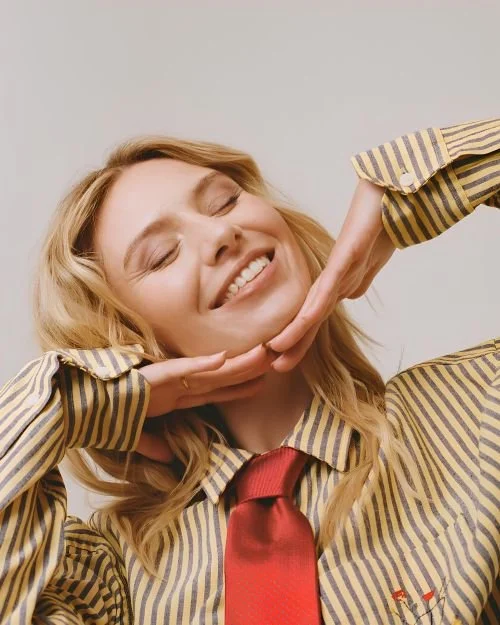
PHOTO CREDIT: Jasmine Engel-Malone
Nowadays, Sian can count herself as a true media multi-hyphenate, skilled in both broadcasting and documentary-making; she speaks about each expertise with equal fondness throughout our conversation. Digging deeper into Paranormal: The Girl, the Ghost and the Gravestone, here, the personality talks spooky filming experiences, finding peace in pottery and why everyone should be listening to Elmeine.
Do you want to make more documentaries in the future? Is this the start of something that you’re really interested in doing, aside from radio?
I’ve definitely got the bug for documentary-making. I’ve always had so much respect for documentary makers, having grown up watching Louis Theroux, Stacey Dooley and even David Attenborough. It’s given me such an amazing insight into what it takes to make a documentary compared to a radio show. Having them side by side for six months and seeing the different ways of working has been so insightful. With radio, there’s a week-long cycle of feeling, and I suppose accomplishment at the end of every Sunday night. Documentary making is long and arduous and it takes ages to make something that is visually spectacular but also, a captivating watch. It’s opened up a whole world for me which I can’t wait to dive into more.
Being a radio and now documentary presenter, you’ve got many strings to your bow. But growing up, what did you want to be?
I had no idea what I wanted to be growing up, and I found it really stressful. I never felt like I was particularly talented in one area, so I remember being really stressed as a kid, not knowing what I wanted to do with my life and what future I wanted.
I think what drew me to music journalism was the idea of storytelling. Music can be confessional or conceptual. People are building worlds in front of your eyes, whether it’s their own or one they’ve created. I think radio was almost hiding in plain sight. I’d loved Radio 1 my one my whole life; I was a religious listener of that station. I just realised, that with broadcast journalism, somebody had to do it as a job but I never considered it as possible or achievable.
Your radio shows play a vital role on the BBC network, especially in an age where people are becoming more aware of their mental health. How do you personally wind down and keep on top of your well-being?
I started doing pottery back in February and I love it. I was a big fan of The Great Pottery Throwdown and remember thinking, that looks like fun. I went to one class and I’m now obsessed with pots. I’m basically off grid for a few hours every week because I’ve got clay on my hands and can’t reach my phone. There’s no pressure to be good. I think that’s the main takeaway I get from it. I think we put so much pressure on ourselves to be at our very best all the time but with pottery, especially when I started, it’s okay to be rubbish and make mistakes.
What would you like listeners to take away from your shows?
I would like them to feel like they have a companion and a friend who loves their company just as much as they enjoy the music. It’s such a privilege to play music on a national platform like Radio 1, one of the biggest stations in the country, and to support people on various different levels. Whether it’s an artist trying to break through, or someone who’s really proud of their records, you can support them and then they potentially become someone’s new favourite artist. That’s such a special feeling.
All of the shows are really eclectic. What do you listen out for when curating the various programs? What gets the Sian Eleri seal of approval?
The production has to be top-notch. If something sounds clear, crisp and thoughtful, I think it’s already making its way up the list. Genre-wise, it’s really nonspecific. A big part of me putting the show and tracklist together is making sure that we try and make as many people happy as possible. If I can feel something from the artist, it’s mellow, and I feel a certain way about it, then I will more likely than not play the tune”.
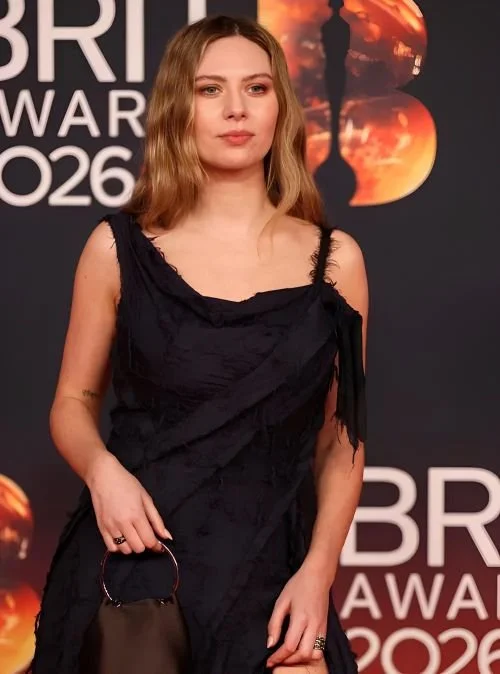
PHOTO CREDIT: John Marshall
I feel there is still this assumption that new music or music in general comes from London. That this is the centre of it all. Artists need to be aware that you do not need to be in London to succeed and be noticed. Things are shifting. Award shows like the Mercury Prize have relocated north and there is this broadening. So many of the greatest and most promising artists around are from outside of London. Last month, this esteemed and respected broadcaster and Mercury Prize judge was in conversation with Music Week. It is a fascinating interview. As they say, Eleri is a “staunch advocate for the industry’s devolution from London, she joins Music Week for a discussion about why emerging talent is in rude health, the impact of social media and swearing on air…”.
“Clearly, the 31-year-old – who starred in our Rising Star column in 2021 – has built a reputation as one of the industry’s most trusted tastemakers. She cemented that status with her appointment to the judging panel of the Mercury Prize, last year presenting Sam Fender with the trophy at the show. Yet while she brings the required gravitas to the prestigious jobs she’s earned, Eleri is also the sort of affable, chatty friend you’d want in your ear every day.
“Considering how much I swear, it’s really lucky that I’ve not slipped up yet, but it’s only a matter of time,” she chuckles, assessing her career to date. “But I did once mispronounce saying that the clocks were turning back... Listeners obviously picked up on that and were like, ‘Oh, something on your mind?’ Gah!”
When Music Week encounters Eleri at 10am on a Monday, she’s enjoying a “slow morning” (“I always try to prioritise slow mornings just because I know the night times are particularly hectic,” she notes), but the rest of the day and week will revolve around extensive prep for all of her shows.
“Honestly, it is one of my favourite parts of the job,” she informs us. “Being able to listen to loads of music, do my own research, curate the shows and have total control is really lovely. I’m sure it’s a rarity in this day and age.”
You took over Future Artists in 2024 – how did it feel to be stepping into Jack Saunders’ shoes and taking on that revered slot?
“It’s such a prestigious slot, so it’s not that I was surprised that I was offered the job, but it was one of those phone calls where you’re like, ‘Oh, now? You want me to have it now?’ It was the phone call that I would maybe have hoped for in three years’ time from that point, so I felt really lucky that the Radio 1 bosses felt like they could see something in me, where I clearly love music and I want to do anything I can to push artists and to promote them. But you get the most amazing people through the door. With someone like Sienna Spiro, I can remember listening to Need Me, her debut single, when she was a complete unknown with a few thousand followers on Instagram and [my producer and I] were sitting in complete silence, stunned, and staring at each other. We knew we needed to have her on the show ASAP because she was obviously next level. She’s one of those artists where you just know. Future Artists gives us the opportunity to introduce brand-new acts that will eventually be household names, and that’s a really nice feeling.”
What can you specifically bring to the show as a tastemaker?
“I remember that Music Week Rising Star interview a few years ago when I said that I wanted to champion international voices and talked about the idea that you don’t have to be able to speak English or be from the UK in order to be a really relevant artist here. I think we’re doing that [on the show]. We’re trying to reflect K-pop bands coming through, and artists that have international widespread appeal. There’s a lot of noise coming from Australia right now; I also really love [New Zealand indie band] Balu Brigada. I think everything sounds amazing from that part of the world.”
How are you feeling about the current state of new music in 2026 generally?
“I’m feeling really optimistic! I’ve noticed more emphasis on fanbases recently. If you look at someone like Alessi Rose, for example, she’s been building an audience for the last few years just by being herself online and making catchy pop songs in the process. You’re also seeing it now with Erin LeCount. About a year-and-a-half ago, she was writing music in her back garden shed studio that she built with her dad, and now she’s the next buzzy person of the moment. It’s really interesting seeing how people are discovering artists that they think are authentic and sincere, especially at a time where the whole AI conversation is looming and changing every day. It scares me a bit because it’s happening so quickly and there aren’t necessarily frameworks in place where we can make sure that we’re supporting real people in the music industry.”
Do you have a message for the business about how it can help new acts?
“I mean, people should be paid fairly for the work that they produce and there’s an imbalance at the moment, but I don’t think that’s a new idea. With the way that people consume music, artists aren’t adequately supported financially. What does that change look like? Massive. As to whether or not it will happen? I don’t know. Once upon a time, I thought I’d quite like to write something and see what that sounds like, and then I’m looking at the costs and, oh my God… It’s miraculous that anyone’s making any music at all. But in terms of how you tackle that in the music industry, it’s just a big beast, isn’t it? I don’t know where you start. But indie record labels are doing their best to uphold and champion these artists and I think we’re trying at Radio 1. We’re really trying.”
Moving back to the subject of radio – what do you think makes a great presenter?
“It’s about making the listeners’ time worthwhile. Ninety-nine per cent of the time, people are doing something else while listening – driving somewhere, cooking, or it’s the background noise when you’ve got a couple of mates around. You also find people in different circumstances in their lives. One of the most profound messages we got on a Sunday night about two years ago was from this young family and they were in an end-of-life care hospice for their daughter. It was the most devastating, heartbreaking message that you could receive, and to know that they were choosing to spend the little time they had left together [with us] was one of those things that I will never forget. On any show, I’m going into it thinking: maybe someone’s just got engaged, or maybe someone’s lost their job today. It could be the best or the worst day of someone’s life and you could be there for it.”
Alongside your radio commitments, you have been a judge on the Mercury Prize panel for three years. How have you found it?
“Oh my God, it’s been the privilege of my life to do it. What I really like is that it’s a space where new artists are on an even playing field with people that have been around for decades. Last year, for example, Jacob Alon’s debut album was there alongside Pulp, and on the same level as Wolf Alice who’ve been nominated every time they’ve released a record. It meant a great deal to me to be able to judge, and I also presented the award, which was crazy – I still can’t believe I did that! I remember being backstage and I’d deliberately gone easy on the table drinks because I was like, ‘You’re going to be on telly. Just keep your head straight.’ It was only just before going on that they were like, ‘The stage is a bit slopey’ and the heels I had on were these enormous platforms. So it was only then that I started getting nervous because I just didn’t want to fall down the stairs and make it about me.”
Do you have any predictions for the shortlist this year?
“Probably Olivia Dean. She’s been shortlisted before, so that’s not going to be a surprise, and the album [The Art Of Loving] is so beautiful. If we’re thinking of massive albums, it would be interesting to see where Lily Allen comes in, and Dave as well. Maybe Dove Ellis, too, because I just really loved Blizzard and the musicality in that record is amazing, but it’s hard to tell at this stage.”
The Mercury Prize is returning to Newcastle this year, while the BRITs and the MOBOs are in Manchester. Are you happy with idea that the industry is becoming less London-centric?
“I think the fact that there’s a conscious effort to move huge, televised awards like the BRITs out of London can only really be a good thing. Seeing it in real time at the Mercurys in Newcastle, it was fantastic. Music isn’t just made in London. It’s showing that music-making is accessible in your patch; that you can belong in the music industry, it doesn’t matter where you come from, and there’s no expectation that you move to London. Radio 1 continues to do that with Big Weekend, so if they can go to the trouble of finding the right kind of sites to hold an entire festival in a different city every single year, you can see that it’s possible. If anyone were to backtrack now and say, ‘Oh, I’m just going to do it in London next year,’ I don’t know if that would be a good look, so I’m hoping that things are only going to continue in this direction.”
Finally, now you’re a radio mainstay and a Mercury Prize judge who has also done some work on television, what are your hopes for the next phase of your career?
“I’ve never been someone who has a five-year plan. That question always scares me! Radio has always been my one true love. I listen to it religiously every single day, so to not be a part of it in some capacity in my career going forward is unimaginable. As long as I’m not swearing on air, and not making massive horrible mistakes, I’m really hoping I’ll stand the test of time on radio. I think there’s an amazing future in radio in general, especially at a point in our lives when online slop is kind of scary, and you don’t know what’s real and what’s not and you just want real recommendations from a human being that knows what they’re talking about, or at least tries to. If I can offer that for the rest of my career, then that will be fantastic”.
I will end it there. Go and connect with Sian Eleri on Instagram and listen to her on BBC Radio 1 and Selector Radio. This is one of the most important broadcasters in the world. One of the best too. I have been such a fan of her work for years now and it is wonderful seeing her evolution. I wonder what the coming years hold. I think Eleri will be with BBC Radio 1 for a while and may get to the position where she is hosting the Mercury Prize (BBC Radio 6 Music and BBC Radio 4’s Lauren Laverne is the current host). Truly, the utterly sensational Sian Eleri is one of our strongest…
VOICES in broadcasting.