
FEATURE:
An Essential Kate Bush Collaborator
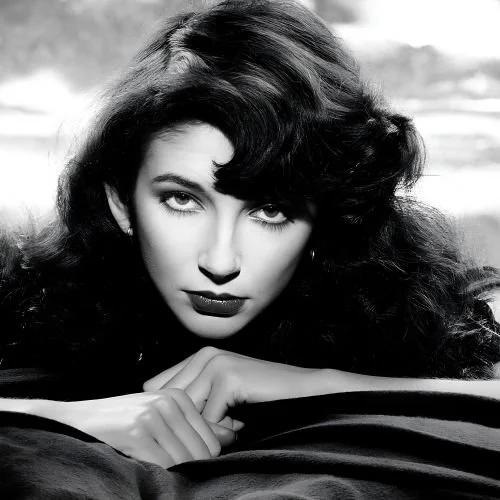
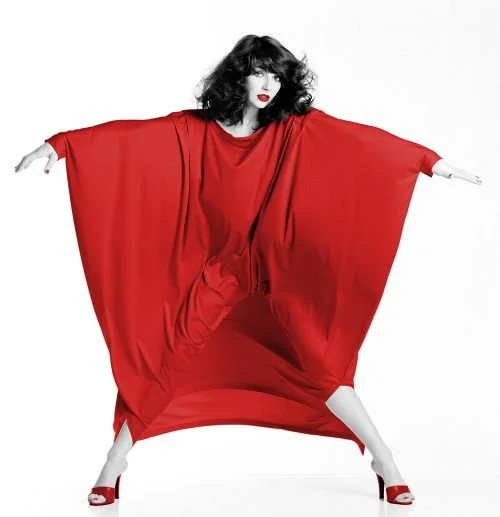
IN THIS PHOTO: Kate Bush in 1978/ALL PHOTOS: Gered Mankowitz
Looking Ahead to the Eightieth Birthday of the Legendary Photographer, Gered Mankowitz
__________
I am a little premature…
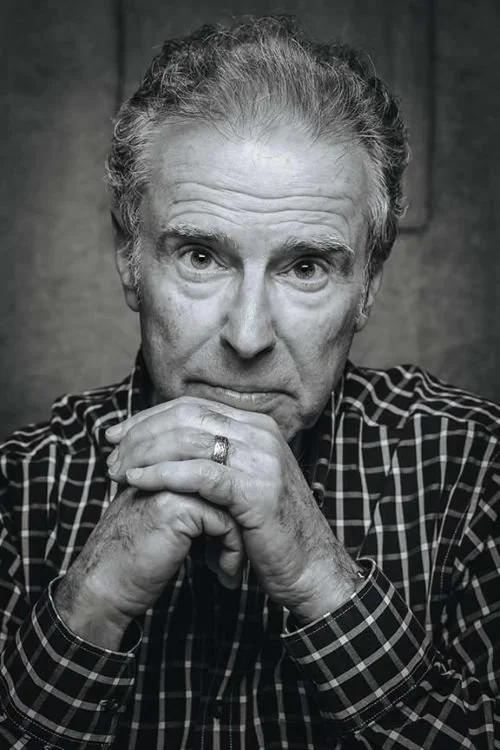
in writing this, but I am looking to the eightieth birthday of one of Kate Bush’s most important early collaborators. Even though her brother, John Carder Bush, was the first person to photographer – and he did so through most of her career and right up to her most recent album, 50 Words for Snow -, perhaps the most notable and important photographer outside of the family who captured Kate Bush is Gered Mankowitz. Born in London on 3rd August, 1946, I wanted to mark the upcoming eightieth birthday of someone responsible for some of the most beautiful and astonishing photos of Kate Bush. Mankowitz has photographed huge artists like Jimi Hendrix, Free, Traffic, The Yardbirds, The Small Faces, Soft Machine, Slade, Suzi Quatro, Sweet, Elton John, The Rolling Stones, Eurythmics, ABC, and Duran Duran. There were notable photographers who have worked with Kate Bush through her career. Ones who shot her once or not often such as Trevor Leighton, Anton Corbijn, Steve Rapport, Clive Arrowsmith, and Kevin Cummins. Although the brilliant Guido Harari had a longer working relationship with Kate Bush (1982-1993), Gered Mankowitz was charged with photographing Kate Bush between 1978 and 1979. From her debut album, The Kick Inside, through to her second album, Lionheart (1978) and the following year, he shot the cover for Lionheart and some wonderful promotional images that are so powerful. I have said how it would be great to have a photography exhibition where we see an array of photographs of Kate Bush through the years. In the 1978-1979 section, displaying those incredible Gered Mankowitz photographs. In terms of my favourite, perhaps the one I have included as the main image. The ‘Hollywood’ shot of 1979. I wrote a feature about that shot.
WOW! Kate Bush is now sold out, but it would be great if there was a new book from Gered Mankowitz. One that compiles his Kate Bush photographs. I will come to some interviews with him where he discussed working alongside Kate Bush. However, we get some background asnd chronology about his time shooting Kate Bush:
“Gered Mankowitz recalls: “The final few weeks of 1977 were very busy for me, with album covers for Bing Crosby, Cliff Richard, Shakin’ Stevens and the Rubettes amongst others. So when EMI asked me over to their Manchester Square offices in central London to discuss a new artist, I was actually a bit pushed to find the time. How glad I am that I did manage to free up my schedule, because at that meeting, they played me ‘Wuthering Heights’ and showed me the video they had produced of a then unknown singer called Kate Bush performing the song. Kate was not at this initial meeting, but from listening to the playback of the song and watching the video, I realised that she was an extraordinary artist and potentially a wonderful subject.”
January 1978 – The first session
“In those days I was working out of a studio in Great Windmill Street in the heart of London’s Soho. For this first session with Kate I had decided to use a wonderful piece of distressed canvas as a background; it had once been used as the floor of a boxing ring in the gym below us, and its coarse texture seemed a perfect contrast to Kate’s youthful beauty.
I purchased some leotards, tights, leg-warmers and scarves, and placed them in our rather inadequate dressing room, which was actually a curtained-off corner in the studio. When Kate arrived, she disappeared behind the curtain with the make-up artists and stylist.
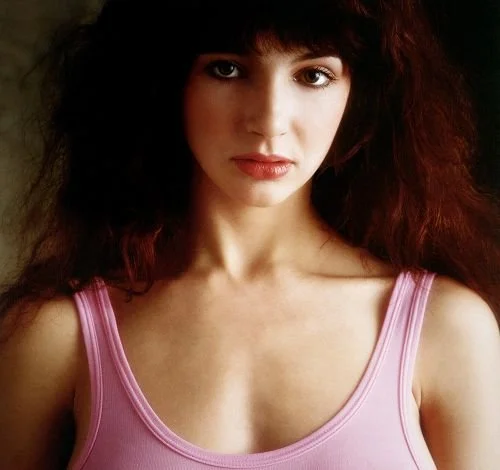
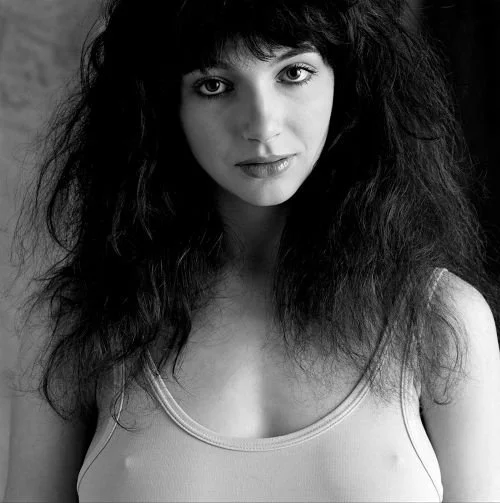
Kate emerged in the pink leotard.
She looked beautiful, and I knew that we were going to have a fantastic session. She settled in front of my Hasselblad camera without a care in the world. Kate did not have much experience of working with a professional photographer, and I felt that it was important to try and guide her through the process. She had a natural instinct and seemed to understand immediately how much the camera loved her.
After shooting several test Polaroids, I was happy with the lighting, and Kate was delighted with the look. We shot throughout the afternoon, with Kate in both the pink outfit and a green version. After about twenty rolls of film, the first shoot was over and I felt certain that we had achieved the objective and produced the portrait that would launch her.”
March 1978 – The second session
My second session with Kate was on 21 March 1978. By this time, both the ‘Wuthering Heights’ single and The Kick Inside album had been established as huge hits. Some countries did not want to use the original Kick Inside cover image, and one of my jobs for this second session was to come up with some alternative options for use on covers outside the UK. One of these turned out to be the classic ‘wooden box’ image which became the American cover for the album, and there were at least four different cover images in total. I always loved the ‘wooden box’ series because it was such a complete contrast to the original pink leotard shoot and showed a more playful side of Kate’s character. We had the box made by my set-builder so that it was completely square and would fill the shape of the album sleeve perfectly.
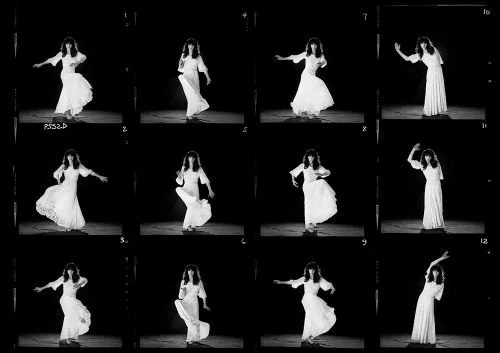
The other reason for the second session was to create a stock of several different portraits that showed different aspects of Kate’s theatrical persona. I remember this as a long and pretty tiring session, and we shot more than six different set-ups and over forty rolls of film. When I look back at this shoot, and see again the variations that we covered in one day – including the entire ‘Wuthering Heights’ video sequence in the Cathy dress, minus the smoke (which EMI had asked for because they could not take stills from the video itself) I am not surprised that it was such a shattering experience.
August 1978 – the third session
The next session in August 1978 was specifically for the Lionheart album cover.
We constructed the attic room in my Great Windmill Street studio. I found the Lion headpiece in a fancy dress shop near Olympia, but the costume was made to measure, and fitted Kate perfectly. I did not want the attic to be filled with the usual sort of junk you find in old attics, because I felt that it needed to be quite sparse in order to keep as much focus on Kate as possible. The same box from the earlier Kick Inside session came into play again, as well as a couple of little props and a great deal of spray-on theatrical cobweb. I had designed the set so as to have a large window through which to light the shot, and apart from a few reflectors, that was it.
I had agreed with EMI that the sleeve would be presented as a gatefold with both sides designed, as much as possible, as “front” covers. The inside spread would carry the lyrics and would include the title track hand-written by Kate. For the reverse “front” cover, I shot a series of very dynamic portraits with a dark background and a powerful orangey red back-light which I have always referred to as the ‘redhead’ series.
My fourth and final session with Kate was in February 1979. By this time, she was clearly established as one of Britain’s brightest stars. The outfit that Kate wore was made specifically for the shoot in a wonderful vivid red jersey material. It was designed to be blown against her body by a powerful wind machine as she made a range of shapes to the camera. Kate responded to the concept with her usual zeal and enthusiasm and we shot a series of exciting and fabulous photographs, several of which remain some of my most favourite from this important period in my career.
The remainder of this final session was spent shooting an extensive range of full length animated, action dance portraits including a surreal series with Kate climbing out of a chrome drum, which was used on several EP sleeves including a rare Brazilian release. In fact this chrome drum was an old Kodak dryer drum which we had been using as the base for the studio coffee table”.
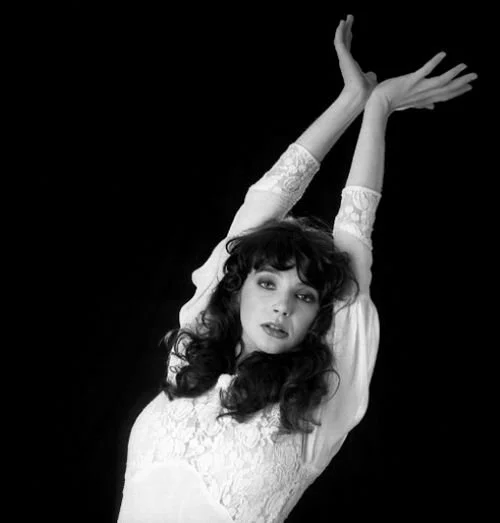
I think Gered Mankowitz is enormously important in terms of how Kate Bush was captured in that first year or two of her professional career. Shooting so many different sides to her, he very much photographed and portrayed her a dancer, which she very much was. Not trying to turn her into a traditional or fake Pop artist, we see this very personal and natural side. Of course, there are some shots like the ‘Hollywood’ one and the cover of Lionheart, though I do think that he created that blend of the most fantastical and the pure, unfiltered Kate Bush. Guido Harari did too. Kate Bush not wanting to be portrayed as something she was not. Or felt uncomfortable with. She clearly had a lot of trust in Gered Mankowitz and you can see she was relaxed around him, as the photos he took between 1978-1979 convey that. Speaking with Big Issue in August 2014 – when she took her residency, Before the Dawn, to Hammersmith – Mankowitz talked about working with Kate Bush:
“I was brought in to create the launch image for Wuthering Heights and I think what makes Kate brilliant is her unique talent, her extraordinary energy, her vision – everything she does has a tremendous vision.
I remember her to be somebody who worked very hard. She was very young, 19, when it came out and she was wonderful to work with. Very energetic, very frenetic, quite difficult to tie down sometimes, to get her to focus on making an idea work, she wasn’t very experienced in having her photograph taken at that time, which was part of the challenge. But her individuality shone through.
I don’t think I had to draw it out of her, it was there, it was bubbling out of her. When I first went to the record company to discuss the session she wasn’t there but they played the video of Wuthering Heights that they’d made. It was quite obvious that she was a unique and special talent, not just because the music was so extraordinary but because of her individual look, her beauty and movement and style.
She had a really special quality, which stood out instantly on record and visually. I knew that I had to be at the top of my game to produce an image that was going to complement and support this extraordinary talent, and that’s what I tried to do. I always try to break these things down so that they are as simple as possible.
I had to be at the top of my game to produce an image that was going to complement and support this extraordinary talent
I only had a very loose connection with the record company. They already had a cover for the album The Kick Inside, but they didn’t have an image of Kate, it was quite obscure and it wasn’t as up-front of Kate as they wanted it to be. But I sense that they weren’t quite sure where they were going with her.
What they seemed very certain of was here was a unique and special talent and that they had somebody who was pure gold, but they were being led by her and I think that they weren’t sure who they were getting.
I wouldn’t want to suggest that she was in control of our session, but she was very much in control of the way she looked when she stepped out of the dressing room and I saw her for the first time ready for the camera I was blown away and knew it was going to be something special.
We did the very famous leotard pictures. I chose the leotards to make visual link with dance, that was the point of choosing and selecting them, I wanted to keep it extremely simple, I hope that in the portrait there would be a visual connection with dance which was clearly very important to her.
During the same session we reproduced the image of Wuthering Heights that she’d recorded for the video because everybody wanted stills of that but in those days they just couldn’t take them from the film. She did the whole dance for me. [Big Issue: “Wow!” Gered: “Wow indeed!”]. The only thing I didn’t have was the dry ice she had in the video, but it was spectacular.
We did four big photo sessions together between January 1978 and March or April 1979 and dance was always very high up on the list and a lot of the pictures we did are her moving, her different leotards, leaping, spinning, dancing and expressing herself like that and that was so important and trying to capture that in a very graphic way.
She could just look at the camera you would melt. You sense that she was really special and felt Wuthering Heights was going to be a big hit and I know that EMI was going to really get behind it. What nobody knew was how huge she would be and how important.
I had worked with a lot of people who had become incredibly successful for one reason or another – The Rolling Stones, Jimi Hendrix, who had that same charisma and presence as Kate, as did Annie Lennox and Suzi Quattro. What you recognise is talent and charisma but that doesn’t necessarily turn into longevity.
We know you’re going to move from one single, one album to the next and hope that the artist and everything in their support structure around them is going to remain intact and supportive, and that the artist will build a fan base that is solid enough to support them.
The one thing that was very clear was here was a very individual and unique special artist. There’s always terrible pressure on people especially if your first record is a huge hit. I don’t think that any of her records have been as big as Wuthering Heights but she’s big enough, talented enough and clever enough not to be overwhelmed by the success.
She would appear to be completely in control of her career, and she’s managed to maintain her privacy. When she makes an appearance [in public] she’s thought about it, and considered it, and the response to it is always huge.
The one picture that in a way is inescapable is the pink leotard Wuthering Heights picture. It’s one of those pictures that become iconic and represents so much, and that doesn’t happen very often. It has a life of its own and it has energy. I think it’s a beautiful portrait of a very beautiful young woman.
The Big Issue: There has been discussion over the years whether her sexuality was being exploited – depending how it’s cropped, it’s quite graphic…
Gered: It didn’t occur to me at that time that [the nipples visible in the full-length shot] would be a problem. I know that it was pretty edgy for the late ’70s but it wasn’t sort of discussed or thought about a great deal. That was how she looked and I wasn’t going to say to her “I think you should cover up”.
She looked absolutely gorgeous. I’m looking at a cropped version of it now and it still has all the power that it did then. Her breasts might have been titillating to a few young boys but her beauty and her serenity, her stillness are what really make this a special photograph.
She certainly knew what she was doing, that’s how she came out of the dressing room, looking like that, and there was no attempt by anybody to make her look like that. That’s what she looked like and I don’t think it’s exploitative at all. I think it’s very, very beautiful.
I’m the photographer and I took that picture, and I don’t see how I could have exploited Kate Bush. She was in control of it.
But she used her sexuality throughout her performance – look at the Babooshka video or any of the records and promotional videos and stills, certainly in those first three or four years of her career she was a very sexual person and I think that came across in the way she moved, looked and the way she sang.
For me that makes any discussion or debate about whether the picture was ‘exploitative’ redundant. She wasn’t like Miley Cyrus trying to draw attention to herself through her sexuality. She’s a very strong woman and as a strong woman you know that she’s aware of everything that’s around her and I completely reject any possibility that the pictures were exploitative, it reflects her beauty and her power and serenity, and her comfortableness with it.
The Big Issue: It’s such a direct portrait, you feel like you know her, her face looks so open but she’s not giving anything away, it gives you chills still to look at it now.
Gered: It often is the case that in the beginning when an artist makes a really profound impact it’s often their first moments that are sort of welded into the public consciousness and that’s one of the most gratifying things. Going back to my favourite image, I’m incredibly proud and thrilled to have been associated with Kate Bush at this early stage. It’s fantastic to hear you say that [above] about it”.
Even though he shot some amazing black-and-white photos of Kate Bush – including promotional shots for Wuthering Heights -, it is interesting what he says in this 2025 interview. How he says A.I. is a nightmare for photography. However, it is when he mentioned Kate Bush looks better in colour than black-and-white. I never considered this: “Other artists simply demand colour. “Kate Bush, for instance… her image demanded colour, because of her hair, her skin, her lips. Colour was how she should be seen.” Perhaps most revealing is Mankowitz’s perspective on what makes for meaningful photographic encounters. Despite the prestige it might bring, he admits his “stomach would sink” at the prospect of photographing modern megastars like Taylor Swift – not due to any artistic reservation, but because of the barriers to genuine connection. “Photography is a very intimate thing for me,” Mankowitz explains .“A portrait of somebody is a very intimate thing. It’s really them and me and the camera”. It would be really cool is, on 3rd August, there was a new interview with Gered Mankowitz for the Kate Bush Fan Podcast. He was with them in 2023. I think his photos of Kate Bush in 1978 and 1979 are some of the best and most captivating. The looks and poses. What he drew from Kate Bush. Some truly remarkable and unforgettable shots. Her in the pink leotard and the expression on her face! Few others could elicit that. That is why I wanted to wish many happy returns to…
A genius photographer.