
FEATURE:
Spice Girls’ Wannabe at Thirty
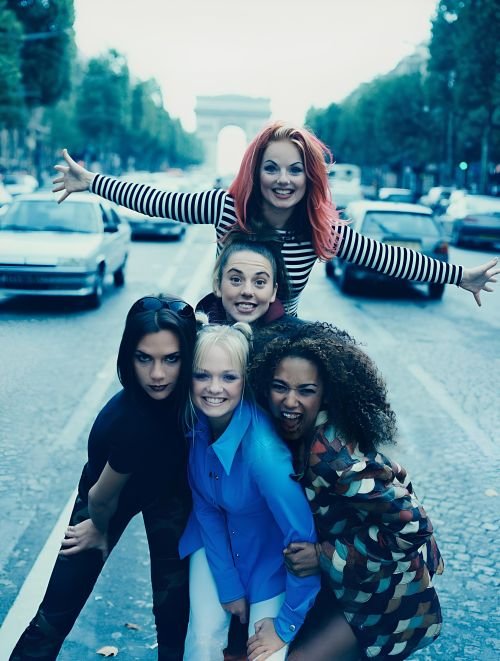
IN THIS PHOTO: Spice Girls clockwise, from front: Emma Bunton ('Baby Spice'), Victoria Beckham ('Posh Spice'), Melanie Chisholm ('Sporty Spice'), Geri Halliwell ('Ginger Spice') and Melanie Brown ('Scary Spice') photographed in Paris in September 1996/PHOTO CREDIT: Tim Roney/Getty Images
One of the Most Important, Powerful and Memorable Debut Singles in Pop History
__________
THIS anniversary feature…
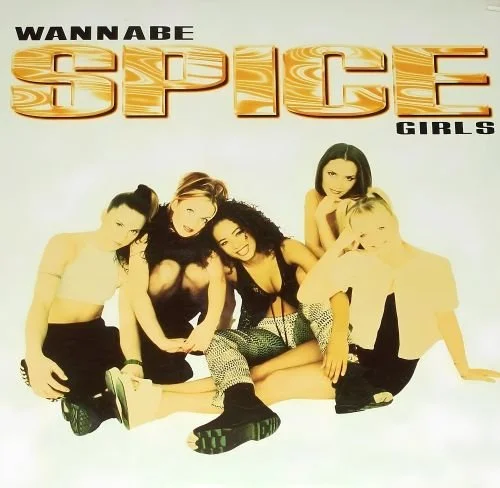
does not have a single theme or point of focus. Instead, I wanted to discuss the sheer brilliance of Spice Girls’ debut single, Wannabe, and how it is so empowering and influential. Although the single was released in the U.K. on 8th July, 1996 in the U.K., it was released on 26th June in Japan. I am taking that June date as its thirtieth, as that is when the song was first released. There is this split between those who say it is this empowering feminist anthem, and people who think its messages are weak and that Girl Power was manufactured, hollow and gimmicky. I do think that Wannabe was a groundbreaking debut for a 1990s Pop act. In terms of what was around in 1996 and the songs released that brilliant summer, there was still a lot of male-dominated guitar music. The hangover of Britpop, the scene was still male-driven. Artists like Underworld, Beck, Manic Street Preachers, The Prodigy and Oasis at the forefront and releasing a lot of the most popular music of the year. The music press very geared still towards male artists and bands. Although there was not a huge backlash against Spice Girls, you could feel mockery and sexism in a lot of the press. This misogyny that felt their brand of feminism was hollow and rubbish. Many reviewers felt Wannabe was contrived and bubble-gum. However, Wannabe’s messages of emphasising female friendships over men was hugely inspiring and spoke to a generation of girls and women. They could have launched with a song that was standard boy-meets-girl. However, they debuted an infectious and incredible track that was very much about independence and empowerment. The legacy of which you can hear today and so many incredible women dominating and defining Pop. I do want to come to the BBC and their feature which marked twenty-five years of Spice Girls and Wannabe. Published on 8th July, 2021, we get some insight into a single that, in the years since 1996, is seen as one of the most important of the decade:
“It came out of nowhere. It changed the course of pop music. It was Wannabe - the scrappily brilliant debut single by The Spice Girls.
The record label had been worried. Wannabe was too weird, too anarchic. They hated the video. BBC Radio 1 was refusing to play it. Breakfast show DJ Chris Evans told the band to go back to kids' TV.
But the girls knew better. "It's not negotiable as far as we're concerned," they insisted. "Wannabe is our first single."
And "if they decided they wanted to do something, then that's what was going to happen," Wannabe's co-writer Richard "Biff" Stannard told the BBC.
History proved them right.
Released 25 years ago, on 8 July 1996, Wannabe spent seven weeks at number one in the UK and four in the US. In the process, it made five unknown girls - Victoria Caroline Adams, Melanie Janine Brown, Emma Lee Bunton, Melanie Jayne Chisholm and Geraldine Estelle Halliwell - global superstars”.
The original demo for Wannabe is being released to mark the song's 25th anniversary - and its very different experience to the final version, full of record scratches, clunky 1990s synths and a bizarre breakbeat outro.
The song was something of a Frankenstein's monster, co-writer Matt Rowe told David Sinclair for his 2004 Spice Girls biography.
"They made all these different bits up," Rowe said. "Not thinking in terms of chorus, bridge or what was going to go where - just coming up with all these sections of chanting and rapping and singing. And then we just sewed it together. Kind of a cut-and-paste method."
Virgin, noting the popularity of girl bands like Eternal and TLC, were keen to give the song an R&B makeover and sent it to US producer Dave Way to be remixed. The result, according to Halliwell, "was bloody awful".
Eventually, Mark "Spike" Stent - a producer who had worked with Massive Attack and Madonna - was called in to knock the song into shape.
"The problem was that the vocal balance hadn't been quite sussed," he told Sound On Sound magazine in 1999, external. "It's a very quirky pop record, and there's not a lot going on with it, and my work was all about getting the vocals to sound right. It was quite tough to do, even though it only took six hours."
Girl Power came in for a lot of stick - mostly from critics who weren't girls and didn't need any more power, music writer Tom Ewing observed, external.
Geri was the one who pushed the concept, and even developed a "power oath" to be recited when events demanded: "I, being of sound mind and new Wonderbra do solemnly promise to cheer and dance and zig-a-zig-ah. Ariba! Girl Power!"
But even if the parameters were a little hazy, the idea was potent. The Spice Girls stood for freedom, self-belief and disobedience - and they inspired generations to stick up for themselves.
In 2017, Geri reflected on the legacy of Girl Power in a BBC interview: "Twenty years ago, if you said the word feminism, you thought of those bra-burning, marching protestors. It was quite tough and harsh.
"For me, Girl Power was a much more punchy way of saying it. But actually, Girl Power embodies much more than a gender. It's about everybody. Everybody deserves the same treatment, whatever race you are, gender you are, age you are.
"It was just saying that in a very digestible way”.
If you don’t think that Wannabe is a genuinely deep feminist anthem like Beyoncé's Run the World (Girls), Aretha Franklin’s Respect, or Helen Reddy’s I Am Woman, then you can appreciate that the group – Geri Halliwell, Victoria Adams, Melanie Brown, Emma Bunton and Melanie Chisholm – were trying to inspire and empower girls and young women. In a landscape that was very much set up for male artists and there was huge misogyny, this was such an important and bold song. This 2019 article discussed the secret feminist history of Spice Girls’ Wannabe:
“The chorus reads like a direct address to the male gaze: “If you wanna be my lover, you gotta get with my friends.” Like many female pop stars before them — and certainly all of them since — the Spice Girls’ biggest marketing tool was their sexuality. They didn’t apologise for it. In fact, Bunton scoffed at the idea that their fashion choices were for anyone but themselves when she told an interviewer in 1997, “Just because you've got a short skirt on and a pair of tits, you can still say what you want to say. We're still very strong.” They wore the short skirts, tight dresses, low-cut tops, and high heels, all customised to their personas — with leopard-print, pink pigtails, track suits, ultra platforms, and painted-on sheath dresses serving as extensions of their identities. And they did not apologise for them. Their larger message was more important: You can look at us, in fact, look at us! But we are more interested in our relationships with each other than with men. The concept of girl power was born with the writing of “Wannabe,” but the actual power — the activism, in fact — came from how the women fought for the song — and for themselves — every step of the way.
“Wannabe” is the biggest-selling single by a female group in the world, ever. But it almost didn’t make it to the radio. Everyone but the Spice Girls themselves seemed to hate the song. Their manager, Simon Fuller, sent it to a team of American producers, and it came back laced with hip-hop beats and an R & B vibe that Halliwell described as “bloody awful.” The members of the group staged a protest until it was remixed to their liking. When it came time for Virgin Records to choose the first single, execs wanted “Say You’ll Be There,” a sappy love-pop ballad that appeased the label’s mission of catering to a mainstream audience — and sending a flirty message to, presumably, men who would want to “be there” for (or with) the Spice Girls. Stannard, who co-wrote "Wannabe," lambasted its weirdness and agreed that it was too risky to use as a first single: “It’s quite anarchic,” Stannard said at the time. “There are a lot of critics who consider it a punk record because it’s quite wild, and the way it was recorded and written was like a punk song. It was in no way a contrived, crafted pop masterpiece that we sat down and specified.”
Fuller agreed, and pushed the Girls to acquiesce. Halliwell, speaking for the group as she often did — including the time she demanded each of them receive individual management contracts before signing with a label — told the men: “It's not negotiable as far as we're concerned. 'Wannabe' is our first single.”
Standing up to a powerful label and deeply vested managers hasn't always pan out for pop stars. Correction: It’s not a thing pop stars even did at the time. Ginger and the Girls made it clear that they were in control. The only risk was if the industry walked away; they’d be fine. One can imagine Kelly Clarkson channelling Halliwell when she fought the illustrious Clive Davis to the point of near-career suicide because she refused to be “bullied” into releasing another American Idol-like record instead of one that reflected her artistic vision.
“Wannabe” was not beloved by critics. And, in fact, it’s safe to say no one even knows what the song is really about. Its jumbled lyrics are a mix of in-jokes, made-up words (“zig-a-zig-ah”) and micro bios of each character spliced into the bridge. But it didn’t matter. “Wannabe” soared to the top of the charts in the U.K. and remained the No. 1 single for seven weeks. By March 1997, “Wannabe” had topped the charts in 37 countries. It didn’t matter if it was gibberish; the spirit of “Wannabe” resonated with the world and it remains one of the most recognisable pop songs of the last 50 years.
When five insta-friends huddled together 23 years ago to write a song about hanging out together, they didn’t have an agenda beyond expressing themselves in that moment. The song itself is not a feminist anthem. But the ways in which the Spice Girls demanded respect and took — didn’t ask for, but seized — control of their careers and the image they presented of girls to girls is a legacy worth celebrating. “Girl power” lives on, and as feminism is mainstreamed into our lives via Beyoncé, Shonda Rhimes, and even President Obama, the meaning of that once-vapid term grows ever more powerful”.
Published in 2016 to mark twenty years of Spice Girls’ Wannabe, Billboard highlighted how this historic debut single revitalised mainstream feminism. As they write, “In the early 1990s, few pop cultural figures embraced the term "feminist”. Wannabe warrants a lot of new appreciation and discussion thirty years after its release. Its messages and meaning perhaps as vital and urgent now as it was in 1996:
“In the early 1990s, the women’s movement seemed dead to the mainstream, as documented in Susan Faludi’s Backlash. Few pop cultural figures embraced the term “feminist.” The underground punk movement known as “Riot Grrrl” scared anyone outside of it (which was part of its point), while Alanis Morissette’s breakthrough single “You Oughta Know” scared everyone else even more.
Then, in the middle of the decade, the Spice Girls took all of that fear and made feminism — popularized as Girl Power — fun. Suddenly, regular girls far outside Women’s Studies classrooms had at least an inkling of what would be known in wonky circles as Third Wave Feminism — led by Generation Xers pushing for sexual freedom and respect for traditionally “girly” pursuits like makeup and fashion, among many other issues.
Preaching Girl Power to worldwide masses in the 1990s was no small thing. It was a commercialized message, to be sure, but alas, so is any message that permeates American consumer culture. Sure, the message came in the empty vessel of the most derivative of pop music, but no one ever said feminists have to be great artists. In fact, their accessibility was their superpower. As we celebrate the 20-year anniversary of their first single “Wannabe” this year, we can see how far women in pop music have come, to the point where the pop world is dominated not just by women, but by women who publicly identify as feminists, such as Beyoncé and Taylor Swift. Girl Power, indeed.
From the very beginning with “Wannabe,” the Spice Girls were the original Sex and the City crew, with all the conflicting ideas about feminism and femininity that entails. Their clear identities allowed girls to choose a favorite with whom to identify: Were you a Scary, Sporty, Posh, Ginger, or Baby? These nicknames, of course, were the very definition of problematic: Scary went to the sole woman of color, while Posh, Ginger, and Baby were obvious stereotypes of femininity. At least Sporty was an option, right?
On the other hand, they demonstrated real, noncompetitive female friendship. “If you wannabe my lover, you gotta get with my friends,” they sang. “Make it last forever; friendship never ends.” Message-wise, this is leagues better than their spiritual descendants, the Pussycat Dolls, singing “Don’t cha wish your girlfriend was hot like me?” a decade later.
The refrain of “Wannabe” could be a war cry of liberation from good-girl syndrome: “I’ll tell you what I want, what I really, really want.” (A great 2011 feminist guide to sex by Jaclyn Friedman swiped this wholesale for its title: What You Really Really Want: The Smart Girl’s Shame-Free Guide to Sex and Safety.) The Girls even embraced the word “feminism” at a time when it was risky to do so. In their 1998 movie Spice World, Ginger gets rid of a guy who’s hitting on her by dropping the F-bomb, laughing as he runs away. Not only was feminism cool in Spice World, but guys who didn’t get it weren’t worth your time.
They also embraced their sexuality in songs such as “2 Become 1.” In Spice World, girls could want sex and want to look sexy — a major tenet of Third Wave Feminism. Baby Spice said it best in an interview: “Just because you’ve got a short skirt on and a pair of tits, you can still say what you want to say. We’re still very strong.”
These messages were going mega-global, thanks to the success of “Wannabe.” The song hit No. 1 in 37 countries, and led to the Girls eventually selling more than 80 million records worldwide. Affection for the Spice Girls hasn’t waned. They delighted fans with a reunion at the London 2012 Olympics. Recently, three of the Spice Girls — Geri Halliwell (Ginger), Emma Bunton (Baby), and Mel B (Scary) — announced they’d be reuniting as GEM (without international fashion icon/former Posh Spice Victoria Beckham or Sporty Spice Mel C., who’s said she’s still undecided about joining in).
It’s unlikely that they’ll be able to push pop feminism forward in 2016. Girl Power has evolved far beyond what the Spice Girls did in 1996, moving from the cheerleader chants of “Wannabe” to Beyoncé sampling a feminist speech by author Chimamanda Ngozi Adichie and featuring poetry by Warsan Shire in her videos. But the Spice Girls’ legacy is real, as shown by the Global Gals campaign’s recent use of “Wannabe” to express an explicit feminist message. The group’s delightful, multicultural video has women dancing and lip-synching along to the classic song while explaining that what women really, really want is quality education, an end to child marriage, and equal pay. “Girl Power has come a long way,” says a message at the end. “Let’s take it further”.
I am going to end with The Times and their 2008 article. They proclaimed Wannabe as the best song of 1996. In a truly massive years where so many wonderful songs were released, it is not a stretch to say that Spice Girls’ Wannabe is the queen of them all:
“A No 1 hit in 31 countries, Wannabe is the bestselling single ever by a female group and propelled Sporty, Scary, Posh, Ginger and Baby Spice to a level of chart-conquering domination that, even now, seems extraordinary. Such statistics can make it easy to forget quite how ropey the five-piece seemed to many music fans, who saw the title of the band’s debut single not as an expression of female empowerment, but as an accurate description of five slightly desperate hoofers recruited from an ad in The Stage. The genius of the Spice Girls – or, rather, the team behind them – was to bulldoze their way through such perceptions with the aid of both precision-bomb marketing and, of course, Wannabe. The former still leaves a bad taste in the mouth: the true legacy of Girl Power is, arguably, a preteen clothing industry selling crop tops and other minimal garments to young girls, not a generation of independent, take-no-nonsense women. But the song remains the same two minutes and 53 seconds of pop perfection that it ever was.
Co-written by Richard Stannard, Matt Rowe and the band, Wannabe opens with immediately undislodgable piano notes, which act as stepping stones to the chorus. Over these, Mel Brown and Geri Halliwell holler the song’s key message of assertiveness: “Yo, I’ll tell you whatI want, what I really, really want.”
What they really, really wanted turned out to be to “zigazig ah”, a phrase open to all manner of interpretation. But its air of devil-may-care zaniness was of a piece with the song’s other message (reinforced by the storming-the-citadels video): we’re taking charge of our own destinies and having a riot at the same time, and so can you. The fact that the band were being manufactured and marketed by a male-dominated industry was an irony that only increased when Tony Blair and Alastair Campbell’s equally cynical political packaging muscled in on the action with Cool Britannia the following year.
Musically, the song is amazingly deft, melding Motown with rap and never losing sight of the need to stay focused on getting its message across (no wonder new Labour got on board). Its success made the Spice Girls a global phenomenon of multiple sponsorship deals and spawned an unforgettably dire movie, Geri’s departure, Posh’s football wedding and, last year, the inevitable reunion. Much of what they sang, said and did now seems ridiculous. On Wannabe, however, the Spice Girls ruled the roost”.
I do think that Wannabe gets unjust stick and criticising. In 2012, Rhiannon Lucy Cosslett wrote for The Guardian, where she said how Spice Girls’ messages of female solidarity, whilst it may seem manufactured or light in some respects, was a gateway and accessible route for their fanbase. Girls and teens in 1996 were hardly going to be reading feminist texts: “Female columnists have not been kind to the group in retrospect; Caitlin Moran basically blamed "Girl Power" for the loss of interest in feminism, while Grace Dent went further by saying that "any student in 2012 who regurgitates this Spice Girls-helped-feminism baloney in a dissertation should have the whole thing shredded and be made to wear a dunce cone in graduation pics". Well, hand me the dunce cap Grace, because I must respectfully disagree. Were it not for their kitschy pop antics, I might not be the massive feminist I am today”. Wannabe changed the face of the mid-’90s Pop scene and it is an iconic Girl Power anthem. Thirty years later, it is this instantly lovable, recognisable and captivating single. Released in 26th June, 1996 in Japan and 8th July, 1996 in the U.K., Spice Girls put out one of the greatest debut singles ever. It would not be long until…
THEY would dominate the globe!