
FEATURE:
I Put This Moment…Here
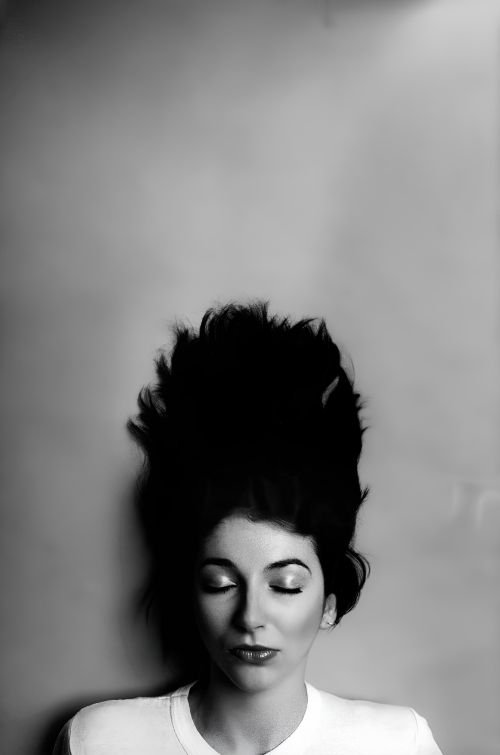
IN THIS PHOTO: Kate Bush photographed for NME on 13th October, 1982 in London/PHOTO CREDIT: Anton Corbijn/Contour by Getty Images
The Importance of Track Sequencing on Kate Bush Albums
__________
THIS is something not talked about…
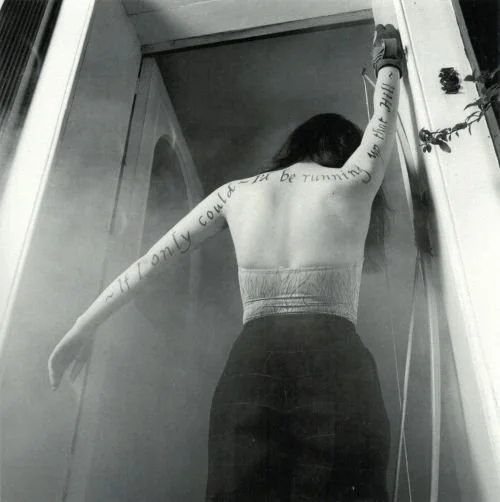
IN THIS PHOTO: Kate Bush in a promotional image for 1985’s Running Up That Hill (A Deal with God), the lead single from her fifth studio album, Hounds of Love/PHOTO CREDIT: John Carder Bush
as much when we look at artists and their albums. We recognise the brilliance and endurance of the albums, though how often do we consider why that is? In terms of the track sequencing, I feel this is a very important reason why so many classic albums resonate and remain. Something as simple as getting the tracks in the wrong order affects the listening experience. It is such a crucial thing. When it comes to Kate Bush, this is an artist that definitely recognises how key it is to get the flow and order just so. The line at the top of this feature is from Hounds of Love’s Jig of Life. That song appears on the album’s second side, The Ninth Wave. As that was a concept suite, it was perhaps more intuitive and easier to get the track order right. The story had to run chronologically and there was a more obvious order. Even so, getting that first side right was a taller order. Because of its propulsive introduction and energy, Running Up That Hill (A Deal with God) was an obvious first song. However, where do you go from there? Could Mother Stands for Comfort realistically follow? It is a colder and more skeletal track, so perhaps it would jar against the fuller and warmer opener. Though, if it finishes the first side, then it would perhaps create a downer or sap some momentum. Even so, you have to follow that song, so which one takes that honour? One reason why Hounds of Love is so brilliant is because that first side is perfectly balanced. Tracks two to five inclusive have Hounds of Love, The Big Sky and Mother Stands for Comfort leading to Cloudbusting. Some might argue ending that first side with The Big Sky. It has a rain/water theme, so it would then lead to the first track of The Ninth Wave, And Dream of Sheep. A suite that is about a woman being lost at sea after going overboard a ship. Though Cloudbusting is a brilliant end to that first side. The optimism of making it rain. A cloudbusting device that creates rain and bursts the clouds, there is something uplifting and hopeful. Clash that against the tyranny and fear of the ocean. That emotional and psychological combination. Also, in terms of quality of the songs, I feel there is a nice balance that means you get that blend. Even though Mother Stands for Comfort comes right after The Big Sky, it is not too extreme.
Kate Bush’s intuition as a producer. I don’t think there is a conceptual arc to the first side. It makes it harder to order the tracks. For the most parts, her studio albums are sublime regarding the sequencing. Aerial too. Its second disc, A Sky of Honey, is conceptual. More tracks on A Sky of Honey than The Ninth Wave (nine to seven), perhaps more difficult getting the order right, though, again, it had this chronology and sense of movement. A summer’s day going from the wood pigeons in the afternoon, and going through to the break of dawn. The Ninth Wave perhaps starting from evening and then taking us through to the following morning. Maybe The Red Shoes (1993) and Lionheart (1978) are the albums that stick out regarding the track order. Perhaps reasons why they are less regarded than other Kate Bush is because the songs are perhaps not in the right place. In the case of Lionheart, I feel it is a case of rejigging the final third. Kashka from Baghdad, Coffee Homeground and Hammer Horror are the final three songs. I always feel that the second five tracks (the second half) of Lionheart should be In the Warm Room, Coffee Homeground, Hammer Horror, Fullhouse and finishing from Kashka from Baghdad, rather than Fullhosue, In the Warm Room, Kashka from Baghdad, Coffee Homeground and Hammer Horror. An odd choice for the final track. The Red Shoes is very top and middle heavy. The final third, too, is a bit of a mess. I feel the title track should be in there and end with Moments of Pleasure. As it is, the four-piece of Constellation of the Heart, Big Stripey Lie, Why Should I Love You? and You’re the One seem a bit mixed and anticlimactic. Those two are the only albums where I feel it was not quite 100%. I mention this subject as I was re-reading Graeme Thomson’s Under the Ivy: The Life and Music of Kate Bush. In a chapter about 1982’a The Dreaming (Kate Bush’s fourth studio album), there are some interesting takeaways. Paul Hardiman, who was credited as recording engineer at Advision and Odyssey Studios, all mixes at Advision Studios, and actually provided the ‘Eeyore’ brays on the final track, Get Out of My House, said how hugely important it was sequencing sides A and B. Thomson notes how “The Dreaming starts with a brisk brio but slows to something close to a lament, the closing clatter of Get Out of My House notwithstanding”. He follows that by saying “The trio of songs at the centre of Side B formed the album’s deep emotional heart”. Tracks seven though to ten are Night of the Swallow, All the Love, Houdini and Get Out of My House. Brilliant sequencing when it came to emotional and sonic balance and this sense of resonance!
A case of the track sequencing being discussed in great detail. I have to wonder whether there is an album that has the best sequencing. You could argue that it is The Dreaming. At ten tracks, is it easier to get the sequencing right compared to a longer one such as Aerial or The Kick Inside? If I had to choose, it would be between The Dreaming and Never Ever (1980). At eleven tracks, I feel that everything is in its right place. A perfect opening two tracks of Babooshka and Delius (Song of Summer). The breaking glass sound that ends Babooshka leading into the second track. How The Wedding List is the middle track and is perfectly sandwiched by Egypt and Violin. Two tracks highlighted as weaker numbers (though not); The Wedding List seen as one of the best. The final three tracks of Night Scented Stock, Army Dreamers and Breathing. Those final two tracks are more political and emotional, but sonically they are quite far apart. Army Dreamers more of a waltz and lighter musically. Breathing more Prog-like and heavier. Touches of Pink Floyd can be heard. Night Scented Stock was a rare occasion of Kate Bush creating this interlude. So many albums have interludes and skits. A way of breaking up tracks and adding more conversation, story and variation, Night Scented Stock has no lyrics, and is this beautiful piece that layers Bush’s vocals and arrives after The Infant Kiss. Perhaps one of the darker or heavier songs in many ways, there is a bit of levity and light before we get to Army Dreamers. Some wonderful sequencing and consideration to the flow and emotional arc. No song but Babooshka could open the album. No song but Breathing could end it. Getting all the other tracks in place was probably quite demanding, and there might have been some shifts and changes. We do not talk about album sequencing when we discuss classics. How that is a vital ingredient. I have never heard anyone discuss it when it comes to Kate Bush. Was she thinking of this when writing the songs and knew where she would place them? Or was it a case of her and the engineers talking and going through that process?
Going back to the title of this feature and that line from Jig of Life. Perhaps not completely instinctual how to arrange Hounds of Love’s The Ninth Wave. Unlike Aerial’s A Sky of Honey, which is about the course of a summer’s day and organising tracks in accordance with light levels and specific timeframes, there is no distinct time period on The Ninth Wave. How long the woman is caught at sea, even if we assume it is less than a day. The middle track on the suite is Watching You Without Me, and that leads to Jig of Life, which then goes into Hello Earth. From a song where a family waits for their daughter/loved one and Bush’s heroine is like a ghost in the room, this song of courage and determination. A need to stay alive. Maybe so she can get back home, or at least stay alive. Then, the camera pans above the water as we see the sea from far into the sky. Is it a moment when the woman dies and her spirit ascends, or, like a film, a key scene where we see the true scale and expanse of the ocean and how distant and lost the woman is?! Jig of Life is so spirited and lively, getting even an inch in the wrong spot could have damaged The Ninth Wave and its masterful brilliance. The Dreaming’s sides A and B perfect. I feel more people need to understand the thought that goes into track sequencing. Even if I have raised this subject before, it is worth revisiting. A reason why The Dreaming especially is so influential now is because of its running order. Not to overexaggerate, but if a couple of the tracks were in different places, I genuinely don’t think the impact would be the same. Bush sees her albums as something to be heard as a whole; vital that all the tracks are considered as a single piece. For the brilliance of the sequencing, we should give to Kate Bush…
ALL the love.