
FEATURE:
White Heat: Madonna’s True Blue at Forty
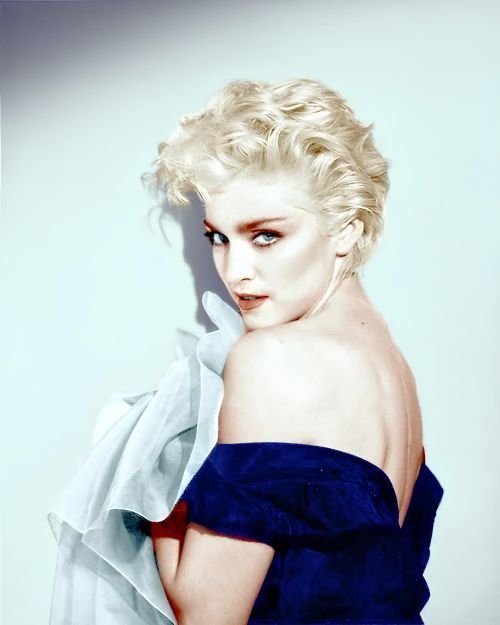
IN THIS PHOTO: Madonna in 1986/PHOTO CREDIT: Herb Ritts
From Pop Queen to a Global Icon
__________
I am starting out…
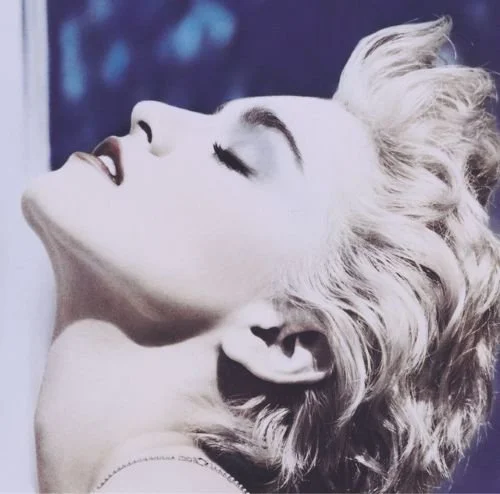
with this article from Rhino, who noted how Madonna ruled the music world in the summer of 1986. True Blue was released on 30th June, 1986. It turns forty very soon, so I wanted to publish another anniversary feature. In this one, I want to chart her rise from this revered artist to a global superstar. Her third studio album was her biggest leap to date in terms of her confidence, songwriting and look. Some of the most memorable and enduring images of Madonna shot in 1986. Although I love those taken in 1983 in NYC by Richard Corman. It is that transition in terms of her fame and accomplishments. It was not only Madonna’s music and touring that made her this global icon. Her film work, whilst not always brilliant, got her that exposure and visibility. True Blue was a definite peak. One where she was undoubtably the biggest Pop artist on the planet:
“Madonna was already a superstar after the success of her second album, Like a Virgin (1984). With third studio effort, True Blue, released June 30, 1986, she became a mega-star, elevating to one of the biggest and most popular artists in the world.
With the new album came a new Madonna, sporting a fresh, revitalized image: "After a while, I got sick of wearing tons of jewelry," the singer told New York Times that year. "I wanted to clean myself off. I see my new look as very innocent and feminine and unadorned. It makes me feel good. Growing up, I admired the kind of beautiful glamorous woman - from Bridget Bardot to Grace Kelly - who doesn't seem to be around much anymore. I think it's time for that kind of glamour to come back."
True Blue was the album that found Madonna stretching beyond the dance floor towards more adult-oriented genres and sounds. The first shot from the record arrived in the form of emotional movie theme "Live to Tell," which hit radio airwaves in March 1986. The surprising ballad was an instant hit, soaring to #1 on the Hot 100 over the week of July 7, 1986. The song was also Madge's first #1 over on Billboard's Adult Contemporary charts.
Madonna kept the chart-topping party going with second single, the controversial "Papa Don't Preach." Released in June '96 with a wildly popular music video, the track was another smash, climbing to the #1 spot on the Hot 100 for the week of August 16, 1986. It held the spot for two weeks in a row.
The fun and retro title track was served up as single #3 from True Blue, released in mid-September. The kicky tune was another radio and MTV hit, peaking at #3 on the Hot 100 for the week of November 15, 1986. The #1 song in America at the time: Boston's "Amanda."
With "True Blue" still rocking the charts, Madonna released "Open Your Heart" as the fourth single from the LP. The horn-blasted and upbeat track danced all the way to #1 on the Hot 100 over the week of February 7, 1987.
Four top 5 singles apparently wasn't enough, so Madonna went in for a fifth hit with "La Isla Bonita," released in February '87, and peaking at #4 for the week of May 2, 1987. The #1 song in the country that week: Cutting Crew's "(I Just) Died in Your Arms."
True Blue was a blockbuster LP, cruising to #1 on the Billboard 200 for the week of August 16, 1986. It held the top spot for a month, finally bested by the Top Gun soundtrack on September 19, 1986. When the smoke cleared, True Blue was the best-selling album in the entire world for the year 1986.
"The girls that dressed like me all got the joke - it was their parents who didn't. You didn't see those girls going off and doing awful things because they bought my records," Madonna insisted. "What I've learned from all the controversy is that you can't expect everyone to get your sense of humor. But I've also learned that people eventually do catch on to what they didn't get at first. It's a nice surprise in the end when they, go, 'Hey, well, you know... I like that”.
1984’s Like a Virgin did a lot to see her as this modern-day great who was an original and innovative Pop artist. However, True Blue was a more sophisticated and rounded work. I think it ages better than her first two albums, and Madonna’s voice has strengthened. In terms of the photography and images of her, this is an amazing woman in her late-twenties who was about to conquer the world. If you want to pinpoint the moment Madonna became a global sensation and was at the forefront of modern music, you could argue it happened with the release of True Blue. Standout singles such as La Isla Bonita and Papa Don’t Preach still seem fresh today. In terms of the diversity of sound and genres on the album, it is a big reason why it was so popular. A worldwide chart-topper, True Blue has never quite gained all the respect it deserves. Compared to an album such as Like a Prayer (1989), True Blue does not have as much written about it. However, it was a fascinating period in her career. Before moving on, I want to source Wikipedia and part of their Legacy section on True Blue:
“In a similar note, Sal Cinquemani said that with True Blue, Madonna joined the ranks of Jackson and Prince and made the transition from "pop tart to consummate artist". According to Lucy O'Brien, "with its sophisticated sheen, [True Blue] took Madonna firmly out of the dance-diva category into a global pop market". Jack White from the Official Charts Company wrote: "True Blue, her third album, saw Madonna shoot into the realms of superstardom that her previous album Like A Virgin had cemented". To Matthew Rettenmund, author of Encyclopedia Madonnica, it was the first "solid proof" of her artistic and musical talents. Patrick Leonard himself explained: "The music got more serious, so I think she got taken more seriously [...] [Madonna] took some chances that I don't know most people would have. There were things [in True Blue] that weren't normal in pop music at the time".
Slant Magazine considered True Blue one of the best albums from the 1980s; Jonathan Keefe wrote that it marked the point where, "it became readily apparent that Madonna was more than just a flash-in-the-pan pop star. It's when she began manipulating her image —and her audience— with a real sense of clarity and purpose". Piatkowski wrote that it "set the stage for the exponential ascent of Madonna's brilliance", that began with 1989's Like a Prayer and reached its peak on 1998's Ray of Light. From music portal Albumism, Justin Chadwick concluded that, "[True Blue] solidified [Madonna's] blonde ambition, cemented her worldwide superstardom, and, once and for all, extinguished any remaining doubts about her potential career longevity”.
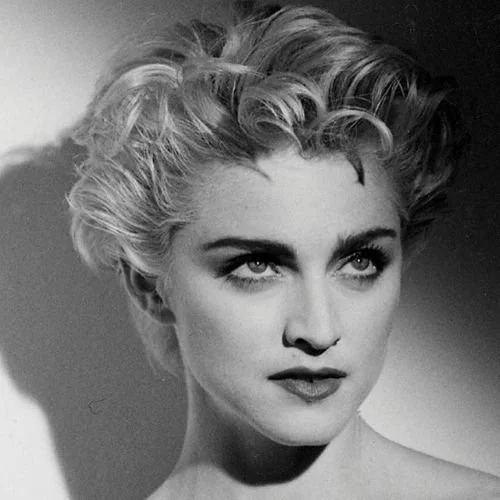
IN THIS PHOTO: Madonna in 1986/PHOTO CREDIT: Herb Ritts
I do want to source Interview Magazine, and a conversation between Madonna biographer Mary Gabriel and Mel Ottenberg, and their thoughts and impressions on Madonna’s True Blue era. It was an album where Madonna has more control regarding which producers and collaborators to work with. By all accounts, 1986 was a very happy and contented one for her:
“OTTENBERG: I still remember when True Blue came out, she had this whole new look and the Madonna wannabe look was instantly obsolete.
GABRIEL: It’s funny because for her first album, the Madonna look was short hair, kind of “tough street kid.” Then, for her Like a Virgin album, she was saucy and sexy, but still tough, still very New York.
OTTENBERG: I feel like she loved the experience of doing Like a Virgin, but then she became more muscular in her powers with True Blue.
GABRIEL: True Blue was really the first Madonna album because that was the first one she did with Steve Bray and Pat Leonard. It was basically just three kids playing. The first one was with Reggie Lucas, he was a well-known producer. Second one, Nile Rodgers, mega-well known producer. The third one, Madonna could dictate her terms by that point and she said, “I’ll just do it with Pat Bray and Steve Leonard.”
OTTENBERG: It is by far the best Madonna album.
GABRIEL: It’s so up and so wonderful. There’s the kind of person that says, “You don’t need to know what’s happening in the artist’s life. You should only look at the product.” But I don’t believe that. I think you need to know what’s happening in the artist’s life because if you look at True Blue, she had just married Sean Penn.
OTTENBERG: Unbelievable.
GABRIEL: She is completely in love. Her life has come together in a way she could have never dreamed of. It’s a pure statement of joy. And yet, it happened at a moment when her world was falling apart because people she loved were dying of AIDS. Think about “Open Your Heart.” What does that video mean? It’s confusing. There’s that end shot with her running off with a little boy into the sunset and you find out that Martin Burgoyne, her best friend who she used to dress like that with, is dying. I mean, it changes everything. Or when she does the video “Cherish” with Herb Ritts, who’s just found out he’s HIV positive. Or when she does Like a Prayer, her marriage is falling apart. It’s this beautiful construction she’s made. Then you get to Blond Ambition— and I wonder if you agree with this. I quote Valerie Steele who said it was the moment when fashion and pop music were joined forever.
OTTENBERG: Madonna changed my life. I mean it in a really profound way. And going to the Blond Ambition World Tour and seeing the fashion, and seeing also how organized it was. Before I was at Interview, I was Rihanna’s stylist for seven years, and I was always like, “I would never put Madonna once on the mood board.” Because Madonna is god and I’m not going to copy god. But I’m going to always have that dedication to, “Could we do something different? We should remix it.” And all of those things come from Madonna moments”.
I wrote about Madonna’s 1986 for a feature last December. It is worth finishing off with Chronicles Beauty Queen, and their words about Madonna’s influence and dominance in 1986. Such an exciting and huge year, she was very much ruling Pop. But she was also appearing on the big screen. Her marriage to Sean Penn gaining a lot of press attention. Even though they divorced, and it was a short-lived marriage, you can hear her happiness and love for him on True Blue’s title track:
"By 1986, Madonna had already reshaped the landscape of pop music, fashion, and female empowerment. After dominating the charts with Like a Virgin (1984) and True Blue (released June 30, 1986), she had evolved from a New York City club sensation into a full-fledged global icon. The True Blue album, recorded in Los Angeles and produced alongside Patrick Leonard and Stephen Bray, featured hits like “Papa Don’t Preach,” “Live to Tell,” and “Open Your Heart”—all of which topped Billboard Hot 100 and sparked both admiration and controversy. The album’s release marked a turning point where Madonna transitioned from playful rebel to powerful storyteller, addressing themes of teenage pregnancy, Catholic guilt, and emotional vulnerability. It became the best-selling album of 1986 globally, and her image—platinum blonde hair, bold brows, lace gloves—was seen everywhere from Tokyo to Toronto.
"Madonna's influence in 1986 was not limited to music. She starred in Shanghai Surprise alongside her then-husband Sean Penn, and though the film struggled, it kept her constantly in the headlines. In fashion, she collaborated with designers like Jean-Paul Gaultier and Maripol, popularizing street style looks from downtown Manhattan—mesh tops, crucifix jewelry, layered skirts—that became iconic across youth cultures in London, Paris, and São Paulo. Her fan base expanded rapidly among LGBTQ+ communities, who saw her as a fearless voice in an era marked by rising conservatism and the AIDS crisis. Her appearance at the 1986 MTV Video Music Awards, dressed in a powder-blue corset and singing “Papa Don’t Preach,” was a visual statement of rebellion and glamour that rippled through pop culture.
"Madonna Louise Ciccone, born in Bay City, Michigan, and raised in Detroit, had arrived in New York City in 1978 with just $35 in her pocket. By 1986, she was a self-made multimillionaire, shaping the sounds, conversations, and aesthetics of a generation. She once said, 'I'm tough, I'm ambitious, and I know exactly what I want.' That grit was on full display in 1986, a year that solidified her as the undisputed Queen of Pop—not just for her music, but for her relentless reinvention, cultural impact, and fearless domination of both stage and screen”.
On 30th June, we celebrate forty years of True Blue. As I said previously, Madonna releases a new album, Confessions on a Dance Floor: Part II, on 3rd July. It will be a busy week of recalling memories of her 1986 album and then welcoming in this new one. Madonna’s aesthetic, sound and music from 1896 has influenced artists like Christina Aguilera, Kylie Minogue, Lady Gaga, Spice Girls, Britney Spears, and Katy Perry. Containing some of her best songs, True Blue set a record by becoming the first album to reach number one in twenty-eight countries. It spent a record thirty-four consecutive weeks at the top of the European Top 100 Albums chart. It was the best-selling album of 1986 and the best-selling album of the 1980s by a female artist, going on to sell twenty-five millions copies. Also, all five singles released from the album (Live to Tell, Papa Don't Preach, True Blue, Open Your Heart, and La Isla Bonita) reached the top five on the Billboard Hot 100, with three hitting number one. Such a monumental album from an artist who ascended to another level in 1986, it is a thrill to mark forty years of…
THE supreme True Blue.