FEATURE:
Kate Bush: Them Heavy People: The Extraordinary Characters in Her Songs
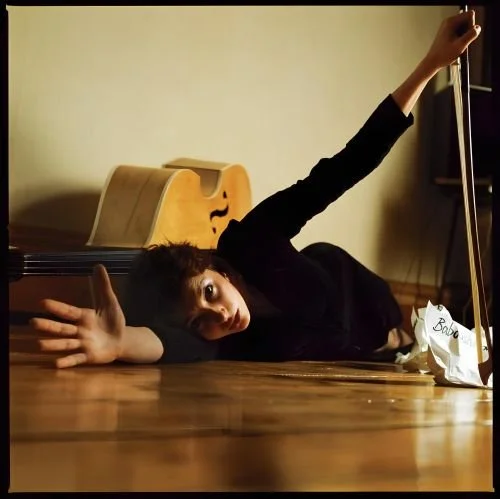
IN THIS PHOTO: Kate Bush in an outtake from the single cover shoot for Babooshka in 1980/PHOTO CREDIT: John Carder Bush
Babooshka/Her Husband (Babooshka)/Emma (Don't Push Your Foot on the Heartbrake)
__________
THERE are other characters…
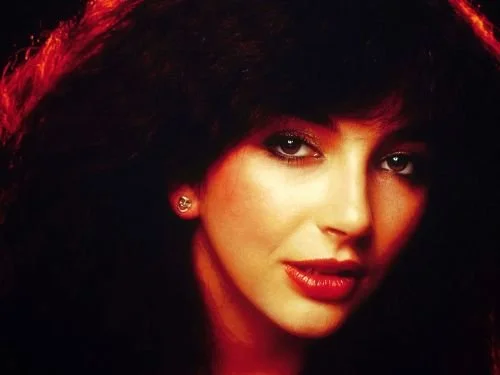
IN THIS PHOTO: Kate Bush captured in 1978/PHOTO CREDIT: RB/Redferns
I have not mined from Kate Bush’s 1980 album, Never for Ever, though I need to put the album aside, as it has been discussed more than any other, so I will come back to it in time. Though I want to write about Babooshka/Her Husband, as this incredible single, Babooshka, turns forty-six on 27th June. I thought I would use the opportunity there to talk about the single but the characters. Technically, the titular character of Babooshka is someone who is…well, I shall let Kate Bush give background to the song. For that, it is to the Kate Bush Encyclopedia:
“I love the melody line of the bass guitar on this song. We got through a lot of boxes of broken crockery to get the right sound at the end – the canteen ladies were not impressed.
It was really a theme that has fascinated me for some time. It’s based on a theme that is often used in folk songs, which is where the wife of the husband begins to feel that perhaps he’s not faithful. And there’s no real strength in her feelings, it’s just more or less paranoia suspicions, and so she starts thinking that she’s going to test him, just to see if he’s faithful. So what she does is she gets herself a pseudonym, which happens to be Babooshka, and she sends him a letter. And he responds very well to the letter, because as he reads it, he recognises the wife that he had a couple of years ago, who was happy, in the letter. And so he likes it, and she decides to take it even further and get a meeting together to see how he reacts to this Babooshka lady instead of her. When he meets her, again because she is so similar to his wife, the one that he loves, he’s very attracted to her. Of course she is very annoyed and the break in the song is just throwing the restaurant at him… (…) The whole idea of the song is really the futility and the stupidness of humans and how by our own thinking, spinning around in our own ideas we come up with completely paranoid facts. So in her situation she was in fact suspicious of a man who was doing nothing wrong, he loved her very much indeed. Through her own suspicions and evil thoughts she’s really ruining the relationship. (Countdown Australia, 1980)”.
I do want to discuss the themes around infidelity in Kate Bush’s music, or how she is more trusting of men perhaps. I mentioned this when writing about Ran Tan Waltz recently. That was a B-side that is about a new wife and mother who is out at night with other men, whilst the husband is with the child. The sympathy falling with the man. Here, another song where the woman has made an error of judgement or pushed too far. The title of Babooshka is interesting. A slight misspelling of the Russian word for grandmother, ‘babushka’, a Kate Bush tribute act/experience is called Baby Bushka, that I would suggest you check out. In a separate interview with BBC Radio 1 in October 1980, Bush said the choice of title was coincidental: “There was an opera called Babooshka. Apparently she was the lady that the three kings went to see because the star stopped over her house and they thought “Jesus is in there”.’ So they went in and he wasn’t. And they wouldn’t let her come with them to find the baby and she spent the rest of her life looking for him and she never found him. And also a friend of mine had a cat called Babooshka”.
When thinking about the characters and how they seem to be taken from literature. Kate Bush took a lot from literature, T.V. and film. In the case of Babooshka, it does seem like this was an old work of fiction or folk story. I am not sure how exactly she came up with the idea and whether there was text linked to it. Bush said she presumed the inspiration was from a fairy story she heard as a child, though apparently not. After writing the song, she heard Donald Swan singing about Babooshka, so she assumed someone must be named it. What I love about the characters and dynamics of the song is that we never really know why the wife went to the trouble of disguising herself. Recorded between January and June 1980, during the recording sessions of Never for Ever, Babooshka features John Giblin on bass, and marks the significance of fretless bass sounds as instrumental ‘male’ partners through Bush's music in the early eighties. That is from Wikipedia, but I think it is interesting regarding the significance of instruments and particular sounds that denote masculinity and femininity. In her more piano-led albums before Never for Ever, perhaps the piano was this symbolism of femininity or beauty and sexuality. Even if Babooshka is a light track in some ways and not too heavy, I did not really think about the composition and how that acts as a character or has this emotional dynamic and facet. What is key from Babooshka is that Bush was developing as a writer and producer. Producing with Jon Kelly, this track includes a breaking glass sound at the end. Maybe symbolising the breaking of trust or anger, it seems quite traditional and common to write a song about mistrust and deceit. Whilst we may feel the man is cheating and his wife is right to cast herself as this mysterious figure, she got the situation wrong. We do not know much about Her Husband, other than how he seems to be faithful but has caused soma paranoia. Bush not mistrustful of men in relationships. She might have reacted to a lot of songs where men and partners were vilified and blamed, so she wrote a track where the wife was very much culpable. How the husband gets the sense he knows Babooshka and it reminds him of “his little lady”. Or, “Just like his wife before she freezed on him”. Even though the wife couldn’t have made a worse move by testing her husband’s faith, at the end of the song, the husband seems to say that he is “all yours”. Like he is succumbing to Babooshka.
Does this mean he does love his wife, or did he technically cheat and was attracted to someone who was not his wife? I will address the video and live performances. When thinking of the characters, it is almost this gothic and tragic relationship. One could compare it to Kate Bush’s debut single, Wuthering Heights (from 1978’s The Kick Inside). Dreams of Orgonon examined the dynamic of Babooshka in their fascinating piece:
“In part, the success of “Babooshka” can be explained by its conceptual kinship with “Wuthering Heights”. Like Bush’s first single, “Babooshka” is a work of literary reverie, relating the dysfunction of a relationship through images derived from a preexisting work (in Babooshka’s case, the folk song “Sovay”). Both songs boast jealous women protagonists whose pathologies lead to a dramatic break in their romantic relationships. Yet while the two songs share DNA, they differ significantly in their songwriting and realization. “Wuthering Heights” is much poppier than “Babooshka.” It’s a deeply strange song, but it’s still a quintessential power ballad ending on a guitar solo. The instrumentation of “Babooshka” mixes a piano, a Yamaha CS-80 synth, and Paddy Bush’s balalaika. There are elements of pop in the song, such as its jazzy melody, but “Babooshka” telegraphs its weirdness from the get-go.
“Wuthering Heights” was a reunion of lovers. “Babooshka” relates the slow burn of a dysfunctional relationship, culminating in a glam psychotic break. The song’s title character acts as if Bush intended to finally write the Catherine of Brontë’s Wuthering Heights: a petty, jealous hooligan ruins her relationship with her partner in a frantic bout of possessiveness. Her plan, of course, is barmy — Babooshka tests her husband’s loyalty by catfishing him through “scented letters” (not a great plan — what happens if Babooshka’s husband finds these letters on a desk while the lady of the house makes herself some Earl Grey? Somebody make a short film about this). Babooshka uses these letters to arrange a tête-à-tête between her husband and her assumed personality — “just like/his wife/but how she was before the years flew by.” The song is unclear on whether Babooshka is recognized by her husband, merely suggesting he gives into her whims (he’s absolutely a sub). Babooshka’s self-poisoning narcissism breaks their relationship, creating a process of martial recursion in which the fear of a relationship’s ending itself ends that relationship.
But what of the relationship’s nature? The details of the emotional split between the couple is expressed vaguely. “Babooshka” is predicated on its protagonist’s desire to “test her husband,” and only supplies the occasional detail on the couple’s relationship. When the husband reads the catfish letters (someone please write a biography of me and title it The Catfish Letters), he observes that she resembles his wife “before the tears/and how she was before the years flew by.” Evidently their marriage was happy at one point, before some cataclysm ruptured it and damned them to a joyless union. Before Babooshka turned to suspicion and jealousy, she had the “capacity to give him all he needs” (we could dedicate an entire piece to the fact that the husband obviously has a mommy kink, but let’s try to keep our readership here). Her scheme to win him over is an expression of desire to return to the joy of their early married years, an act of futile nostalgia. The fantasy she enacts is not simply toxic; it’s regressive and pitiful”.
Whilst Bush was not specifically inspired by a story or show, Dreams of Orgonon also theorise that a traditional English Folk song might have influenced the story: Sovay, the Female Highwayman. The song (which Bush could have heard from A.L. Lloyd or her social circle of musicians) as they say, tells of a maiden who “dressed herself in man’s array,” pretends to be a highwayman, and holds her lover at gunpoint, demanding his treasures. The man gives Sovay his pocket watch but refuses to part with his precious engagement ring. Having seen her fiancé’s loyalty in practice, Sovay departs from him”. The video for Babooshka was an extraordinary step forward in terms of confidence and concept. The first single from Never for Ever, Breathing, was quite epic and filmic. However, Bush was with other people in the video, and what makes Babooshka so eye-catching and memorable is that she is solo and transforms into this warrior princess in the chorus. In the video, we see Bush beside a double bass (contrabass). That represents her husband. Bush, wearing a black bodysuit and a veil in her role as the embittered wife, is magnetic and incredible sexy. She changed into this extraordinary ‘Russian’ costume as her alter-ego, Babooshka. An illustration by Chris Achilleos was the basis for the costume. I think it is her boldest and perhaps best video that point. Those who felt Bush was this child-like artist and someone quite immature or naïve would see this incredible thrilling and sexy video. One where she was very seductive and charged.
One interesting subject related to the promotion of Babooshka is the live performances. Largely mimed, how to bring the visuals of Babooshka to various sets and stages around the world? Performing on several European T.V. shows, her outing on the Dr. Hook television special (Bush appeared on a BBC special hosted by American Rock band, Dr. Hook & the Medicine Show on 20th March, 1980). On her the right side, Bush “resembles a staid Victorian lady in mourning dress; on the left side a glittering, liberated young woman in a silvery jumpsuit, with bright lightning-streaks painted down the left side of her face. Her figure is lit so that only the “repressed” side of her costume is visible during the verses of the song, and mainly the “free” side during the choruses”. The Kate Bush Encyclopedia helping out once more. Her stagecraft and how she could reinterpret her own songs and change the visuals between performances was exceptional. Bush’s videos are remarkable and innovative. For T.V. shows where she well could phone it in and do something basic, she put so much thought into her performances and added something new. A psychological edge or something that made you think. I keep thinking about Her Husband/Babooshka and that awkward situation. The wife maybe influenced by Sovay, the Female Highwayman. A really fascinating potential connection to that source. Kate Bush exploring relationships in different ways. Rather than simple love songs or ones where there is a messy break-up, she was perhaps less personal and found greater intrigue and interest in something fictional, literary or fantastical. By doing so, she did not lose relatability. Instead, nuance and layers to a brilliant song like Babooshka. Its ill-fated wife who is this Babooshka and fails to make her husband cheat. Her bad plan backfires.
Flipping to the second side of this feature, and let’s go back an album. I started by writing about the second single from Bush’s third studio album. Released in November 1978, Lionheart is her underrated second studio album. This character passed me by, as I must confess I have not listened to this Kate Bush song as much as others. Whilst Babooshka leads Never for Ever and was a single that reached five in the U.K., Don’t Push Your Foot on the Heartbrake was the penultimate song on the first side of Lionheart, and is a song that did not get a lot of appreciation or attention. Sandwiched between Wow and Oh England My Lionheart, was the sequencing right for the album? I will get to characters in a very underappreciated song, though thinking about the tone and feel of that run of three songs, Wow, Don’t Push Your Foot on the Heartbrake, and there are quite a few twists and turns. Maybe Kashka from Baghdad could come from track eight and be moved further up. I do feel that sequencing, if not completely right, can affect the whole album and how you appreciate certain songs. Even if Don’t Push Your Foot on the Heartbrake is highlighted as throwaway, this idea of Kate Bush doing a Patti Smith song is intriguing.
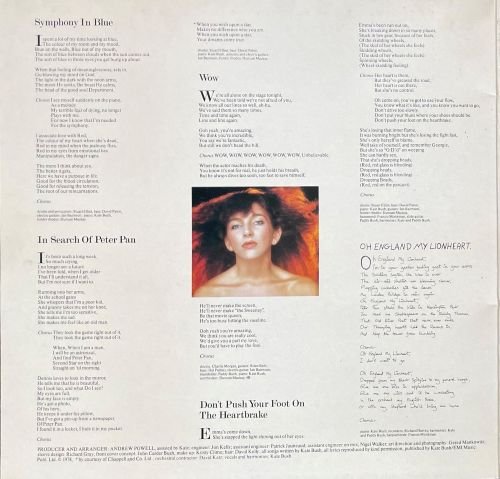
It makes me think about Kate Bush and Rock. Patti Smith released her extraordinary and hugely influential debut album, Horses, in 1975. No doubt, a seventeen-year-old Kate Bush would have heard that album and been struck by it. Though it may not sound exactly what Patti Smith would do, Don’t Push Your Foot on the Heartbrake is a rare occasion of Kate Bush going into more Rock and Post-Punk territory. Many associate her with piano Pop and this idea she was quite airy-fairy and slight. Maybe like The Beatles, Bush perhaps better or more synonymous with Pop than Rock. However, there were a few tracks through her discography where there was this Rock grit and punch. When Lionheart was released in November 1978, Punk and New Wave was taking hold in the U.K. 1978 saw a move away from direct and raw noise to a more expansive and nuanced Punk sound. Art and Post-Punk coming in. Key albums from the year were X-Ray Spex’s Germfree Adolescents, Buzzcocks’ Another Music in a Different Kitchen, Wire’s Chairs Missing, and The Clash’s Give 'Em Enough Rope. It is commendable that Kate Bush wanted to add her voice in a small way. Or just write a song in the mould of an artist she admired. Think about Lionheart, and most of the songs are gentler and piano-led. She would provide some rare and ecstatic tracks on Never for Ever and The Dreaming. On Lionheart, Don’t Push Your Foot on the Heartbrake is a bit of a standout. Because it is a lot faster and gutsier. Coffee Homeground and Fullhouse are eccentric and have their own energy. Though nothing on Lionheart sits right alongside Don’t Push Your Foot on the Heartbrake.
I feel this song was written around the time Patti Smith’s Horses was released. I wrote a feature Kate Bush and songs inspired by other artists. Kite from The Kick Inside was inspired by Bob Marley. I do love how Don’t Push Your Foot on the Heartbrake was Bush’s attempt to write something in the mould of Patti Smith. Bush performed Don’t Push Your Foot On The Heartbrake on the Leo Sayer Show on 17th November, 1978, and on the 1979 Christmas special. The song was also included in the setlist of The Tour of Life. I am not sure who Emma is. Bush uses clever lyrics of the road and vehicles to articulate a breakdown or break-up. The ‘Heartbrake’ part of the title. “Emma’s been run out on/She’s breaking down/In so many places/Stuck in low gear/Because of her fears”. I love how Kate and Paddy Bush (her brother) harmonise. He is on slide guitar. I am curious who Bush had in mind when writing the song. Emma may have been a name she plucked out of thin air. “She’s only herself to blame/Well, take care of yourself/And remember Georgie/But she’s so O.D.’d on weeping/She can hardly see”. I could have included Georgie. Who is that?! Kate Bush rarely had named characters in her songs. Most of this series is of people without names. Here, we have two characters. The ill-fated heroine, Emma, who is spinning out of control. I am going to bring in a couple of features about the song. I want to come again to Dreams of Orgonon. Even though they do not especially like the song, they do make some interesting observations. Very little outside of this written about a track that I feel is much more interesting than people give it credit for. In terms of tonal shifts, there is much more of this than on The Kick Inside. How, “Lionheart is mostly leftovers, scraps of The Kick Inside and the Phoenix demos reheated in a French studio. Yet for all that gets made of its leftovers status Lionheart showcases a drastic tonal shift from The Kick Inside”.
It is interesting thinking about that Patti Smith tie-in. Perhaps Kate Bush felt like she had to give a music-related connection. Shout out someone who was very cool and edgy at a time when Bush was not considered as such. Giving gravitas or modern music relevance. Dreams of Orgonon write how a brilliant and hugely powerful piece of literature is more similar to Don’t Push Your Foot on the Heartbrake than you might hear on Horses, say:
“Smith’s Beat-influenced, raucous NYC-grounded style is about as far from Bush’s sophisticated weirdness as London’s punk scene. No, the Patti Smith influence on this song isn’t primarily aesthetic. It’s primarily a structural influence. A number of Patti Smith songs, including “Gloria,” “Free Money,” and “Because the Night,” center their intros around a piano, bring in a standard set of rock instruments, and erupt with expressive noise in the chorus. This is a structure “Don’t Push Your Foot on the Heartbrake” apes, albeit with more randomness and less meticulously constructed tension than something like “Because the Night.” Lyrically, Bush and Smith share a sense of propulsion and escalating, which in Bush’s case consists of tearing down a motorway and in Smith’s consists of everything from heists to lusting after strangers. Yet Bush eschews the transgressive qualities of albums like Horses and Easter, and probably for the best (Bush has yet to release an album track with a racial slur in its title). There’s a melodramatic innocence to “Heartbrake,” anchored as it is in its protagonist’s frantic mourning of Georgie. Bush’s homage to Smith is little more than borrowing a stencil which she traces her own work around. This is of course the kind of work that uses patently ridiculous phrases like “but she’s so O. D. ’d on weeping.”
In lieu of an immediate musical analogue for “Heartbrake,” let’s compare this song to a more famous piece of media centered around a person’s internal state shattering on a motorway: J. G. Ballard’s controversial novel Crash. Ballard is legendary for his interrogations of modernity: his masterpiece The Atrocity Exhibition features a piece called “Why I Want to Fuck Ronald Reagan” which literally landed him in court. He frequently positions large social structures, such as high rises, the mass media, and motorways, as analogous to the human body and symptomatic of deep-rooted entropy. This is… not terribly far from where Bush lands, at times. Sure, Bush overlooks the whole “nightmare of modernity” thing (indeed, “Heartbrake” is one of the few Bush songs to unambiguously take place in the late 20th century), but physical experience is crucial to the narrative of her music. Tuning into one’s own body to find spiritual liberation is one of the recurrent ideas in Bush’s discography so far. Whereas The Kick Inside took this freedom and operated it with unbridled optimism, Lionheart is the sobering moment in which Bush has to figure out what to do when the initial high of becoming an adult subsides. Sometimes growing up entails crashing a car. But if you’re going to do it, you might as well be romantic about it”.
I am not sure whether Kate Bush remembers the song or holds in particular high esteem now. A song that was not originally intended to go on an album and was grabbed from the archives to ensure she could put out a second studio album six months after her first – insane pressure and expectation from EMI! -, Don’t Push Your Foot on the Heartbrake is a curio. Something that, whilst not spectacular, is odd and goofy. It is Rock-themed, and Bush said it was her version of a Patti Smith song. Making this track quite interesting. A lot to unpick. I keep wondering about Emma. A school friend from when Bush attended St Joseph's Convent Grammar School in Abbey Wood, south east London? That is a Catholic girls' school. Bush attended the school until 1976. The opening lines read like this: “Emma’s come down/She’s stopped the light/Shining out of her eyes”. In terms of Emmas who were the titles of songs released around the time Bush wrote Don’t Push Your Foot on the Heartbrake were Hot Chocolate’s 1974 song, Emma, and Little River Band’s 1975 track, Emma. Even so, this is more personal to Bush, though she never revealed who the character is. In terms of positive takes on the songs, when Harry Doherty spoke to Kate Bush for a November 1978 edition of Melody Maker, he did say this:
“A few months ago, in the paper, Kate said how one of her musical ambitions was to write a real rousing rock'n'roll song and how difficult she found that task. James and the Cold Gun was her effort on The Kick Inside, and with Don't Push Your Foot on the Heartbrake she has tackled the art of writing a roasting rocker on her own terms. Heartbrake (another piece of emotional therapy) might not be considered a rocker in the traditional sense of racing from start to finish but it's still one of the most vicious pieces of rock I've stumbled across in some time. The chorus is slow, pedestrianly slow. The pace is deceiving. It slides into the chorus. Bush moves into a jog. Then the second part of the chorus. It's complete havoc, and when it comes to repeating that second part in the run-up to the end, Kate wrenches from her slight frame a screaming line of unbelievably consummate rock'n'roll power that astounded me. A rather unnerving turn to Kate's music, I think”.
I will leave things there. As Babooshka turns forty-six on 27th June, I wanted to write about Babooshka/Her Husband. The wife who dresses as this other woman to try and test her husband’s fidelity. Going back a couple of years to Lionheart and the under-discussed Don’t Push Your Foot on the Heartbrake. Who the ‘Emma’ is that is bereft, and Bush warns not to skid off the road. There is no record of Kate Bush having a close friend named Emma, so it does make me curious where she got the name, and who she had in mind when writing the song. A trio of fascinating characters from the incredible work of…
THE unique Kate Bush.