
FEATURE:
Groovelines
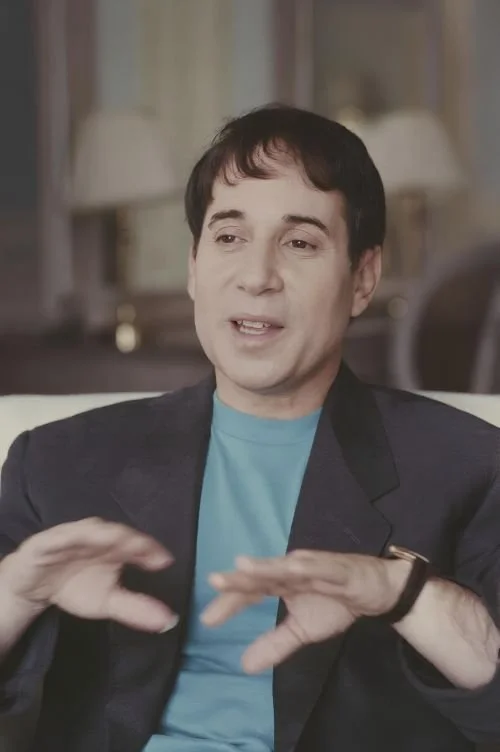
IN THIS PHOTO: Paul Simon photographed in London in 1986/PHOTO CREDIT: Michael Putland/Getty Images
Paul Simon - You Can Call Me Al
__________
ON 25th August…
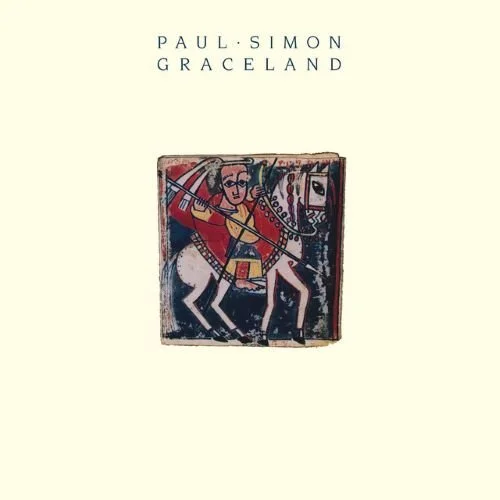
we mark forty years of Paul Simon’s masterpiece, Graceland. Perhaps his greatest solo album ever, it has endured to this day. I will go into it more closer to the time. However, before that, one of its defining singles turns forty. That is You Can Call me Al. There is a bit of debate around its exact release date, through several sources say July 1986. I am going to start out with a feature from American Songwriter, who tells of the real-life interaction that inspired a song that could be seen as a mid-life crisis. It is one of the standout songs from Graceland. Musically brilliant and inventive, its iconic video, with Chevy Chase appearing alongside Paul Simon, helps cement its legacy:
“We all reach a point in our lives when the aging process becomes a lot less fun than it used to be. Turning 18? A highly anticipated moment in everyone’s life. Turning any age past 25? A little less anticipated…That’s the onus behind Paul Simon’s playful take on a mid-life crises, “You Can Call Me Al.” Though the song was inspired by a specific event, Simon used his songwriting chops to give it a much wider scope than originally intended. Uncover the meaning behind this track, below.
Videos by American Songwriter
Behind the Meaning of Paul Simon’s Mid-Life Crises, “You Can Call Me Al”
A man walks down the street
He says, “Why am I soft in the middle now?
Why am I soft in the middle?
The rest of my life is so hard
I need a photo-opportunity
I want a shot at redemption
Don’t want to end up a cartoon
In a cartoon graveyard”
The opening line quickly orients the listener to the subject of this song: growing up. Why am I soft in the middle, Simon asks, not doubt prompting a knowing chuckle from many of his listeners. Like many Simon songs, his language borders on figurative, but the meaning is still easily understood. Simon struggles with growing up and aging out of a time when life seems to be easy breezy.
Despite the explicit meaning of this song concerning aging, the title was inspired by a real life event in Simon’s life. As the story goes, he attended a party and was mistaken for some man called “Al.”
The Party Behind the Song
“Fun fact, the titular line for ‘You Can Call Me Al; was inspired by an amusing misunderstanding at a party,” a post on Simon’s Facebook reads. “One evening in the early 1970s, French composer Pierre Boulez, who had just been named musical director of the New York Philharmonic, attended a party hosted by Paul and his wife. At the end of the night, Paul said goodbye to Boulez at the door, who politely responded, ‘Thank you, Al, and please give my best to Betty.’”
In the end, Simon used this miscommunication to explain the apathy that can creep into our lives as we grow older. Things that once amused us, annoyed or, or angered us fail to rouse any emotion what so ever. It’s a nuanced track with many different point of relatability for the listener. Overarchingly, it seems Simon wants someone to commiserate with about the unceasing passing of time.
Revisit this track, below.
Bone digger, bone digger
Dogs in the moonlight
Far away in my well-lit door
Mr. Beer belly, Beer belly
Get these mutts away from me
You know, I don’t find this stuff amusing anymore
If you’d be my bodyguard
I can be your long-lost pal
I can call you Betty
And Betty, when you call me
You can call me Al
A man walks down the street
He says, “Why am I short of attention?
Got a short little span of attention
And, whoa, my nights are so long
Where’s my wife and family?
What if I die here?”.
The last time that Paul Simon performed the brilliant You Can Call Me Al was on his Homeward Bound – The Farewell Tour, which concluded on 22nd September, 2018, in Queens, New York. I will come to an NME article from 2024 that tells why Simon has retired that song. Simon has recently performed some gigs and is still touring. We hope that he performs for years to come. This article from Vintage Digital goes inside You Can Call Me Al. It is not allowing me to copy the text. I would recommend you to read it, as it provides insight into this genius song. It is Graceland’s most “most playful, intricate and technically daring track”. “What sounds effortless on record was, in reality, a masterpiece of analogue/digital construction, held together by Simon’s compositional instincts and Roy Halee’s extraordinary ability to bend tape, time and technology into something new”. Roy Halee is the mixing engineer on Graceland. “Rhythm grooves cut in Johannesburg were never intended as finished songs. They were conversations, sketches and experiments, played by musicians who stood shoulder to shoulder with no headphones, feeding off each other’s energy. Halee captured it all to analogue tape with careful mic placement and minimal baffling, isolating what needed to be isolated while preserving the live spark that allowed Simon to build a song off of communal momentum. Simon later returned these tapes to New York, treating them like raw clay. He sifted, edited, lifted moments from one performance and paired them with phrases from another, shaping the song bar by bar. In the analogue world, this would be a monumental task. Halee transferred the analogue recordings to a Sony PCM-3324 digital 24-track recorder and performed dozens of edits, chasing the groove across reels and assembling the foundations of the track with meticulous, almost architectural precision. The dense instrumentation threatened to swallow the vocal whole. Halee’s solution was ingenious: he created two different tape delays, one feeding left and one feeding right, which pulled the vocal into the music without letting it disappear. Remove that delay and the entire sonic illusion collapses. With it, the track gains a rhythmic bounce and intelligibility that feels almost impossible given how crowded the mix is”. I have cut from various paragraphs, but I couldn’t get through the whole things. It gives you a flavour of the challenges faced and how brilliant intuition and inventiveness saved the song from potential disaster. You Can Call Me Al sounds so extraordinary all these years later.
I am finishing off with NME and an article from 2024. A shame that Paul Simon has had to retire one of his most beloved and acclaimed songs. Having dealt with major health conditions, including hearing loss, he has improved. Though he is not in perfect health, I do wonder if You Can Call Me Al will return to his sets soon. It would be wonderful to hear perform this classic live:
“Paul Simon has opened up about his decision to retire hit song ‘You Can Call Me Al’.
The Simon and Garfunkel singer-songwriter has grown distant from some of his most iconic songs over the years. However, of all the hits he has taken a step back from, it is ‘You Can Call Me Al’ that he has fully retired from his live shows.
It was released back in 1986 from his groundbreaking album ‘Graceland’, and soon went on to become one of the defining tracks from his solo career. According to a new interview though, the singer said the decision to move on from the song has come from necessity rather than desire.
Talking with CBS Mornings, Simon said that his battle with hearing loss has left him unable to perform like he used to, and interfered massively with his relationship with music.
“There’s only about six per cent [hearing] in my left ear,” he told the outlet, also recalling how he has been forced to use multiple monitors in order to hear properly during recent shows. “When the balance is right, I can hear well.”
He also added that the condition has forced him to be much more selective when choosing setlists. “I’m going through my repertoire and reducing a lot of the choices I make to acoustic versions,” he explained. “It’s all much quieter. It’s not ‘You Can Call Me Al.’ That’s gone. I can’t do that one”.
Ahead of the fortieth anniversary of Graceland in August, I wanted to focus on its extraordinary lead single. One of Paul Simon’s finest works, every time I hear this song, I get transported back to childhood when I first heard the song. It is such a playful and hypnotic song that makes you want to move. That is why I wanted to focus on it…
FOR this Groovelines.