
FEATURE:
Groovelines
Run-D.M.C. (with Aerosmith) - Walk This Way
__________
I am spending some time…
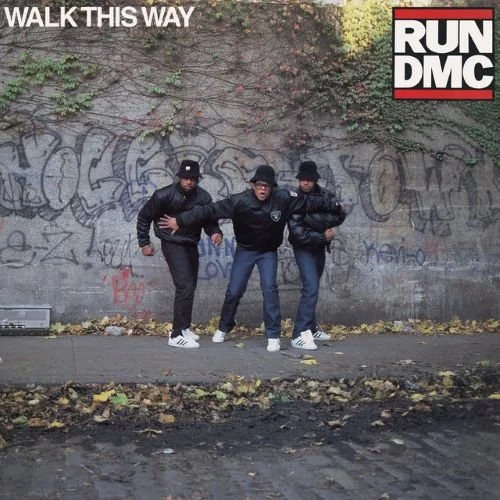
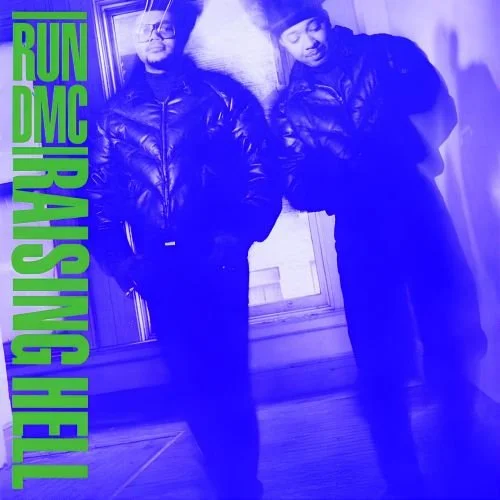
with a song that turns forty on 4th July. I did first cover this song from Groovelines in 2021, though I feel it is worth coming back to it. Walk This Way unified Hip-Hop and Rock. Originally recorded by Aerosmith for their 1975 album, Toys in the Attics, it was included in Run-D.M.C.’s 1986 masterpiece, Raising Hell. Featuring Aerosmith’s Steven Tyler on vocals and Joe Perry on guitars, it was an amazing collaborations that arguably saved Aerosmith. In terms of their reputation and how they were in a slump by 1986. The second single from Raising Hell, Walk This Way was produced by Russell Simmons and Rick Rubin. Run-D.M.C. did not want the song to be released as a single and were shocked when it was and it became such a huge success. Rick Rubin also was surprised it was a single. Walk This Way peaked at number four in the U.S., becoming Run-D.M.C.'s biggest hit. It was also the first Hip-Hop single to reach the top five on the Billboard charts. It reached number eight in the U.K. Ahead of its fortieth anniversary, I want to explore this phenomenal crossover single. One that united a very cool and influential Hip-Hop group with a Rock band who had perhaps become a little stale by the time their 1975 song was revitalised and repurposed. I do want to come to some features around Walk This Way. I think it is a perfect blend of Aerosmith’s original inspiration with the spark and energy that Run-D.M.C. inject. Making a great song into something epic and timeless. In 2023, Classic Rock went inside Walk This Way. Rick Rubin had to talk Run-D.M.C. into recording it. The song became a hit, and the rest is history:
“The beginning of the now-classic video for Run-DMC’s version of Walk This Way begins with the Hollis, Queens rap trio (MCs Run and DMC plus DJ Jam Master Jay) trying to drown out a band rehearsing next door – Aerosmith’s Steven Tyler and Joe Perry. Each faction cranks up the volume, until Tyler smashes a hole in the wall with his bandana-strewn mic stand – then, a ‘duet’ between both groups ensues. The video also serves as a metaphor for how separated rock and rap were at the time.
By the mid-80s, Aerosmith were a shadow of their former self. After 1985’s unfocused reunion album Done With Mirrors failed to recapture the group’s earlier glories – coupled with its members’ ongoing drug problems – it seemed like Aerosmith’s chart-dominating days were over. On the other hand, Run-DMC were a group on the rise – their first two albums [1984’s Run-DMC and 1985’s King Of Rock] helped put rap on the map and, as evidenced by both the title track of King Of Rock and Rock Box, the seeds for a rap-rock hybrid were sown.
It didn’t truly together until sessions began for Run-DMC’s third album, Raising Hell, in early 1986. when Jam Master Jay and DMC resuscitated a sample from their early days.
“Before rap records were made, we used to have to find beats to rap over, and Walk This Way was one of our favourites,” recalls DMC [real name Darryl McDaniels]. “There’s something about Walk This Way – when the DJ threw that on, the beat was so cool, the way those guitars came in. And then the DJ would cut it back to the start of the beat.”
“We were in the studio one day looping the beat and [producer] Rick Rubin walks in. He’s like, ‘Yo, do you know what that is?’. And me and Jay were like, ‘Yeah, that’s Toys In The Attic’. We didn’t know the group – we just went off with what was on the cover. He was like, ‘This is Aerosmith, Walk This Way’ – he was giving us the 411 on Aerosmith.”
When Rubin suggested Run-DMC re-do the song, DMC remembers resistance. “Me and Run were like, ‘You’re taking this rock-rap shit too far – you’re going to ruin us. That’s going to be fake, nobody in hip-hop is going to like it’. But he persuaded me and Jay to sit down and listen to the lyrics, so we put the needle on the record. When Steven Tyler opened his mouth, we got on the phone: ‘Y’all motherfuckers – we’re going to be ruined!’. We had this big argument.”
What Run-DMC didn’t know was Rubin had already asked Perry and Tyler to drop by Magic Ventures Studios in NYC.
“We went into the studio and laid down a weak version – because we didn’t want to do the record – and left. Eight hours later, we get a call to come back to the studio. We walk in and Joe Perry is playing his riff, Steven Tyler is in the booth doing the lyrics. Me and Run knew we had to step our game up. Jay was like, ‘Yo, don’t think of the record as “Steven Tyler and Joe Perry’s record”, think of those lyrics as Run-DMC lyrics’. So we went in the booth and that went so good that Steven said, ‘Yo, let me get in with y’all’.”
In the 1997 book Walk This Way: The Autobiography Of Aerosmith, the band’s then-manager, Tim Collins, admits not knowing what rap was when Rubin first suggested the session – but agreed when offered $8,000 for a day’s studio work.
Perry added, “I didn’t know what was gonna happen when I walked into the studio. I thought they’d show us ideas on how to rearrange the song, but all they had was a drum track.”
DMC recalls his first impressions of the Aero-duo. “Steven was very friendly and Joe Perry didn’t say one word. He’d nod at you, go over and play the guitar, finish his riff. ‘Are you ready to play?’. He’d shake his head yes. But Steve was just very friendly and inquisitive, like, ‘Wow, do the DJ thing Jay – show me how to DJ’. He was like a little kid – excited and enthused.”
In the Walk This Way… autobiography, Tyler reflected on the sessions. “Run and D and Jay were huddled in a corner, really intent on something. I go, ‘Joe, what are they doing?’. ‘Probably smoking crack’, he says. Later we went over to the corner. They’d been eating lunch from McDonald’s.”
As soon as Run-DMC began playing their version of Walk This Way, DMC knew they were on to something. “Everybody flipped out. Me and Run were so puzzled, because the reaction was overwhelming. We didn’t think it was going to be a big hit, but people were loving it.”
Soon after, the video was filmed, which MTV aired throughout the summer of 1986. Raising Hell was soon a smash, peaking at No.6 on the US album chart, while Walk This Way hit No.4 on the US singles chart. Aerosmith may have benefited more from the success – they soon kicked their addictions and enjoyed a hugely successful comeback”.
I will move to The Guardian and their 2016 feature. Making thirty years of Walk This Way, they told the story of one of the standout songs of the 1980s. Before Walk This Way, I am not sure whether Hip-Hop and Rock had been fused. Maybe a risk bringing Aerosmith and Run-D.M.C. together, the interaction and blend is perfect. No wonder it was so popular when it arrived in 1986:
“Not that hip-hop had always been an easy sell. The rap records that reached radio listeners in the early years had a tendency, ever since the Sugarhill Gang’s breakthrough, Rapper’s Delight, to exude a novelty flavour, while turntablism, in real life the beating heart of the culture, tended to manifest itself only as a cheesy wikki-wikki add-on. And then there were the clothes. Oh dear God, the clothes. Seek out the extraordinary footage of Grandmaster Flash and the Furious Five on Channel 4’s The Tube performing The Message, its pioneering gritty street-level content undermined by their superfly sci-fi costumes, which looked like they’d been raided from George Clinton’s tour bus seven years earlier.
The reputation of the entire genre was rescued by Run-DMC who, in the words of British writer Neil Kulkarni in The Periodic Table of Hip Hop, “made everything that had happened before them sound old-fashioned, too slick and smarmy”. The trio had roots in that clunky prehistory: Run (Joseph Simmons), the teenage brother of Russell Simmons, had previously DJed for Kurtis Blow, before forming his own band, originally called Orange Crush, with DMC (Darryl McDaniels) and DJ Jam Master Jay (Jason Mizell). But everything changed in 1983 when the trio, renamed Run-DMC and still in their teens, released their debut single, It’s Like That, on Profile. That track – brutally blunt by the standards of the time – and its rival-dissing flipside, Sucker MCs, blew up on rap radio and changed the game for good. “Ultimately it took Run-DMC, with their black leather, sweats, homburgs and in-your-face attitude, to crystallise the image of toughness into rap chic,” wrote SH Fernando Jr in hip-hop history The New Beats. “Their attitude, like their beats, was hard. Their dress, unlike the extravagant leather, sequin and feather outfits of most rap acts at the time, reflected a street aesthetic to which the average b-boy on the corner could relate.”
Aerosmith, meanwhile, were in a slump. Album sales had steadily declined since their 70s peak, the band’s key members were ravaged by various addictions, and they hadn’t had a Billboard top 10 single since the original Walk This Way, a decade earlier. The song had first been recorded for the band’s Toys in the Attic album, and was born on tour when singer Steven Tyler, who had been listening to the Meters and James Brown, asked drummer Joey Kramer to lay down something with a little funk to it. (Run-DMC, therefore, were not so much appropriating Aerosmith’s groove for black culture as reclaiming it.) Guitarist Joe Perry added a simple but effective hook, and Tyler came up with a lewd loss-of-innocence lyric about a schoolboy getting caught masturbating by his father, who instructs him in the ways of seduction.
When it was time to record the track at New York’s Record Plant studio, it still needed a title and a chorus. Inspiration finally came to them when they took a break to walk a few blocks to Times Square to catch a movie. The film was Mel Brooks’s comedy Young Frankenstein, in which Marty Feldman’s Igor lurches and limps down some stone steps, then instructs Gene Wilder, playing the title role, to “walk this way”. In a classic sight gag, Wilder does exactly that.
By the time the Run-DMC/Aerosmith collaboration was mooted, Jam Master Jay had already been cutting Walk This Way back and forth between his decks for years, and Run had been rapping over it since he was 12. They weren’t the first act, though, to attempt a rap-rock hybrid. The Beastie Boys’ AC/DC-sampling Rock Hard and LL Cool J’s Rock the Bells – both Rick Rubin productions – had already walked that way, and Run-DMC themselves had released several trial runs, notably the Russell Simmons-produced Rock Box and the provocatively titled King of Rock, both featuring chunky riffing from session guitarist Eddie Martinez.
When Collins relayed Rubin’s offer to Tyler and Perry, they were initially sceptical, but went along to Magic Ventures studio in Manhattan on 9 March 1986 for the rate of $8,000 a day. And a day is all it took: Run-DMC had a rental car that was overdue for return, and needed to work fast. As Tyler recalled in Walk This Way: The Autobiography of Aerosmith, “Run and D and Jay were huddled in a corner, really intent on something. I go, ‘Joe, what are they doing?’ He says, ‘Probably smoking crack.’ Later we went over to the corner. They’d been eating lunch from McDonald’s.”
What Rick Rubin created with that day’s work still stands as an immortal party anthem, as liable to spark outbreaks of air-scratching as air-guitar among drunks unable to decide whether they want to be Jay or Joe as they lurched around (an ability to dance was optional for the enjoyment of Walk This Way). Tyler’s rapid-fire vocal was too slang-packed to be completely decipherable to British ears, but the bits about “feet flying up in the air”, a “kitty in the middle” and being “down on the muffin” left little doubt that it was thinly veiled filth.
And the video was one of the most literal in a decade not short of contenders. The two bands – the sleazy old rock slags and the box-fresh rap crew – are rehearsing in adjacent rooms and engaged in a loudness war, but join forces when Tyler literally smashes down the wall between the two rooms/races/genres, and the two groups storm a theatre stage to the delight of screaming fans. The clip instantly took Run-DMC into the MTV mainstream (the channel showed it twice an hour).
But which half of the hook-up were the real winners from Walk This Way? Who was doing a favour for whom? Rick Rubin had sold Aerosmith the idea as “a great crossover opportunity for both groups”, and so it proved. The received narrative is that the song broke Run-DMC and, by extension, rap, legitimising the genre in the eyes of white listeners, just as Eddie Van Halen’s solo on Beat It had done for Michael Jackson and black pop. It’s true that the single became the first rap single on Billboard’s Top 10 (peaking at No 4), that its parent album, Raising Hell, became rap’s first platinum LP, and that Run-DMC became the first rap act on the cover of Rolling Stone”.
I am going to end with a review of the supreme Walk This Way. The Mix Review provided their take on a song that has endured through the decades. Forty years after its release, Walk This Way still sounds so exciting and fresh. You can play it multiple times and never tire of its brilliance. I remember first hearing this song in the 1990s. I was enthralled. I still get a rush when I hear it played now:
“A pioneering collaboration between Run-DMC and Aerosmith under the auspices of production guru Rick Rubin, this not only catapulted the rap-rock sub-genre into the mainstream, but also helped launch the career of one of the all-time great mix engineers, Andy Wallace. Despite the heavy gated (or sample-triggered?) snare ambience, what impresses me is how aggressive and upfront this production sounds. That might seem nothing special these days, when we’re so used to super-dry and present mixes, but in 1986 Rocky IV, Karate Kid II and Top Gun had saturated the airwaves with lushly reverb-tastic offerings like Survivor’s ‘Burning Heart’, Peter Cetera’s ‘Glory Of Love’, and Berlin’s ‘Take My Breath Away’. In that context, ‘Walk This Way’ must have felt like a bolt from the blue!
It’s also easy to underestimate the production’s complexity. Yes, there are plenty of big, bold elements in there: the merciless sampled drums, the guitar riffs and the alternation between Run-DMC’s rapped verses and Steven Tyler’s sung choruses. But the closer you listen, the more nuances emerge. For instance, this production might appear to have no bass part (and the strong ‘C’ pitch to the kick sample potentially obviates the need much of the time), but there’s something sneakily sidling in at 0:26 to underpin the first verse. It can also be detected in the choruses, where its rhythm deviates from that of the guitar. (If you can’t hear what I’m talking about, low-pass filter the mix at 100Hz and it’ll become more clearly audible.)
The way the verse is developed throughout the production is cool. The second verse, for instance, adds live ride-cymbal overdubs, a lead-guitar fill at 1:02, and Tyler’s pitched call-and-response contributions on phrases such as “kitty in the middle” (1:00) and “ready to play” (1:06). Then, after the third verse has stripped things back to a loop from Aerosmith’s original 1975 release (a nice touch!), Tyler joins the rapper in an equal lead role all through verse four. In fact, despite strong competition from the samples, riffs and raps, Tyler totally steals the show with his hook line. Not only is it extraordinarily high (high Bb and the Eb above it), but the tone is so gloriously filthy and distorted that it merges seamlessly with the guitar timbre to create something more than the sum of its parts. So striking is this timbre, in fact, that I don’t feel in the least short-changed despite there being, unusually, only two such hook sections in the entire song”.
A simply extraordinary song that turns forty on 4th July, Run-D.M.C. thought Walk This Way would ruin them. Picking up on the Classic Rock feature, the group cannot argue against what its legacy is: “DMC can see what the song accomplished. “People tell me it’s the greatest rap record ever made and the greatest video. VH-1 did the ‘Top 50 Videos Of All-Time’ – we were No.1. It was about bringing generations of music together, which is what music is supposed to do – evolution and unity”. When you think about Walk This Way in those terms, few records have…
LEFT such a legacy.