FEATURE:
Spotlight
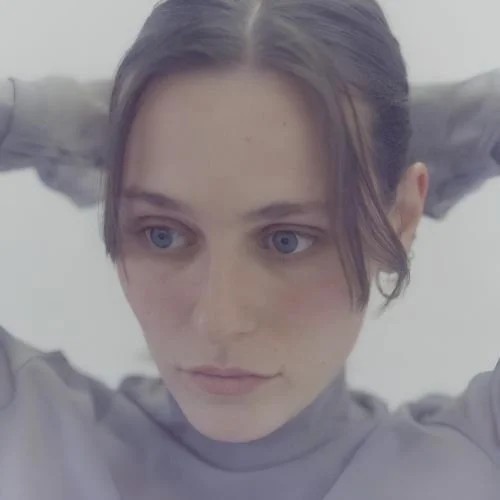
Ellie O'Neill
__________
A debut that ranks alongside…
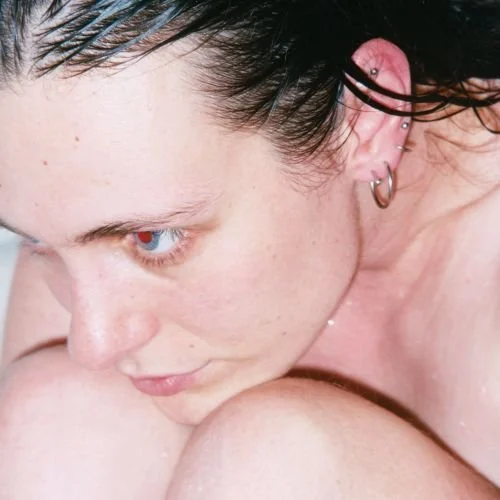
the most impressive of this year, Time of Fallow came out on 20th March. It is the work of the incredible Ellie O’Neill. I am going to spotlight an artist that you should know about. There are a few interviews with O’Neill that I want to cover and explore, so that we can get a bigger impression of a musician who has a growing fanbase. It is clear that Ellie O’Neill is going to be a star. She is garnering a lot of attention and love. Music Week spoke with Ellie O’Neill around the release Time of Fallow came out. It is a stunning album:
“You recorded Time Of Fallow way back in 2021 – can you put into words how you feel about it finally coming out?
“It has had a long life already, so I’m definitely excited for it to be out. I don’t see music as a product, so that’s partially why I was slow to get it released. For me, a song is out when I’ve written it and I’m like, ‘Perfect, I love that.’ Before, it felt like the songs were already released, because I had shared them with people at so many gigs... I’ve played a lot of gigs! But it was cool to have time to find the thread that connected the songs. The title encompasses the weight of their content, but also the fact that it was a downtime and an isolated experience for me to write them, a time of learning, of going inwards to then re-emerge afterwards.”
How would you define the music you make?
“The first record I ever loved was a Christy Moore album, and folk and country are definitely a part of what I make, but when I listen to songwriter music like Arthur Russell, I feel closer to that. But I don’t know where I fall and I don’t really care. In school, I was learning guitar, but I would never sing. Then I learned a KT Tunstall song or something and I was like, ‘Oh my God, cool, I can play and sing at the same time!’ [Laughs]. I would always be really shy and then when I’d sing on stage I would be totally chill. I just loved the feeling. It’s not about the hit that you get from being good at something in front of people. It’s more of a deepening or a grounding that you feel, because you actually can’t do anything else in that moment.”
As an independent act, how have you found the industry?
“It is definitely hard to survive and it can be an unbelievably elitist industry. Most people you meet have some kind of safety net. I really appreciate when well-known artists are transparent about the challenges for people coming up. Everything is weighed against you, so you have to be smart about how you manage that. I’m really lucky to have got to this point, to be talking to you about my songs. It’s pretty crazy. But when I tell my friends who aren’t in music how much things cost, they’re like, ‘What?!’ If you go into it not expecting that, then maybe you’d be more shocked, but I’m not in it for the money. If I was, I would be very, very upset all the time [laughs]!”
Do you think your stance on not viewing music as a product could ever change?
“I really hope not. I don’t know if I can make good things while thinking only about the audience. For me, music is private, a little safe thing I want to protect. That idea is really important to me. It’s not about what happens at the end, it’s about getting to know yourself or your instrument more and what you feel right now. I wrote most of the album in my bedroom in my parents’ house, with my brothers running around or while literally putting on my boots to play a [Gaelic] football match. It demythologised this whole ‘cabin in the woods’ idea of songwriting. The songwriting part of me is the thing I want to cultivate and keep alive, because it makes me feel so good. It makes me feel everything. If that can be a lifelong companion, as I hope it will be, then that will be a massive yes for me”.
Back in January, The Line of Best Fit interviewed Ellie O’Neill. They write how her “music and identity is driven by the rejection of prescribed paths and a search to discover her own authentic voice”. I have only just connected with this wonderful artist. I am curious if she will be playing near London at some point:
“We go back to the beginning, and her earliest influences. She wasn’t from a particularly musical household. “I think music was kind of a left-field thing for me to be so into. But my dad did teach me my first chords: a song called ‘Bright Blue Rose’ written by Jimmy MacCarthy, which is so, so beautiful.” She took formal guitar lessons but was the only girl in the class of six, so mostly taught herself at home. She rinsed her parents’ Michael Jackson and Christy Moore CDs. Aged 19, she discovered Judee Sill; then, later, Leonard Cohen and Adrianne Lenker.
In April 2024, O’Neill opened for Lenker on the Irish leg of the Bright Future tour, including an unforgettable show at St Canice’s Cathedral in Kilkenny. The two artists bonded a little off-stage over their shared horror of the internet. She has also supported Irish folk artist John Francis Flynn, who was so impressed that he invited O’Neill to duet with him in the main set.
The audience at the ICA are won over in a similar way. They’re here to see Dove Ellis, and when O’Neill steps on stage, they’re still chattering and chuntering, but as soon as she opens her mouth and starts to race around the octaves, their attention turns rapt. It is pin-drop silent for the songs, while the din that follows each one just keeps escalating, not least because of the way she ends them, with a flight of falsetto or an abrupt and punchy stop. By the end, the atmosphere is raucous. As O’Neill plays the final descending chords of “Peter’s Song” and ducks out, one Ellis fan turns to his mate, both of them looking mildly dazed. “That was incredible,” he grins. “We can go home now.”
O’Neill’s distinctive, tuned-down, freewheeling guitar-playing has attracted almost as much attention as her voice, and she says there’s a clear parallel between her interest in reinventing artistic form, and her sexuality. “I think trying to find a way around the guitar that isn’t given to me is similar to what you have to do as a queer person – finding a route that isn’t given to you. In terms of both queerness and art, you don’t have a map so you have to crash your way through, even if that’s in a very personal, silent way. I think there’s obvious reasons why a lot of queer people are artists or activists or both.”
At some stage, she will get another band together, but at the moment she’s most energised by the idea of ambitious studio work. “Before I’d made my first thing ever, I was really purist about it, like, ‘I want to be able to replicate it live’, and now I don’t care about that. I’m just interested in being surprised about what I can make, thinking, ‘There’s so much more I can do.’”
Her most recent release is an elusive, hypnotic second single, “Little Sister”, which took twice as long to write as “Bohemia”, at a whopping 20 minutes. “It’s an example, I think, of how lots of things are almost suspended in your mind, or wherever you keep them, and then they just come up in the stream.”
Of late, she has been writing in a more direct and grounded vein. “That’s really freeing. To say, ‘It doesn’t all have to be like a dream.’ The gateway for me was starting to write portrait songs as gifts for people. I did the first one during Covid. Do you know that feeling of, ‘Oh actually people that you love don’t live near you, probably forever, and you just won’t see them all the time’? It’s such a crazy thing to me. But it’s nice to feel that at least you have that song”.
There are a couple of other interviews to include before finishing off. Hotpress spent some time with Ellie O’Neill last month. In this amazing interview, she spoke about, among other things, “football, slowing down, boundary-pushing Irish artists, and touring with Adrianne Lenker”:
“Ellie has made no effort to dull down the edges of her own Irish identity for broader international appeal – with lyrics referencing Skibbereen, Auburn Street in Phibsborough, “Cailleach and Clothrú”, and the “curve of the Samhain moon”.
“I feel like Irish artists have always done that – especially the good ones,” she notes. “If you're writing from a true place, you're not filtering that for the sake of commercial gain, or for the sake of an end product. I always think about the amount of times that Sinéad is referencing parts of home that are just immediately Irish."
But, as she points out, "Ireland is obviously a cultural moment – and that can be a good and a bad thing for an Irish person writing music."
"Because it can just be picked up as fodder in that machine," she elaborates. "But you have to just do it. You have to just write whatever you need to write, and hope that it means something for you, and hope that it means something for somebody else as a secondary bonus.
“It's my way of understanding myself, and my life, and the people around me as well. So not using that would be a disservice – and an untruth, probably.”
Although Time of Fallow has yet to be released at the time of our conversation, Ellie is already looking forward to having “a bit of silence again” in her head, to carve out a path towards her next project.
“I just want to keep writing songs, and keep growing. I really feel like I'm still so new to it, in terms of the length of my career, the length of my understanding of the craft of writing songs – and, hopefully, the length of my life.
“But the funny thing for me is that once the song is written, it's already out – I've had that moment with it," she says of the release. "So in a way, this moment is for other people”.
It is worth coming to CLASH and their interesting interview with Ellie O’Neill. I do think that there are so many tremendous Irish artists putting out music of the highest order. Go and listen to Time of Fallow as soon as possible. It genuinely is one of the best debut albums of this year:
“Congrats on the reaction to ‘Time Of Fallow’ – you must be thrilled! How does it feel to finally have the album out there?
Very good!
I’ve read the earliest song on the record was penned while you were still an English Literature undergraduate – how important were you studies on your creative process? Do you hear reflections of your literary heroes / heroines in your own lyrics?
I think everything I write is informed by everything I read and love. I like to feel in communion with other writers and I feel closer to writers I love a lot of the time rather than musicians.
Some of the impetus for completing the recordafter you were forced to move back home during the pandemic. What was that experience like?
I had always lived between home and Dublin, so it was normal to me, except I had more time in the house than before. It wasn’t an impetus for completing the record, and I wasn’t forced to move back, I chose to, like a lot of people my age at the time. I felt lucky to have the privilege of doing that, and wanted to use my time well.
I’ve read you would write after your family had gone to bed – do you think that’s a factor in the slightly hushed quietude on the record?
I think it’s quiet at times because I am singing about intimate things, and I write mostly with headphones on to hear my own voice clearly and go deep so I don’t need to project that much. It is also not quiet at times, there’s diversity of tone and projection across the album, I think. It’s easier to write in solitude.
‘Seabird’ is a deeply affecting closing statement, did you always conceive of it as the final song? The album’s structure is also curious – did you enjoy toying with notions of linearity through this?
I don’t think this song is really what I would call ‘affecting’, I think it’s full of lightness and ease. That take on the record was just a rehearsal, it’s very laid back and blossoms easily for that reason. I never conceived of my songs as an album, so nothing was written as a functional thing, just expressions and outpourings”.
There are some really positive reviews for Time of Fallow. Coming back to CLASH, they note how there is a lot to consider and chew on with regards this album. Even though a lot of the words might ring personally to Ellie O’Neill, her songs are universal. She is an artist I am really looking forward hearing more from. I do hope to see her perform live one day:
“There’s something transformational about the music of Ellie O’Neill. The Irish songwriter’s debut album ‘Time Of Fallow’ picks you up in one space, and deposits you in another – listening to it, you’re left feeling like a pebble in the current, pushed downstream to pastures new. A pared-back selection of alt folk minimalism, these sketch-like pieces are uniquely powerful, resulting in a debut album that leaves a palpable impact.
Music that discusses memory, grief, desire, and self-reckoning, the material on ‘Time Of Fallow’ was penned in the aftermath of the pandemic, a time when Ellie O’Neill was forced to return to her family home on a County Meath council estate. A period of personal change, the songs came to reflect her queer identity, while also looking more broadly at community, heritage, and the quiet evolution Ireland itself was embarking on.
In short, there’s a lot to chew on across the space of this remarkable debut album. Lead single ‘Silent Water’ contains a heart-stopping beauty, while songs like ‘Anna With The Silver Arrow’ or ‘Sister Of The Sea’ contain real complexities. It’s all set to wonderful music, of course – the pirouetting guitar lines, the undulating melodies, given enough space to breathe a little in the minimalist framework.
Recalling Laura Marling or Karen Dalton in its stark simplicity, ‘Time Of Fallow’ was recorded in a matter of days at Analogue Catalogue in Newry, a tape-first, female-run studio. There’s a unique atmosphere to ‘Sean’s Song’ for example, the sound of someone putting themselves out there on the line. ‘Witness’ is framed by truth, while closer ‘Seabird’ rises to the heavens, a soul unleashed.
Rooted in a very specific locality, ‘Time Of Fallow’ broadens its scope to become something universal. A wonderful experience, Ellie O’Neill’s debut album should be treasured.
8/10”.
You really do need to go and follow Ellie O’Neill. Even though I am quite new to her music, I do feel like I am going to be listening to her years from now. There is something about Time of Fallow that gets under your skin. She is going to sit alongside the best songwriters in modern music and I feel that she will hit that peak…
VERY shortly.
__________
Follow Ellie O’Neill