
FEATURE:
Kate Bush: Them Heavy People: The Extraordinary Characters in Her Songs

IN THIS PHOTO: Kate Bush in a promotional photo for 50 Words for Snow in 2011/PHOTO CREDIT: John Carder Bush
Two Old Flames (Snowed in at Wheeler Street)/Eddie (The Gay Farewell)
__________
ANOTHER occasion…
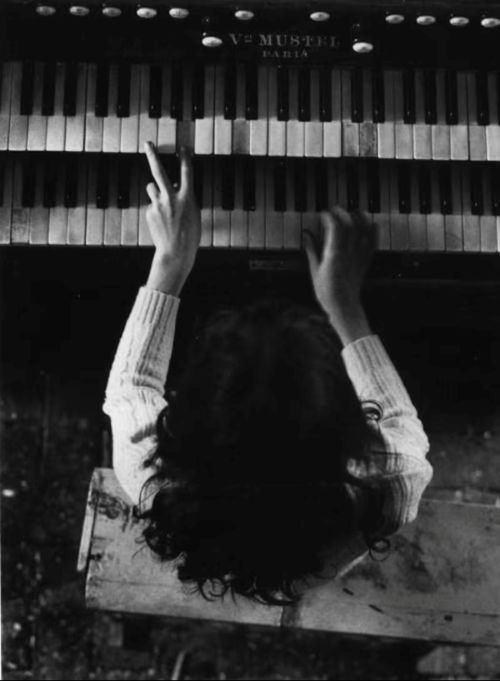
PHOTO CREDIT: John Carder Bush
where I am pairing Kate Bush’s most recent work with her very earliest. Characters from each. This series is where I highlight characters in her songs and talk around them. Themes that are connected. I will come to Eddie from The Gay Farewell. This is an early Kate Bush song that had more than one title. I am fascinated to examine the track and who Eddie might be. I am starting out with two characters from Snowed in at Wheeler Street. From 2011’s 50 Words for Snow, it was Kate Bush duetting with Elton John. Perhaps the only time that Bush has duetted with another artist for her album. She duetted with Peter Gabriel for his extraordinary song, Don’t Give Up (from 1986’s So). I can’t recall another Kate Bush song where the vocals are divided almost evenly. The characters in the song are actually meant to be lovers. Two old flames. This line reveals that: “Snowed in at Wheeler street/just two old flames keeping the fire going/We look so good together”. This idea that they are two lovers that get separated through time. In Ancient Rome, in the U.S. on 9/11. Switching through periods. The sense that they maybe were lovers and have been in love forever, though they get separated and there is this sense of mystery, what-if, missed connection and memories that stretch through time. I will discuss Elton John and the significance of Bush’s music, and how she considers him to be an idol. I also want to come on to talk about Bush’s voice in 2011 and why the longer and more expansive and explorative tracks on 50 Words for Snow are among her most compelling and underrated.
I want to look inside the song and the inspiration behind it. The lyrics are really interesting. Perhaps in situations of destruction and chaos, they died and then got reincarnated. Taking that photo in New York on 9/11. So close. Was that just before they got caught in the terrorist attack? These lines suggest warfare divided them: “I just let you walk away. I've never forgiven myself/I saw you on the steps in Paris, you were with someone else/Couldn't you see that should've been me? I just walked on by/Then we met in '42 but we were on different sides/I hid you under my bed but they took you away/I lost you in a London smog as you crossed the lane/I never know where you're gonna be next but I know that you'll surprise me/Come with me, I'll find some rope and I'll tie us together”. There is romance, history and mystery all in these lines. Bush writing cinematically and novelistically in a sense. Painting a picture and creating something that is almost a short film. This is what Kate Bush said of a song where she got to share the microphone with a musical hero: “The idea is that there are two lovers, two souls who keep on meeting up in different periods of time. So they meet in Ancient Rome and then they meet again walking through time. But each time something happens to tear them apart. (…) It’s like two old souls that keep on meeting up. (John Doran, ‘A Demon In The Drift: Kate Bush Interviewed’. The Quietus, 2011)”. The two old flames divided lovers through time. Although 50 Words for Snow is a wintery album, Snowed in at Wheeler Street seems to be the least wintery. Its title suggests this barricade of snow trapping people. However, it is only a small part of the story. Fire is more present and important. Bush wanted a unifying wintery theme for her most recent album. You do get that, but it is not a concept album or something with a single narrative arc. As Graeme Thomson notes in Under the Ivy: The Life and Music of Kate Bush, he observes how there was an intent to “write long, involved pieces, unhurried and full of room”. Bush wanted “the listener to “go on a journey” Bush pushing away from conventional Pop songs. The first album where there was nothing in the way of a clear and short single.
Aside from Among Angels (the final track on 50 Words for Snow), everything was written after the release of Director’s Cut. That was released in May 2011. In a relatively short period of time, Bush composed six long songs for this amazing album. She was elated to work from scratch again after spending so long rearranging and re-recording older songs for Director’s Cut. In a way, this was Bush returning to her earliest days. Writing on the piano and working through the music and finding the right notes and melodies. “The organic, old school ethos was caried through the recording process. The journey between the song as written and the song as recorded was shorter and less torturous than at any time since the late Seventies. She put the piano pieces to tape in long, live single perforemncnes, tracking the instrumental part then adding her vocals”. I feel this was in part a way of going back to basics and getting a more organic sound. Connecting to Elton John, she loved his live album, 17-11-70. That incredible live album that she fell in love with. Closing her eyes and imagining she was there. Released in 1971, the recording was taken from a live WABC-FM radio broadcast on 17th November, 1970. Kate Bush specifically wrote the track with Elton John in mind, so she would been a bit lost if he turned her down. He plays one of the two old flames. She loved his vocal on the song. It is very powerful. John did not want to hear the track before he arrived, and he just went straight into Kate Bush’s home studio and nailed it. A song with so much space and atmosphere, it was Kate Bush truly severing herself from conventional Pop. Snowed in at Wheeler Street was also Bush looking against reincarnation and déjà vu. Subjects she tackled on earlier songs like Strange Phenomena (from 1978’s The Kick Inside) and Symphony in Blue (from 1978’s Lionheart). Graeme Thomson feels Snowed in at Wheeler Street is less graceful and accomplished as other songs on the album. Taking a bit too long to get where its going. Elton John and Kate Bush’s vocals not as well-suited and compatible as you’d think. I would disagree. The song, clocking in at 8:05, is quite epic. I feel that it is a suitable length. I always see this as a short film or piece that should have been animated. How we get to see these two old flames in these historical settings. We get to pan over Wheeler Street (wherever that may be) and an image of this frame or heart-shaped locket with the two lovers in it. I do think there is a natural and instant bond and chemistry between Bush and John. How it is great that the two are cast as lovers. Something that would have seemed so far-fetched to a very young Kate Bush (then Cathy/Catherine) when she first heard his music.

IN THIS PHOTO: Kate Bush in a promotional photo for 50 Words for Snow in 2011
Kate Bush first heard Elton John in 1972 when she was thirteen. She became a massive fan after hearing his hit single, Rocket Man, which she played on repeat and credits with inspiring her own piano-driven style. Bush would later cover the song for a 1991 tribute album to Elton John and Bernie Taupin. I imagine this teenager listening to Rocket Man and being hooked on this artist. Throughout her career, Elton John plated a big role. The two became friends long before he turned up on Snowed in at Wheel Street. Bush was invited to his wedding to David Furnish in 2014. The significance of Bush’s music on John is interesting. He appeared on the 2014 BBC documentary, Kate Bush: Running Up That Hill, and said hearing her on Peter Gabriel’s Don’t Give Up saved his life. How he was in the grip of addiction and something in her performance spoke to him. The power of that song and its importance. The mutual love between them. Bush idolising John in a way. How he was this piano player in the 1970s who was popular and was not your conventional Rock musician. Few artists of the time synonymous with that instrument. Unusual and also very relatable to someone who herself bonded with the piano very young. I do especially love Kate Bush’s voice in 2011. That deeper sound. There is that real sense of depth, both sonically and emotionally. I like how we get these longer and more expansive songs together with this richer and deeper voice. Whilst there is a weariness and sense of loss on Snowed in at Wheeler Street, there is also passion and desire. You do envisage these two old flames across time. Bush jokes in an interview how she did not want the whole thing to be about Ancient Rome! It is a good setting. I have written before how a short film should be made around 50 Words for Snow. Animated versions of the songs. I would love to see Kate Bush bring the visuals to life. As 50 Words for Snow turns fifteen in November, it would be amazing to see videos made for some of the songs. Snowed in at Wheeler Street is one of those underrated songs from an underrated album. Two of my favourite characters from the album, there is sadness that they are so close and have these memories. From Ancient Rome to 2001, they get pulled apart. It shows how Bush, in her fifties, as imaginative and original as ever. How many other artists were writing songs like Snowed in at Wheeler Street in 2011? I think their vocals are wonderful. There is a sense of ageism with some of the criticism.
I will now move on and flip back to the 1970s, and a very early Kate Bush demo. A remarkably interesting song from a young prodigy. I want to bring in more of the 2011 interview from The Quietus and what Kate Bush says about Snowed in at Wheeler Street and Elton John:
“Now, ‘Snowed In At Wheeler Street’ features the vocal talents of Sir Elton John and I was wondering, was the track written with him in mind?
KB: Yes. Absolutely.
How long have you known him?
KB: Oooh. I’ve known him for a long time. He used to be one of my greatest musical heroes. He was such an inspiration to me when I was starting to write songs. I just adored him. I suppose at that time a lot of the well-known performers and writers were quite guitar based but he could play really hot piano. And I’ve always loved his stuff. I’ve always been a fan so I kind of wrote the song with him in mind. And I’m just blown away by his performance on it. Don’t you think it’s great?
Yeah, he really gives it his all.
KB: He sings with pure emotion.
It’s good to hear him belting it out. Back when you were 13 years old and practicing playing the organ in your parents’ house and just starting to write your own songs and lyrics, what was the Elton John album that inspired you?
KB: Well, I love them all and I worked my way through them but my absolute favourite was Madman Across The Water. I just loved that record. I loved the songs on it and the production. It’s a really beautiful album.
Now please correct me if I’m wrong but this song, in my mind at least, seems to hark back to ‘The Man With The Child In His Eyes’ because it’s about a fantasy – almost idealised – lover.
KB: No it isn’t. It’s nothing to do with that at all. The idea is that there are two lovers, two souls who keep on meeting up in different periods of time. So they meet in Ancient Rome and then they meet again walking through time. But each time something happens to tear them apart”.
In a sense, Kate Bush’s experience of hearing his music when she was a young teen and being blown away by him inspired her decades later. Even though her piano is less hot than what we hear on Madman Across the Water, I do feel that Elton John was in her mind when she approached her 2011 album. Writing a song with him in mind. The one and only time these friends performed on record together. She loved Elton John as a child, and continued to follow his work. He was captivated by her and one particular song helped save his life and keep him going. These two old flames and separated souls beautifully duetting on an underrated jewel from 50 Words for Snow.
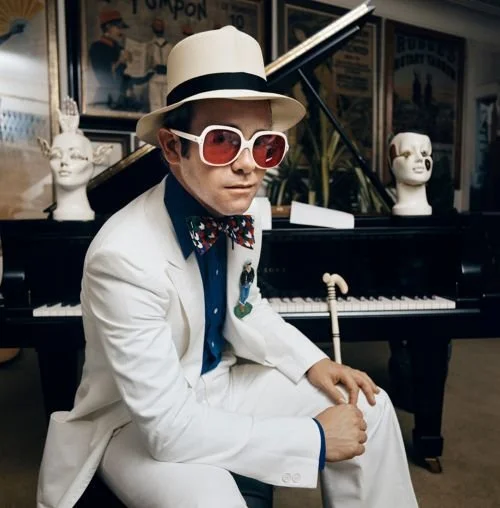
IN THIS PHOTO: Elton John sat at his piano in an outtake from his Greatest Hits cover-shoot, 1974/PHOTO CREDIT: Terry O’Neill
Let’s flip to a song called The Gay Farewell. A character called Eddie. These lines from the song: “I've never seen/Such a sad queen/As Eddie./I've seen him raving/Maybe even in pain/But never/Weeping like a baby”. There is a lot to unpack there. Last month was Pride Month. It gets me thinking about Kate Bush’s association with the L.G.B.T.Q.I.A.+ community. How she explores sexuality through her music. Whilst a lot of her peers were heteronormative and it was unusual for straight artists to discuss gay relationships through their music, Kate Bush did. Kashka from Baghdad (Lionheart, 1978) an early example. I love her wordplay here. Who is the person that influenced this song? I think it was also called Eddie/Queen Eddie. There are demos older than The Gay Farewell. Most likely recorded in 1976 (originally recorded in 1973; it was re-recorded in '76), this demo appears on the bootleg 7″ single, Cathy Demos Volume Three. I first wanted to discuss the breadth of those demos. With a fair few song written in 1973, that would put Bush at thirteen. Maybe even twelve. Rather than these being lyrically simplistic and similar, she traverses quite a lot of ground. Quite poetic in nature, I think that The Gay Farewell is one of the standouts. In terms of her engaging with the L.G.B.T.Q.I.A.+ community. In 1973, tying back to Elton John, he was one of a few L.G.B.T.Q.I.A.+ artists who were in the mainstream. Others included Patrick Haggerty (Lavender Country), and Jobriath. It was quite rare or unusual to find a huge artist that was trailblazing. So it makes it more impressive that Kate Bush was identifying with the L.G.B.T.Q.I.A.+ community (though it might have been LGBTQ+ in 1973). Was that as a result of the poetry that she was exposed to through her brother, John? Some of the culture that was in the Bush household? The Gay Farewell is a remarkably bold and advanced song from someone so young. Dreams of Orgonon not only highlighted that aspect and how Bush was pioneering in a way. Or at least she was channelling some of her record collection and stuff her brothers were digging:
“Queen Eddie” is a surprisingly sharp and melancholy song. It’s multifaceted in its thematic concerns and has a grasp of rhythm and melody that “Something Like a Song” doesn’t quite. In “Something,” we had a singer who admired someone from a distance, who they didn’t quite understand. “Queen Eddie” is more mature: it’s about the singer finding out that someone they already know is more complex than they previously realized. In short, it’s a song about learning to empathize.
And Eddie in dire need of empathy. “I’ve never seen/such a sad queen as Eddie,” ponders the singer. “I’ve seen him raving/maybe even in pain/but never weeping like a baby.” Eddie isn’t some macho hero to sweep the damsel off her feet (indeed, he may not even swing that way). He’s a frightened young person whose life is falling apart for reasons not specified in the song. He’s a person who’s noticeably pretty, and on Saturday evening transforms into a drag queen. Bush’s music often displays a strong interest in the feminine side of men, and this is the earliest musical manifestation of her concern. Eddie is someone with no time for masculinity. Everything from the effeminate adjective of “pretty” to the fact he’s saying goodbye to “his boy” points to that (who’s his boy? Is he breaking up with a boyfriend, or is he transitioning?) Even the song’s varying titles, in all probability not penned by Bush, point to a queer reading of the song (“The Gay Farewell” is a pretty wretched pun even by my standards). There’s an element of fetishization here — Eddie is denied an identity outside of his gender and sexuality in a way that’s genuinely harmful. For all that the empathy on display is genuine, so is the singer’s privilege.
Yet for this song’s flaws, it feels like something that needed to be written in 1973, even if it wasn’t heard outside 11 East Wickham. An LGBT rights movement was booming in the UK at the time — The Gay Liberation Front was new and alive, and the First British Gay Pride Rally had been held in London, not too far from the Bushes, a year previously. But these movements were responded to by things like the Nationwide Festival of Light, a puritanical attempt by notorious professional bigot Mary Whitehouse and others to suppress the existence of gay people, as well as any expression of sexuality that didn’t pertain entirely to procreation. The LGBT community needed some allies, and Kate was willing to step into the ring early on. Kate’s complex championing of the queer community has begun. Thus we get “Queen Eddie,” her first camp song.
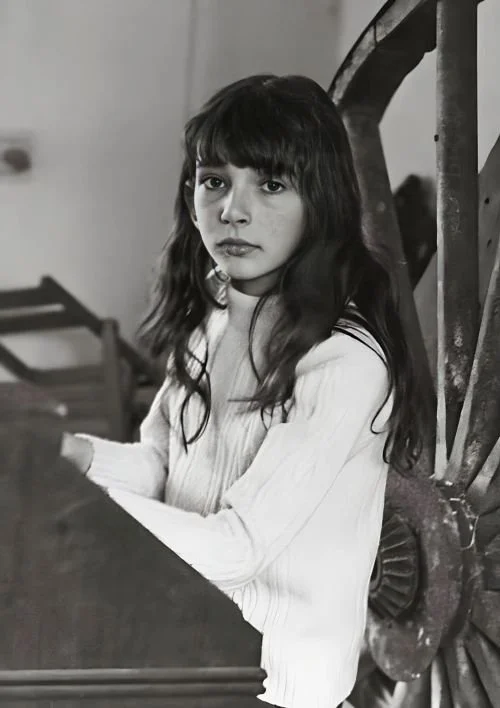
PHOTO CREDIT: John Carder Bush
Ah yes, camp. We may as well define it now, as this won’t be the last instance of discussing camp on this blog. Turning to Susan Sontag’s classic but controversial essay “Notes on Camp,” we discover that camp is the ultimate reification of style over substance. It’s not so much a coherent style as a sensibility; one that revels in the debasement of established tradition. Sontag rightfully comes under fire for her backwards idea that describes camp as something gay people were drawn to, rather than something they shaped from the beginning and used as an engine for sociopolitical change. Still, for flaws, the essay is a good starting point for discussing the camp aesthetic.
So how did Cathy, an ostensibly well-behaved young person bred by a respectable middle-class family and educated at a nun-administrated Catholic school, discover camp? She was unlikely to be hitting London’s gay clubs where camp culture flourished. It’s possible there was some gay literature sprinkled around the house (she was always an Oscar Wilde fan), but it’s far more likely Cathy got in tune with the gay world via her brothers’ record collections. Jay and Paddy were Cathy’s first dealers, bringing home a variety of records — everything from prog rock like King Crimson to contemporary folk music by A. L. Lloyd. Cathy was always by captivated the music, and eventually started independently developing her own taste (the first album she ever bought was Bridge Over Troubled Water). But what really seemed to stick with her was the glam rock she heard, particularly the more baroque artists — David Bowie, Roxy Music, Elton John (some of you might dispute how glam John is, but come on, “Philadelphia Freedom” is unquestionably draped in glam trappings). Their often melancholy but always glamorous sound clearly caught her ear, and made their way into her songwriting.
So “Queen Eddie” ends up as a mellow glam rock song, closer to “In Every Home a Heartache” than “Get It On.” It’s a song about a glamorous man whose life is falling apart (arguably a Goth rock song in that sense), and thus is mid-tempo and quiet, as such collapses often are (the vocal livens it up though —young Cathy’s vocal model is Elton John. That swinging pop voice is reminiscent of “Tiny Dancer,” which this song is arguably a spiritual successor to). The 1976 re-recording is a bit livelier and more urgent; it sounds like a halfway point between the Cathy demos and The Kick Inside. Cathy can’t be entirely sad — if Eddie is sad, she must dance with him. Thankfully, the song does little to explain just what’s happening to Eddie. The singer is quick to listen to his story but not to speak for him. Instead, they’re Eddie’s friend and ally. In the intervening years, Kate has become a guiding light for queer people. There are plenty of reasons for this. There’s a Guardian article in which singer Rufus Wainwright calls Kate “the older sister that every gay man wants,” and points out that she “connects so well with a gay audience because she is so removed from the real world.” Being removed from material reality in this sense is a product of privilege. The song doesn’t refrain from tokenizing Eddie. Its approach to the reality of queer people is flawed, but the fact that a 15-year-old is already attempting to empathize with minorities and being at least partially successful is impressive. Already, this is an impressive body of work. Let’s keep exploring it”.
PHOTO CREDIT: Alexander Grey/Pexels
There are a couple of things to pick up on. How there was this anti-gay movement. In the early-1970s, this attempt to supress gay people. Bigotry that Kate Bush would have heard about and been affected by. Even though she was not directly affected and it is unlikely any school friends were openly gay or were being bullied because of their sexuality – though I cannot say for sure -, that is not to say that she was detached from the real world. Even if Bush does not explore homophobia and some of her camp songs have flaws and there is some tokenism, she at least was making attempts to counteract or protest what was happening. A show of love and understanding against this strain and stain of hatred. Bush often got accused of being apolitical and not a serious artist. These critics clearly did not hear her demos and songs like The Gay Farewell. It is interesting looking at The Gay Farewell in 1973. This article look at “lesbian, gay, bi and trans history in terms of social, political and legislative change, representation and visibility”. Let’s look two years either side of the recording of The Gay Farewell:
“1971
The Committee for Homosexual Equality, keeping the same initials, becomes the Campaign for Homosexual Equality (CHE).
The Nullity of Marriage Act was passed, explicitly banning same-sex marriages between same-sex couples in England and Wales.
1972
The first Pride is held in London, attracting approximately 2,000 participants.
Gay News, Britain’s first gay newspaper is founded.
1973
The Campaign for Homosexual Equality holds the first British gay rights conference in Morecambe, Lancashire.
Brighton's first Pride takes place, organised by the Sussex Gay Liberation Front.
1974
London Lesbian and Gay Switchboard, a London-based information and support helpline, is established.
Jan Morris, Welsh historian, author and travel writer, releases Conundrum, a personal account of her transition.
Maureen Colquhoun came out as the first lesbian Labour MP.
Stephen Whittle, trans man and prominent activist, co-founds a Manchester based "TV/TS" group; a group for trans people.
The First National TV/TS (Transvestite/Transsexual Conference) is held in Leeds.
1975
British journal, Gay Left, begins publication.
The Liberal Party (now the Liberal Democrats) became the first UK political party to support LGBT rights, passing a motion at conference to support ‘full equality for homosexuals’, including equalising the age of consent”.
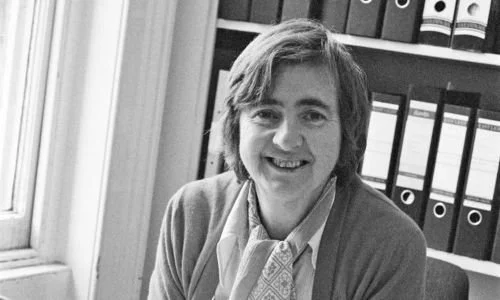
IN THIS PHOTO: Maureen Colquhoun in 1980/PHOTO CREDIT: Mirrorpix/Getty Images
A young Kate Bush would no doubt have been influenced by the first Pride march that happened in London in 1972. Seeing scenes on the news. It is all well and good seeing this and wanting to do something. For an aspiring artist, how to turn this desire and passion into a song? Quite a hard task for someone so young. I love the lyrics of the song. Quite playful, characterful and funny/sad, there is this standout verse: “On Saturday afternoon/He was really fine to him/But on Saturday evening/Oh, well Eddie was so pretty/But now his boy is leaving/But now his boy is leaving/But now his boy is leaving him”. Also, Dreams of Orgonon writing how Bush is seen as a big sister to many in the L.G.B.T.Q.I.A.+ community. It is difficult to say who exactly Bush had in mind with the song. Eddie Buczynski (1947–1989) was an American gay rights activist and a pioneer in the queer neo-pagan/Wiccan movement. In 1972, Buczynski and his partner Herman Slater opened The Warlock Shop in Greenwich Village, which became a vital underground hub for the local gay community. He later founded the Minoan Brotherhood in 1977 specifically for gay and bisexual men. That is an A.I.-generated search, but is is truth. Perhaps not the ‘Eddie’ in The Gay Farewell, it wouldn’t be a stretch to think Bush had him in mind. I am going to end by talking about the early demos and why they deserve to be as heralded and discussed as Kate Bush’s albums. Kate Bush being a queer ally and icon was something that was ingrained in her. Not something that she built up to become. In 2018, Attitude celebrated Kate Bush as a queer icon, forty years after the release of her debut single, Wuthering Heights:
“Kate’s deep and thoughtful understanding of men in her songs is an underrated value in her arsenal; there are the men sent to war in ‘Army Dreamers’, or the kindly but increasingly distant father figure in ‘The Fog’, the misunderstood mathematician in “Pi,” and, most of all, the exquisite ‘This Woman’s Work’, where she sings about parenthood and birth from the male perspective. And no one could inhabit Peter Gabriel’s lyric as the voice of reason and comfort in ‘Don’t Give Up’ better than Kate Bush.
Perhaps most poignant of all, the father-son narrative of ‘Cloudbusting’ climaxes with the Shakespearean pun “your son’s coming out.” The rush of hearing Bush equate positivity, happiness, open-mindedness, and the promise of good things with the emergence – sexually or otherwise – into the world at large remains a profound thrill.
Kate made hits of these songs, and they remain enduring in the public consciousness. She brought the joys and sorrows of hidden human life to the forefront through normalising phrases and ideas, and streamlined all elements of her craft into a unique musical and visual style.
She studied movement with the choreographer and mime artist Lindsay Kemp at his dance studios in Covent Garden; Kemp had worked with Bowie and had a small but memorable role in 1973’s The Wicker Man as a sinister pub landlord. Bush had seen Kemp’s production of Flowers and was rapt.
Her theatricality didn’t just extend to her music, be it the cabaret Weimar camp of ‘Coffee Homeground’ or the flamboyant ‘Hammer Horror’: Her wide-eyed facial expressions, interpolation of mime, and her swooping, balletic movements made not just ‘Wuthering Heights’ but all of her early performance films iconic.
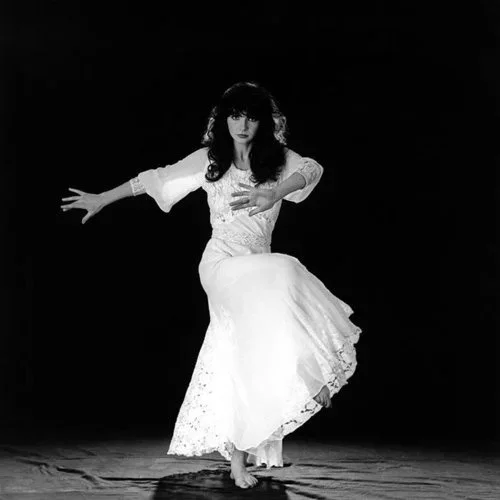
IN THIS PHOTO: Kate Bush in 1978/PHOTO CREDIT: Gered Mankowitz
Today, the Kate Bush of ‘Wuthering Heights’ is a continuing beacon of pop culture. Take ‘The Ultimate Kate Bush Experience’ in Brighton in 2013, where hundreds of Kate Bush lookalikes donned wigs and red dresses to stage a warm-hearted recreation of the ‘Wuthering Heights’ video; further such events took place in London’s Brockwell Park and at Dublin’s St. Anne’s Park in the ensuing years.
And who could forget Noel Fielding’s good-natured parody on Let’s Dance for Comic Relief in 2011, a performance that garnered the attention of the lady herself, who sent a good luck message.
The fact that the Kate of ‘Wuthering Heights’ – a figure of incredible talent but, at the time (and to a lesser degree to this day), somewhat roundly mocked – blossomed into the art-pop auteur of 1982’s The Dreaming and 1985’s Hounds of Love, a woman of universally-acknowledged originality, creative excellence, and innovation, indeed an artist who changed the landscape of pop music forever, chimes with the gay audience too.
What at first the public may mistake for novelty, or frivolity, reveals itself over time to be intelligent, compassionate, and wise.
Kate Bush is an LGBT icon for several reasons, not least because she built a successful career, without compromise, on her own terms, with thorough originality, ingenuity, and, crucially, trueness to herself. She did, and continues to do, things her own way, and is undaunted in her distinctiveness and navigation of the peculiarities of life.
Who else could make a song about intercourse with a snowman (‘Misty’) seem plausible? Who else would find both eroticism and melancholy in the humdrum as Kate does in ‘Mrs. Bartolozzi’?
Anohni Hegarty told The Guardian in 2005 that her first glimpse of Kate, singing ‘Wuthering Heights’ now forty years ago, was a seminal experience.
“She was so magical: the world she inhabited was, especially poetically, a sort of fairyland. It was very sensuous and very pagan, and she sang so high – it was madcap,” she said.
And it is that sensuality, magic, and poeticism, that otherness and courageousness, that has carried Kate Bush, for forty years, through the choppy, murky waters of pop music and carved a firm place in our hearts.
She is, and always has been, herself, with no apologies. And for that, we salute you Kate Bush”.
I am going to wrap up soon. There have been various release, bootlegs and such that have collated the demos. Nothing in the way of an extensive official release, Kate Bush now would not perhaps want these songs remastered and widely heard. Just because it was such a long time ago. Even so, these recordings are available on YouTube. Despite some basicness in terms of the piano playing – compared to the leaps she would take by the time The Kick Inside arrived in 1977 -, and the vocals not being that different, songs like The Gay Farewell are classics. Incredible words and a fantastic performance. I cast my mind to East Wickham Farm in 1973. This girl growing up at a time when there was this divide between gay rights pioneers and legislation. Those trying to tear them down. Divide and homophobia alongside this desire for equality, representation and acceptance. Tense and strange for someone so young. Rather than write in an angry way or get ‘political’, Eddie is a character that seems so real. You can picture him. The way Bush paints him. I am going to finish here. Three very different characters. Two divided lovers (old flames) in a 2011 song that evokes so many different settings and times in history. Another is a simpler song dating back to 1973. This character called Eddie. I still have ammunition for this feature series, so you will have to wait to see which characters…
COME next.