
FEATURE:
Exploring John Carder Bush’s Kate: Inside the Rainbow
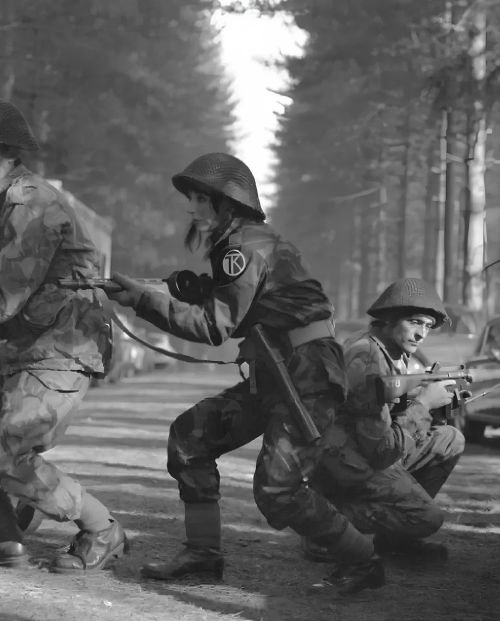
ALL PHOTOS: John Carder Bush
Claret: Chasing the Shot…
__________
THIS is a limited series…
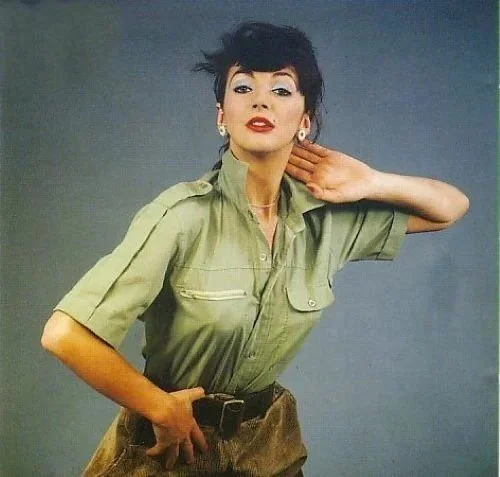
where I go inside John Carder Bush’s Kate: Inside the Rainbow. The first instalment looked at the earliest memories. It was an introduction and preface, really. Setting the scene and sharing his memories. Why photographing his sister is so meaningful. Some great anecdotes and recollections. For this second part, I am looking at part of a chapter called Chasing the Shot. The next couple of chapters will see me look at his shots for Never for Ever. I am going to use some photos from the Never for Ever chapter, as there are very few in the Chasing the Shot one, so I am casting a little way ahead, which I hope people do not mind. I will finish off this chapter in the next part. In terms of the rainbow colour spectrum, this and the next edition will focus on red. Shades of reds and words associated with them. I will then move to purple. This one sort of bridges between that early experience photographing Kate Bush and the extraordinary shots for Never for Ever. Stills from video shoots and some great photographs people might not have seen. I will get as far as page fifty-seven. John Carder Bush recalls how he photographed his sister “during her early and teenage years, when she was experiencing changes and the usual confusion that teenagers go through. She hated having a camera appointed at her; there was none of the willingness of the little girl from Cathy”. That is a bit of a revelation for me. I through that there was always this ease! I guess, when you are a teenager, you become more self-conscious and aware of your privacy. She might not have wanted to be photographed. The Victorian warehouse where a lot of those Cathy shots were taken became a dojo with a weighty kicking bag suspended on a wire across the room. This area was a “very intense place smelling of feet and sprayed sweat”. Not a spot for a teenage girl “to find a corner for dreaming in”. Some of that reservation and reluctance to be photographed stemmed from her once-idyllic spaces between transformed and losing some of their romance and purity.
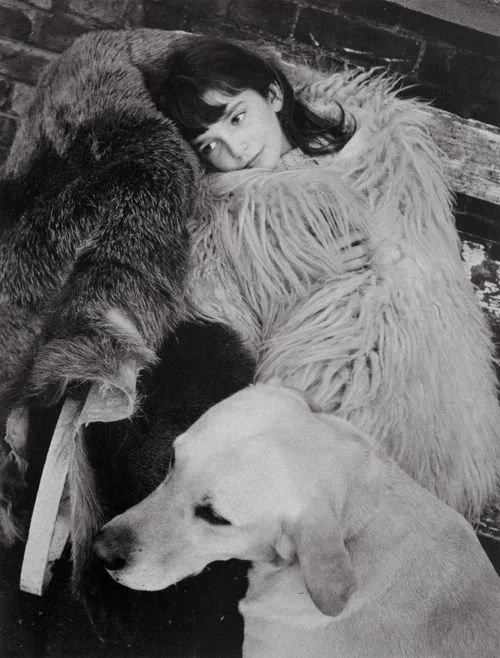
That original aura was gone. The grain loft from the Cathy shoots was still unclaimed. It was somewhere that was a safe space for “Catherine’s imagination to leap and gambol while her brothers screamed and clashed below her and doves nested in the roof beams above”. When Never for Ever came out in 1980, Kate Bush was twenty-two. The years between saw transition and change. John Carder Bush not really that involved with images and shoots for 1978’s The Kick Incise and Lionheart. Even though he was looking after his sister and dealt with a lot of the business side, there were other photographers snapping his sister. I am looking forward to the Never for Ever chapter(s) and his memories. John Carder Bush notes how he photographed his sister professionally in almost an accidental way. Once the success of The Kick Inside was realised and exceeded expectation, the record label organised photoshoots with photographers of their choice. John Carder Bush thought there would be a rehearsal with a session of their own. There was, however, a chance for John Carder Bush to photograph his sister. The environment of the session was nothing special. A wash-house with karate instructions scrawled on the walls. A velvet curtain ion the background supplied by their mother. The shots “seemed as though they came from a play or film, a real moment caught, that stood out”. John Carder Bush observes how these photos were taken just before Kate Bush understood how “glamour, the casting of a spell, could be translated from reality onto flat paper”. The photos were taken in October 1977, in the same place he took the Cathy photos a decade before. The relaxation was back. The photographer realising how much he missed that trust and bond. Family around. Hannah Bush (mother Bush) singing as she swept the yard; Robert Bush (father Bush) playing Schubert in the front room. The dog popping in every now and then to see what was happening. John Carder Bush was not a professional at that point, so EMI did not encourage him. He didn’t have a high-end studio and this massive portfolio.
What is glaring is how John Carder Bush notes how those sessions were sometimes silly and ill-advised. His sister not having approval over the final shots. Though photographers like Guido Harari and Gered Mankowitz had this connection and they took some wonderful photographs, Kate Bush learned she could not trust “her image to be dictated by other people”. Control was the answer. It was decided that he would photograph his sister again. There was a new responsibility. This ascending star was now a commercial success, so there was this pressure. This task demanded a “different standard of acceptance”. John Carder Bush was not exploiting Kate Bush for his career. There was that trust between them. He was used to working with black-and-white. He felt that medium as powerful as a poem. Shooting in colour was a shift for him. Skipping a few paragraphs, John Carder Bush writes how photographing his sister meant that he became “a hunter of that look”. That follows his recollection of falling for an America actress, Jean Seberg, and her as Saint Joan in a 1957 adaptation of George Bernard Shaw’s play of the same name. He also saw Siobhán McKenna – whose iconic Molly Bloom soliloquy from James Joyce’s Ulysses would inspire Kate Bush to write The Sensual World (she could not get permission from James Joyce to use original text in 1989, but she got permission in 2011 when she rewrote The Sensual World and it became Flower of the Mountain) -in a theatrical performance of Saint Joan. He wanted that same reaction and magnetism from his sister. Whilst he was attracted to those two actresses, the dynamic was different here. Her innate beauty and unique allure, it was a case of chasing that shot and that same sort of photo would come. That same ‘wow factor’. “When I look at her though a lens, it is like looking at the flow of a person, personality, projection, physical presence, gesture, posture, pose, animation, fascial expression, thoughts, all moving like streams and rivers, brooks and waterfalls”. Seeing photos of his sister in the same iconic setting as Seberg and McKenna, he wondered if they were doing to the owners what those treasured photos had done to him. “Like an arms dealer, the photographer seldom takes responsibility for who gets shot in the heart”.
John Carder Bush recalls how he bought an L.P. of Siobhán McKenna reading poetry. Among which was that Molly Bloom soliloquy. He played it to death, whilst his six-year-old sister hummed along to it. The seeds already planted! I do love how a photo of an actress playing this iconic role indirectly led to one of Kate Bush’s most treasured songs. People told John Carder Bush how they could tell a photo was his. That brother-sister bond. For him, it was the setting that was most important. Although portraits did not need a lot of space, there needed to be a distance between the photographer and subject. A connection between generations. You can imagine how some of the Cathy photos distributed some of the family routine and space at East Wickham Farm. How these spaces would be transformed and almost been cut off. It was not long until John Carder Bush’s children would race into rooms and stop dead and turn around because the rooms they are used to playing in were now for photography. The privacy was important. Not using professional studios was important. No need to commute and spend loads of money. A small team (hair stylists, make-up artists and clothes stylists) would come to his flat. Kate Bush was at home there and could wander in wearing jeans and a jumper. The challenges of Victorian flats – which I know about as I live in one! – is the high ceiling and lack of heating. Heat rises, and so it was an issue keeping warm. That said, the space and height could be advantageous. Canvases and background rolls could be hung. Though, as he remembers, there was one incident when he was up a ladder and photographic equipment and a camera came crashing down. He fell off the ladder and avoided hitting them and being cut by broken glass. Modifications were made! A typical studio day with his sister started with collection of shopping for lunch and tea breaks for half a dozen people. Lights and backdrop were put up. The dining room became the focus for hair and make-up. The importance of the kitchen: a “bolt hole where a constant stream of cups of tea would be prepared throughout the day”. Finishing this two-parter on that Chasing the Shot chapter, John Carder Bush talked of his memories. The hair and make-up taking a while to perfect. That odd low hum and morning mood. One of his children a stand-in for his sister. Taking these Polaroids. He would stand on a ladder and shoot down so that Kate Bush, hair and make-up and the clothes stylists could see where he was heading.
Escaping the kitchen, he would wave the Polaroid and “watched the image coming through, then back into the ‘studio’, back into the warm hazy smell of celluloid from the film, chemicals from the Polaroids and that ever-fizzy, cheerful smell of hairspray, to pass the Polaroid around”. There would be adjustment as Kate Bush made suggestions. More Polaroids before the actual shots were taken. A lot of going up and down the ladder, changing magazines, going from colour to black-and-white, and seeing what worked. The shots were artistically demanding but also physical. Especially, as he notes “with the weight of the Hasselbad with a long lens”. That dilemma of being in the creative and technical zones at the same time. John Carder Bush’s martial arts training helped him as he was “able to assume postures and positions that allowed me to get a more favourable angle on a shot. I would always go for a sequence using a tripod, but most of the time the camera was hand-held and I moved my angle of view, which meant constantly firing off the lights to check the meter readings and adjust the aperture”. That take us to the end of the first half of that Chasing the Shot section. The final ‘red’ part of the rainbow (as we are going deep with Kate: Inside the Rainbow) gets us to the point of Never for Ever. It is fascinating reading John Carder Bush’s words about shooting his sister and the realities. Whilst quite involved and like balancing a lot of things at once, it was also homely and charming. Insights into his world and those early-career moments with a women who would very soon be exposed to the wider world. I think that John Carder Bush’s photographs are so remarkable and distinct1 For that reason, I would urge everyone to buy…
HIS wonderful 2015 photobook.