
FEATURE:
Spotlight
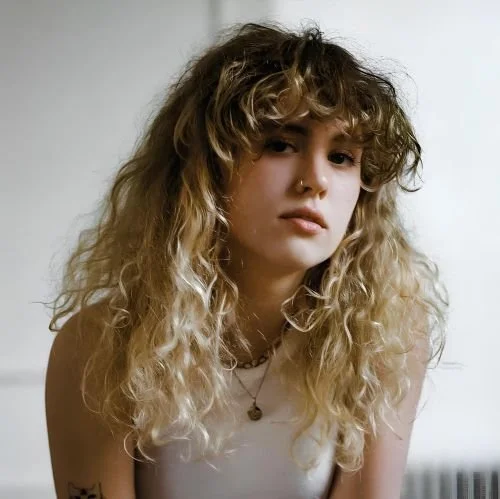
Fiona-Lee
__________
THIS is the second…
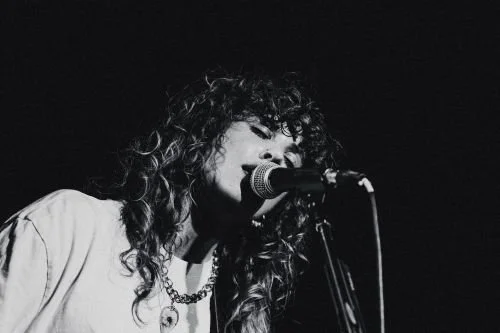
of a few artist I am grabbing from a recent Rolling Stone UK feature. It is one where they list the artists who are going to define future music. Among them is the fabulous Fiona-Lee. Before coming to some interviews, here is a bit of information about a wonderful musician who is a major talent:
“I’ve been very influenced by the storytelling of folk music, but I have always wanted it to sound really big,” Fiona-Lee tells Rolling Stone UK, explaining the emotional charge that runs through her work. “I don’t want it to be background music; this is something you’re gonna fucking listen to!”
Like her heroes Sam Fender and Bruce Springsteen, the Yorkshire native’s songs read like intimate thoughts but are delivered with the gusto of someone who wants the whole world to hear. In common with the singers she reveres, Lee makes the personal universal, telling vital stories through the most intimate lens. “It’s all too common how every woman has been in a similar position with a man,” she spits on the title track from new EP Every Woman, over a menacing guitar line that reflects her anger. Later on in the song comes a ripping guitar solo, showing that she wants these messages to be delivered to arenas and stadiums.
“Are you threatened by me? / Cause I’ll knock you over when I get the chance, honey,” she sings to her own self-doubt on the song ‘Imposter’, sounding ironically like a singer with the world at her feet”.
I am coming now to an interview from last year from Clunk Magazine. Fiona-Lee was discussing, among other things, her debut E.P., Nothing Compares to Nineteen. It is shocking reading about the challenges and traumas Fiona-Lee faced when she moved to London as a teenager. Rather than it instantly being this great move where she had all these opportunities, there were some events that dealt her a huge blow:
“Eight years is a long time to spend on a debut release, but for emerging artist Fiona-Lee, the journey to her first EP has been as significant as the destination. She joined me to discuss the winding path to finding her sound, the raw vulnerability of her songwriting, and the power of taking one’s time. Though not from a musical family, Fiona grew up surrounded by her dad’s classic rock collection, with Genesis, Led Zeppelin, and U2 forming the soundtrack of her early years. It was at the age of fourteen, years after abandoned childhood piano lessons, that she finally picked up a guitar — and she never put it back down. “I just got really obsessed with playing the guitar, and then started singing and writing,” she explains, recalling how she honed her craft through countless gigs in Hull, “cutting [her] teeth” on live performances near home.
Fiona was eighteen when she made the big move to London — into her manager’s office basement. Whilst the opportunity felt like her big break into the music industry, it quickly turned sour. The nineteenth year of Fiona’s life was filled with profound personal challenges, including an increasingly abusive management relationship and the loss of a friend to suicide. Her new EP’s title ‘Nothing Compares To Nineteen’ denotes the gravity of this year of her life.
The EP is a culmination of five years of songwriting, a collection Fiona describes as “a really good representation of the past, like, all my life up until this point.” She really wanted to capture the critical transition from adolescence to adulthood. “It’s about that big period of change, where you go from being a kid to being an adult,” she reflects. “It’s about a lot of the really uncomfortable growing pains that everyone goes through in some way or another.” Her tracks explore themes of loss — be it fractured friendships, first heartbreaks or the grief of losing a friend.
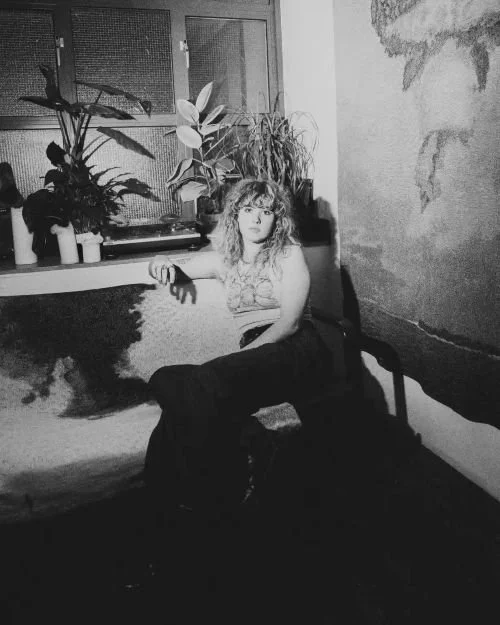
These past five years have also led to changes in Fiona’s songwriting process and sound. In the past, she wrote all her songs by herself, starting with lyrics jotted in her phone (formerly in notebooks), followed by guitar exploration. “You have to kind of just let the song write itself,” she explains, acknowledging how “hippy dippy” that might sound. Recently, she’s really been enjoying experimenting with co-writing. Working with other musicians also led Fiona to move away from her solo acoustic beginnings, instead landing on her vision for something “really big and exciting and almost euphoric, uplifting.” She says that getting “into a room together and just play[ing] these songs” with former Catfish And The Bottlemen drummer Rob Hall, was particularly formative, allowing everything to fall into place. Looking ahead to 2025, assembling a full band for live performances is one of her key aspirations. “I want to be able to bring the feeling that I’ve created in the EP to people live in a room,” she explains, noting the limitations of a solo guitar performance for capturing her evolved sound”.
Despite more collaboration in her music, Fiona is keen to stay involved in the production side of things as much as the songwriting itself. This hands-on involvement evolved naturally over time, and she finds it really important. “I think, especially as a woman, it can be really hard to say what you want and put your ideas out there because it’s so male dominated,” she reflects. Beyond making one’s voice heard, she keenly emphasises the importance of patience for other young musicians. “Don’t stress about time. Take your time to get to know who you are as a person,” she advises, adding that she’s “a really big believer in manifesting.” Whilst she knows it’s cheesy, she insists that she really does believe she’s manifested this life, and that believing in oneself is of utmost importance.
Throughout our discussion, one thing becomes abundantly clear: this is an artist who values authentic expression above all else, hoping her music allows listeners to “feel empowered in being vulnerable.” As she poignantly observes, “We’re all just humans trying to fucking get through life… You can have such a horrible experience but then make it into something so beautiful,” and this EP is just that”.
I am coming to an interview from Rolling Stone UK from last year. Early supporters of Fiona-Lee, we discover more about her past into music. Though I have not included the question here, she was asked about tackling the subject of suicide in her music. Nothing Compares to Nineteen is an extraordinary E.P. in so many ways. In terms of what it addresses. Rather than it being a bleak or heavy listen, there is an energy and momentum to the tracks:
“What’s your journey in music been like so far to this point?
I’m not really from a very musical family but I’ve always been surrounded by music – my dad always has music on in the house. When I turned 14 or 15 I started playing guitar and went from there, but it does feel like I’ve had a couple of false starts. I moved to London when I was 18 and had a really weird manager and I was like living in his office basement. I talk about that on my debut single ‘Mother’ and it wasn’t the best situation, a really weird one to be honest. But I’ve always been obsessed with guitar music.
Who were your formative influences?
Kings of Leon, early on, and Bruce Springsteen has been a big one too. I remember discovering PJ Harvey and Jeff Buckley when I was 17 or 18 too and got really into them. Sam Fender has always been a big influence too, certainly in the way he writes about things and manages to deliver what it is essentially pop music with a really important message.
There’s a common theme among those of artists who are strong, defined storytellers. Has this shaped your work?
Yeah and I’m a big fan of Alanis Morissette. Jagged Little Pill was a massive influence for me, in terms of storytelling but also a sense of anger and not taking any shit. I found that really inspirational and empowering.
I first discovered Sam when I was 17 and it was just really inspiring to see the things he talks about. Because I think there have maybe been some similar experiences we’ve shared and I think it sounds like we use writing in the same way, where it becomes a cathartic and therapeutic thing to do.
How does it feel to know your debut EP is out in a couple of weeks?
I never really think about upcoming things, but it is exciting because I’ve honestly been writing these songs since I was 20 and I’m 25 the day after the EP comes out. It’s been a five year period of writing these songs and it feels like an achievement that I’ve finally done it”.
I think I might finish off with an interview from this year. Every Woman is the latest E.P. from Fiona-Lee. That came out in April. I wonder if she has plans for an album this year or next. I feel she grows stronger and more compelling with each release. Hotpress spoke with Fiona-Lee back in March, ahead of the release of her second E.P. The Yorkshire-raised artist “discusses Glastonbury, touring with CMAT, and finding confidence in subtlety”:
“Much of 2025 was spent building momentum, with the singer earning increasing acclaim for her brand of introspective indie. It’s a sound that combines driving reverbed guitars (Sam Fender meets Chastity Belt) with themes like toxic masculinity and mental health, delivered with sobering maturity.
Fiona-Lee has been hard at work too, finishing her second EP Every Woman (out April 17). The follow-up to September’s Nothing Compares To Nineteen, the upcoming project keeps the vulnerable stuff, but feels more assured. Imposter syndrome and narcissists posing as friends are some of the subjects under the microscope.
“The EP is about being a young woman today, and learning how to back yourself in difficult situations,” Fiona-Lee explains. “As a woman, and especially when you’re younger, it’s easy to doubt yourself in certain confrontations with other people.
“It’s about learning how to really back yourself, and how to sit with uncomfortable feelings, to get to that other side of clarity and peace. That’s how I felt throughout the whole process of making the EP. Before I wrote the songs, I had a lot of self-doubt and questioned myself a lot. On the other side of it, I’m a lot more confident and self-assured.”
She also made a point of recording all the guitar parts herself.
“Women are not encouraged in the same way that young men or boys are to play lead guitar and shred or whatever, you know?” Fiona-Lee says. “I’ve grown a lot more confident with all of that, writing those kind of parts. I feel like I’ve not cut any corners and I’ve given it everything.
“There’s some more folky influences and vulnerable, softer moments. When I was younger, I always thought that, as a woman, you had to be really loud to be heard – that’s how you got people’s attention. I’ve realised there’s a lot of confidence in being subtle, gentle and quiet.”
Go and follow Fiona-Lee. She is a remarkable artist that you definitely need to know. She has some tour dates in July and August. Can and see her if you can. I do want to quickly include a review of Every Woman from DORK. They heralded the power in vulnerability that comes through on the E.P. I have heard the E.P. and it instantly affected me:
“Fiona Lee makes the kind of music designed to stop you in your tracks, every word she sings carrying enough weight to make you really think about the point she's making. Across her second EP, 'Every Woman', she tackles a variety of difficult subject matter without sugarcoating the reality that lies behind it, and each of the six tracks feels more vital than the last.
Much like Sam Fender or even CMAT, she spares not a single second nor anyone's feelings when writing about the things we should all be paying attention to. The title-track is built on erratic guitar that intensifies the urgency of Lee's lyrics as she sings about the all too common instances of sexual assault being brushed under the rug and the importance of holding men to account for both their actions and that of those around them.
She slides between energy-filled outpourings and moments of much more stripped-back candidness with the ease of an artist many years into their career. Funnily enough, 'Imposter Syndrome' comes across as her most self-assured track to date. Starting off quite subdued and simple, the lyrics focus on trying to focus on fighting the internal voice that tells you that you aren't good enough, while the melody builds before eventually erupting into something much bigger that feels like a real moment of catharsis. The EP is built on these huge guitar parts that allow Lee to showcase what can happen when women in music are given the same encouragement as their male counterparts.
'Not My Friends' is perhaps the most anthemic of the tracks on offer here; it's catchy but remains intimate and is where Lee's introspective way of writing is at its best. Closer 'Victim' is a world away from the frenetic rock sound of the rest of the EP; her vocals are softer and lighter, combining with a simple acoustic guitar that adds to the melancholy that lies within her words.
Ultimately, 'Every Woman' shows that there is power in vulnerability, while pushing Fiona-Lee that little bit further into the spotlight she is so deserving of”.
I think Fiona-Lee is going to have a very long future in music. Rolling Stone UK have named her as an artist who will define future music. With some great E.P.s under her belt and this growing fanbase, I do think that the next few years will see her play bigger and bigger venues and gain a lot more momentum. There is something about her music that is connecting with people. For those unaware, you really do need to…
SEEK her out.
___________
Follow Fiona-Lee
Official:
https://www.fiona-leeofficial.com/
Instagram:
https://www.instagram.com/fionaleeofficial/
TikTok:
https://www.tiktok.com/@fionaleeofficial
Spotify:
https://open.spotify.com/artist/50vlHl1iuV051WG7kRaCmQ?si=rMRd_OAZROy-JaykpRllcA
YouTube:
https://www.youtube.com/channel/UCQsHMfmiHceeixMbI_PPm5A
Facebook: