
FEATURE:
Expecting
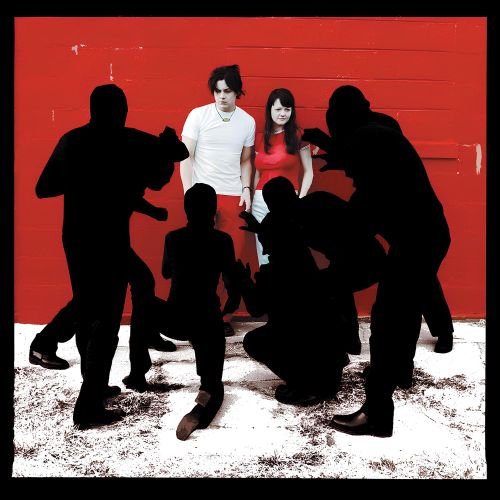
The White Stripes’ White Blood Cells at Twenty-Five
__________
IT seems like a lifetime away…

IN THIS PHOTO: Jack and Meg White (The White Stripes) in 2002/PHOTO CREDIT: Kelly Ryerson for FADER
when you consider Jack White today. He announced a new album, Frozen Charlotte, on 10th July. He has put out so much work since The White Stripes’ White Blood Cells came out on 3rd July, 2001. I wanted to recognise twenty-five years of a fabulous album. One of the very best the duo of Jack and Meg White released, a Deluxe edition came out in 2021 for its twentieth anniversary. I will come to some reviews around The White Stripes’ third studio album. It was the biggest step forward. Their 1999 eponymous album is a raw and Blues-heavy record. With 2000’s De Stijl, there was a broader palette. Maybe not as sludgy or heavy, you can feel different colours and sounds. Even so, it was not a massive shift. Just enough to show that De Stijl was its own thing. I feel White Blood Cells is a different beast to anything they produced before. Jack White’s songwriting at its very best. Recorded at Easley McCain Recording in February 2001, it was finioshed quickly. That is how the duo operated. Lo-fi but always nuanced and astonishing, White Blood Cells is my favourite album from The White Stripes. So many standout moments, people associate it with songs like Dead Leaves and the Dirty Ground, Hotel Yorba and Fell in Love with a Girl. Their most varied and accomplished album to that point, White Blood Cells was not a big commercial success. It charted quite lot but the reviews were very positive. That mix of rawness and sweetness. The bond between Jack and Meg White. I want to explore some features around White Blood Cells. I cannot find any online interviews from 2001 around the release of the album. However, there is one from 2002. FADER put The White Stripes on their cover. Speaking with them after the release of White Blood Cells as their stature and celebrity was growing, it is interesting reading what they had to say:
“But the White Stripes are big, and famous in that tired-ass latter half of the 20th century way. Famous enough to have a reported $1,000,000 dangled in their faces to appear in a massive celebrity-driven Gap ad campaign—a payday they turned down after Jack had already sang on their third album, last year’s White Blood Cells: Well you’re in your little room/ and you’re working on something good/ but if it’s really good/ you’re gonna need a bigger room/ and when you’re in the bigger room/ you might not know what to do/ you might have to think of how you got started/ sitting in your little room…
Why would they want to be successful? You can’t even ask that question in America, at least not in the new America of the New Economy and the Internet and necromantic politics and weekly record sales updates and outposts of mall culture around the world. Perhaps this is why the idea that the White Stripes might not want to blow up and go pop hasn’t really been the dominant narrative flying off the rock and roll desk over at New America Media, Marketing and Promotion, Inc. It’s probably more a function of capitalism than a simplistic matter of race, but journalists are patented suckers for white people digging into their own souls through music forms of black American origin, like the blues, jazz, rock and roll, and hip-hop. This makes for both good copy and good business sense: writers and editors love that shit, because they love to build ’em up so they can tear ‘em down—maybe because there’s nothing more dangerous to the collective than a man or woman who simply doesn’t give a fuck and takes chances. who tries to reach out and break to the other side, whatever that side may be. (“I like putting myself in other people’s shoes,” says Jack.) Here are the White Stripes, the standard brief goes, a guitar/drums duo from Detroit who say they are brother and sister and has released three noisy albums of blues-based garage rock with touches of Zeppelin and the occasional Bob Dylan or Marlene Dietrich cover. They always wear red and white. The guy is really pale and scrawls the name of obscure bluesman like Blind Willie McTell on a white T-shirt, and get this: the girl bangs the drums with a deliberate kid-like thrashing!
“There’s different things we love: we love country music, we love the blues, we love rock and roll, we pretty much love anything American, from the South. So we have all these different influences,” explains Jack. And so naturally because the White Stripes tried and actually succeeded at an honest visceral music that smells like cigarettes, tastes like old motor oil and hits like an alcoholic girlfriend, they have provoked the usual media hateration. Time’s Benjamin Nugent went all out, putting his J-school diploma on the line and dong a bit of tidy investigative work. “In 1996, John (Jack) Gillis and Megan (Meg) White, got married, and Jack took Meg’s last name,” reported Nugent diligently. “Jack says he grew up with ten older siblings in the southwest Detroit house he currently shares with roommates, and this is rumored to be true. Meg, he claims, grew up in the suburb of Grosse Pointe… Last year they divorced, but the band remained intact…” The British press has mainly ignored this. They’re pissing their pants because the White Stripes are the best new big thing since, well, the Strokes.
Of course, one country’s dampened knickers are another nation’s legacy of blacks and blues (or something like that), and that’s not a new story either. White people have always been obsessed with the blues, at least since John and Alan Lomax made their famous Southern field recordings (the ones Moby sampled for Play) a couple of decades before an adolescent Mick Jagger sent away for sides from Chess Records in Chicago. A lot of folks both black and white might write the whole thing off as a rinky-dink taboo attraction to the forbidden “other”—with the thinking being that the “other” is the entire black American nation. That’s not entirely accurate. Black as they are, the blues are also part and parcel of America’s outlaw ethos: the first bluesmen were primarily jobless, itinerant musicians whose lyrics and lifestyle were an obvious liability to black America’s emergent race-building consciousness in the late 19th and early 20th century. The bluesman was not pulling himself up by the bootstraps, and the music would not or could not be considered “a credit to the race” until decades later. Today, of course, famous bluesmen open tourist traps in Times Square.
“The blues are completely honest. It’s just perfect to me,” says Jack, matter-of-factly. “Every song can only be one man’s story against everybody’s.” One man’s story against everybody else’s! Jack White says he grew up poor and white in a neighborhood called Mexicantown and that he first started listening to the blues when he was the only white kid at his mostly black high school that didn’t wig out. But who knows if he’s telling the truth? Just what, exactly, did Jack White do to be so black and so blue?
This identity politics line of questioning is for squares and comes out of the cross-roads where the basic American obsession with authenticity meets the country’s central personality trait of near-pathological lying. It’s also patronizing racism, American-style, that the king of the Delta Blues can sell his soul to the Devil in legend but Jack White of Detroit can’t call his ex-wife his sister. The White Stripes—like the blues—are unconcerned with such a trick bag and so they exist squarely outside the matrix. Outside that system, honesty is urgency as much as it is truth-telling, and Jack White sings like there’s things about him and Meg and they peoples that they desperately want you to understand, even if he can’t or won’t make it exactly plain for you. And if you listen to their albums and can’t tell what’s a White Stripes song and what’s a cover, that’s the interstitial space in which the blues have always existed. At their best, the blues themselves are a question, a sort of black American koan that take a long time—perhaps a lifetime or just the 70-some odd years between the first recording of Son House’s “Death Letter” and the White Stripes version—to really understand just one man’s story. It looked like ten thousand people gathered ‘round the burial ground/ I didn’t know I loved her ’till they began to lay her down.
And if the White Stripes are a little self-aware, as they were when drawing parallel between the blues and Holland’s De Stijl art movement for the title of their second album, they are not self-consciously so. Detroit as a city is almost completely unself-conscious. The girls there eat red meat, drink dark liquor and chain-smoke Camels, and the guys are probably still cool with their moms, have day jobs and girlfriends and peculiar ways of handling cigarettes and the smoke they produce. No one seems to have a cell phone and when you go to the record store there’s no Latin section and there are actually street signs that point the way to Mexicantown. As late as last November the White Stripes were playing $5 shows ($1 for students) and when the band records some songs for a local PBS station and “The Big Three Killed My Baby” is cut from the program because General Motors sponsored the show, no one blinks twice.
“We never set out to say, ‘Okay, we’re gonna be a garage rock band and that’s it—we’re gonna use the same three chords over and over again. We’re gonna make six albums and then we’re gonna stop.’ We never said that,” says Jack. “We never wanted to play for the same 50 people all the time.”
“And that’s what you could say about these last few years in Detroit: a back-to-basics look at what music means.” Jack continues, “What does it actually mean? With all its faults and fakes and videos and clothing and album covers, what does it actually mean? It’s just looking towards getting back to what it really was, not looking back and reminiscing as much as getting things back to normal again.” There is no irony in Detroit. When the White Stripes can turn down a million dollars from Gap and Jack still says there’s no hope in the city, it calls to mind something Detroit techno DJ Mike Banks said or wrote somewhere: No hope No dreams no love My only escape is underground”.
I found a review of White Blood Cells from Pitchfork. If their first two albums had some high points among some less-than-spectacular songs, everything on White Blood Cells clicks and stays with you. A song as short as Little Room as memorable as a bigger one like I Can Learn. The sweetness and charm of We’re Going to Be Friends together with the snarl and punch of I Think I Smell a Rat. Such a hugely listenable album that you will revisit time and time again:
“Virtually all of these songs address a distanced lover. Sometimes he's coming home to see her; other times she's done him some permanent wrong. The lyrics are succinct and direct, and poetic like an aged bluesman. On "Dead Leaves and the Dirty Ground," he sings: "If you can hear a piano fall, you can hear me coming down the hall/ If I could just hear your pretty voice, I don't think I'd need to see at all." He concludes the song with, "Any man with a microphone can tell you what he loves the most/ And you know why you love at all if you're thinking of the Holy Ghost."
On the country hootenanny "Hotel Yorba," the Stripes reflect the grit of early Railroad Jerk-- a glee-filled boogie with Jack's voice breaking and whooping, almost on the verge of a yodel. "Fell in Love with a Girl" is frenzied and rollicking (the album's best), complete with Yardbirds-type "ahhaa's" and a joi de vivre tempered by the admission that trouble is sure to follow: "My left brain knows that all love is fleeting."
Indeed, many of the songs admit that the love is lost. On "The Union Forever," Jack White mourns, "It can't be love/ Because there is no love." The song is a riff on Citizen Kane, including a strange breakdown with sampled dialogue from the film. Here, the White Stripes are the most experimental they get, which is to say "not very," though the song reminds me of the ragged power of Royal Trux without the pointless artiness. Certainly, it would be nice to hear the White Stripes take this music in a new direction, but this band is all about the songs, and the songs are good enough to stand alone, sans-flashy effects and tape editing.
"The Same Boy You've Always Known" is another high point. For a ballad, it rocks harder than most bands' hard-rockers, yet it wrenches in its emotional impact. Jack White repeats certain key lines, straining his voice to impart meaning and feeling. Again, the state of the relationship in question is uncertain. The song ends uncommitted and terribly sad with, "If there's anything good about me/ I'm the only one who knows." How many bands have failed with entire albums of moroseness to only express the alienation of those two lines?
The closest thing to a dud on this record is "We're Going to Be Friends," a gentle, nostalgic ditty of innocent love and childhood. It's a little too pleasant, lacking any of the fear and confusion of those pre-double-digit years, but its softness gives the record's midpoint some time to inhale before another six exhalations of fire.
Finally, at the close of the album, Jack sits alone at the piano for "This Protector." Though its message is vague, there are implications of religion and loss: "You thought you heard a sound/ There's no one else around/ 300 people out in West Virginia/ Have no idea of all these thoughts that lie within you/ But now... now... now, now, now, NOW!" Now what? It's the floating resonance of the moment, the intensity of the feeling, that gives these words meaning.
White Blood Cells doesn't veer far from the formula of past White Stripes records; all are tense, sparse and jagged. But it's here that they've finally come into their own, where Jack and Meg White finally seem not only comfortable with the path they've chosen, but practiced, precise and able to convey the deepest sentiment in a single bound. It's hard to know at this point in the game where they'll head from here, but what matters is right now. And right now, I want to listen to this album again”.
I will end things with Stereogum and their twentieth anniversary feature around White Blood Cells. I first heard it around 2003. That is when its follow-up, Elephant, was released. Although most critics and fans would say Elephant is a superior album, I have always had more love and fascination with and for White Blood Cells. Twenty-five years after its release and no other group have tried to replicate the sound of The White Stripes. Some have maybe tried, but none have been able to elicit this kind of majesty and brilliance:
“In the beginning the White Stripes had consciously entered themselves into Detroit's lineage of noise-bombed rock 'n' roll, a continuum of feral howlers stretching from the Stooges and MC5 to the Gories and Detroit Cobras. They might have been happy to remain in that world forever, but their twist on the ragged Motor City tradition was too compelling for the rest of the world to ignore. Jack and Meg built up a mythos -- adhering to a strict red-and-white dress code, pretending to be brother and sister -- and a small but potent catalog, culled from the rough 'n' tumble corners of British and American music history. Their sound was deeply familiar but utterly peculiar. And just when nostalgia and backlash against garish late '90s trends opened up a window for back-to-basics rock bands to become real-deal superstars, they put out the strongest front-to-back statement of their career. White Blood Cells catapulted the White Stripes from the dive bar circuit into superstardom. By the end of the following year, they had appeared on the cover of Spin, accepted an MTV Video Music Award from the Olsen twins, and toured arenas with the Rolling Stones.
It's easy to look back on the hype surrounding the retro rock revolution and laugh -- and the idea that these kids in Converse were here to rescue rock 'n' roll from Fred Durst's clutches is admittedly silly. But in hindsight, getting excited about the best of these bands made perfect sense. The Hives, if one-dimensional, were a total powerhouse. The Strokes, if derivative, were pop-songwriter geniuses with the kind of swagger you can't teach. And listening through White Blood Cells is a reminder that the White Stripes were so much more than gimmick and persona. The album is a staggering outpouring of creativity, a reminder of how stridently unique a mishmash of uber-authentic influences can be. The sense that you're witnessing a Mojo editor's wet dream is quickly overshadowed by all the fun you're having. These songs are catchy as hell. They rock. Sometimes they hoot and holler too.
All those dusty blues, country, and garage rock records informing the White Stripes' ethos had been filtered through Jack White's twisted imagination, yet even his wildest ideas were grounded in Meg White's less-is-more simplicity. And really, both of them were about serving the song above all else. Underneath all the idiosyncrasies, White Blood Cells is a pop record that at times rocks extremely hard. For all the volatility animating these songs, melody rules all. Even the hooks Jack stuffed away at the end of the album are stunners, from "I thought you made up your mi-i-ind!" on the scathing rocker "I Can't Wait" to "You thought you heard a sound!" on the haunting piano-led closer "This Protector." The noise Jack wrangled from his guitar tended to imprint itself on your brain, too, as if he couldn't separate his most fiery impulses from his pop pedrigree. And for two people who had fallen out of sync, romantically speaking, he and Meg sure had a telepathic ability to pivot from quiet to loud and back.
"Dead Leaves And The Dirty Ground" was a transcendent example of this chemistry in action, but White Blood Cells covered so much ground beyond that initial blast. The album's other singles -- the unhinged hootenanny "Hotel Yorba," the rampaging punk-rocker "Fell In Love With A Girl," the precious twee fantasy "We're Going To Be Friends" -- were proof of how many ways Jack could write about being smitten. And he had much more than infatuation on his mind back then. A wordless hard-rock anthem called "Aluminum"? Yes, definitely. A discordant Citizen Kane homage about how love does not exist? Absolutely. He's the same boy you've always known, but he's finding it harder to be a gentleman every day. He thinks he smells a rat. You send him to Toledo. (Toledo? Toledo!)
These sidelong sentiments were threaded into many kinds of rock music -- tunes that, despite their throwback feel, were nearly as inventive as the Lego-animated Michel Gondry music video that got the band on TV. The same artisanal touch Jack brought to his upholstery day job played out in songs that shared a sensibility but never a mold. This had been the White Stripes' M.O. since they started, and it reached its apotheosis in the winter of 2001. In just four days of harried recording, before this batch of songs could calcify into rote muscle memory, Jack and Meg wrangled their inspiration and nervous energy into a tour de force. Clearly they had some inkling that they'd captured something intoxicating because both the cover art and the album title hinted at an influx of unwelcome attention. Still, some part of them relished the prospect of expanding their empire beyond the confines of the dingy rock 'n' roll subculture that raised them, or else they would have ended the band for good before it had a chance to make them famous. This stuff was really good; they were gonna need a bigger room”.
On 3rd July, it will be twenty-five years since the release of White Blood Cells. I hope that Jack White shares some words about the album. Meg White is no longer in music, so I don’t feel she will post anything about White Blood Cells. Even so, anyone has never heard of this album seriously needs to hear it now. It is a lo-fi, high-quality offering…
FROM The White Stripes.