FEATURE:
Mama Tells Me I Shouldn't Bother…
The Cardigans’ Lovefool at Thirty
__________
IN June…
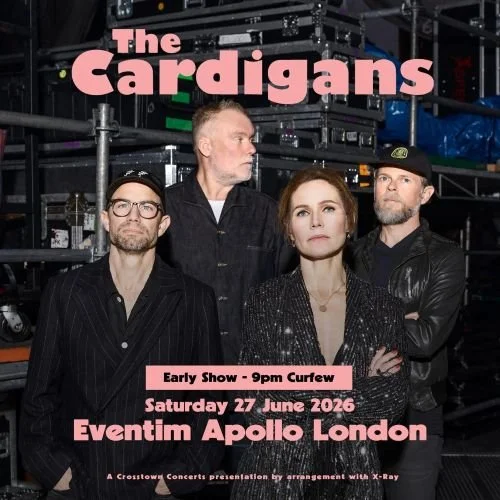
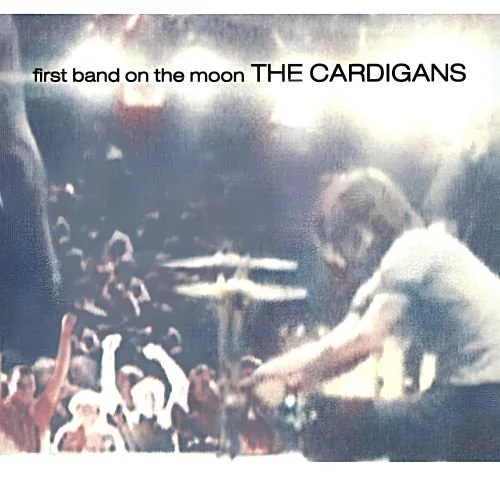
The Cardigans played at London’s Eventim Apollo. Led by Nina Persson, there is hope that the Swedish band will play more shows in the U.K. Not only because they are an amazing band who have released so many brilliant albums. Their acclaimed third studio album, First Band on the Moon, was released on 6th September, 1996. The third album from the then-quintet, I think it would be great if they came back and did some thirtieth anniversary shows. I think the London show was a celebration of that album, but such a huge record deserves more focus. There are so many great moments on First Band on the Moon. However, its lead single, Lovefool, is the standout. One of the defining songs of the 1990s. I was at high school when Lovefool came out, and it is a song I instantly fell in love with. I still get shivers when I hear the song! Written by Peter Svensson and Nina Persson, it is a beautiful, lush and wonderfully performed song. Perhaps a little dated now, you cannot fault the majesty of this gem. Reaching number two on the U.K. chart, I wanted to celebrate thirty years of this song. It was released on 5th August, 1996 (that was its European release date). It is interesting to look at the reviews and impressions of Lovefool. The retrospective reviews of Lovefool are interesting. There was a lot of praise for Lovefool in 1996. Although some felt it was sugary and a little too kitsch, many proclaimed Lovefool as a catchy and instant classic track. I think it is among the finest songs of the 1990s:
“Justin Chadwick of Albumism said "Lovefool" is "one of the more exciting straight-ahead pop songs of the contemporary era", calling it "pure, exquisitely produced pop perfection." John Bush of AllMusic deemed it a "depressing lament of unrequited affection". Annie Zaleski of The A.V. Club described it as "giddy". Dave Fawbert of ShortList wrote, "It's one of the best things in life when a song comes along, you listen to it, and you just think: "Well, that's perfect isn't it?" Every little bit of this three minutes and 14 seconds is absolutely, utterly unimprovable, from the little bllllrrrrring guitar intro, all the way through to that gorgeous ritardando and final chord at the end. Impossibly stylish, groovy and ice cool, this is, you'll be unsurprised to hear, still brilliant, fully 20 years on. The Swedes, they build things to last—Volvos and 'Lovefool', two sides of the same coin.” Sal Cinquemani of Slant called it a "tongue-in-cheek smash", writing that "Lovefool" "criminally crowned the band as one-hit wonders in the U.S." Treblezine wrote, "it's not difficult to understand the effect of this song. It's got that certain quality that digs right down into your being and glows with a precise sense of rhythm and pleasure”.
Prior to getting to some other features around Lovefool, I want to focus on American Songwriter and their 2024 feature around an indelible ‘90s classic. They say how The Cardigans “had every intention of rocking out in a way they hadn’t done on previous records. But one song required a subtler, slinkier approach. It’s a good thing they took that approach, because the song in question, “Lovefool,” turned out to the most successful of their career”:
“Fool” Me Once
The Cardigans formed in Sweden in the early ’90s, and they were distinguished early on by the dreamy vocals of lead singer Nina Persson and an eclectic musical bent. They began the process of collecting material for their third album First Band on the Moon while they were still touring the album Life, which they had released in 1995.
As a result, it was in an airport where guitarist Peter Svensson first played the song to the rest of the band. He had the first part of the chorus (Love me, love me, say that you love me) in place. Persson didn’t think the song should be quite so syrupy, so she countered with Fool me, fool me, go on and fool me. She explained to The Guardian what went into her lyrics:
“It’s a song about how it’s very human to bend over backwards when it comes to getting love. The character is very calculating, aware that what they’re going to get isn’t real but that it’s better than nothing.”
Booting the Bossa Nova
When Svensson initially wrote the music, he envisioned the song played with a bossa nova rhythm. Needless to say, that slightly antiquated style wasn’t exactly in demand on the various radio formats of the time. The band’s producer, Tore Johansson, gave the band a hard time about the song, suggesting they switch it up.
Johansson convinced The Cardigans to throw more of a disco feel behind the song, without revving up the pace so much that it would lose the prettiness of the melody. That’s when “Lovefool” came together into a version that did well right off the bat in countries all over the world.
But the song’s exposure went into overdrive when filmmaker Baz Luhrmann reached out to the band. He was looking for just the right pop songs for his modernized version of Romeo + Juliet, and “Lovefool” caught his attention. Once the song appeared in the film, The Cardigans found themselves hitting new heights of popularity.
What is the Meaning of “Lovefool”?
The portmanteau title of “Lovefool” hints at the song’s duality. The narrator is clearly in love with the person she’s addressing, but she can feel him pulling away: Dear, I fear we’re facing a problem / You love me no longer, I know, she sings to begin the song. But she explains that she can delude herself as long as he sticks around: I don’t care if you really care / As long as you don’t go.
The narrator receives advice from others she ignores: That I ought just stick to another man / A man that surely deserves me / But I think you do. She also neglects all the logic that tells her she shouldn’t subject herself to this anguish anymore: Reason will not reach a solution / I will end up lost in confusion.
I can’t care ’bout anything but you, Persson sings to close out the song, but her voice sounds far more quizzical than decisive. “Lovefool” suggests we’ll put up with all manner of indignities to be with the one we love. The Cardigans dressed that somewhat sour message in a chirpy sheen to make it accessible, and the rest is ’90s pop history”.
I will finish with a piece from The Guardian. Before that, I do want to source a 2016 interview from Billboard. Looking back on Lovefool at twenty, Nina Persson shared her thoughts. It was a massive success and one that most have grated the band to a degree. Maybe being associated heavily with a song they were weary of, in retrospect, they were pleased of its success and play it live. I do hope the band have some upcoming gigs where they play Lovefool. I am writing this ahead of their date at the Eventim Apollo (27th June), so I am not sure if that was in the set:
“Lovefool” — the uber-earworm from the band’s third studio album, First Band on the Moon — swiftly became a hit in Europe but didn’t debut internationally until Oct. 5, 1996. “We put out that song and record and embarked on a long tour, so in one way, nothing changed for us,” frontwoman Nina Persson told Billboard recently over the phone from Los Angeles, where she was preparing to play a show with Local Natives. “Then the movie came out” — that would be Baz Luhrmann‘s ’90s-defining Romeo + Juliet — “and the U.S. caught on tremendously.”
After Romeo + Juliet was released on Nov. 1, 1996, “Lovefool” debuted on the Adult Pop Songs chart dated Nov. 30 at No. 39. It then hit the Radio Songs chart the following week, peaking at No. 2 and staying there for eight nonconsecutive weeks. It spent seven weeks at No. 1 on the Pop Songs airplay chart, beginning with the Feb. 22, 1997-dated tally. (The song did not chart on the Billboard Hot 100 chart, because at the time, non-commercially available songs — like “Lovefool” — were not eligible to chart on the list.)
As Persson recalls today, “Lovefool” felt like an odd fit for The Cardigans. “We definitely were aware that it was a single and a catchy song when we wrote it, but the direction it took is not something we could have predicted,” Persson says. “It wasn’t necessarily our character; it felt like a bit of a freak on the record — which, objectively, it still is.” The song’s upbeat feel wasn’t the band’s initial intention. “Before we recorded it, it was slower and more of a bossa nova,” Persson says. “It’s quite a sad love song; the meaning of it is quite pathetic, really. But then when we were recording, by chance, our drummer started to play that kind of disco beat, and there was no way to get away from it after that.”
The band had already shot a different music video for the U.K. and Europe — “much more bleak, much more our original style,” Persson says. “We had an actor playing a sort of handsome-man-love-interest of mine, and he was supposed to be a kind of gangster and the band played his gang members.” But thanks to the success of Romeo + Juliet, another video debuted and became ubiquitous on MTV, cementing Persson’s public image as a flaxen-haired pixie floating at sea, a message in a bottle in human form. Watch the MTV staple below, as well as a side-by-side comparison of the two videos:
Persson acknowledges she and her bandmates weren’t initially thrilled by the success of “Lovefool.” “It took over our whole existence, and it wasn’t something we totally identified with,” she says today. The Cardigans played it on Beverly Hills, 90210 and on the morning talk show circuit; Persson remembers being “freaked out” when she’d see the video on screens in American clothing stores. “We were kind of snobs,” she acknowledges. “We felt like these things were glitzy, and we felt like, ‘No, no, we’re a rock band!'”
But today, with the distance of two decades, she’s able to look on the song a bit more kindly. “Now, we see it from the other end, and we’re proud and thankful,” she says. The band happily plays “Lovefool” in concert. And as Persson herself wrote on her Instagram on the anniversary of the song’s U.K. release: “We love you, sweet nuisance!”.
In 2023, The Guardian spoke with The Cardigans’ Nina Persson and producer Tore Johansson about the best-known track from the Swedish band. I think there are those who heard it first in 1996 and it has stayed with them. Some have changed their views and now like a song they were a bit cold towards. Those who were spellbound by it and still are. Others who are discovering it now. I do think it is one of those tracks impossible to dislike. It has a simple heart. Rather than – as some feel – it being cloying or too sickly, it is this seductive and wonderful song that is rightly hailed as one of the standout songs from the 1990s:
“Nina Persson, singer and co-writer
In 1995 we had just released our second album, Life, and were touring a lot. We were in an airport somewhere waiting for a flight and were looking at material Peter Svensson, our guitarist and songwriter, had written for the next record. He played this song on guitar: it was a bossa nova at that point. I thought it was beautiful, but found the chorus “Love me, love me, say that you love me” too cliched, so I tried to offset its sweetness by adding: “Fool me, fool me, go on and fool me.” It’s a song about how it’s very human to bend over backwards when it comes to getting love. The character is very calculating, aware that what they’re going to get isn’t real but that it’s better than nothing.
Our producer Tore Johansson would break our balls. He couldn’t stand that it was a bossa nova and immediately had our drummer play a disco beat. Disco wasn’t being used a lot then and it helped the song stand out. The first time we released Lovefool, in 1996, it did well. We didn’t think it could be any bigger. Then, a year or so later, Baz Luhrmann asked us for a song to use in his film Romeo + Juliet. It felt really nice that he personally got in touch. We offered him a different song that was way more romantic but then he heard Lovefool and said: “No, that’s what I want.” We were invited to the premiere but were away on tour at the time. I still haven’t met Leonardo DiCaprio. I never got my chance, before I turned 25, to have my moment with him.
The culture verged on pornographic. There were shoots of me licking an ice cream, while Peter made guitar mag covers
After that second release, I was in a Nike store in New York one day and the video came on their big screen. The salespeople were all singing along. “Oh my God!” I thought. “This is big.” I had to go outside – I was freaked out. I loved music but I had no intention of being famous. I also had a problem with how women were presented. At the time, there was this horrible culture that verged on pornographic. There were photoshoots of me licking an ice-cream, gross stuff like that, while Peter got to be on the cover of guitar magazines.
Lovefool has definitely come back around, with the 90s being so hot right now. My 12-year-old son and his friends know it through things like TikTok. Young girls ask me if I’ve met Justin Bieber, because of his song Love Me, which borrows the chorus from Lovefool. We thought it was bullshit at first. Let a 15-year-old use our song? No way! But our manager said: “You guys want to think twice because people say this kid is going to be really big.” We’re happy we did.
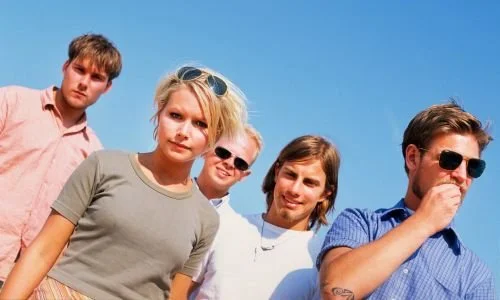
PHOTO CREDIT: Gie Knaeps/Getty Images
Tore Johansson, producer, played bass
My friends and I were hobby musicians. We built Tambourine Studios in Malmö just to have a place to record. We started recording other bands to make money. One was the Cardigans. I never really wanted to be a producer but I ended up recording all of their albums except one and having an amazing, almost full-time career with them for many years.
When they came to me with Lovefool, I thought: “Yeah, it’s really good, but we’ve made so many of these indie bossa nova songs. Couldn’t we try something a little funkier?” Latin rock and disco were the big inspiration, the organ was inspired by Oye Como Va by Santana.
We bought a restaurant. That was fun. But in a very Malmö way. Not much cocaine going on
We recorded it totally analogue. Our studio was like an authentic 1970s studio: it’s an easy way to get that kind of retro sound. We worked hard on every instrumental part to get it perfect. I think I played bass on the chorus and Peter on the verse. Nina is super good at doing vocals. She had a sound and she had a style.
The Cardigans are very down to earth, so Malmö was a great town for them to be famous in. We had this weird double life, of being pretty normal at home while all this crazy stuff was happening around the world. There was so much money coming in to the studio, we started a record label and we bought a restaurant. That was fun. But in a very Malmö way. Not much cocaine going on.
I went on to produce Franz Ferdinand’s first album, as well as lots of other bands. But Lovefool is definitely my claim to fame. If I’m at a wedding or something, meeting people who don’t know me, I can tell them: “You know that ‘love me, love me, say that you love me’ song? That was me.” I can do that and be proud”.
It is hard to believe that Lovefool turns thirty on 5th August. To me, it still feels recent, as I think about the song and have good memories. Though those memories are from three decades ago, so it is also distant. Glad that The Cardigans are still together, and they are not a band to dismiss a massive hit and refuse to play it. It means new generations of fans can discover a song that turned them into international superstars in 1996. Also, go and listen to First Band on the Moon, as it is a tremendous album. However, when you think of its standout moment, few can argue against…
THE mighty and divine Lovefool.