FEATURE:
You Put Light in My Life
Elton John and Kiki Dee’s Don’t Go Breaking My Heart at Fifty
__________
I wanted to mark…
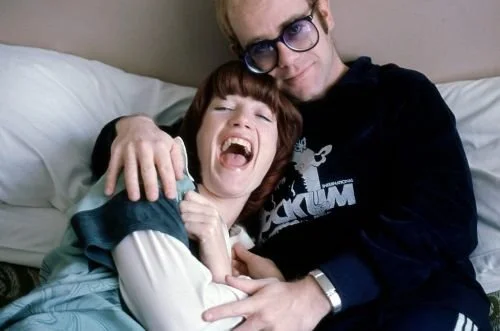
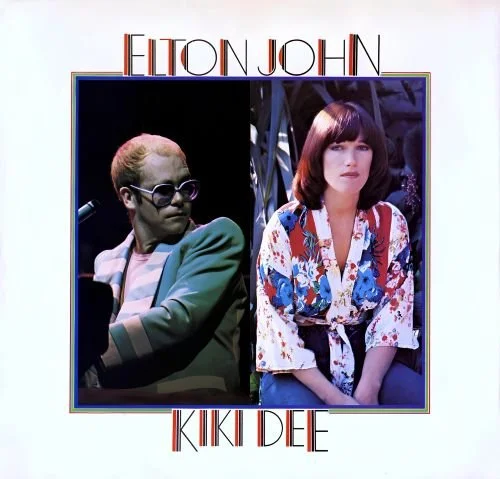
fifty years of a true classic song. Don’t Go Breaking My Heart is a duet between Elton John and Kiki Dee. It was released on 21st June, 1976. Written by John with Bernie Taupin, they used the pseudonyms Ann Orson and Carte Blanche, respectively. It was their pastiche and tribute to Motown duets, especially those between by Marvin Gaye and artists Tammi Terrell and Kim Weston. It was unusual in the Elton John catalogue, as we associate him with his solo work. Not known for his duets. In April 1976, John was between albums. His tenth studio album, Rock of the Westies, was released in October 1975. His eleventh studio album, Blue Movies, came out in 1976. That latter album was not one of his best. Though 1975 was a successful year. Captain Fantastic and the Brown Dirt Cowboy came out in May 1975. Don’t Go Breaking My Heart was this standalone single. The song was offered to Dusty Springfield at the time, but the offer was withdrawn. Her partner Sue Cameron said Springfield was too ill when the song was offered to her. I want to explore Don’t Go Breaking My Heart further. It reached number one in the U.K. and U.S. Last September, the track surpassed a billion streams on Spotify. I am keen to come to a few features around Don’t Go Breaking My Heart. In 2019, Ultimate Classic Rock illuminate the story behind a tremendous and hugely popular song:
“Elton John and Bernie Taupin used the pseudonyms Ann Orson and Carte Blanche – a bit of wordplay on the phrases "a horse and cart" and "carte blanche" – for "Don't Go Breaking My Heart," just as they had done on Rock of the Westies. According to producer Gus Dudgeon, John came up with the music first and then had Taupin pen the words, a different process from how they traditionally worked.
“Elton didn’t have a lyric for it," Dudgeon said, according to John's official website. "It was so weird to see him writing a song in the studio with no lyric. I’d never seen him do it before. And all he was singing was ‘Don’t go breaking my heart. Don’t go breaking my heart. Don’t go breaking my heart. Don’t go breaking my heart. Don’t go breaking my heart…’ That’s what he sang all the way through!”
For inspiration, they looked to Marvin Gaye's run of hit duets with Tammi Terrell and Kim Weston ("Ain't No Mountain High Enough," "It Takes Two," "You're All I Need to Get By"), which combined uptempo R&B with an orchestra. With the help of percussionist Ray Cooper, John's keyboardist James Newton Howard was given the opportunity to write the arrangement. He came up with a chart that used 20 strings (12 violins, four violas, four cellos).
"I wrote the arrangement on piano and then wrote it down on paper: the old-fashioned way," Howard recalled to EltonJohn.com. "There were no sequencers back in the day. Well, there were, but there was no way to sync them to tape. So, I just plunked it out on the piano, wrote it down, sent it to the copyist and that was it. ... The one thing I remember Elton saying is, ‘You should do a string solo.' The solo in the middle is full orchestra, so that was kind of fun."
John and his band recorded the track in Toronto during the sessions for Blue Moves and sent it to London for Dee to add her contribution. “I remember getting a copy of it with Elton singing his vocal," she also told EltonJohn.com, "and also doing my part in a high voice! I worked hard on my parts. Elton had already stamped the song with his vocal, which in a way is quite good, ‘cos it gives you a groundwork on how you’re gonna sing it. The precedent has already been set by him, and the writing and production of the song. I seem to remember working quite hard to get the right attitude. Good vocals are always hard work.”
She continued: "It was pretty informal. It’s interesting how something you approach with such a casual attitude – like the video (which was done in a couple of takes for a TV show), who would have thought that would have been played so much over the years?”
Released as a standalone single in June 1976, "Don't Go Breaking My Heart" went to No. 1 in both the U.S. (four weeks) and the U.K. (six weeks). That ranked as his sixth song to top the Billboard Hot 100 in four years, it was also Elton John's last until 1986, when he sang on Dionne Warwick's charity single "That's What Friends Are For." One of John's own compositions wouldn't reach No. 1 until another duet, George Michael's live remake of "Don't Let the Sun Go Down on Me" did so in February 1992.
In honor of their success on "Don't Go Breaking My Heart," John gave Dee a gold heart necklace with the song's title engraved on it; as of 2011, she said she still had it. And even though he's revisited "Don't Go Breaking My Heart" on several occasions, including singing it in high-profile situations with Miss Piggy on The Muppet Show, the Spice Girls, Minnie Mouse, RuPaul and actor/comedian Steve Coogan, John has never forgotten his original duet partner. They recorded a cover of the Four Tops' "Loving You Is Sweeter Than Ever" for her 1981 record Perfect Timing, she joined him onstage at Live Aid for "Don't Go Breaking My Heart" and they interpreted Cole Porter's "True Love" for his 1993 Duets album”.
There are a couple of features on the Elton John website worth highlighting. This one gives us ten fun facts about Don’t Go Breaking My Heart. As it turns fifty on 21st June, I hope there is new celebration and articles written about the song. Even if people associate Kiki Dee with the one song, it is clear there is a lot more to her than this. I remember hearing the song as a child and instantly being hooked. It is so infectious and uplifting:
“1. Today in 1976, Elton had the No. 1 song on the Billboard Top 200 chart for the sixth time in just four years.
Don’t Go Breaking My Heart spent four weeks at No. 1, eight weeks in the Top 10, 15 weeks on the Top 40, and four and a half months on the Top 100. It wound up at No. 2 on the Billboard Year-End Hot 100 singles chart for 1976 and was Elton’s last No. 1 release in the US until Candle In The Wind 1997.
On the other side of the Atlantic, the duet became Elton’s first No. 1 single in Britain on July 2 – its 4th week on the UK Singles Chart. It spent six weeks at the top and a total of 14 weeks on the chart.
2. The song was written differently from almost every other composition in the Elton John/Bernie Taupin catalogue.
Elton uncommonly came up with the title himself whilst creating the tune at Eastern Sound Studios in Toronto, Canada. He then called Bernie, who was not at the Blue Moves sessions during which this song was recorded, and asked for a lyric to go with that title.
The original lyrics Bernie wrote had very little to do with the final version – only one line (and the title) remains in the song we know today.
3. The track was recorded two days after Elton’s 29th birthday.
Elton played electric piano on the session, with band member James Newton Howard on acoustic piano, Elton’s usual instrument. Other band members included Caleb Quaye (guitars), Kenny Passarelli (bass), Roger Pope (drums), and Ray Cooper (congas and tambourine).
Kiki’s vocals were tracked later in London, using as a guide the demo tape that had Elton singing her lines in a higher voice than his own part.
4. There are three uncredited backing vocalists on the hit single.
Cindy (now Cidny) Bullens, Ken Gold, and Jon Joyce, the backing vocalists on Elton’s 1976 tour, recorded their background parts to Don’t Go Breaking My Heart in London, in May 1976 after Kiki’s vocal had been done. The backing vocals, arranged by Bullens, can be heard along with Elton and Kiki on the “Woo-hoo”, “Nobody knows it”, “Don’t go breakin’ my…” and other parts.
5. ‘Don’t Go Breaking My Heart’ was the 143rd song producer Gus Dudgeon worked on with Elton between 1970 and 1976 (roughly 24 songs per year).
After finishing on Elton and the band’s parts, Gus returned to London to record Kiki’s vocal. “I worked hard to make [my vocal] happen,” Kiki recalled. “But I think I probably felt quite comfortable because I’d already done I’ve Got The Music In Me with Gus – and that was a hard vocal for me to get. So, we had trust with each other. And that’s hugely important, I think, because confidence is everything in the studio.”
6. The song was not part of any album at the time of its release.
Don’t Go Breaking My Heart was Elton’s third stand-alone single, after Lucy In The Sky With Diamonds (1974) and Philadelphia Freedom (1975), and later appeared on Elton John’s Greatest Hits Volume II and subsequent compilations… most recently, Diamonds (2017).
It has also been included as a bonus track on the reissued versions of Rock Of The Westies, even though it was not recorded during that album.
7. The single won Elton two awards in 1977.
Ivor Novello for “Best Pop Song” and “Best Male Vocalist” American Music Award.
8. 19 official versions of the song have been issued:
1976: Elton John and Kiki Dee’s original single, released on June 21 in the US and July 2 in the UK.
1993: Elton John and RuPaul, from the album Duets, with 13 additional remixes and dub versions by Giorgio Moroder, Serious Rope, and Roger Sanchez.
2000: A live version with Kiki Dee from Elton’s One Night Only album.
2018: Q-Tip featuring Demi Lovato covered the song on Revamp: Reimagining The Songs Of Elton John & Bernie Taupin and was that album’s pre-release single.
2018: Sherlock Gnomes version – PNAU built the new dance track using elements from both the Kiki Dee and RuPaul recordings.
2019: Rocketman Official Sound Track (Interlude) version, sung by Taron Egerton and Rachel Muldoon.
9. There have also been a handful of TV and film renditions, with assorted duet partners, after the original promo video:
The Muppet Show with Miss Piggy (“a wonderful lady that I’ve always wanted to work and sing with”) in 1978.
With an animated Minnie Mouse (voiced by Russi Taylor) on the Totally Minnie NBC musical television special in 1988.
The BRIT Awards broadcast on Feb 14, 1994, with RuPaul.
With the Spice Girls on the An Audience with Elton John ITV special, in September 1997.
The British Comedy Awards in December 2000 with Steve Coogan (in his Alan Partridge character).
Taron Egerton and Rachel Muldoon partially recreate the 1976 video in this year’s Rocketman film.
10. Elton has performed ‘Don’t Go Breaking My Heart’ live both with and without a duet partner, including:
May 14, 1976: According to reports, Elton surprised the audience at Baileys nightclub in Watford when he brought Kiki out on stage to perform the song almost two months before its release.
With Kiki at Chicago Stadium, and other scattered shows during the 1976 Louder Than Concorde tour, including the final run of seven shows at Madison Square Garden.
A solo version at the Edinburgh Playhouse on Sept 17, 1976.
With Kiki at Live Aid on July 13, 1985.
At the One Night Only concerts in Wilkes-Barre, PA (without Kiki) and New York City (with Kiki) in October 2000.
At the Stonewall Equality Show on July 2, 2006 with Kiki at the Royal Albert Hall in London.
With Demi Lovato at the Wiltern Theatre in Los Angeles on January 13, 2016.
On February 4, 2016, as part of a medley while donating a piano to the Kings Cross St Pancras station.
Also… Elton was a surprise guest on the song during at least three Kiki Dee concerts in the mid-1970s and at two Ed Sheeran shows in 2015”.
I am going to end with this feature. It tells how Don’t Go Breaking My Heart dominated during the summer of 1976. I still think that it sounds tremendous, even though I have heard it dozens of time. A delightful song that you can tell was a pleasure to record, it would be great for Elton John and Kiki Dee to reunite and perform this number again:
“As detailed by fans caught up in the “summer of Elton” 40 years ago, much joy was found from seeing Elton in concert, following him in the media, and listening to his songs on radios and record players across America, Britain, and the world at large.
One song especially – Don’t Go Breaking My Heart:
“That was ‘my’ song that summer.”
“The perfect summer song.”
“Our theme song.”
“We sang it all summer.”
“It seemed like the radio stations were playing it every ten minutes.”
“I think I drove the local radio stations crazy repeatedly requesting it.”
“My sister’s cell phone plays Don’t Go Breaking My Heart when I call.”
These are just some of the enduring attachments that have been made to a 4 and-a-half-minute song that captured the attention of Elton lovers on both sides of the Atlantic like none before it. It not only was the first of Elton’s singles to reach Number One in the UK charts, but it also stayed on Billboard’s Top 40 in America for 16 weeks…six of them at Number One and ten in the Top 10.
But it wasn’t just a defining moment for fans during the summer of the American Bicentennial and a British heat wave, it also made a lasting mark on the lives and careers of those who worked on the recording…most notably Kiki Dee and James Newton Howard.
While Kiki was a known entity before she was asked to duet on the track (having already done two albums on Elton’s Rocket Records label and enjoying chart success with Amoureuse and I’ve Got The Music In Me), her visibility rose considerably following its release. To this day she honors the song by including it in her live sets with guitarist Carmelo Luggeri.
People have got a lot of fondness for that song. I did a guest spot at a big music festival…and when the other acts were playing I went out into the audience. A lot of people told me how much the song meant to them. One was an Indian guy who’d come over in 1972 and 'Don’t Go Breaking My Heart' was his favorite song ever. It was very, very sweet.
Kiki Dee
James had been a member of the Elton John Band less than a year when Don’t Go Breaking My Heart was recorded. He had previously done some arrangements for Melissa Manchester but the prominence of his string charts on an Elton John hit single most certainly laid the groundwork for his becoming one of the premiere film composers working today.
James: I didn’t study orchestration in school, I kind of just learned by myself. I was a classical piano student, so I knew how to read and write music. And I just sort of knew that I would be able to arrange for strings. That song was one of the first things I’d ever done.
Don’t Go Breaking My Heart‘s backing tracks were recorded at the end of the Blue Moves sessions in Toronto, Canada, in early 1976. Having completed one of his most adventurous albums to date, Elton took hold of a very catchy musical idea and ran with it…eventually asking Bernie Taupin to write lyrics around the melody and title phrase.
Song producer Gus Dudgeon: Elton didn’t have a lyric for it. It was so weird to see him writing a song in the studio with no lyric. I’d never seen him do it before. And all he was singing was ‘Don’t go breaking my heart. Don’t go breaking my heart. Don’t go breaking my heart. Don’t go breaking my heart. Don’t go breaking my heart…’ That’s what he sang all the way through!
The songwriting credit went to pseudonyms that Elton had devised for himself and Bernie during the Rock Of The Westies album, “Ann Orson and Carte Blanche” (a mash-up of the phrase “A horse and cart” and “Carte Blanche”, the name of a prestigious credit card at the time). During its writing and recording, the song was nestled firmly in the warm embrace of the Tamla/Motown sound – a sort of nine-year-old follow-up to the 1967 classic Ain’t No Mountain High Enough and other duets by Marvin Gaye with female artists on the Detroit-based label. A label, by the way, which had signed Kiki Dee as its first white artist in 1970.
Kiki: Elton and I are both the same age (three weeks apart), and we grew up on Marvin Gaye, Tammi Terrell, Kim West and the Tamla/Motown duets.
James: It definitely had a lot to do with the tradition of Motown strings and things like My Girl. The one thing I remember Elton saying is, “You should do a string solo.” The solo in the middle is full orchestra. So that was kind of fun.
James’ transition from second keyboardist in Elton’s band to orchestral arranger came about with the help of percussionist Ray Cooper.
Gus: I remember clearly, Ray just suddenly turned to me one day and he said, “You know, you really ought to give James a chance to do some orchestral arrangements…he’s really good. He knows his stuff.” And a good thing too…it’s a bloody good arrangement.
James: When I first joined the band Ray kind of took me under his wing. He was a classical music guy and we talked a lot about orchestration and classical music in general. I think I expressed to him my ambition to be able to do that with Elton. Having been a huge fan of Paul Buckmaster – he wrote the greatest string charts ever for Elton, in my opinion. And Gene Page’s extraordinary orchestration. Del Newman was great. So there was a tradition of great orchestrations in his records and it was something I was excited to attempt to do. And I went to Elton and asked him if he’d consider letting me do it on the Blue Moves album. He said, “Well, let me think about it.” And he must have conferred with Ray at some point. He came back to me and said, “Yeah! You can do it.”
Kiki’s path to the project was with a bit less direct involvement: Elton had produced my first album for Rocket (Loving and Free) in 1973, and we toured together in 1974. So perhaps when they came up with this song they thought “Well, it’d be nice to get Kiki on this”…’cos I was in his life. It was pretty informal. It’s interesting how something you approach with such a casual attitude…like the video (which was done in a couple of takes for a TV show)….who would have thought that would have been played so much over the years?
After Elton and the band were done in Toronto, Kiki was given an unfinished recording and ultimately taped her vocals to the backing tracks in a London studio: I remember getting a copy of it with Elton singing his vocal, and also doing my part in a high voice! I worked hard on my parts. Elton had already stamped the song with his vocal, which in a way is quite good, ‘cos it gives you a groundwork on how you’re gonna sing it. The precedent has already been set by him, and the writing and production of the song. I seem to remember working quite hard to get the right attitude. Good vocals are always hard work.
The finished song is one of the denser that Elton had done to that point. In addition to the two vocalists (each doing multiple tracks and heavily reverbed) and seven band musicians, there was an orchestra of 12 violins, 4 violas, and 4 celli. This left little breathing room, especially in the pre-CD days where vinyl singles had to survive the test of transistor radio speakers. This could have been intimidating to the new kid on the conductor’s podium, but James was not daunted.
James: I just completely ignored all of that. I wrote the arrangement on piano and then wrote it down on paper: the old-fashioned way. There were no sequencers back in the day. Well, there were, but there was no way to sync them to tape. So I just plunked it out on the piano, wrote it down, sent it to the copyist and that was it.
Don’t Go Breaking My Heart was released in June 1976 and quickly lived up to its pop potential, reaching the top of the US Hot 100 chart on its sixth week. In the UK it leapt up to #1 on the UK singles chart in just three weeks.
Gus: It gave me a buzz because you could tell straight away that the song was really commercial. Really vibey and up.
Kiki: I remember hearing it on the radio for the first time and thinking, “Wow.” ‘Cos some records, especially in those days, they have to sound great on the radio…and this was one of those records that did. I remember thinking, “Oh, this could do okay…this could go.”
And “go” it went…
James: It was exciting! I remember on the cover of one of the bigger music magazines there was a review and it mentioned my string arrangement, which I was very excited about. That was really a fun time.
Kiki: I was terribly proud for my mum and dad…’cos they’d stuck with me. I started professionally when I was 17 years old, and this was over ten years later. So I was so pleased for them. And Elton was chuffed. He had a little gold heart necklace made for me, which said, “Don’t go breaking my heart.” I’ve still got that.
Elton John and Kiki Dee: 'Don't Go Breaking My Heart'
Since that time, Don’t Go Breaking My Heart has continued to thrive in popular culture in any number of ways: Elton himself has recorded versions with Miss Piggy, Minnie Mouse and RuPaul…and self-confessed Elton fanatic Valerie Bertinelli sang as Elton (with Mackenzie Phillips playing Kiki) on an episode of the popular television sitcom, One Day at a Time the winter after the single’s release”.
Fifty years after its release, Don’t Go Breaking My Heart still sounds full of life and wonder. Though there is some bittersweetness to the lyrics, this is a song that always lifts me! Such committed performances from Elton John and Kiki Dee. It is why Don’t Go Breaking My Heart…
CAN never be broken!