
FEATURE:
Exploring John Carder Bush’s Kate: Inside the Rainbow
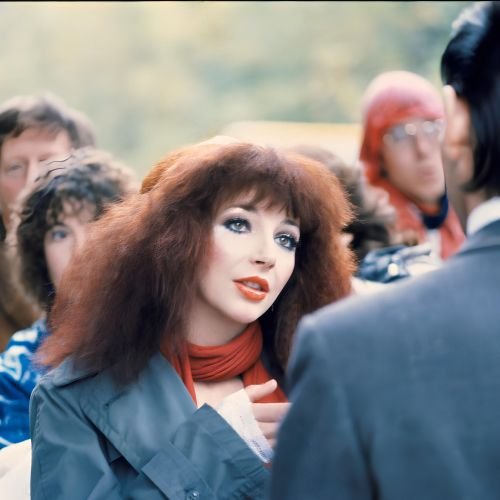
ALL PHOTOS: John Carder Bush
Crimson: Light Became the Enemy…
__________
I am completing…
the ‘red’ section of my look at John Carder Bush’s Kate: Inside the Rainbow. This is quite a short section. The next part takes us to ‘orange’ and a few sections around that colour. It goes as far as Never for Ever and John Carder Bush photographing his sister around that 1980 album. And the music videos. Some of the brilliant shots he got from that time. Right now, we are sort of wrapping up. We are sort of looking at 1978. In his book, we learn that “In those days, both Kate and I were very much night people”. That is the magic time for composers and artists. Photographers get to enjoy the quiet and have less distraction. Writers like Kate Bush could draw inspiration from that stillness and time. John Carder Bush notes how “There is also that feeling that by not going to bed you are extending your time on the planet and living more”. Photography sessions often ran late through the night to the following morning. I can imagine Kate Bush being this night owl. When it came to recording when she started to produce, she would have sessions going late. I am not sure whether this is something that stemmed from her childhood. Wanting to stay up late and being fascinated by what that time of the day offered. In terms of its mystery and stillness. John Carder Bush observed how modern photographers can get a great shot. They have digital equipment, so there is less risk. When he was photographing Kate Bush, there was always that sense of jeopardy. Or making sure that you had a great shot before you left. “Before I would start to process the black and white shots into the early hours, I would put away all the camera equipment, take down the lights, roll up the background and dismantle the set while everyone else was packing up their things and getting ready to go home”. These are the more technical details of his process. I think it is important, as we look at these shots of Kate Bush he took in her early career and assume it was very fast.
“But every part of the analogue process I used was fraught with danger. Every stage was critical – one mistake and the whole process would be ineffective, and I wouldn’t necessarily know until after the film processing stage”. One of the standout lines, which we see on page fifty-seven is “Once the film had been exposed to the massive amounts of controlled light in the studio for each photo, light became the enemy”. He curses this “demonic, indifferent destroyer that could slip through the tinniest cracks”. I don’t know if we ever think about how these timeless shots look so natural and easy but, in reality, things are different for photographers. In the 1970s, there was not the luxury of having digital equipment; being able to edit everything and doing multiple shots easily. “With colour, the rolls went off to a colour laboratory I knew I could trust. But I processed the black and white myself”. I am going to skip some of what he says – as it goes so deep with the whole process -, however, it is worth reiterating the challenges he faced. “The unknown results of the whole process, from loading the film that morning, which now seemed like a week ago, could be looked at in negative, and with the first perusal would come excitement or disappointment, even dismay”. It must have been tense for John Carder Bush to see if the shots he took would be development and look good or the expression he hoped he’d shot would be released. Getting that control and of light and chemistry right was crucial. The route from the shot being taken to us seeing it is long and often brutal. In terms of how it could all go wrong. In the end, there would be a contact sheet with a row of black and white images, which John Carder Bush likened to “postage stamps of my sister”. There was a connection between the siblings that extended to photography and an instinctive eye. John Carder Bush would know which shot worked the best and which one was right. So did his sister. We throw forward. The trials and that experimentation. Such a pain for a photographer who wanted to get the best shot but was hampered by the restrictions of the time. Images of him experimenting “with developers and bromide papers late night after late night”, “I almost poisoned myself using toners in the tiny bathroom under the stairs in my flat that I could convert into a darkroom when it wasn’t being used for its original purpose”, and “The result of this crash course in experimentation and chemistry was the first album cover I did for my sister: The Dreaming”.
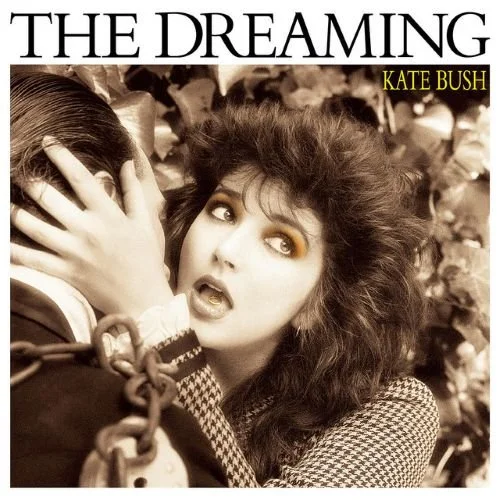
Though we are pre-Never for Ever chronologically, there is that nod to 1982. I did not know about the details of what she wanted for the cover. She wanted a black and white shot, but one that had a “toned finish and hand tinting to give the suggestion of the photography of Houdini’s time”. That would be between 1874-1926. The cover sees Bush with a key on her tongue and a man’s head (Del Palmer, her boyfriend at the time) in the shot. It was depicting Houdini Being fed a key by a kiss so he could escape a trap. Bush playing his wife, Beatrice ‘Bess’ Houdini. John Carder Bush writes how he loves the skin tones on the cover. They were achieved, as he says, “in natural light against the ivy that covered an eighteenth-century wall that had once surrounded a large fruit and vegetable garden, and were lovingly coaxed out of the alchemy of developers and fixatives and the long, thorough purification with water before being committed to the bath of selenium toner where magic happened, or didn’t”. That image was then hand-tinted by his girlfriend, Vivienne Morgan Chandler. We get to know about this very important woman, as “it has to do with living inside the rainbow”. She and John Carder Bush had a child together. She is very relevant to the book, as Chandler (who died in 2013) was a fine art photographer who became a Fellow of the Royal Society of Photographers. It was, as we find out “her own research into printing methods, developers, toners and papers” that helped John Carder Bush the results he wanted for The Dreaming and The Whole Story (1986). One of the most surprising revelations of this section of Kate: Inside the Rainbow is that those early photo sessions were unenjoyable. Many shots had been taken to give to record companies and magazines “An aura of vague, undefined projection suffused the studio”. John Carder Bush does say that there were superb shots taken. But after having to go to dance rehearsals, practise, production meetings, interviews and the likes, the last thing his sister wanted to do was to project and be this other person. When she should have been relaxing and simply being herself. I can understand that. The single and album covers were different. They had “all the fun of the Cathy book photos but with make-up artists, hair stylists, costumiers, flashlighting, backdrops and the magical Hasselblad, the icon of the medium-format cameras”.
Kate Bush and her brother working on the emotional trappings and settings for these shots. “The music industry was convinced that image alone could sell the product”. The importance of getting the shot ‘right’. We learn from the photographer about the Hasselblad. If he takes a still from a video shoot thirty years previous, it is still crisp and looks great. The VHS copy of the final video looks lifeless and blurred. Colourless. That is why I have argued that so many of her videos need an HD upgrade. The video artform is explored too. How it was essentially a series of stills strung together. How expensive it was to make a video, with no guarantee it would be shown on T.V. Now – or when the book was published – videos seem easier to make. You could do a one-take video and it would be a lot less rigorous than what directors had to endure decades before. That excitement of taking a shot that would be used on an album cover. A piece of art almost. John Carder Bush writing how he would buy albums on the strength of the artwork. Less common when it came to the C.D. era. Artwork and the importance of the image not as paramount. We are in a digital age but one where vinyl is very important. Yet, there are few standout album covers each year. Where you get that phenomenal and memorable image. John Carder Bush looks back at promo shots from the past and why some were not used. It might be, as he muses, “Perhaps it’s that during the intensity of a portrait session a mood evolves, partly on purpose and partly because of the time, the place, the season, the currents of our lives, and that when we looked through the transparencies and contact prints we were probably looking for shot that best captured the mood”. A different case for album covers. Many exquisite ones that were never used, yet “the ones we did choose still stand out as the most appropriate”. John Carder Bush reminisces how his sister was getting a “healthy distance from the madness of fame”, though that didn’t allow much permanence. He was still based in the same flat he lived at for thirty years (where he was living at the same address as his sister); she would have to move to avoid intrusion and obsessive fans. Criminals too. Never really being secure or settled anywhere.
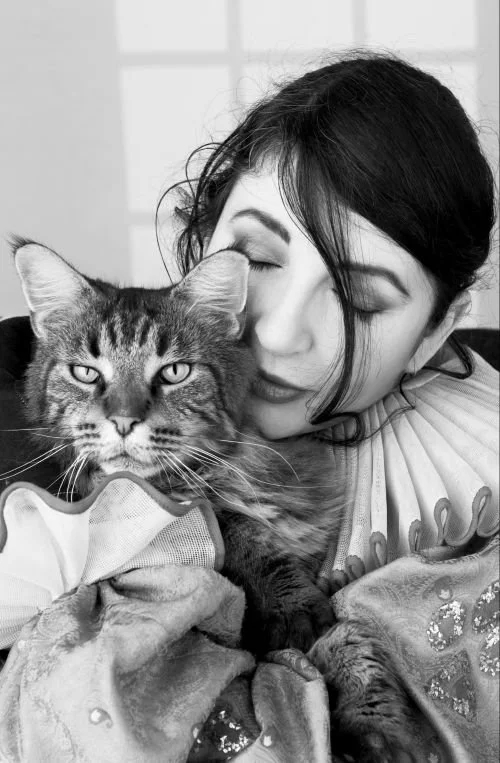
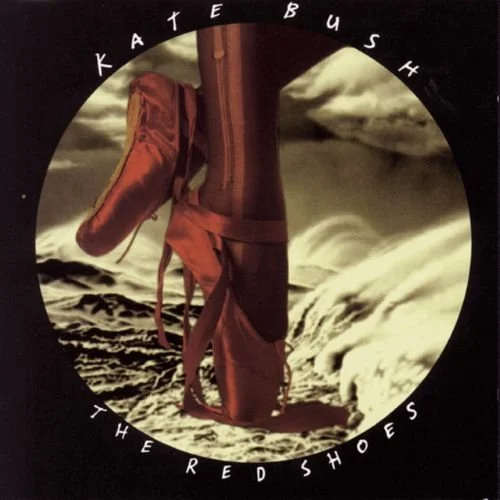
As a stills photographer on her videos, John Carder compared himself to a thief. One that crept among the shadows to find the right shot. Trying to get a different angle or perspective that the cameraman did not, whilst also trying to stay out of the way. Walking onto a video shoot would amaze John Carder Bush. How many people were involved. A comparatively small crew for a stills shoot. As Kate Bush was discussing choreography, what she wanted from the video and was being made up and prepared, her brother would navigate a labyrinth of cables and crew to get himself positioned to take a perfect shot. Almost like a sniper in plain view. The final analogue sessions he did with his sister was for 1993’s The Red Shoes. That was using the beloved Hasselblad. In 2011, for Director’s Cut, a Canon digital camera belonging to his son, Gavin, was used. John Carder Bush does not consider himself to be a professional photographer, despite the fact he produced images for magazines and albums. He shot his sister but very few people outside of that world. He did not usually look back but, when constructing Kate: Inside the Rainbow, he had to. He remembered fondly the Cathy photos. Those he took of his sister as a girl. Even though they “probably represent just an hour or so out of her childhood, their flavour still seems to linger in these photos that scan many years of adulthood”. I like how he says, when selecting images for the new book, he was confronted by the passing of time and the date of the images. When he took the images of his sister, “there is a very personal sort of vortexing into the ‘soul’ of the shot that bypasses the details of the date – does it do to me for a split second what those photos I kept in my desk at boarding school did for me? Does the arrow strike its target? If it does, the passing of time is irrelevant”. In the end, however staged and constructed the photos are, nothing has changed. “Just look at her eyes…”. The final words before we reach 1980 and Never for Ever. Completing ‘red’ before go into the ‘orange’ of Never for Ever and beyond, I did want to highlight the limitations John Carder Bush faced. How light could be this great gift, but also an enemy. How a shot could easily be ruined and there was this sense of nervousness when it was developing. The equipment he used and his memories from this early years. I guess that take us through 1978 and maybe into 1979. How he switched from black and white to colour at one point and analogue to digital later. Though things changed and evolved, other aspects stayed the same. Chief among them, the startling potency and beauty…
OF his sister.