
FEATURE:
Kate Bush: Them Heavy People: The Extraordinary Characters in Her Songs
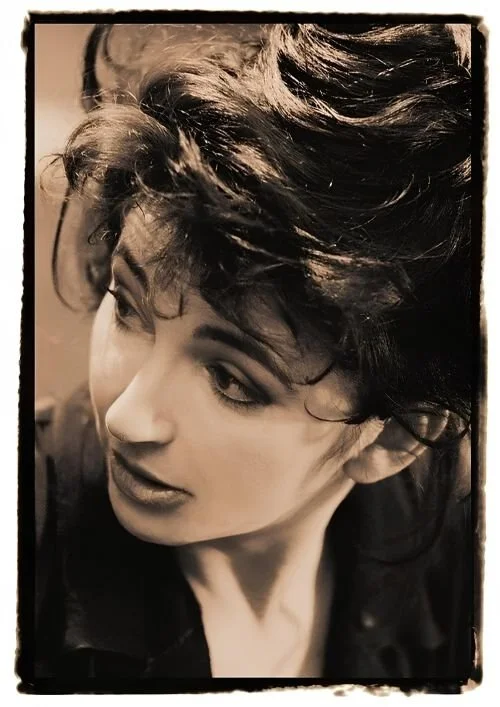
IN THIS PHOTO: Kate Bush during the filming of the 1993 short film, The Line, the Cross and the Curve/PHOTO CREDIT: Guido Harari
Solomon/Isolde/Marion (The Song of Solomon)/Carmilla (Surrender into the Roses)
__________
THERE are not many combinations…
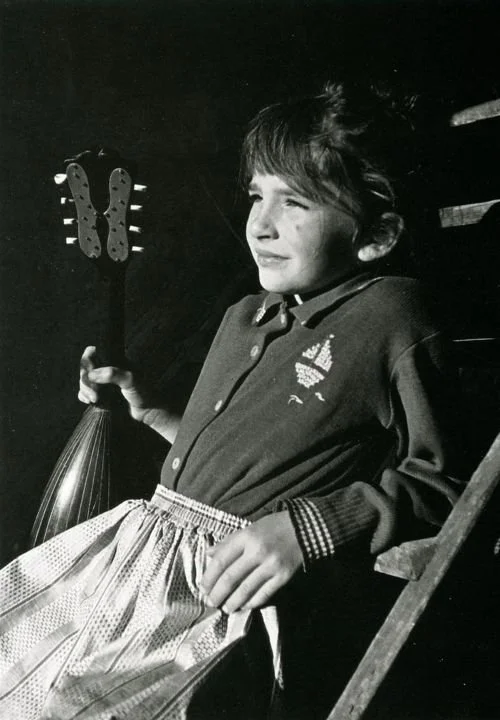
IN THIS PHOTO: A young Cathy Bush/PHOTO CREDIT: John Carder Bush
left for this series. I am going to end by pairing Houdini from The Dreaming with Them Heavy People from The Kick Inside. I will lead off with a song from The Red Shoes. I am then going to finish by discussing a character from a Kate Bush demo. The first character is another religious figure. Solomon is, of course, part of The Song of Solomon. I will look at who Solomon was, but there are other subjects to talk about. I will not repeat what I wrote previously about The Red Shoes. I shall come to the sexual urgency and explicitness in it. Not that it is a raunchy song. It is Kate Bush being bold. It depends how you approach the lyrics. It was definitely something new. Her music has always been quite sensual and sexy. She is an artist who talks about sex and fantasies. Someone who has never been conventional when it comes to love and desire. You can trace that all the way back to her 1978 debut album, The Kick Inside. By the time of The Red Shoes being released, there was change in terms of relationships and personal lives. The Song of Solomon, I assume was written sometime around 1992. The album came out in November 1993. Perhaps we can date it as late as 1993. Kate Bush married Dan McIntosh in 1992. Is this a song about her new husband? I have focused on this song before. Many have written it off as being an offcut from The Sensual World. In some ways, it fits more onto that album. This makes me think of songs that one would imagine are more suited to other albums. I think that about Moments of Pleasure. That is on The Red Shoes. I always think that it should have been on The Sensual World. I don’t think that was a holdover or offcut. Even so, there is something about Moments of Pleasure that slots into the ethos and tone of The Sensual World.
That idea of Bush embracing sensuality or at least exploring womanhood. You could fit Moments of Pleasure right by The Sensual World’s title song. I can appreciate how The Song of Solomon is also one that could appear on The Sensual World. That 1989 album has plenty of gold on it. In terms of how people react to the song and how Solomon connects with the rest of the lyrics. This tumblr post makes some interesting observations: “It fits well enough on The Red Shoes, an album in part about picking personal mythology out of the most patriarchal of stuff; but otherwise, it's pretty clear where it goes. The Trio Bulgarka, the Bulgarian vocal ensemble of Stoyanka Boneva, Yanka Rupkina and Eva Georgieva who had some solo albums but are mainly known for Bush's work, returns here -- curiously, on none of the The Line, the Cross and the Curve choices. Bush has called The Sensual World her most "feminine" album, and this is possibly among her most explicitly feminine songs, both in the delicate instrumentation, harps and vocals and sounds like chiffon, and in the lyrics: "here's a woman singing," Bush says, drawing boundaries like curtains. Everything's beneath a thick, suggestive haze. Too many people think this song is a joke, largely because of the chorus: "Don't want your bullshit -- just want your sexuality." The fact that dismissing female sexuality is exactly the sort of bullshit Bush doesn't want is lost on everyone, and the fact that there's nothing coquettish about it. Sure, she pores over her Bible for the first time this album (though, tellingly, not the really explicit verses, which is rather a feat with the Song of Solomon in pop culture); sure, she dwells and pauses upon lines like "his left hand is under my head, and his right hand -- doth embrace me" fairly suggestively. Sure, the bridge is pretty obviously supposed to be simulating an orgasm, with lines that either read amazingly dirty or oddly submissive. But none of this explains it all. The last time she sings it, it's out of pure frustration -- don't want your bullshit! -- and sounds almost defeated, as if there's a lot of bullshit to come”.
Let’s go back to the roots. The Song of Solomon. In The Bible, Solomon was the third (and final) king of the united kingdom of Israel. He ruled a golden age of peace and prosperity. The son of King David and Bathsheba. Best known for his unparalleled wisdom, his immense wealth, and building the First Temple in Jerusalem. I do wonder what influenced Kate Bush to explore this character. However, rather than her song being about this biblical king, it connects with a lyrical poem. This article explores The Song of Solomon:
“The Song of Solomon is a lyric poem written to extol the virtues of love between a husband and his wife. The poem clearly presents marriage as God’s design. A man and woman are to live together within the context of marriage, loving each other spiritually, emotionally, and physically.
This book combats two extremes: asceticism (the denial of all pleasure) and hedonism (the pursuit of only pleasure). The marriage profiled in Song of Solomon is a model of care, commitment, and delight.
Key Verses:
Song of Solomon 2:7; 3:5; 8:4 - “Do not arouse or awaken love until it so desires.”
Song of Solomon 5:1 - “Eat, O friends, and drink; drink your fill, O lovers.”
Song of Solomon 8:6-7 - “Place me like a seal over your heart, like a seal on your arm; for love is as strong as death, its jealousy unyielding as the grave. It burns like blazing fire, like a mighty flame. Many waters cannot quench love; rivers cannot wash it away. If one were to give all the wealth of his house for love, it would be utterly scorned.”
Brief Summary: The poetry takes the form of a dialogue between a husband (the king) and his wife (the Shulamite). We can divide the book into three sections: the courtship (1:1 - 3:5); the wedding (3:6 - 5:1); and the maturing marriage (5:2 - 8:14).
The song begins before the wedding, as the bride-to-be longs to be with her betrothed, and she looks forward to his intimate caresses. However, she advises letting love develop naturally, in its own time. The king praises the Shulamite’s beauty, overcoming her feelings of insecurity about her appearance. The Shulamite has a dream in which she loses Solomon and searches throughout the city for him. With the help of the city guards, she finds her beloved and clings to him, taking him to a safe place. Upon waking, she repeats her injunction not to force love.
On the wedding night, the husband again praises the beauty of his wife, and in highly symbolic language, the wife invites her spouse to partake of all she has to offer. They make love, and God blesses their union.
As the marriage matures, the husband and wife go through a difficult time, symbolized in another dream. In this second dream, the Shulamite rebuffs her husband, and he leaves. Overcome with guilt, she searches the city for him; but this time, instead of helping her, the guards beat her—symbolic of her pained conscience. Things end happily as the lovers reunite and are reconciled.
As the song ends, both the husband and wife are confident and secure in their love, they sing of the lasting nature of true love, and they yearn to be in each other’s presence.
Foreshadowings: Some Bible interpreters see in Song of Solomon an exact symbolic representation of Christ and His church. Christ is seen as the king, while the church is represented by the Shulamite. While we believe the book should be understood literally as a depiction of marriage, there are some elements that foreshadow the Church and her relationship with her king, the Lord Jesus. Song of Solomon 2:4 describes the experience of every believer who is sought and bought by the Lord Jesus. We are in a place of great spiritual wealth and are covered by His love. Verse 16 of chapter 2 says, “My beloved is mine, and I am his. He feeds his flock among the lilies” (NKJV). Here is a picture of not only the security of the believer in Christ (John 10:28-29), but of the Good Shepherd who knows His sheep—believers—and lays down His life for us (John 10:11). Because of Him, we are no longer stained by sin, having had our “spots” removed by His blood (Song of Solomon 4:7; Ephesians 5:27)”.
While The Song of Solomon is traditionally associated with King Solomon, scholars debate whether he is the speaker, the subject, or simply a thematic inspiration. Kate Bush has referenced The Bible and figures from it before. There is debate as to whether King Solomon is the focal point for The Red Shoes’ The Song of Solomon. Thought I look at the lyrics of her song and I do feel that she was thinking about King Solomon. In any case, there are a couple of avenues to explore before I finish with the lyrics. There is imagery and words from the song that could be seen as problematic today if they were in a song. Not least because they reference Israel. Even if we are talking about something very much rooted in history, there would be issues if The Song of Solomon came out in 2026. In thinking about Solomon today, we have chilling parallels between a figure from The Bible and a current Israeli regime. The fact that Song of Solomon does seem to have connections to that King of Israel gives it a tarnish. In terms of biography, here is more about Solomon: “The Bible says that Solomon consolidated his position by liquidating his opponents ruthlessly as soon as he acceded to the throne. Once rid of his foes, he established his friends in the key posts of the military, governmental, and religious institutions. Solomon also reinforced his position through military strength. In addition to infantry, he had at his disposal impressive chariotry and cavalry. The eighth chapter of 2 Chronicles recounts Solomon’s successful military operations in Syria. His aim was the control of a great overland trading route”. Rather than be haunted and scarred by what Israel is doing to Gaza and the Palestinian people now and connecting it to the time of Solomon, we can look at the poem between two lovers. You can read it as a couple who have doubts and their strength is tested, though they are resolved and connected at the end. I keep thinking about how Bush came to write her song and how it connects to Song of Solomon. Whether she was thinking about that poem and adding her take, or considering Solomon and assuming the male figure in the poem was him.
Few articles scrutinise the origins of Kate Bush’s song from The Red Shoes. Bush re-recorded it for 2011’s Director’s Cut. The vocals from the Trio Bulgarka remain, yet there were new elements. I wonder why Kate Bush reproached this song. Maybe she did not like the production. Or she wanted to strip the song down. If there is a title-link between The Song of Solomon and Song of Solomon, Bush’s reading and lyrics paint something more personal: “Don’t want your bullshit, yeah/Just want your sexuality/Don’t want excuses, yeah/Write me your poetry in motion/Write it just for me, yeah/And sing it with a kiss”. There is this blend of Bush being poetic and biblical. In terms of referencing the book and also blending in something quite lyrical and romantic: “Mmm, just take any line/“Comfort me with apples/For I am sick of love/His left hand is under my head/And his right hand/Doth embrace me”/This is the Song of Solomon/Here’s a woman singing”. Whilst I have discussed Solomon, there are two other characters that are more literal and directly references. These lines mention them: “I’ll be the Rose of Sharon for you/I’ll do it for you/I’ll be the Lily of the Valley for you/I’ll do it for you/I’ll be Isolde or Marion for you/I’ll do it for you”. The name, Rose of Sharon, first appears in Hebrew in the Tanakh. In the Shir Hashirim (Song of Songs) 2:1, the speaker (the beloved) says, "I am the rose of Sharon, a rose of the valley". Interesting to wonder where Bush got inspiration to mention the Rose of Sharon. It is her referencing Isolde and Marion. Two particular options. Isolde (Yseult) is the tragic heroine of the Arthurian romance Tristan and Isolde, known for a powerful, consuming, and fateful love. Marion (Maid Marian) is the steadfast, loyal lover of Robin Hood, famous for her rustic charm, companionship, and devotion. Both fateful and devoted lovers. Bush casting herself back in history. To legend and lore. Fictionalised lovers to an extent. It is the spread of these characters in terms of periods of history and their depiction. Solomon potentially tying into the man/king figure in Song of Solomon. What is Bush saying with this song? She is saying that she could be anyone for this lover. She can take different forms or be a variety of things. Is this her being subservient and submissive? She is definitely confident and brash when it comes to her demands. Though there is that contrast in terms of moulding into different forms, some of them tragic and ill-fated, when it comes to pleasing her lover. A fascinating song to unpick, it sounds more potent and striking as part of Director’s Cut. I have perhaps not done full justice to The Song of Solomon. In any case, it is a song that warrants more investigation and affection.
Surrender Into the Roses is an early Kate Bush song. Although there is one character mentioned, there is also mystery in terms of their relevance. Camrilla is named in the song. Let’s look at the lyrics: “Last night you were on my balcony/You needn't try, know the whole story/Before it's too late I must get away/But both of us know you must stay/Oh, come on, Carmilla/Surrender into the roses/Go back home under the posies/Surrender into the roses/Carmilla, Carmilla, Carmilla”. There is a floral link to The Song of Solomon. Bush imagining herself as these flowers. Though there is biblical connection, we do have Rose of Sharon and Lily of the Valley. Here, there are the rose and posies. No stranger to bringing flowers and floral life into her song, many have connected Kate Bush’s Carmilla from Surrender into the Roses to a source that many might not think Kate Bush would have known about. Though, for anyone who knows about Bush (Cathy Bush, we should say, as she would have written this song before her professional career began) this is a hugely intelligent and well-read artist who grew up in a house abuzz with music, culture and words and sounds to inspire all the senses. Dreams of Orgonon wrote about Surrender into the Roses, a.k.a., Carmilla:
“Felicity Toulson’s essay in the Bush-themed fanzine Homeground. Toulson makes the so-compelling-as-to-be-obviously-right argument that the song is an homage to Joseph Sheridan Le Fanu’s classic Gothic lesbian vampire novella Carmilla, and frankly makes her case right away by pointing out that the lyrics are totally vampiric—the song literally mentions covering a room in garlic flowers. It’s a horror song in its tropes and atmosphere.
It’s also a lover’s quarrel gone horribly wrong. Carmilla is largely famous for its sapphic attributes, with the relationship between the characters Laura and Carmilla being an explicitly lesbian one (this is made explicit in the Hammer horror film adaptation The Vampire Lovers—a fun connection to a song we’ll cover here soon). This sexual-romantic tension is expressed in the song too: “before it’s too late I must get away/but both of us know you must stay.” It’s a mildly startling little recording, one that foreshadows Bush’s various engagements with intertextuality and queerness (bonus: it’s one of at least two Kate Bush songs to rhyme “roses” with “posies.” In the later song she even pronounces “posies” in a way that makes the rhyme parse on record). Our time exploring the Phoenix era is ending, so we may as well go out with lesbians and vampires”.
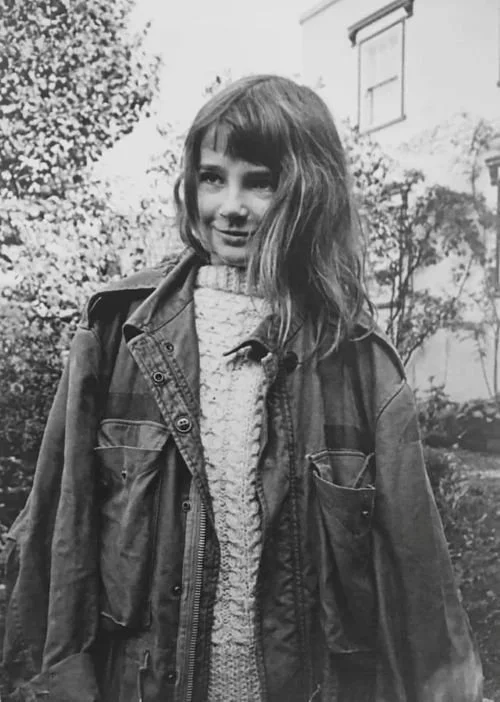
PHOTO CREDIT: John Carder Bush
There is a lot to examine there. Although Kate Bush does not mention Laura in the song, there is every likelihood that she was thinking about this novella when writing Surrender into the Roses. I love these lines: “Tying, dying, flowers around the room/It keeps me safe, but oh! the sickly perfume/Well, it makes me long for the good times/When you were really alive”. It is a very short song, through one of Kate Bush’s most intriguing. A wonderful demo that I feel should have got a bigger life. There is that Horror connection. An early example of Bush exploring the Gothic genre. You could say that Wuthering Heights, her 1978 debut single, was a classic example. The ghost of Catherine Earnshaw trying to grab Heathcliff. Hammer Horror, the first single from her second studio album, Lionheart (1978), has those obvious connections. Throughout her career, Bush explored and expanded on Horror/Gothic ideas. Bringing the dark and macabre into her music. Though I am not sure whether she wrote anything similar to Surrender into the Roses. When she was at school, Bush wrote poetry and her writing did explore less conventional forms of romance. If 1993’s The Song of Solomon is her perhaps at her most charged and sexually confident, there is also that ambiguity and blend. Between her making this demand, but also compromising or conforming. A lot to talk about. Surrender into the Roses is more straightforward in a sense, though it is no less unconventional. Perhaps the song was considered for The Kick Inside, but seen as too odd. Bush’s poetry referenced death. There was darkness to a lot of it. In terms of poetry that was mor sexually liberated and less conservative, her brother John would have exposed her to that. No shock that she would pen a song that is a vampiric lesbian love song!
I am writing this during Pride month (June). Bush writing a song that is about intersexuality. That would have been rare in the 1970s. Was there taboo about her releasing a song like this on her debut album, or was Surrender into the Roses seen as a demo that was not substantial enough to put on an album?! Like many of Kate Bush’s songs, you can connect to films, literature and television. The Song of Solomon made me think about Song of Solomon and The Bible. Exactly where Bush was drawing inspiration from. Surrender into the Roses goes to The Vampire Lovers. I do wonder whether a young Cathy Bush was allowed to watch The Vampire Lovers! A fan of Hammer Horror flicks, perhaps she was exposed to a risqué film at a young age. Her household was quite open, though you wonder whether Bush was simply referencing a film she had heard about or if she actually saw it. In terms of its quality, it doesn’t stand up today. This review shows that there are flaws: “The Vampire Lovers runs 91 minutes, or about an hour and a half. It’s not the greatest thing in the world, but it certainly isn’t the worst. It’s a solid “B” film, with a good story, good pace, and “titties galore.” It is a Hammer Horror film after all. The Vampire Lovers also plays heavily on the “lesbian vampire” angle, much more so than the original work. The lone drawback, the one black spot, is Forbes-Robertson’s character. While Pitt is far from a good thespian, and that takes away a little, this character takes away a lot. The character isn’t in Carmilla, and never gets explained in the film. We know he’s a vampire, and dressed in an aristocratic black suit and matching top hat, but also a “zombie green” makeup all over his face. The character just appears, says nothing, doesn’t really do anything, and we don’t know his fate at the end. The Vampire Lovers stands as a good “read, then watch” companion to Carmilla, and as a standalone film”.
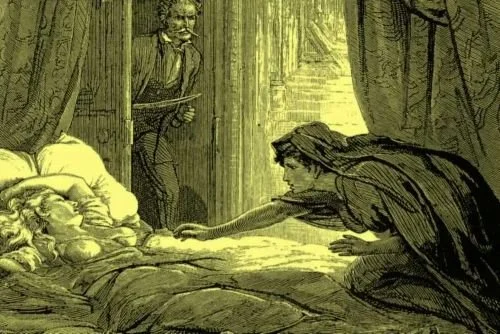
IMAGE CREDIT: Precast reinforced concrete heart
If there were age restriction in terms of what children could see at the cinema, the 1970 film could have been shown on the T.V. Though I feel Bush read the 1872 novella, Carmilla. The fact is the novella was written by an Irish author, Joseph Sheridan Le Fanu, and it was a foundational work of English-language vampire literature. Kate Bush’s mother was Irish, so perhaps a curiosity regarding Irish culture and literature. Though there would have been vampire films shown when Bush was growing up. A lot of them evolved from Carmilla. This amazing article explores Carmilla. I have written previous about The Gay Farewell (Queen Eddie), a song that very much explores queerness and a Queer character. In the 1970s in the U.K., there was this struggle for L.G.B.T.Q.I.A.+ representation and equality. The first Pride march took place in London in 1972. This might have compelled Bush to think about the way she represented love. Less heteronormative. Though it is also the Gothic nature of the novella which would have fascinated her:
“The queer elements of this story are obvious in even a superficial reading, as are the sexually subversive and feminist undertones of Carmilla’s narrative. This is particularly true when the novella is set against the backdrop of the late Victorian era of its publication. While we often think of the Victorian age as deeply repressive of sexual desire outright, let alone homosexual desire, female platonic and even romantic love was in fact commonplace during this period (even if explicit lesbianism was not socially endorsed). You can read my other blog post on Boston Marriages to learn more about such 19th and early 20th century sapphic relationships.
Manifold interpretations of the novella’s text abound. Some focus on the intersection of feminist and lesbian themes. Elizabeth Signorotti opines in this vein that “Laura’s and Carmilla’s lesbian relationship defies the traditional structures of kinship by which men regulate the exchange of women”. She adds that Bram Stoker’s later work Dracula acts as a foil to Carmilla’s “reckless unleashing of female desire.”
Amy Leal emphasizes the “unameable desires” of Carmilla, suggesting that Carmilla’s anagram name games are perhaps a symbol of the closeted queer experience of the Victorian period. She notes, “[i]n every incarnation over the centuries, Carmilla must adopt an anagrammatical variation of her original name, each of which carries its own host of interpretations hinting at the forbidden same-sex desires in the text.”
Likewise, Marília Milhomem Moscoso Maia opines in her analysis that “Carmilla is a mysterious character and the same monstrous, who feeds on blood to the innocence of the young. It is a transgressive figure and a threat to the patriarchy of a society that lives under the aegis of the Victorian Era.” She adds, “Sheridan Le Fanu sustains a perception of lesbianism in the book depicted in something torturant and codified in a double system of opposite binary significations such as pleasure/displeasure; love/hatred; joy/rage and forbidden/desirable.”
Lindsey Vesperry expands on these themes of a female monster as a threat to Victorian heteronormative social hierarchy. She notes, “[t]he vampire Carmilla, who is a vehicle for the natural world, transgresses the boundaries of Victorian femininity by preying upon young women, and the male characters attempt to reestablish the patriarchal system by staking her. The ‘unnatural’ Carmilla certainly stands as a challenge against a male-dominated civilization by her mere existence.” She concludes that the novella itself represents masculine fear of “the monstrous feminine” which so boldly challenges patriarchy”.
What also could have compelled this young genius is how complex a character Carmilla is, as you can see from the article below. Carmilla is an underrepresented and underrated novella. How influential and important it is. I am sure Catherine/Kate Bush would have known about this as a child when she discovered the 1872 novella. Fascinated by so many elements, she wanted to bring this novella and its antagonist, into a song:
“Carmilla” is unusual for Le Fanu primarily in that its antagonist is a beautiful, young woman with no attitude of haughtiness or entitlement (at least that she lets on). Le Fanu’s villains tend to be corrupt and corpulent aristocratic men: judges, earls, squires, lords of the manor, demon lovers, etc. If they are females (and they rarely are), they are proud noblewomen who shine with beauty but reek with corruption, as in “The Child that Went with the Fairies” – a highly influential prologue to “Carmilla,” as it so happens.
While Carmilla often repels Laura, she is not an arrogant potentate – more like a sluggish, slightly depressed loner who is desperate to possess the heart of her friend. She even exhibits the effects of a variety of mental illnesses (most prominently, borderline personality disorder, a neurosis that causes people to demand affection when it is withdrawn but reject it when it is offered).
Best known as the book that influenced Bram Stoker’s Dracula (though it was also heavily influenced by “Ultor de Lacy” and “Aungier Street” – more on that later), and as the one of the earliest uses of the lesbian vampire trope, “Carmilla” is woefully underappreciated as a Gothic powerhouse that stands among the best contributions to the genre of vampire fiction”.
I shall wrap things up here. In thinking of Surrender into the Roses, it makes me wonder whether people know about the Phoenix/Cathy Demos. You can read more about them here. In terms of what she was writing about and how she was developing as a songwriter, this Dreams of Orgonon article provides some guidance and great analysis. Perhaps I am overreaching or have got my perspectives wrong. Though I may also have not dug deeply enough. The Song of Solomon and Surrender into the Roses written years apart and are vastly different, though each traces back to some very compelling sources. Two intriguing songs of desire that are far from ordinary. The Song of Solomon was Kate Bush at arguably her most explicit. Surrender into the Roses was this curious and agile young mind exploring love in a way that was more like poetry than popular music. Each of these songs highlight that there is…
NOBODY like her!