
FEATURE:
Kate Bush: Them Heavy People: The Extraordinary Characters in Her Songs
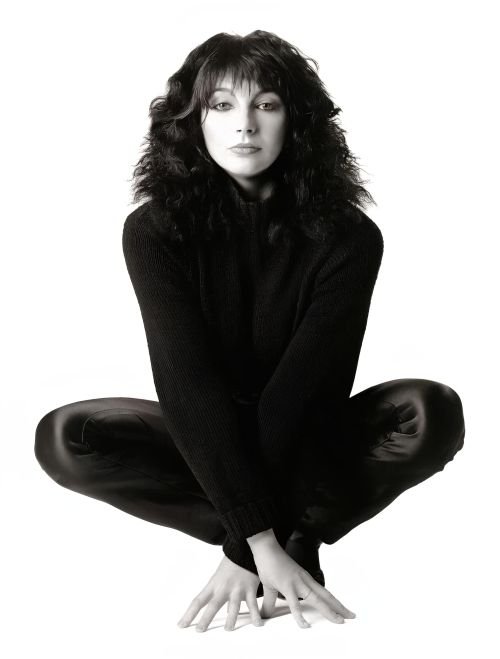
IN THIS PHOTO: Kate Bush in 1980/PHOTO CREDIT: Patrick Lichfield
Bill Duffield… (Blow Away (For Bill)/Sweet and Gentle Sensitive Man (Pi)
__________
THERE are quite a few…
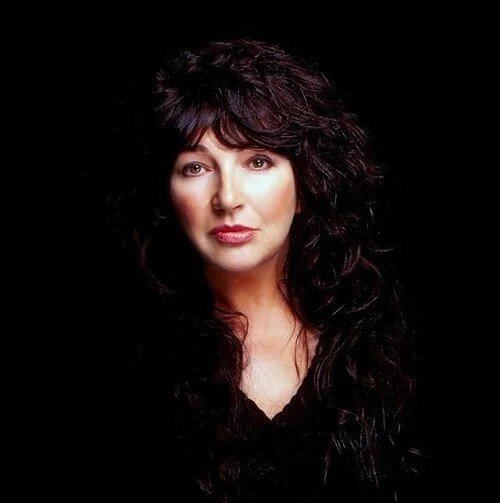
IN THIS PHOTO: Kate Bush in 2005/PHOTO CREDIT: Trevor Leighton
characters to cover off in this feature. So many so that I have had to put an ellipsis in the title of the feature, as Squarespace only allow two-hundred characters (letters)! The first song names a few real-life people. Well, technically, they are all departed, though they were real people. Subjects I want to connect with Blow Away (For Bill) is whether this song is the weakest on Never for Ever (1980). The ‘Bill’ of the song is Bill Duffield. His death was hugely tragic, and I think that it affected Kate Bush a lot. She names Minnie, Moony, Vicious, Bolan, Buddy Holly and Sandy Denny. That is Minnie Riperton, Keith Moon and Sid Vicious. Marc Bolan. This idea that this young man who was in the music industry and worked (briefly) on Kate Bush’s The Tour of Life – not that it was called that until after 1979 – is joining high-profile musicians in Heaven. I have always wondered whether Bush was a fan of the artists that she named. No doubt, she would have heard The Who and Keith Moon’s drumming as a child. That would have spoken to her. People comparing her to Minnie Riperton. You can’t really hear their influence in her own music. She could have mentioned other artists who were closer in tone to her. I feel, if the song had been released on The Dreaming, she would have included John Lennon. He was murdered in December 1980, which was after Blow Away (For Bill) was released. I need to start off with words from Kate Bush about this gem of a track:
“‘Blow Away’ is a comfort for the fear of dying and for those of us who believe that music is perhaps an exception to the ‘Never For Ever’ rule.
Kate Bush Club newsletter, September 1980”.
That is a brief interview snipper, but the mention of the album title is amazing! What does that quote mean? Did Bush mean music is eternal? Even though Bill Duffield and music greats like Buddy Holly have died, we can feel their spirit and their influence. Although Bush did not base the album title on this one song, you can connect the two. I guess it should be Never Forever, so putting that space leaves some mystery. Never for Ever would suggest nothing lasts and love, regret and anything negative will pass. Like a storm. Music is that exception.
I feel Bush was a lot deeper on Blow Away (For Bill) than it was given credit for. People writing it off as this silly song where she name-checks musicians and it is lightweight. I have seen people call the song banal and bad. It is not the weakest song on Never for Ever. Though it cannot compete with the best of her 1980 album – Babooshka, Delius (Song of Summer), The Wedding List, Breathing and Army Dreamers -, there is a lot to recommend. I love Kate Bush’s vocal. It is ethereal and heavenly. She provides this backing chorus. Great fretless bass from Del Palmer and spine-tingling strings from the Martin Ford Orchestra. Sid Vicious is mentioned more than once. Buddy Holly died in 1959, Marc Bolan in 1977, Keith Moon in 1978, Sid Vicious in 1979, Minnie Riperton in 1979, and Sandy Denny in 1978. It is horrible to think how many great artists died between 1978 and 1979. This is a period between Kate Bush releasing her debut album, The Kick Inside, and performing on The Tour of Life. Even after that had ended, she would have heard news of another loss. Those deaths in 1959 were when she was barely a one-year-old, so they would have been tragedies for her parents. Yet, it was a bleak period that extended in 1980. Seeing peers die young would have impacted Bush. These were not older people. Bill Duffield was twenty-one when he died after the warm-up gig of The Tour of Life. Bush thinking of her own mortality. She was twenty-two when Never for Ever was released, so writing about these artists and trying to detach herself would have been helpful. As Bush explained in another interview, there was almost a positive. Rather than being scared of death, these artists are not fearful. They are prepared. We are living to die, so that is our ultimate purpose:
“So I thought this thing about the death-fear. I like to think I’m coming to terms with it, and other people are too. The song was really written after someone very special died.
Although the song had been formulating before and had to be written as a comfort to those people who are afraid of dying, there was also this idea of the music, energies in us that aren’t physical: art, the love in people. It can’t die, because where does it go? It seems really that music could carry on in radio form, radio waves… There are people who swear they can pick up symphonies from Chopin, Schubert. We’re really transient, everything to do with us is transient, except for these non-physical things that we don’t even control…
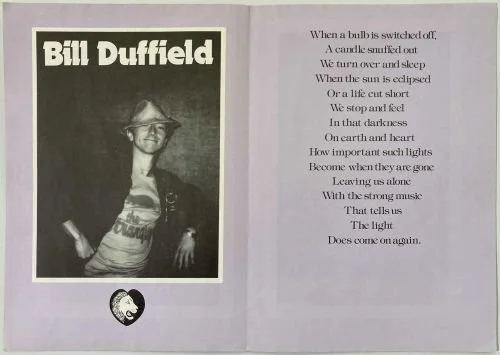
Bill Duffield joins this supergroup in Heaven. These artists who nearly died but survived were “Feeling no fear of leaving their bodies here/And went to a room that was soon full of visitors”. The lines “Don’t bump me/Don’t dump me back there/Please don’t thump me”. Is that Bill Duffield asking them not to send him back to Earth? Bill Duffield was the lighting director for The Tour of Life. These lines seem to relate to him and he is lighting up Heaven: “Put out the light, then, put out the light/Vibes in the sky invite you to dine”. Those lines are actually from William Shakespeare’s Othello, in the scene just before Othello kills Desdemona. Though Bush adapted it or applied them to this much-missed lighting director. The song was not performed during The Tour of Life, as it would have been bleak. She would have amended an older song after Duffield died in April 1979. Likely it would have been completed early in 1980, given the artists named and when they died. However, Bush debuted the song on 18th November, 1979 during a concert at the Royal Albert Hall, celebrating seventy-five years of the London Symphony Orchestra. This was the first and only performance of the song. I think the opening lines are the most revealing and thought-provoking. “One of the band told me last night/That music is all that he’s got in his life/So where does it go?/Surely not with his soul/Will all of his licks and his R’n’B/Blow away?/Blow away/Blow away”. I like how there is conversation and it is almost like Bush was speaking with The Tour of Life’s crew about their departed colleague. Blow Away (For Bill) gets dismissed as a runt of Never for Ever’s litter. However, it does deal with life and death. Philosophical and theological arguments and possibilities. How a body can depart but music remains. Always we mourn and miss artists, that music does not blow away. It remains here with us. Bill Duffield still very much with us.
Bush recorded Blow Away (For Bill) very close to some artists dying. Recorded in September 1979, she maturely dealt with their passing. Her positive and uplifting belief in the afterlife. I often source Dreams of Orgonon for these features. I do want to bring in some thoughts from them as they ask about the afterlife and Kate Bush’s approach and attitude towards it.
“The Martin Ford Orchestra’s strings gives the song space, and Bush’s piano playing often has moments of silence which let the song breathe. The actual rhythm of the song is minimal, lacking the urgency of more rock-inflected music. It’s almost New Age, but in a genuinely spiritual way.
So what does “Blow Away” think of the afterlife? Well, it clearly thinks there is one. The dead have souls in Bush’s music. Her universe is populated by spectres — “The Kick Inside” and “Hammer Horror” demonstrate that. “Blow Away” fills their slot on Never for Ever — the song for those beyond the grave. Yet “Blow Away” is more optimistic about their chances of a happy eternity. Consciousness may thrive after death, but Bush has finally liberated her deceased characters of their mortal woes. Part of this is a matter of taste: everyone knows Keith Moon is in hell, but in 1980 it wouldn’t have been politic to say it in a song. Yes, there’s reverence for these musicians in this song, but the nostalgia is alleviated by the thoughtful weirdness of the song. It’s not the most radical song on the album, but it’s assuring that Bush’s optimism for the power of artistic imagination extends beyond the grave”.
Kate Bush wanted to keep alive Bill Duffield, as the idea of someone her age dying so young and not being around would be too much to take. Though her debut single was about the ghost of Catherine Earnshaw. She often brought spirits and the dead back into the world. Though titans like Minnie Riperton and Buddy Holly are not back on here in spirit form, they are up above the clouds hanging out.
The choice of artists in Blow Away (For Bill) is interesting. Kate Bush only knew Bill Duffield a short period of time, but he is immortalised in a song. He also comes back for Moments of Pleasure, which appeared on her 1993 album, The Red Shoes. That generosity of spirit. On 12th May, 1979, in the final days of her tour, Bush performed a memorial concert for Bill Duffield at the Hammersmith Odeon. On the bill was Peter Gabriel and Steve Harley, who had each worked with Duffield in the past. Even if he was a small part of a large crew, she loved everyone and his death really shook her! The attachment to the artists she includes might not have been as personal. Elvis Presley would have been eligible (as he died in 1977). He is named in her 2005 single, King of the Mountain (from the double album, Aerial). The controversy around Sid Vicious, an alleged killer, would have raised a few eyebrows. Dreams of Orgonon reacted to the inclusion of Buddy Holly. Someone immortalised in Don McLean’s American Pie:
“The use of Buddy Holly as a poster child for rock tragedy harkens back to another Seventies songs featuring his death, Don McLean’s “American Pie.” That paean to the fifties which has caused many boomers to explode phallic blood vessels is more grossly nostalgic than “Blow Away.” Tom Ewing has a great write-up of Madonna’s “American Pie” cover on Popular (which you frankly should read instead of wasting time on this blog), so I won’t discuss it in too much depth here, but suffice it to say that the song is a veritable tome of song references by a songwriter who can’t get over the music of his youth (Ewing hilariously mocks McLean’s unsubstle “Eight Miles High” namedrop). Ewing describes “American Pie” as “a theological dispute between Buddy Holly and Mick Jagger.” Holly is an ideological ploy for McLean’s rockist sectarianism. Little insight is offered into the workings of Fifties music. What McLean gives the listener is a nostalgia package: memory is what he trades on. In McLean’s mind, Altamont didn’t strike the killing blow to the Sixties dream: it was dead when it started. Mick Jagger ever getting on stage was the cardinal sin for “American Pie.” McLean’s use of “The Day the Music Died” isn’t a simple metaphor for the deaths of a few rock ‘n’ roll singers. In McLean’s view, it’s the point an entire tradition is co-opted and desecrated by these Lennon-McCartney whippersnappers”.
A review of Never for Ever from Record Mirror was not that kind to Blow Away (For Bill): “'Blow Away' again meanders, it being the story of how musicians have something to look forward to in death as they can get together with "Minnie, Moony, Vicious, Vicious, Buddy Holly, Sandy Denny." Dubious my dear, dubious”. What we do get is a positivity from a young artist. Seeing peers die so young and remembering a couple of music legends who died too young, she could have been morbid. Bill Duffield’s passing no doubt impacted her whole career. Part of her decision never to tour again came from that loss. Not the only reason, it is a tragedy that no doubt is still in her mind. I will come back to Bill Duffield when I write about Moments of Pleasure. From the well-known and heavy-hitting musicians from this song, we then shift to an unnamed man from a song on Aerial that is also seen as one of the weakest.
I wanted to pair these songs, as they are seen as the weaker ones on the respective albums. Blow Away (For Bill) from Never for Ever. Pi on Aerial. This song is one where Bush recites this mathematical constant. It is quirky and whimsical and features this sweet and gentle and sensitive man. We do not know who he is. Bush having this character who recites pi romantically. This man has a complete infatuation with the calculation of pi. Bush actually sings the number to its 78th decimal place. There was an error which means she did not get it entirely right. A rare occasion of Bush slipping up. Though I like how pi is incomplete and has this mistake. In terms of a jumping off point, let’s look at what Bush said about a track not as revered as others on Aerial:
“I really like the challenge of singing numbers, as opposed to words because numbers are so unemotional as a lyric to sing and it was really fascinating singing that. Trying to sort of, put an emotional element into singing about…a seven…you know and you really care about that nine. I find numbers fascinating, the idea that nearly everything can be broken down into numbers, it is a fascinating thing; and i think also that we are completely surrounded by numbers now, in a way that we weren’t you know even 20, 30 years ago we’re all walking around with mobile phones and numbers on our foreheads almost; and it’s like you know computers…”
Ken Bruce show, BBC Radio 2, 31 October 2005
It is clear that Bush was revering those departed artists. Here, she shows passion for this man who is obsessed by pi. Even if the subject matter and lyrics appear silly or weird, Kate Bush commits. Few other artists would take this approach. There is something very special about pi. Has any other artist ever done this in a song? Bush would challenge listeners for 50 Words for Snow in 2011. Rather than reciting pi, she did give fifty words to snow. It is a myth that the Yupik people have fifty words for snow. Though Bush wanted to take on that myth and think of fifty names.
I think that Bush had a definite person in mind when she wrote Pi. The listener could imagine who it is. What I like is how she can take a potentially boring subject and area and make it magical. When speaking of the afterlife on Blow Away (For Bill), I feel that sense of whimsy and wandering adds something. A conventional and real dynamic. Like she is dreaming or trying to put her thoughts into words. With Pi, it could have been very dry. She could simply have recited numbers, but the listener would have noticed. We get this character that has this obsession. Bush, twenty-five years after Never for Ever, in silly and fun mode. Her music marked by this sense of playfulness: “Oh he love, he love, he love/He does love his numbers/And they run, they run, they run him/In a great big circle/In a circle of infinity”. There are a lot of characters through Aerial. Some of them are personal. I do like how she mixes in the historical (Joan of Arc, Joanni), her mother (A Coral Room), and an imaginary architect (An Architect's Dream). The ordinary and extraordinary sitting alongside one another. Like Never for Ever and Blow Away (For Bill). A regular but special man alongside these great artists. Pi elevates the mathematical constant to rarefied heights. Almost like this event. I like how the man who is obsessed by pi is sweet, gentle and sensitive. You get an essence of who he is. A disposition that is very gentle and positive. Not a lot to distinguish him, expect he has this affection for pi. One of the standout elements of the song is Bush slips up a bit. As Far Out Magazine wrote last year, there is a small mistake: “She messes up on the 54th decimal, which I think can be forgiven given how much of a feat it is to remember that far. But then later, she skips forward a whole 22 decimals, seemingly fast forwarding to a part of the number that simply fit the song better”.
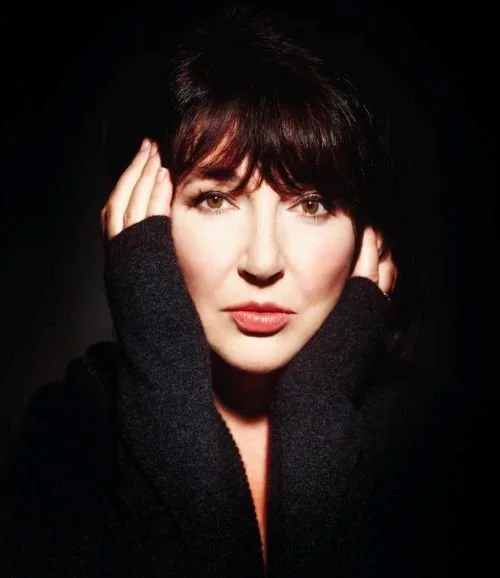
IN THIS PHOTO: Kate Bush in 2005/PHOTO CREDIT: Trevor Leighton
Using this gentle, sweet and sensitive man as a route into the song, it shows that nothing was off limits for Kate Bush. Innovative and original in 2005 as she was in 1978. Even though so many artists came after her, few were as bold and inventive when it came to subject matter. You could select a few here and there, but in terms of sheer breadth and variety, there is a book to be written! In terms of the bookshelf, film library and palette Bush has, they are as multifarious, busy and broad as any other artist in history. Bush writing about love and relationships but doing so in such an interesting way. Going beyond the cliches. I think some of her best moments are when she tackles pi and subjects that nobody else does. You could argue that some of the greats have managed to balance a certain eccentricity and unusualness with a grounded and realistic aspect. They can be human and odd at the same time. I don’t think there is anyone like Kate Bush in that respect. The cast of characters I have covered for this series so far is proof of that. But explore her albums and work and you can see just how wide her world is. This fascination with humans and beyond. From someone humble and sweet in Pi, through to great historical figures, demons, mythical beings and religious icons, there is seemingly nothing off limits for Kate Bush. It makes her music so compelling and refreshing. Bush has occasionally strayed towards something pedestrian. It is rare. People might not be that engaged with a song like Pi, but you cannot argue against its originality. I think it is a brilliant song. I do think about the man in this song and whether Bush considered bringing in a guest to recite the numbers. I don’t think they could have matched her when it comes to making a series of number this magical quest. This wonderful thing that you are arrested by!
I do think there is some of Kate Bush in Pi. In terms of this sweet, gentle, generous and sensitive person who has her own infatuation. Maybe not with numbers, for Kate Bush, there does seem to be this quest. If a series of numbers could go forever without end and people try and pin it down, music is the same. In terms of where you can go and what you can write about. Kate Bush, this musical mathematician. Or an artist always curious. Listen to the tracks on 2011’s 50 Words for Snow, and you can hear this artist still going beyond the realms of the ordinary and earthbound. So much imagination and brilliance in terms of what and who she sings about. Going back to the 2005 interview with Ken Bruce, and these words stick in my mind: “in a way is possibly something that will go on to infinity and yet people are trying to pin it down and put their mark on and make it theirs in a way I guess also I think you know you get a bit a lot of connection with mathematism and music because of patterns and shapes… in a way is possibly something that will go on to infinity and yet people are trying to pin it down and put their mark on and make it theirs in a way I guess also I think you know you get a bit a lot of connection with mathematism and music because of patterns and shapes…”. That idea of music having shapes and patterns. Maths and music not disconnected. There is a relation between them. Though there is so much emotion and soul in her music, it would not be cold to say that she has a mathematical approach. When it comes to song structures and the shape of a song. Pi has more levels than people would assume. That is why I wanted to include it here and look at the sweet and gentle and sensitive man, whomever he might be! From the gallery of sadly-departed musicians who Bill Duffield joins in Blow Away (For Bill), we then lead to a sweet man reciting pi. These are songs that are seen as among the less essential on their respective albums – Never for Ever and Aerial -, but they have this depth and layers that are not appreciated. The divine Kate Bush has…
THAT rarest of gifts.