
FEATURE:
Modern-Day Queens

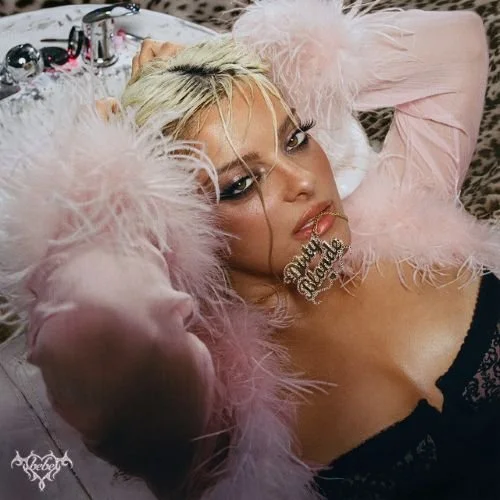
DIRTY BLONDE is one of the best Pop albums of this year, I was keen to shine a light on Bebe Rexha. It is the fourth studio album from the New York City-born artist. Arguably her best work to date. I will come to a review of DIRTY BLONDE, but I am more eager to get to some interviews with the wonderful Bebe Rexha. She is such an amazing artist I have been following for years. There is something about her music and videos that sets her apart from her peers. I will start of Forbes and their interview and spotlight of Bebe Rexha. The sound of becoming DIRTY BLONDE. An album that seems her most direct but extraordinary to date:
“Dirty Blonde arrives less like a rollout and more like a transmission: part diary, part dance-floor confession, part signal of what happens when an artist stops asking permission. It’s glossy in places, bruised in others, and carries the energy of someone who has stopped waiting for the next chorus and started writing it herself.
Bebe Rexha And The Intuition Of Pop
Bebe Rexha isn’t reintroducing herself so much as circling back to the instincts that existed before chart positions, label systems, and industry narratives ever shaped the frame around her.
That instinct, she says, stretches back to her earliest recognition as a songwriter. Even now, there’s a nostalgia in the way she recalls it: “That feels like it was yesterday.” At 15, she won the Best Teen Songwriter Award at the National Academy of Recording Arts & Sciences’ annual Grammy Day event, where she was selected from hundreds of young writers—an early milestone that now feels less like a breakthrough and more like a preview of what was already there.
She returns to what she was beginning to understand at the time: “Something that I learned about songwriting—structure,” she says, noting that melody always came naturally. “I think when I look back now, melody always came very easy for me.”
Bebe Rexha Shares The Moment The Floor Moved
There’s a version of this story that begins with charts and certifications. The more interesting one starts with a phone call that didn’t feel like business at all. What followed was the end of her long-term label partnership with Warner Records after more than a decade.
“It almost felt like a breakup,” she says. “When you first get the news, you feel like you’ve been hit by a train.” The experience wasn’t strategic or abstract—it was physical. “My whole body was aching,” she recalls. “I just couldn’t believe it because it was 12 years of trying to build with my label.”
Looking back, the moment still lands with the same force. “I remember walking into my room, and I literally couldn’t hold myself up,” she says. “I was so devastated. I fell to my knees. My dad helped me get onto the bed.”
The Sound Of Not Stopping For Bebe Rexha
What followed was not a pause, but acceleration. Bebe continued writing across cities and sessions, refusing to let the disruption interrupt her creative output. “I was like, ‘I need to not stop writing… this is what keeps me going.’”
That decision became the foundation of Dirty Blonde. Instead of rebuilding from scratch in a controlled environment, she built the album in motion—writing in Sweden, London, and Los Angeles while navigating uncertainty around structure and support. At a pivotal point, she also turned to her publishing team at BMG, who stepped in to help her continue shaping and finishing the project as it took form in real time.
What emerges isn’t a tightly packaged sonic concept, but something more instinctive. It holds together because it was made in flux, not mapped out in advance.
Bebe Rexha, photographed in sunglasses and blonde hair worn down as she stares directly into the camera with an effortless, composed expression.
Bebe Rexha In Her Own Little Galaxy
For Bebe, independence is not framed as freedom in a romantic sense. It’s described as a shift in how creative energy is organized and supported.
She contrasts it with the major-label system she left behind. In early 2026, it was announced that she had gone fully independent, entering a new partnership with powerhouse label and distributor EMPIRE. “It’s like a galaxy and they’re kind of all revolving around each other… when you’re independent, you're kind of like your own little galaxy… these wins are so much more, amazing.” The distinction is not scale, but control of orbit. Success no longer arrives through centralized validation. It arrives through direct execution”.
A couple of other interviews to get to before a review for DIRTY BLONDE. I am snipping a transcript of an NPR interview earlier this month. They were speaking with the captivating Bebe Rexha and getting some insight into the album and her sound. I have had to edit some chunks out, so I hope what is left makes sense and is not too random! We do get an idea of where Bebe Rexha is now:
“SUMMERS: Earlier this year, you split with Warner Records and partnered with Empire. I wonder what that's meant for your creative process and whether there are things that you can do now with Empire that you couldn't before.
REXHA: Well, being with Empire now, I finally feel like I'm understood, I'm celebrated. And that does something too. Like, as a person, you - I finally feel understood, you know, not misunderstood. And when you have somebody that believes in you like that and such a transparent team, you feel more confident. It's been really fun just, like, all the visuals and stuff.
SUMMERS: Yeah.
REXHA: And, like, it's nice because, like, I'm working on my tour now, and, like, I just feel like I can try different things and have more fun.
SUMMERS: Can we talk about the visuals? - because "Dirty Blonde" is a visual album. What goes into that choice? What kind of aesthetic are you going for?
REXHA: My thing is, like, I felt - started feeling very inspired by, like, classic beauties, like Marilyn, the way Madonna did it. But then, like, mixing it with edge. And I was like, what would Marilyn Monroe be like if she was born in Brooklyn, like me, raised in Staten Island around all the Italian girls, was Albanian.
I always feel like I didn't fit the mold in terms of, like, both my parents are from Albania. My dad's an immigrant. Like, my dad was like - when I was growing up in New York, everybody had these nice backyards, and my dad was growing 'cause he grew up as a - with a farmer dad growing tomatoes in the backyard in New York City. And I'm like, oh, my God, we had, like, you know - it was just - so for me, I think, being able to incorporate that Albanian was really important for me.
SUMMERS: I can't talk to you without asking you about the song "Sad Girls," which you've described as an anthem for anyone who's ever been on a dance floor with a broken heart and refused to let it win.
REXHA: (Singing) And it kills me watching you taking her home. But sad girls don't leave till the last song.
SUMMERS: Very relatable, first of all. Tell us about the song. Was there an experience that sparked it?
REXHA: Yeah. A lot of these songs were about my heartbreak. It's about getting broken up with, you know? Yeah, I was never, like, a party girl. And then I started - like, to be honest with you - partying, like, in my 30s now 'cause I wanted that experience. I want to go where the people go. I want to feel the energy. I want to get sweaty. I want to get sticky. I want to hear...
SUMMERS: Yeah.
REXHA: ...What you're listening to. I want to be in the culture. And what - I think what I liked about it was I felt like I could express myself. And then I felt like I could spend 4 hours just, like, shutting my brain off, listening to music, dancing with strangers. Like, I...
SUMMERS: It's the best, it's the best.
REXHA: Like, I remember meeting a couple 'cause I like - there was a guy, and I was like, oh my God, you're so cute, and he was like, sorry, babes, I'm gay. And I was like, oh, this makes sense. Let's dance. So, like, I would make all these friends on the dance floor that I never have seen before and then never spoke to again after we were - we had the best night of our lives, you know?
And I think for "Sad Girls," it was kind of like, I was still going through my breakup internally. And going out in these places and just being in the mix, I feel like I was in the culture, and it was a - it's a very different environment. I guess "Sad Girls" is like, you don't want the night to end. You're feeling good. The music shuts your brain off. And you don't want to go back to reality, as sad as that sounds, but I think it's also very human.
SUMMERS: We've been speaking with Bebe Rexha. Her new album is "Dirty Blonde." Thank you so much.
REXHA: Thank you”.
EUPHORIA. caught Bebe Rexha when she was in Paris during a hectic period of promotion. However, she was not complaining. It is an album that a lot of people want to know about. DIRTY BLONDE among the best Pop albums of 2026 and a perfect one for the summer. Many of its more high-energy tracks beckon people to come to the dancefloor. Bringing them together:
“The biggest hit from the campaign so far has been “New Religion.” Has that come as a surprise to you?
No [laughs]. When I write a song, I don’t always know if it’s going to be a hit, but I do know when something feels special. I can tell when a song has something about it that’s really special. I write a lot of songs — tons and tons of songs. Not all of them are going to be your favourite. Honestly, I don’t even love everything I write. My PR team are laughing at me right now, but it’s true. You know what I mean? Whatever your job is, you’re not going to think everything you do is perfect. I’m sure you’ve written a piece before and thought, “Ah, that could’ve been better.” It’s the same thing. But when something feels special, you know it. I can usually tell when something feels really special. I just get excited about it. I want to call everyone in my phone and play it to them over FaceTime.
All your albums take listeners on a rollercoaster of emotions, and this one is no different. Which was the most challenging song to write this time around?
I would say “The Way I Want You” was the hardest song for me. Writing it was difficult because it was based on a real story. I’d gone through a breakup, and that was tough. It was also challenging from a musical perspective. When I first started the project, it was very upbeat. It was originally a dance album because I didn’t really want to feel anything. I’d come out of a difficult period — parting ways with a major label and going through a messy breakup — so I didn’t want to write about anything too deep because it all felt like too much. Then, when I was probably more than 70% of the way through making the album, I thought, “Ah, fuck. I feel like I can write about some real stuff now.” I felt ready to be more vulnerable. That’s when we wrote “The Way I Want You,” which I really loved. But the song itself was difficult to figure out. It started off slow, then sped up, then became more dance-driven. It took forever to get the structure right because I wanted to incorporate acoustic guitars, a rhythmic drum pattern, and those big guitar moments before moving into a dance section that felt really energetic and emotional. Trying to make all those elements work together was really, really hard. But we figured it out in the end.
Does owning yourself on songs come naturally to you or is it a lot easier to be vulnerable?
Ooh, I don’t know. I think it depends on where your mental state is at. I wasn’t really feeling like writing songs like that for a long time, and then I started to feel my oats, so I just started writing. It depends. Sometimes vulnerable songs are actually easier for me because I can feel it building up inside of me — it’ll just keep bothering me, bothering me, bothering me. Then I’ll start writing things in my phone, and when I get to the studio, it just kind of pours out of me.
What song on this album are you most proud of?
I love “The Way I Want You.” It’s my favorite song. I’m obsessed with it.
In January, you announced you had parted ways with your label. How is your relationship with them today?
I mean, I’m friends with a lot of people. A lot of my friends are still on my label — they text me, we hang out. I have a pretty good relationship with a lot of my best friends.
Can fans expect a tour announcement soon?
Yeah, I’m working on that right now, so fingers crossed. But it takes a lot of work — all the logistics. I’m trying to focus on the creative side, while we figure out the logistical part. For me, the most fun part is things like: what does the show start with? What am I bringing in from the past? How am I tweaking older songs? Can I make medleys? Am I going to remake the whole production? What do I end the show with? How am I doing the new songs? It’s really fun because you get to reimagine a lot of the older songs.
Some say you have finally left the Khia Asylum. How do you feel about that?
I’m not sure whether I’m out, in, above it, underneath, in the basement. I don’t know where I am. All I know is I’m just trying to put out good music. I think it’s actually fun for people to have something to entertain them with — it’s the entertainment business. But I’m in a really lucky position. I’m in Paris right now. Look where I am. And I’m going to party with the fans tonight — we’re all going to take over the streets. I’m feeling really good, Fabio. It’s a good energy, good vibes”.
I am ending with a review of DIRTY BLONDE from Shatter the Standards. They delivered a four-star review of an album from a great artist who is enjoying this imperial phase. A real gold standard. You wonder how Bebe Rexha will follow DIRTY BLONDE. It is such a great album that instantly grabs you. I think that we need to give more respect and love to Rexha, as she is one of her generation’s most important artists:
“Everything here is post-midnight. Somewhere in a club, someone’s telling the bouncer not to turn on the lights. The dark’s got work to do. As long as the morning can’t get in, the night has to wait; whatever’s on the other side gets pushed one more song back. Mostly, the tracks are what they say they are. Glossy, high-end pop pitched at a floor full of bodies. Bebe Rexha has had ten years to build hooks like these—earworms that should lodge in place and never leave. Rexha stuffs her tracks with material they were never made to contain. A prayer finds itself amid the bounce. A fear of not making it home snakes its way beneath a chorus. The hook stays intact, the confession travels on the inside of the record.
“Lord, forgive me,” Rexha asks on the open of “Hysteria,” “If I don’t make it home tonight.” Two lines later, the track’s all crowd-work—“Turn it up, make it bounce/Hysteria in the crowd/Got the world in a trance”—and the prayer is never answered or acknowledged. It lingers at the doorway as the drums shove it into “bang your head, don’t kill the vibe.” The same trick holds, with a higher lift, through “Çike Çike.” Its chanted, Albanian hook (“Çike, çike, luje belin, çike”) goes round the waiting-for-an-Uber, a phone number pressed into a hand with a 347 area code, and a bouncer brushed away; almost tossed into the side, in the bridge, is the real admission—“I just came here to clear my mind.” “Tokyo” has a one-night stand with someone who was told that she was a fan. Rexha ditched the boyfriend she came with in a single aside, “Left my boyfriend in Nantucket,” and talked herself into the assignation, “I’m out in Tokyo, so my attitude is ‘Fuck it.’”
On “$.H.I.T.” and “Nobody’s There,” she’s picked a bit and followed it to the very end. The “S.H.I.T.” bit is a pun that she will not let go of: “I’m the sugar-honey iced tea,” spelled out for anyone who hasn’t followed yet, “I’m the S-H-I-T.” If that’s the line, the verse has to fill it in with a week’s worth of personality, Monday having fun, Tuesday blowing someone off, Wednesday being loved, Thursday being single, Friday a freak, Saturday a creep, and then, “Sunday, I’m asleep like a sweet little angel.” “Nobody’s There” turns that swagger into the third person; into a “she” who’s got “fire in her eyes” and “can make the room go loud,” and wants to “dance like nobody’s watching, like nobody’s there.” That “she” is Rexha from an arm’s length away; that restless urgency is handed over to someone who she can watch over the room.
When she reaches for something bigger than a bit, the writing thins like “New Religion,” Built on interpolating Faithless’ 1995 single “Insomnia,” she wants the floor to feel like salvation and states it explicitly: “I feel the beat, I feel the beat/It’s like a new religion.” The bridge reaches for a real before and after: “I used to believe there was nothing for me/That nowhere was where I belonged,” and then the song just keeps widening that one hook. ‘Drink and a Little Love’ has a better, smaller idea, exhaustion as its own ache. “Stressin’ all day,” she sings, “I’ve been cryin’ my heart out,” and all she wants is “a drink and a little love.” ‘Life has been lifin’, she admits, and the song settles for pleasant when the words under it are tired enough to be sad.
Light acts like a switch; she keeps flipping it the wrong way. ‘Lights off, what just happened?” is how the chaos begins on ‘Hysteria.” “Don’t turn the lights on,” she pleads on “Nobody’s There,” “don’t let the morning come,” and the logic is clear. A dark room means the night can’t end, and the reckoning can’t begin. “Sad Girls,” the David Guetta collaboration, makes that bargain its whole theme. She watches someone leave with another and dances anyway, “tears dipped in glitter and Molly,” stating “I’m alright for the hundredth time,” and then, flatly, “That’s a lie.” Then she’s begging to keep the room dark: ‘I’m not ready for the lights back on.”
Two songs let the dance lift go almost entirely and are the better for it. “i like you better than me” runs on comparison and self-hatred, a hook that fixates on wanting to “fit in those size-two jeans” and a verse that fully embraces the ugly machinery: “I get off on being insecure,” “there’s something wrong with me for sure.” When a friend’s positivity makes it worse, she names that, too, “your toxic positivity... You know you’re only making it worse.” “Night Falls” takes a slower, darker turn, loneliness setting in “when the night falls,” thoughts of an ex that “makes my skin crawl,” her mind reported from the inside as “way too dark,” waiting for “a glimpse of light,” while the chorus repeats its message that ‘never gets better.” Bluntly, in her own words, the dread carries more weight than any chant about bouncing.
The best of these shifts that blame outward and become really ugly. Rexha speeds past the house of an old flame in “Time” and flat-lines her position (“I wasted all my best years on you,” “I’m fucking bitter, but I’m not a victim,”“I had to lose and let you win, to love myself again”), and you know, that’s the line, that’s the end of the story. The chorus circles round one plain statement of truth—“So many good times/But I never had a good time,” and that tells me more than all of “New Religion” does of a successful one. Similarly, “One Day” is a curse, with Rexha promising her ex he’ll be “haunted by the ghost of me.” The really great parts are quieter than all of that and, at least, less earnest. Halfway through “The Way I Want You,” having just admitted to still calling him up at 4AM, and admitting that “the pills don’t work the same anymore,” Rexha hits the joke—“I talk to my therapist like a billion times/And that bitch is overpaid.” It follows with the real reason we’re all still depressed (“my anxiety won’t go away”) and a perfect sentence for any bad relationship (“sick and tired of being sick and tired of loving you”). All that uncomplicated meanness is the greatest thing to come out of Bebe Rexha’s DIRTY BLONDE”.
I am going to leave things here. I wanted to include Bebe Rexha in this Modern-Day Queens, as she is an astonishing talent. In a music industry where women are ruling and Pop is still on top, Bebe Rexha is right up there with the very best. DIRTY BLONDE is a magnificent album that everyone should check out. Even if she is at a peak right now, you feel this New York queen…
WILL get better and better.
_____________
Follow Bebe Rexha

PHOTO CREDIT: Nate Guenther
Official:
Twitter:
Instagram:
https://www.instagram.com/beberexha/
Facebook:
https://www.facebook.com/beberexha/
TikTok:
https://www.tiktok.com/@beberexha
Spotify:
https://open.spotify.com/artist/64M6ah0SkkRsnPGtGiRAbb?si=2oNgNxLrRiWDD6kTuMIlfA
YouTube: