
FEATURE:
Leave It Closed
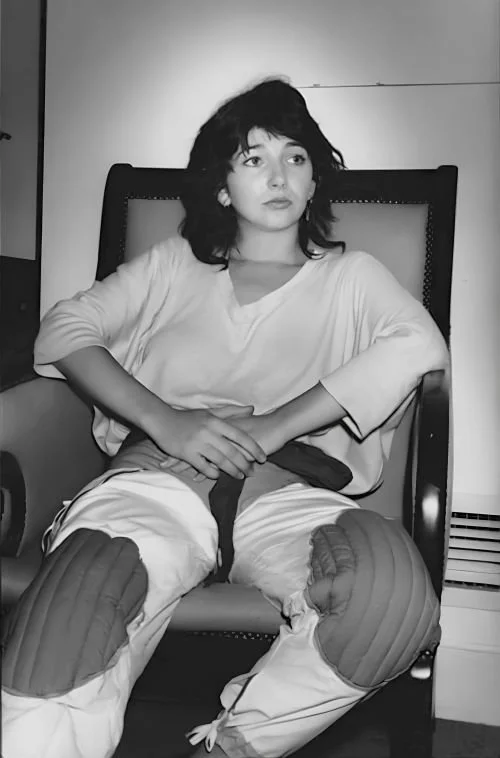
IN THIS PHOTO: Kate Bush in 1982/PHOTO CREDIT: Pierre Terrasson
The Risk of Kate Bush Not Being a Singles Artist, and Why It Makes Her So Awe-Inspiring
__________
THERE was a moment…
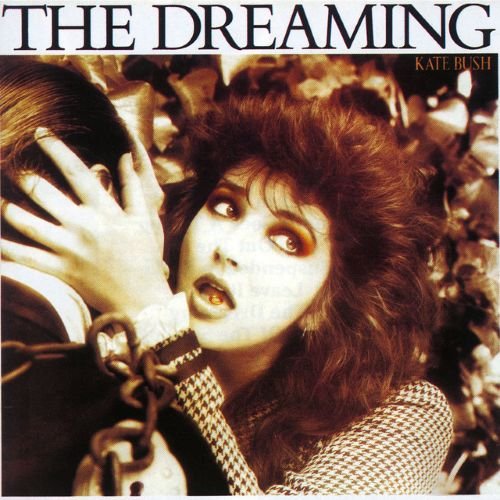
in Kate Bush’s career where she was much more immersed in the making of an album without thinking about singles. You could say she was not a singles artist. You can look at artists today who make albums, though there are songs that they clearly have in mind for singles. These great albums have clear examples of what is good as a single. It is not a bad thing, though you wish that more artists were thinking about albums as a whole, rather than deliberately writing singles and then putting them with album tracks. Perhaps that is not how it is but, as I am writing this at a time when so many incredible Pop artists are coming through and they are capturing attention because of these incredible singles, do they consciously have chart and streaming numbers in mind?! You’d wonder whether Kate Bush as a young artist would fit in today’s culture. Having one eye on Spotify and the other on radio playlists. Her debut single, Wuthering Heights, was one she fought to have released. It was her first single, so she did want to have a say what people heard. There were other times where Bush was eager for a certain single to be released, though I don’t think The Kick Inside is an album where she was thinking about singles, even though certain songs have that quality. She wanted to make a body of work. An album. That was always her goal. You could see that there were songs more commercial than others on her first few albums. Bush was not averse to include songs that were single-worthy or commercial, though The Dreaming was the first album she produced solo. Released in 1982, it is her most ‘single-less’ album. In terms of it being this complete body of work where singles were not explicitly written. Or there were few obvious choices, though Night of the Swallow should have got a wider release. It was an Ireland-only release in 1983. It is clear Bush was pushing against the idea of being a ‘Pop’ artist who had to write singles.
Richard Cook spoke to Kate Bush for New Musical Express in 1982. It was interesting what Bush said about writing songs for an album. Not really a singles artist. It must have been frustrating for EMI. Though they signed an artist who was determined and knew what she wanted from the start. This demand for radio-friendly songs and easy singles was not going to happen. Did this decision to sort of avoid singles cause The Dreaming a bit of harm? Did Bush sort of reverse the decision a bit for 1985’s Hounds of Love? The interview does offer some insights from an artist who was distinctly not a commercial and traditional Pop artist in 1982:
“Kate Bush is a small woman with a huge, protective smile. She has an even and unhurried style of conversation, but it is hard to get her to speak what might really be on her mind.
We bubbled along for twenty minutes until I took up the subject of her earliest incarnation, ruthlessly enshrined in the erotic trivia of The Kick Inside --no offense intended, ma'am--and a familiar block shutters her expression. She retreats into the rockspeak of albums and songs and images and progression without regret.
"I think I've always seen myself as someone who writes songs that go on an album. If there are any singles among them, then they can be chosen for that. But apart from Wuthering Heights, I was always an album-orientated artist. Even if my singles are more remembered."
You have no regard for those instantaneous qualities of the single? A rocket going up brilliantly for a moment?
"Each album is like a rocket. I build it up as much as I can, and see how high it goes. I'm never aware of any commercial value. I never sit down to write a single. Whenever I write, I'm challenging myself in some area. Everyone who creates something considers themself an artist in some way, don't they?"
I wonder whether you really want to do music--whether you'd rather do poetry or theatre or dance or...
"I'm doing that as well, really, aren't I? Maybe it's wrong to see me as a pop personality. You're going to keep changing-- Wuthering Heights was a story with music and dancing, but I've changed so much since then. The things that the media most remember about me are those things. Some people see that I am changing, but...oh, not as many as the people who hang onto those singles. But I am beginning to be seen as an albums artist."
What's an albums artist?
"It's not being a pop personality or whatever it was you called me. I'm not interested in making singles. Maybe I will make some 'singles' one day..."
The Dreaming is an ornate, billowing record. Its songs are peculiarly ambitious: their grand design all but drives out the spirit of lowly pop music.
The ghosts of famous men pace their dark corridors; great tunnels of sound emulate mighty and multi-levelled conceptions. Songs are sung in a multitude of voices, like a chittering, half-heard spirit-world. Bush's operatic entreaties are finally matched to music of a similar size and shape. At any one moment.
It's already a huge success. Despite the failure of the title song in single form--there are surely no singles on the record--Bush has found that her admirers have not gone away. I suggest to her some of the things it seems to be about, like the struggle between public and private faces, and the ability to disappear inside a recording; she is scarcely drawn. Not suspicious--simply not interested in the ambiguity and anatomy of music so intensely organised. <The meaning of this statement is unclear to IED.> Kate Bush is a dedicated artist.
Is she there?
"Primitive? I'm not sure about that word...Perhaps. There are traditional roots in it. Basic forms of music."
I think it's extremely sophisticated.
"Do you? Sophisticated? Well, I'd rather you say that than turdlike.
"I could explain some of it, if you want me to: Suspended in Gaffa is reasonably autobiographical, which most of my songs aren't. <Doug Alan is loving this. IED can just see him chortling with glee.> It's about seeing something that you want--on any level--and not being able to get that thing unless you work hard and in the right way towards it. When I do that I become aware of so many obstacles, and then I want the thing without the work. And then when you achieve it you enter...a different level--everything will slightly change. It's like going into a time warp which otherwise wouldn't have existed.
"Oh, yes, quite a few people have surmised that from listening to the song. But when you explain it like this it doesn't sound like anything. The idea is much more valuable within the song than it is in my telling you about it. When you analyse it, it seems silly.
" Leave It Open is the idea of human beings being like cups--like receptive vessels. We open and shut ourselves at different times. It's very easy to let your ego go " nag nag nag " when you should shut it. Or when you're very narrow-minded and you should be open. Finally you should be able to control your levels of receptivity to a productive end.
" The Dreaming is very different from my first two records. Each time I do an LP it feels like the last one was years and years before. The essence of what I'm playing has been there from the start; it's just that the expression has been changing. What I'm doing now is what I was trying to do four years ago. If I do a show, it will only be music from the last two albums.
"I wish I had a five-year plan, but I never plan too far ahead. I get into trouble because I always take longer to do things than I expect. That's why I knew I had to wait for another two albums' worth of material before doing another show”.
It is clear that there was a lot of thought given to each song. More like little stories that formed a part of a bigger whole. The tone of The Dreaming is quite dense and dark in places, though it is a lot more varied than people think. Bush was keener in terms of the sound and production. Not wanting to put in a big and catchy chorus for the sake of it, there was this sense of her being a serious artist and wanting a bit more respect. Perhaps trying to push away against her earlier sound and preconceived notions around her, there was this lack of singles from The Dreaming. Nothing that was easily digestible to an audience that might not be aware of her. I guess it was important for EMI to get radio play and have this artist record some successful singles. What was released from The Dreaming was a bit of a chart failure. Apart from the lead single, Sat in Your Lap, there was not too much to salvage when it came to the charts. Bush was looking at the bigger picture and the album itself. The Dreaming was successful and has in year since been seen as one of her best albums. I guess there was a bit of damage that needed to be corrected for the next album. EMI not keen for Bush to produce. That came back to bite them, as Hounds of Love was an enormous success and got some incredible reviews. But there was some worries what would happen after The Dreaming. Radio stations were featuring other artists. I guess some Kate Bush music was being played, but there was less exposure for The Dreaming compared even to Never for Ever. The two albums either side of The Dreaming has a few successful singles that balanced with songs that were deeper and less obvious singles. I think Bush managed to produce Hounds of Love in a way that meant it was this complex and extraordinary work but also had these songs that were played on the radio and sold well.
Kate Bush in that interview not aware of her commercial value. Was that a bit of self-sabotage? I suppose artists now really need to know about commercial value. Now, it is less about charts and radio and more about social media impact and streaming. In 1982, Bush was in a busy market and EMI would have loved for at least a couple of singles to hit the top ten. Instead, Bush was all about the sound of The Dreaming and what felt true to her. She had her fanbase remaining solid, yet I wonder whether she recruited many/any new fans with The Dreaming as it sounded, rather than something that had a couple of big singles. Hounds of Love was not a compromise. Bush was able to have a conceptual suite on the second side of Hounds of Love, so that satisfied a side to her. Having a first side that was similar to The Dreaming would have been a step back. Bush was always evolving and different. I guess there was also some press scepticism and writing off. Having followed this artist for years and seeing her as weird or eccentric, The Dreaming must have been a treat! The Dreaming was almost returned to Kate Bush. That fear of releasing it. They would have wanted a repeat of Never for Ever. A number one album with some great singles and tracks that were pretty accessible. A couple of more challenging songs, in the sense they were more epic or edgier. The Dreaming was a huge departure. Hounds of Love was a little bit of reigning in in terms of eccentricity or this album that had no obvious singles. But Bush was still led by her own instincts and would not let anyone else touch production. She was right in the end. The Dreaming now is seen as a masterpiece and one of her best albums, though you don’t hear many of the songs on the radio. Sat in Your Lap. Why do they not play more songs from it? The biggest radio stations still far too commercial and risk-averse! The Dreaming is notable as being this complete album.
A singular work, whereas I think we associate other albums with its singles. “The Dreaming’s disparate narratives frequently seem to be tropes for Bush’s quest for artistic autonomy and the anxieties that accompany it” is what The Quietus say in their fortieth anniversary feature from 2018. “The proviso Bush had for The Dreaming was that everything was to "be cinematic and experimental". Movies inform The Dreaming as much as any musical influences”. The Quietus note how The Dreaming was the last album Bush made in London. The shadow of Thatcherism and the murder of John Lennon (1980) casting a dark shadow. Th legacy of The Dreaming is clear: “For such an extreme album, its influence has been far-reaching. ABC, then in their Lexicon Of Love prime, named it as one of their favourites, as did Bjork whose similar use of electronics to convey the pantheistic seems directly descended from The Dreaming. Even The Cure’s Disintegration duplicates the track arrangement on the sleeve and the request that ‘this album was mixed to be played loud’. ‘Leave It Open’‘s vari-speed vocals even prefigure the art-damaged munchkins of The Knife vocal arsenal. Field Music/The Week That Was arrayed themselves with sonics that seem heavily indebted to Bush’s work here. Graphic novelist Neil Gaiman even had a character sing lyrics from the title track in his The Sandman series. John Balance of post-industrialists Coil confessed that the album’s songs were all ideas that he later tried to write. But Bush got there first. And The Dreaming remains a testament to the exhilarating joy of "letting the weirdness in". Even if it was not a huge-selling album like The Kick Inside (her 1978 debut) and a number one like Never for Ever, it was a natural shift more into the studio. Not wanting to promote endlessly. Like The Beatles in 1966 and 1967. With a few flop singles, it could have been disaster. Bush followed The Dreaming with Hounds of Love: a masterpiece that is seen as one of the greatest albums ever. I feel we need to acknowledge Kate Bush’s boldness and bravery on The Dreaming. She could have written some easy singles and gone down that path. Instead, she made an album true to her – even if she, in her own words, was going a bit mad – that has so many fans today. Its influence is major. Her production on The Dreaming is extraordinary. Bush’s fourth studio album was…
A huge awakening.