
FEATURE:
Never Going Back Again
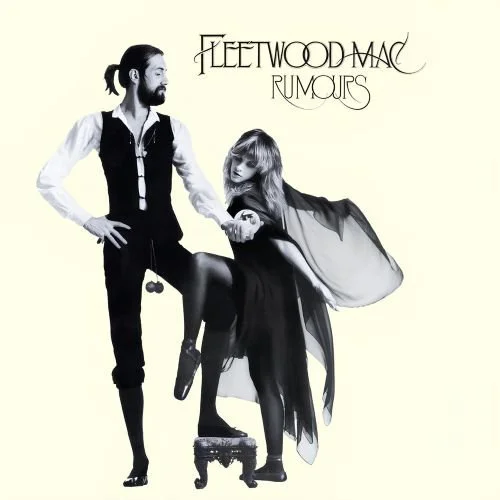
Fifty Years Since the Recording of Fleetwood Mac’s Rumours
__________
THE album release date…
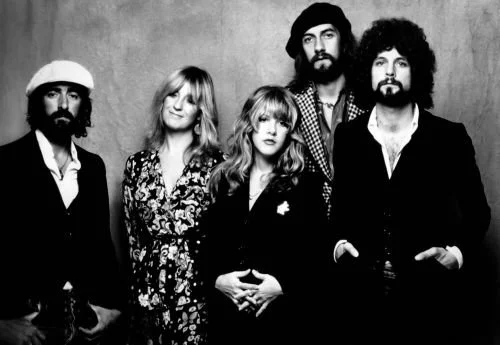
IN THIS PHOTO: Fleetwood Mac (John McVie, Christine McVie, Stevie Nicks, Mick Fleetwood and Lindsey Buckingham) in 1977/PHOTO CREDIT: ZUMA Wire/Imago Images
is 4th February, 1977, so the fiftieth anniversary of Fleetwood Mac’s Rumours happens quite soon. It makes me wonder how it will be marked. How the band’s surviving members – Stevie Nicks, Lindsey Buckingham, John McVie and Mick Fleetwood – are going to remember it. Rumours was a turbulent time for the band. Because the band completed recording of their eleventh studio album in August 1976, I am marking fifty years of the completion of the recording. I will celebrate fifty years of Rumours closer to February. I have a chance now to examine an album considered to be one of the best ever. In terms of its popularity, it is still one of the biggest-selling albums on vinyl. MOJO published a feature in February and spoke with Stevie Nicks, Lindsey Buckingham and Mick Fleetwood about Rumours. Sharing their memories of an album that was defined by heartache, madness and excess. What came from it was a masterpiece. But at what cost? The story behind Rumours is fascinating and heart-aching:
“Somewhat naively, Fleetwood had rented a house for the band to live in just behind the studio. Nicks: “Chris and I managed one night there, and then said, No way. We left the boys to it and rented a place of our own.”
Nicks had her own reasons for moving: she had just told Buckingham that it was all over between them. “Lindsey and I were fast, rich, beautiful and successful,” she says. “And,” quips Buckingham, “there is nothing like success to undermine… things.”
“Stevie and I had been having problems,” he continues. “But when Chris left John you had this situation where the two women reinforced each other’s notions… It was a catalyst to speed up what would have happened to Stevie and I anyway, but might have taken longer under normal circumstances.”
The studio atmosphere was understandably charged. “I thought I was going to be making a regular album,” says Ken Caillat. “Then I heard this yelling and saw Chris throw a glass of champagne in John’s face. Then Stevie and Lindsey started having an argument over the microphone. Then Mick walked in with tears in his eyes as he’d just got off the phone to his wife. I started to think it was contagious.”
Stoking the tensions, Fleetwood insisted the band work 12-hour days. “If we finished at midnight, I tried to make sure we didn’t start the next day until noon,” says Caillat. “But Mick was obsessed. We worked 35 days straight without a day off.”
Stories from the making of Rumours have since entered rock’n’roll folklore. But Caillat insists that, despite one report, Fleetwood never removed the studio clocks to prevent the band from knowing how long they’d been working. “It was so dark in there, you never knew whether it was day or night anyway.”
Reports, too, that they spent four days tuning a piano have been exaggerated slightly. “Yes, it did drag on for four days,” Buckingham says, “but we weren’t tuning for 12 hours a day. We were trying different tuners. Though it’s quite conceivable that in those days when everyone was a little… er, wacked out, it took longer than it should have done.”
Coming off the back of a platinum album, the band indulged themselves. An electric harpsichord was shipped in for Stevie’s spooked-sounding ballad Gold Dust Woman. To achieve a certain rhythmic effect on Lindsey’s percussive Second Hand News, Buckingham ‘played’ the faux-leather seat of a studio chair. Fleetwood, meanwhile, recalls hours wasted looking for some elusive sound effect by lashing two bass drums together. “I used to sit there and read, crochet or draw while all this was going on,” says Nicks. “And I would make my little suggestions, like a wingman.”
However, getting “wacked out” was also becoming an occupational hazard. One night was lost after the band consumed a tray of cookies, not knowing they were laced with marijuana. Nicks: “We sat there for hours just staring at each other.”
There was also a communal bag of cocaine on the mixing desk.
“Rumours was the beginning of their cocaine use,” states Caillat. “At that time, they were amateurs. This bag sat there for anyone to help themselves. But of course that meant there were times when we worked till 4am and then had to take the next day off.”
Along with the workload, the cocaine helped blot out the trauma in their private lives. “You felt so bad about what was happening that you did a line to cheer yourself up,” sighs Nicks. “We honestly thought that it couldn’t harm us. That it wasn’t addictive. How wrong we were.” Later, Fleetwood informed journalists that Rumours would have carried a credit for his coke dealer – had the dealer not been murdered before the record came out.
“When it comes to these war stories about our substance abuse, I am the prime candidate,” Fleetwood concedes. “I was very open about my cocaine use. These days I try to de-romanticise all that. But it’s true. It happened. I always imagine us making Rumours was a bit like Paris in the 1920s.”
Fleetwood’s enthusiasms were infectious. “My attitude was ‘when in Rome…’” says Buckingham. “But I was never the guy buying the stuff. On Rumours, I don’t think I went for more than 36 hours straight without sleep. Though I can’t speak for the rest of the band and certainly not Mick.”
Their noses may have been numb, but their songs – heartbroken, tumultuous, addressing specifics about their writers’ lives – were anything but. “Dreams and Go Your Own Way are what I call the ‘twin songs’,” says Nicks. “They’re the same song written by two different people about the same relationship.”
Nicks remembers Dreams unfolding in Sly Stone’s velvet-draped pit. With just a cassette player and Fender Rhodes piano for company, she conjured a gentle elegy for her and Buckingham’s relationship. By contrast, Buckingham’s Go Your Own Way was an angry kiss-off.
“Lindsey took a more punk rock approach,” shrugs Nicks. “But that was his way of getting through it. I still don’t like the line in Go Your Own Way – ‘shacking up is all you wanna do’ – but unfortunately that’s how he felt about me. And I have to live with that.”
“I guess Stevie would rather have seen that song politicised,” Buckingham ripostes. “But what are you going to do? There is so much truth going on in all of those songs that there is no way you change them.”
“They were writing those songs about and to each other,” observes Mick Fleetwood, “and then singing them on the same mike. I don’t know how they did it. Warners were terrified. I had executives phoning up and asking, ‘Do we still have a band, Mick?’ And I said, Yes, because we will not stop what we are doing for anything – even if we have to crucify ourselves.”
Towards the end of the group’s time at the Record Plant, Fleetwood started to believe “that we were all going insane”. The claustrophobic environment was too much: ex-couples were screaming at each other or not speaking at all; the days were blurring into nights; one studio engineer had taken to sleeping under the mixing desk as “it was the safest place to be”. Drugs and alcohol were rife.
A single incident convinced the drummer it was time to move on. “One night I turned up and I saw John McVie, on his own, trying to master a bass part. This very well-grounded Scotsman was on his hands and knees praying, with a picture of his guru and a bottle of brandy in front of him.” Fleetwood pauses, as if he still can’t believe what he saw. “And John was so not that sort of guy. I knew then that we had to get out of there.”
The band emerged from the Record Plant, blinking into the daylight, and headed off on another tour. In between shows, they returned to Los Angeles to finish the album. Fleetwood fielded more calls from concerned executives who now realised the band wouldn’t make the planned September release date. Rumours still wasn’t finished. They had 3,000 hours of recordings, and the master tape was now dangerously thin. During one meticulous 16-hour session, the overdubs were transferred from the deteriorating master to another first-generation tape containing the basic tracks. Caillat: “If we hadn’t done that we’d have lost everything.”
“I think we’d rented every studio in LA,” recalls Nicks. “And just spent months overdubbing and spending more money. We became self-indulgent, spoiled and excessive, but we didn’t care. That was when the cocaine really came into the picture and in a very big way.”
Warners announced in the final weeks of 1976 that Fleetwood Mac’s new album was imminent. Its working title, Yesterday’s Gone (from a lyric in Don’t Stop) had been changed, at John McVie’s suggestion, to Rumours. Only one song, The Chain, was credited to all five members. The lyric – “I can still hear you saying you would never break the chain” – described what Fleetwood calls “the realisation that the music we were making together was more powerful than any of us.”
The song had started life at the Record Plant, then in LA the group re-wrote the verses, and added a new intro, a re-working of the opening to Lola (My Love), a song from Buckingham Nicks.
Released in January ’77, Rumours would have the largest advance orders of any album in Warner Bros’ history. By March it had topped the charts in the US, Canada, Australia and the UK: a sweet victory for the three exiled Brits who’d seen Fleetwood Mac written off for dead at home. Four singles from the album would also become US Top 10 hits. At the last official count, Rumours has around 40 million copies worldwide.
Rumours casts a long shadow, one that a further five US Top 20 Fleetwood Mac albums have not shaken off. You sense this is a source of frustration to Buckingham, who quit the band for a time, and has made a raft of idiosyncratic, undervalued solo albums. “I actually think Fleetwood Mac is a better-recorded album than Rumours,” he ventures. “But we always knew Rumours was good, and expected a certain outcome. I don’t think anyone could have predicted the Michael Jackson world we’d find ourselves in”.
I will come to some reviews of Rumours. I have said before how the making of the album would make for a film. Documenting that time for the band. They might not want that exposed on the screen. There have been dramas like 2023’s Daisy Jones & The Six and the stage play, Stereophonic (that was first stages in 2023). They have both been compared to Rumours and that period. Similarities especially strong in Stereophonic. In February, when Rumours turns fifty, I wonder how it will be commemorated. I do want to explore this feature that also tells the story of Rumours. Worth repeating the dynamics in the studio and what was going on within Fleetwood Mac when they were recording the album. 1976 was a very tense year for them. Rumours is “testament to musical brilliance born from personal chaos, transforming intimate heartbreak into one of history's most iconic albums”:
“Yet if ‘Dreams’ was the more gentle and philosophical side of the record, Buckingham’s ‘Go Your Own Way’ was the angry and revengeful reply from his perspective of the relationship, featuring the lyrics: “Packin’ up, shackin’ up is all you wanna do.”
Nicks would go on to say that “every time those words would come onstage”, she wanted “to go over and kill him,” as Buckingham knew the accusation was false and was just trying to make her suffer for leaving him. Of course, Nicks had the same exact desire with her equally bitter ‘Silver Springs,’ a song that was later axed from the tracklist, creating more drama in and of itself. Due to the band’s desire for equal representation and being tied by vinyl pressings, it was replaced by ‘I Don’t Want To Know,’ an upbeat and conciliatory Buckingham-Nicks duet about the end of a relationship.
‘Silver Springs’ was eventually, and fittingly, released as a B-Side to ‘Go Your Own Way,’ the title coming from Nick’s romanticisation of the Maryland town’s name, symbolising what Buckingham could have been to her. ‘Silver Springs’ featured digs such as “The sound of my voice will haunt you”, which became the song that gave us perhaps the most iconic live Fleetwood Mac moment in their performance at Warner Bros. Studios in 1997. Nicks would sing the entire final minute hyper-fixated on Buckingham, slowly walking towards him, a fitting illustration of the pair’s timeless broken bond.
Both of these crumbling relationships, along with reports of heavy drug use due to production taking place in the centre of Sausolito’s hippie community, led to an awkward yet astounding recording process. The group rarely socialised outside of working hours, would only work when they were finally tired from nights of debauchery, and would send not-so-subliminal messages through songs that the recipients would then have to play and sing on. Yet the process worked. Rumours went number 1 on the Billboard Top 100, remaining there for 31 weeks, and would later become the 9th best-selling album of all time.
Indeed, Pitchfork has described Rumours as “a flawless record pulled from the wreckage of real lives,” an apt description of the immense, intense and emotional release that emerged from the extremities of heartbreak and betrayal each bandmate suffered. It is only fitting that the record’s most famous lyrics reflect this: “Thunder only happens when it’s raining.”
In 2013, Pitchfork reviewed the fastest-selling album of all time. It was reissued with outtakes, live recordings and alternative mixes. Rumours was and is “a cultural phenomenon and also set a template for pop with a gleaming surface that has something complicated, desperate, and dark resonating underneath”:
“While Fleetwood Mac was a bit of a mash-up of existing work, Lindsey Buckingham effectively commandeered the band for Rumours, giving their sound a radio-ready facelift. He redirected John McVie and Fleetwood's playing from blues past towards the pop now. Fleetwood Mac wanted hits and gave the wheel to Buckingham, a deft craftsman with a vision for what the album had to become.
He opens the record with the libidinous "Second Hand News", inspired by the redemption Buckingham was finding in new women, post-Stevie. It was the album's first single and also perhaps the most euphoric ode to rebound chicks ever written. Buckingham's "bow-bow-bow-doot-doo-diddley-doot" is corny, but it works along with the percussion track (Buckingham played the seat of an office chair after Fleetwood was unable to properly replicate a beat a la the Bee Gees' "Jive Talkin'"). Like "Second Hand News", Buckingham's "Go Your Own Way" is upbeat but totally fuck-you. He croons "shackin' up is all you wanna do,"-- accusing an ex-lover of being a wanton slut on a song where his ex-lover harmonizes on the hook. Save for "Never Going Back Again," (a vintage Buckingham Nicks composition brought in to replace Stevie's too-long "Silver Springs") Buckingham's songs are turnabout as fairplay with lithe guitar glissando on top.
"Second Hand News" is followed by a twist-of-the-knife Stevie-showpiece, "Dreams", a gauzy ballad about what she'd had and what she'd lost with Buckingham. It was written during one of the days where Nicks wasn't needed for tracking. She wrote the song in a few minutes, recorded it onto a cassette, and returned to the studio and demanded the band listen to it. It was a simple ballad that would be finessed into the album's jewel; the quiet vamp laced with laconic Leslie-speaker vibrato and spooky warmth allow Nicks to draw an exquisite sketch of loneliness. "Dreams" would become Fleetwood Mac's only #1 hit.
Though Fleetwood Mac was always the sum of its parts, Nicks was something special both in terms of the band and in rock history. She helped establish a feminine vernacular that was (still) in league with the cock rock of the 70s but didn't present as a diametric vulnerability; it was not innocent. While Janis Joplin and Grace Slick had been rock's most iconic heroines at the tail-end of the 60s, they were very much trying to keep up with boys in their world; Nicks was creating a new space. And Fleetwood Mac was still very much an anomaly, unique in being a rock band fronted by two women who were writing their own material, with Nicks presenting as the girliest bad girl rock'n'roll had seen since Ronnie Spector. She took the stage baring a tambourine festooned with lengths of lavender ribbon; people said she was a witch.
Like her male rock'n'roll peers, Nicks sang songs about the intractable power of a woman (her first hit, "Rhiannon") and used women as a metaphor ("Gold Dust Woman"), but her approach was different. At the time of Rumours' release, she maintained that the latter song was about groupies who would scowl at her and Christine but light up when the guys appeared. She later confessed that it was about cocaine getting the best of her. In 1976, coke was the mise of the scene-- to admit you were growing weary would have been gauche. Nicks' husky voice made it sound like she'd lived and her lyrics-- of pathos, independence, and getting played-- certainly backed it up. She seemed like a real woman-- easy to identify with, but with mystery and a natural glamour worth aspiring to.
It's almost easy to miss Christine McVie for all of Nicks' mystique. McVie had been in the band for years, but never at the helm. Her songs "You Make Lovin' Fun" and "Don't Stop" are pure pep. "Songbird" starts as a plaintive ode of fealty and how total her devotion-- until the sad tell of "And I wish you all the love in the world/ But most of all I wish it from myself," (an especially heart-wrenching line given that McVie's not quite ex-husband was dragging a rebound model chick to the sessions and Christine was sneaking around with a member of the crew). She didn't hate her husband, she adored him, she wished it could work but after years of being in the Mac together, she knew better. Throughout, McVie's songwriting is pure and direct, irrepressibly sweet. "Oh Daddy", a song she wrote about Mick Fleetwood's pending divorce is melancholy but ultimately maintains its dignity. McVie, with typical British reserve, confessed she preferred to leave the bleakness and poesy to her dear friend Stevie.
As much feminine energy as Rumours wields, the album's magic is in its balance: male and female, British blues versus American rock'n'roll, lightness and dark, love and disgust, sorrow and elation, ballads and anthems, McVie's sweetness against Nicks' grit. They were a democratic band where each player raised the stakes of the whole. The addition of Buckingham and Nicks and McVie's new prominence kicked John McVie's bass playing loose from its blues mooring and forced him towards simpler, more buoyant pop. Fleetwood's playing itself is just godhead, with effortless little fills, light but thunderous, and his placement impeccable throughout. The ominous, insistent kick on the first half on "The Chain", for example, colors the song as much as the quiver of disgust in Buckingham's voice when he spits "never."
In the liner notes to the deluxe Rumours 4xCD/DVD/LP box set, Buckingham describes the album-making process as "organic." Rumours is anything but, and that is part of its genius-- it's so flawless it feels far from nature. It is more like a peak human feat of Olympic-level studio craft. It was made better by its myopia and brutal circumstances: the wounded pride of a recently dumped Buckingham, the new hit of "Rhiannon", goading Nicks to fight for inclusion of her own songs, Christine McVie attempting to salve her heart with "Songbird." That Fleetwood Mac had become the biggest record Warner Bros. had ever released while the band was making Rumours allowed for an impossibly long tether for them to dick around and correct the next album until it was immaculate.
Given the standalone nature of Rumours, it's difficult to argue that any other part of the box set is necessary. The live recordings of the Rumours tour are fine, lively even (perhaps owing to Fleetwood rationing a Heineken cap of coke to each band member to power performances). Only a handful of tracks on the two discs of the sessions outtakes lend any greater understanding of the process behind it. One is "Dreams (Take 2)", which is just Nicks voice, some burbling organ, and rough rhythm guitar gives an appreciation of her fundamental talent as well as Buckingham's ability to transform it; it makes the case for how much they needed each other. Another is "Second Hand News (Early Take)", which features Buckingham mumbling lyrics so as not to incense Nicks. The alternate mixes and takes (more phaser! Less Dobro! Take 22!), by the time you make it to disc four, just underscore the fact that Rumours did not hatch as a pristine whole. One does not need three variously funky articulations of Christine's burning "Keep Me There" to comprehend this.
Nevertheless, it is difficult not to buy into the mythology of Rumours both as an album and pop culture artifact: a flawless record pulled from the wreckage of real lives. As one of classic rock's foundational albums, it holds up better than any other commercial smash of that ilk (Hotel California, certainly). We can now use it as a kind of nostalgic benchmark-- that they don't make groups like that anymore, that there is no rock band so palatable that it could be the best-selling album in the U.S. for 31 weeks. Things work differently now. Examined from that angle, Rumours was not exactly a game changer, it was merely perfect”.
I am going to leave things there. There is not as much written about the album as you’d hope. Considering that it is one of the most successful albums ever and it was this moment that almost broke the band but they kept going and recorded for years, there is so much to dissect and explore. Ahead of the fiftieth anniversary on 4th February, I did want to mark the completion of the recording. In August 1976, Fleetwood Mac finished recording an album that almost split them. Fifty years later, Rumours is this towering masterpiece. How all this tension and heartache led to this intense creativity and brilliance. Rumours remains a…
PERFECT record.