
FEATURE:
Kate Bush: Them Heavy People: The Extraordinary Characters in Her Songs
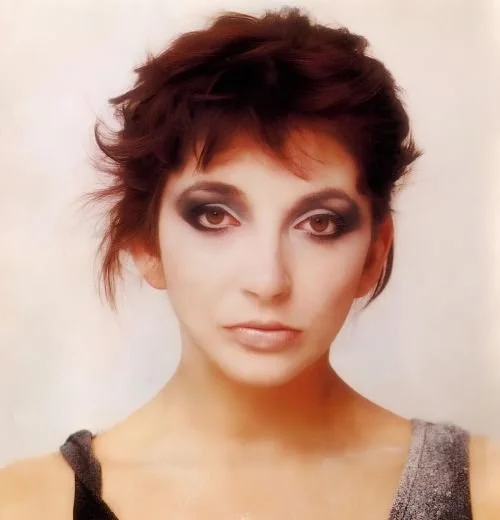
IN THIS PHOTO: Kate Bush in 1985/PHOTO CREDIT: Guido Harari
My Mother/My Father/My Brothers (The Morning Fog)/Moving Stranger (Moving)
__________
THERE are not many…
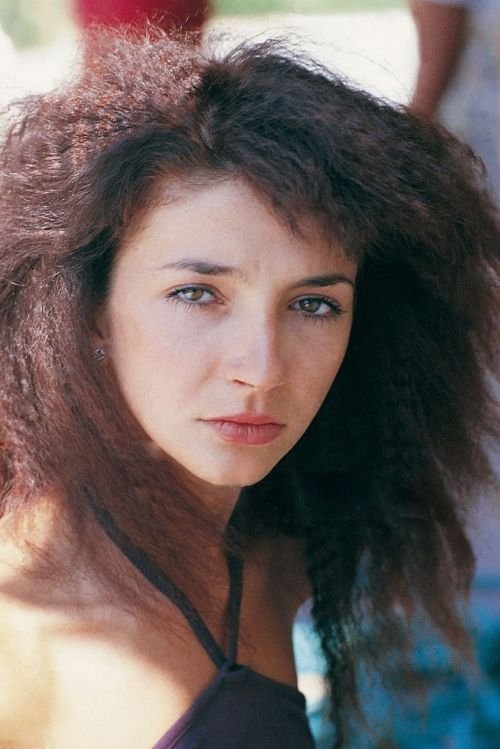
IN THIS PHOTO: Kate Bush in Italy in 1978/PHOTO CREDIT: Angelo Deligio/Mondadori via Getty Images
more edition of this series to go until I am out of characters. I have four more or so to go after this. Two more songs from The Kick Inside. I am ending this feature by looking at the brilliant opening song on Kate Bush’s debut album. I am starting off with the final track on Hounds of Love. Opposite ends of albums, they both are connected in a way by water. They also mention or are a tribute to very important people. The latter song was about a sadly-departed influence on Kate Bush who very much helped shape her as a dancer and, to an extent, an artist. I am beginning with The Morning Fog from Hounds of Love. It is the final moment in the suite called The Ninth Wave. This is where Kate Bush’s heroine is in the sea and presumingly has gone overboard a ship. Trying to stay alive, we see these scenes and songs infold where she struggles and fights. Visions and hallucinations. Ghosts and dangers. Something under the ice and things below the water. I have always seen this as Kate Bush being in the water rather than a heroine, as she does mention her relatives in The Morning Fog. I am leaving out “My Loved One”. She does mentioned My Mother, My Father and My Brothers. Those close to her that she is so glad to see. Before exploring ideas around this song, it is worth reading some words with Kate Bush about this song. The Kate Bush Encyclopedia provide us with some useful resource:
“Well, that’s really meant to be the rescue of the whole situation, where now suddenly out of all this darkness and weight comes light. You know, the weightiness is gone and here’s the morning, and it’s meant to feel very positive and bright and uplifting from the rest of dense, darkness of the previous track. And although it doesn’t say so, in my mind this was the song where they were rescued, where they get pulled out of the water. And it’s very much a song of seeing perspective, of really, you know, of being so grateful for everything that you have, that you’re never grateful of in ordinary life because you just abuse it totally. And it was also meant to be one of those kind of “thank you and goodnight” songs. You know, the little finale where everyone does a little dance and then the bow and then they leave the stage. [laughs]
Richard Skinner, ‘Classic Albums interview: Hounds Of Love. Radio 1 (UK), aired 26 January 1992”.
I do like that idea of it being this curtain call and little show. There are a number of different ways we can look at The Ninth Wave. Even if Bush says in that interview how it is about a person thankful for everything they have, there is clear personal relevance. The importance of Kate Bush’s family. I will come onto that.
I do want to stay around this idea of The Ninth Wave being this theatrical piece. Bush did perform it in its entirety in 2014 for Before the Dawn. I was not there, but from people who were at those shows, they remarked how immersive and amazing those shows were. Being in the audience when you get to see The Ninth Wave unfold. It does have this old-time sensibility. The thank you and goodnight moment, as she said. You do not really get that much from albums. Maybe a thing of the past. The Beatles had a song called Goodnight, which was the final track from their 1968 double album, The Beatles. Ringo Starr sang that number. Not that there was a concept around The Beates. But they very much used this number to wrap things up and calm things down. The final words are these: “Close your eyes and I'll close mine/Good night, sleep tight/Now the sun turns out his light/Good night, sleep tight/Dream sweet dreams for me/dream sweet dreams for you/(Whispered:) Good night, good night everybody/Everybody everywhere/Good night”. Kate Bush might have used that for inspiration. In any case, The Morning Fog is this lively and bouncing track after what has been quite a turbulent ride. When it seemed like nobody could reach the struggling woman, there is this rescue. It opens up a question as to whether Bush was rescued. She liked to think that is how The Ninth Wave ended. I am going to turn to Leah Kardos’s 33 1/3 book on Hounds of Love that was published in 2024. She attended Before the Dawn and saw The Morning Fog performed. There was an idea that The Ninth Wave would be turned into a film. Bush wanted to do that. I guess work got in the way or it wasn’t possible. For a 2005 MOJO interview, Bush saw The Ninth Wave as her first novelette. This idea of music being a journey. I have written before how The Ninth Wave would still make a great film. You could saw its ultimate interpretation and visual representation happened on stage in 2014. That is fair enough. Those who were not at the residency will never know what it was like. Also, there are limitations being on the stage. You can achieve more with a film. And Kate Bush herself has never said that there is no point to a filmed The Ninth Wave. I think I cast Saoirse Ronan as the heroine in the film idea. Maybe shifting that casting choice to someone like Margaret Qualley, I would still love that come to life. Set in New York and with a first act that sets up the tragedy and woman going overboard, we would then go into the woman falling overboard. Or she ends up in the water somehow. The idea of the songs being sung by Kate Bush and someone else playing the lead role. I feel it would still work. What you could get from a filmed The Ninth Wave is The Morning Fog being realised. That moment of relief and joy. Leah Kardos notes how, in Before the Dawn, “Bush sings about falling ‘like a stone, like a storm’, which could suggest to some tat she is being pulled down into the water’s depths one last time, or alternatively that she is falling to earth with gravity, back to safety. Her feeling of being ‘born again into the sweet morning fog’ is a transforming rebirth; alive or not, she emerges into the light on the other side of the ordeal, understanding herself and how to love and appreciate others in a better way”.
I never considered Hounds of Love to be a concept album. However, there is that arc of someone learning how to love. I have written before about The Morning Fog. The love that she had before for her loved ones and family, stronger and better now. Appreciating them anew. Her brothers, John and Paddy, definitely in her mind. They both appear on Hounds of Love. Paddy is playing and does some backing vocals, whilst John can be heard reciting a poem during Jig of Life. Her mother and father very dear to her. Although uncredited, I think Paddy Bush does provide one oe more of the vocals on Waking the Witch. He and John are on Cloudbusting. Paddy provided the voice of a helicopter pilot for Before the Dawn. That is during Waking the Witch. Through her life and career, her brothers hugely important. In terms of supporting their sister and enlightening her. Music, poetry and culture. Her mother and father also massively important. It is natural that any artist would feel fondly about their family and they would mention them in a song. Though Kate Bush’s career is unlike others. How instrumental her parents were. Her brothers always so supportive. I did not mention the loved one Bush sings about. Though you know that would be Del Palmer. He was her boyfriend at the time. He was an engineer on Hounds of Love. The two of them had this very close working relationship. Although there were some arguments and differences, there was immense trust. Palmer worked on her albums up to and including 50 Words for Snow in 2011. He sadly died in 2024. His role in Hounds of Love and Kate Bush’s career as a whole was massive. What you get in this track is that rebirth and realisation. The affirmation of showing love for her family. There is also that survival after an ordeal. Even if Leah Kardos suggests that things may have turned out tragically, I still think that it was a good ending. Kardos did have some words to say about the live version.
Bush said in the programme for Before the Dawn how she wanted to mix film and theatre. How the real-life events happen on a screen. They were pre-filmed. The nightmares and delirium happen on the stage. That crossfade between the two. “In another pre-filmed clip from the chilly Pinewood tank (Bush filmed the video for And Dream of Sleep in a giant water tank and caught mild hypothermia), Bush sings the verse in water brilliantly illuminated by a halo of reflected moonlight. With the words ‘I get out of my car’, she grasps the edge of the buoy while, in a dream, a gigantic buoy also appears, glowing with bright red light and floating on an ocean of reflected stars. Members of the chorus ride upon it, holding red flares aloft as they sing the mournful Georgian chorale ‘Zinzkaro’. The Lords detach Bush’s seemingly lifeless body from the buoy, slowly carrying her off the stage and down the venue’s aisle in a sombre funereal procession. Suddenly on the screen a hand reaches down, another hand grasps back, and halfway down the aisle Bush stirs. Gathering at the front of the stage, now bathed in the warm light of dawn, the whole company joins in with an acoustic rendition of ‘The Morning Fog’. Now unmasked, the lords hoist their fish heads onto the shoulders and dance gracefully with the members of the chorus. Bush walks back through the venue and on to the stager to gigantic cheers”.
I think that The Ninth Wave has influenced artists since. You can look at Taylor Swift’s most recent album, The Life of a Showgirl, and how it is similar to the back cover of Hounds of Love. That photo of Bush in the water. Shot by John Carder Bush, more than a coincidence. On The Life of a Showgirl, there is a song called The Fate of Ophelia. Although The Ninth Wave was inspired in part by a poem from Alfred Lord Tennyson, the photo on the back of Hounds of Love evokes William Shakespeare’s Ophelia. A character in Hamlet (1599–1601), Ophelia is a young noblewoman of Denmark, the daughter of Polonius, sister of Laertes, and potential wife of Prince Hamlet. Due to Hamlet's actions, Ophelia ultimately becomes mad and drowns. I feel Taylor Swift was influenced by Hounds of Love more than Hamlet when it comes to that album cover. This article explores how The Ninth Wave takes its title from an Alfred Lord Tennyson poem. How The Coming of Arthur (1869) influenced Hounds of Love’s masterpiece suite:
“The second part of Kate Bush’s ‘The Hounds of Love’ album takes its title from the first poem of Tennyson’s ‘The Idylls of the King’, ‘the ninth wave’.
Kate Bush uses ‘the ninth wave’, inspired by ‘The Coming of Arthur’, as well Aivazovsky's iconic 1850 painting ‘The ninth wave’ which shows a group of people shipwrecked at sea, as a metaphor for the final wave before drowning, a moment which becomes the anchor of the album and provides its framing narrative. Bush’s referencing to ‘the ninth wave’ doesn’t stop there, during her most recent tour ‘Before the Dawn’ she dropped confetti inscribed with this quotation from ‘The Coming of Arthur’ in Tennyson’s handwriting. Bush’s use of ‘The Coming of Arthur’ has gone on to influence pop generally, such as in ‘Waves’ by the Dutch singer Mr Probz, as ‘wave after wave’ became an iconic phrase.
‘Drifting away
Wave after wave, wave after wave
I'm slowly drifting (drifting away)
And it feels like I'm drowning
Pulling against the stream
Pulling against the wave’ – ‘Waves’
However, what if it’s possible to read ‘The Idylls of the King’ as having more than a passing influence on Bush’s album? The promotional photography for both the tour, ‘Before the Dawn’, and the original album ‘Hounds of Love’, both feature Bush floating amongst flowers wearing a life jacket, in what fans have noted, is a pose that self-consciously echoes that of Shakespeare’s ‘Ophelia’, but perhaps it also echoes that of Tennyson’s ‘Elaine’ in ‘Lancelot and Elaine’ from ‘The Idylls of the King’.
‘And Lancelot answered nothing, but he went,
And at the inrunning of a little brook
Sat by the river in a cove, and watched
The high reed wave, and lifted up his eyes
And saw the barge that brought her moving down,
Far-off, a blot upon the stream, and said
Low in himself, "Ah simple heart and sweet,
Ye loved me, damsel, surely with a love
Far tenderer than my Queen's. Pray for thy soul?
Ay, that will I. Farewell too--now at last--
Farewell, fair lily.’ – ‘Lancelot and Elaine’
If Bush’s songs do reference the fates of Elaine and Ophelia, both popular figures during the Tennysonian or Pre-Raphelite period, then it also sees the water that envelopes them as a feminine space, containing possibilities for power (a power on display in the song ‘Waking the Witch’, for example), and rebirth, as in ‘Morning Fog’. In ‘The Idylls of the King’ water is also a realm that is guarded by and controlled by the feminine.
And there was no gate like it under heaven.
For barefoot on the keystone, which was lined
And rippled like an ever-fleeting wave,
The Lady of the Lake stood: all her dress
Wept from her sides as water flowing away’ – ‘Gareth and Lynette’
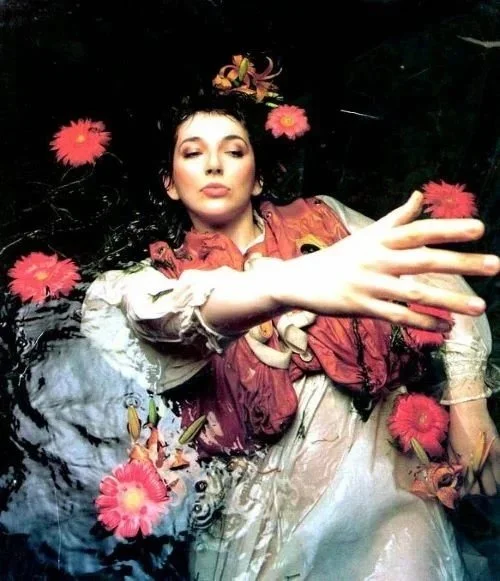
IN THIS PHOTO: Kate Bush shot for Hounds of Love’s The Ninth Wave/PHOTO CREDIT: John Carder Bush
Bush’s command in the title track ‘Hounds of Love’ to ‘Take your shoes off and throw them in a lake!’ therefore becomes a command that links the first part of the album to the second part, a command that demands the acceptance of the power of the feminine, which both the listener and the subject must give themselves up to in the album’s second part. Throwing the accoutrements of life into a ‘lake’ is, of course, an act taken directly from the death of King Arthur, where he asks Sir Bevidere to throw his sword ‘Excalibur’ into the lake, an indication that he is letting go of his own grip on life.
‘Then quickly rose Sir Bedivere, and ran,
And, leaping down the ridges lightly, plunged
Among the bulrush beds, and clutched the sword,
And strongly wheeled and threw it. The great brand
Made lightnings in the splendour of the moon,
And flashing round and round, and whirled in an arch,
Shot like a streamer of the northern morn,
Seen where the moving isles of winter shock
By night, with noises of the Northern Sea.
So flashed and fell the brand Excalibur:
But ere he dipt the surface, rose an arm
Clothed in white samite, mystic, wonderful,
And caught him by the hilt, and brandished him
Three times, and drew him under in the mere.
And lightly went the other to the King.’ – ‘The Passing of Arthur’
That the final and twelfth track of the album, ‘Morning Fog’ references the last and twelfth poem of the ‘The Idylls of the King’, ‘The Passing of Arthur’, will therefore come as no surprise. The song’s lyrics read:
‘The light
Begin to bleed
Begin to breathe
Begin to speak
D'you know what?
I love you better now
I am falling
Like a stone
Like a storm
Being born again
Into the sweet morning fog’ – ‘Morning Fog’
The Death of Arthur is described by Tennyson:
‘Last, as by some one deathbed after wail
Of suffering, silence follows, or through death
Or deathlike swoon, thus over all that shore,
Save for some whisper of the seething seas,
A dead hush fell; but when the dolorous day
Grew drearier toward twilight falling, came
A bitter wind, clear from the North, and blew
The mist aside, and with that wind the tide
Rose, and the pale King glanced across the field
Of battle: but no man was moving there;
Nor any cry of Christian heard thereon,
Nor yet of heathen; only the wan wave
Brake in among dead faces, to and fro
Swaying the helpless hands, and up and down
Tumbling the hollow helmets of the fallen,
And shivered brands that once had fought with Rome,
And rolling far along the gloomy shores
The voice of days of old and days to be.
Then spake King Arthur to Sir Bedivere,
And whiter than the mist that all day long
Had held the field of battle was the King’ – ‘The Passing of Arthur’
The morning fog and the last ‘wan wave’ are described as arriving whilst Arthur dies, and at the end of the poem, he, like Elaine, is pushed out on a boat into the middle of the lake, and the ‘new year’ is born.
‘he saw, the speck that bare the King,
Down that long water opening on the deep
Somewhere far off, pass on and on, and go
From less to less and vanish into light.
And the new sun rose bringing the new year.’ – ‘The Passing of Arthur’”.
Let’s move to the Moving Stranger that features in The Kick Inside’s opening track, Moving. In fact, the first two words on that opening track are “Moving stranger”. That character is not necessity inspire by anyone real. However, the song is a tribute to Lindsay Kemp. I want to come to a reliable and trusted source, Dreams of Orgonon, and what they say about Moving. If The Ninth Wave’s The Morning Fog connects to water in a different way to Moving, they are connected. Water very much a fascination and pull for Bush. If The Ninth Wave is about the brutality of the ocean and that struggle to survive, Moving presents it in a more intimate, calm and beautiful way. The first sound we hear on The Kick Inside is whale song. That ‘moving stranger’ could well be a dance instructor like Lindsay Kemp. How he impacted her. Bush was quite shy and would stand at the back of class. Kemp pulled her to the front in a sense and forced her into action. Rather than it being a cruel act, it was someone spotting her potential. The line, “You crush the lily in my soul” is about him and how this timidity and fear was squashed:
“From its opening moments, “Moving” has a sense of weight and motion, commencing with a fifteen-second sample of whale song from environmentalist Roger S. Payne’s LP Songs of the Humpback Whale (“whales say everything about ‘moving’…it weighs a ton and yet it’s so light it floats”). Then Bush’s vocals and piano greet the listener with “moving stranger, does it really matter?/ as long as you’re not afraid to feel.” Bush requests a stranger’s partnership in a no-string-attached arrangement — the ability to dance together is an adequately precious union. Dance a mediator, like a precisely choreographed one-night stand.
Bush has credited multiple instructors in the development of her dancing skills, including jazz-influenced instructor Robin Kovac and American mime Adam Darius. But her most influential teacher is one of the world’s most famous mimes, Lindsay Kemp. Kemp’s legacy is enormous, boasting experience teaching and working with David Bowie, maintaining a status as a gay icon, and his extravagant theatrical performances. One of these stage shows is particularly crucial for Kate Bush. In 1975, she saw Kemp for the first time in a performance in Bloomsbury. Flowers, an adaptation of Jean Genet’s proto-Beat debut novel Our Lady of the Flowers, is an astonishing vision of decadence, material brutality, and bodily liberation
“Moving” is explicitly Bush paying her debt to Kemp, applying his lessons to her work in the same way she’s channeled the songwriting of Bowie or Ferry into her music. Bush’s anti-gnosticism in particular is inherited from Kemp, viewing dance as an art form that can be radical, liberating, and innovative. “You give me life/please don’t let me go,” says the hedonistic Bush, “you crush the lily in my soul.”
Salient in “Moving” is a use of aqueous language. From its whale sample onwards, it fixates upon water as a metaphor for dance. “Moving liquid/yes, you are just as water,” Bush realizes about her partner, as if she’s realized he has the face of a genius. She invests greatly in malleability, letting motion transform her — Bush has explained the “moving liquid” lyric by explaining it as “what the Chinese say about being the cup the water turns into” (this also touches on George Gurdijeff’s Fourth Way, in which an essence is governed by the form is takes. We’ll get there soon). For “Moving,” form is as crucial as substance”.
I want to come to that idea of the moving stranger and whether it is about romance and sex or dance. Lindsay Kemp definitely is at the heart of Moving. Kate Bush slipped a copy of The Kick Inside under his door when it was released and he saw her tribute him. He did not even know she was a singer until he heard the album! Bush explained in an interview how he “needed a song written to him. He opened up my eyes to the meanings of movement. He makes you feel so good. If you’ve got two left feet it’s ‘you dance like an angel darling.’ He fills people up, you’re an empty glass and glug, glug, glug, he’s filled you with champagne”. In 1982, Zaine Griff approached Kate Bush to sing on his song, Flowers. A tribute to his and Bush’s mentor – Bush met Griff at a dance class years earlier -, she happily obliged. The cover of the song is evocative of Kate Bush’s The Ninth Wave and that John Carder Bush-shot photo. You can read more about that collaboration here. There is no exaggerating how important Lindsay Kemp was to Kate Bush. Not just when it came to him teaching dance and bringing that love from her. His staging of Flowers impacted her career. You can feel so much of The Kick Inside nodding to that. The production features music from, among others, Pink Floyd and Billie Holiday. Kate Bush was a big fan of Holiday and obviously Pink Floyd. David Gilmour another mentor and close friend. If David Bowie’s final performance as Ziggy Stardust in 1973 affected a young Kate Bush in one way, and perhaps inspired something in her music. Lindsay Kemp – he and Bowie were in a relationship at one point it is said – and Flowers opened her eyes and mind. In terms of the culture she was digesting at a young age, it was verry advanced, provocative and liberal. Consider what she would have witnessed:
“Inspiration: Kemp’s extremely free interpretation of Genet’s novel “Our Lady of the Flowers”, with himself playing the central role of Divine, a transvestite transcending gender in a world of criminals, whores and angels: prisons and sexual fantasies, Genet’s verbal violence and poetry transformed into music and gesture, silence and stillness. A dreamlike journey to destruction, through seduction, shock, laughter, poetry and total emotion.
Creation: First performance in September 1970, in the ex-Edinburgh Rock factory in Edinburgh, manually converted into something resembling a theatre by Kemp and a cast of willing young acquaintances, and named The Edinburgh Combination. Further extremely experimental versions were created and evolved from 1970-72, in small Scottish theatre spaces or English universities, transmitting raw “poor theatre” energy, sex, parody and violence. In January 1974, in London, transferring from the tiny Bush Theatre to the West End, came the transformation into the show that would tour the world and open the doors to all the other Lindsay Kemp Company productions.
Ingredients (post-1974): A set built of stark high scaffolding, soaring ladders, platforms and a balcony. High impact lighting by John Spradbery, bold stylised colours, light bursting out of darkness and breathing with the music and smoke.
A potent recorded sound track with live percussion by Joji Hirota: an extreme contrasted collage of electronic effects and voices with music from Mozart to Pink Floyd via La Vie en Rose, Al Jolson, Schumann and Billie Holiday. Plus total silence.
Boldly stylised make-up, simple costumes and nudity. Prisoners, sailors, whores, transvestites, but also angels, masked furies and white bodies smeared with blood.
A closely knit cast of ten performers infused over time with Kemp’s performance technique but also inspired by his example to deeply develop their own performing personalities, backed up by 5 equally passionate technicians and assistants”.
It is clear that some of the lines are about Lindsay Kemp and what he gave to Kate Bush. “How I’m moved/How you move me/With your beauty’s potency/You give me life/Please don’t let me go”. There is that dedication and tribute to Kemp. But there are also those aspects of sex, dance and water. What Dreams of Orgonon analysed and discussed. The poetry in Bush’s Moving. The line “Yes, you are just as water”, referring to Kemp’s fluid, graceful nature and his ability to flow past any obstacles in his path. Ultimately, the song serves as a beautiful, biographical thank you for teaching her how to let go and translate emotion into art. There is a mix of the desire and lust in some of the lines together with that tribute to Lindsay Kemp. I do love how water is elemental too. Hounds of Love, water appears at the core of The Ninth Wave. It also plays a part on Cloudbusting and The Big Sky from the first side. Thinking about the words “moving stranger”. That idea of a stranger being someone unknown and malleable. Stranger as in something odd. The first experience Kate Bush had of Lindsay Kemp was likely nerves. Although she is a fantastic dancer, it perhaps was not a quick transformation. That scene and setting might have seemed strange to her. She and Kemp becoming friends. He appeared in her 1993 short film, The Line, the Cross and the Curve. Here are examples of where Kate Bush talked about Lindsay Kemp and his impact on her:
“I couldn’t believe how strongly Lindsay communicates with people without even opening his mouth. It was incredible, he had the whole audience in his control, just with his little finger. And it was amazing. I’d never seen anything like it, I really hadn’t. And I felt if it was possible to combine that strength of movement with the voice, then maybe it would work, and that’s what I’ve tried to do.
Woman’s Hour, BBC Radio 4 (UK), 21 February 1979
Once I’d left school I tried to get into a dance school full-time, but no one would accept me as I had no qualifications in ballet. I had almost given up the idea of using dance as an extension of my music, until I met Lindsay Kemp, and that really did change so many of my ideas. He was the first person to actually give me some lessons in movement. I realized there was so much potential with using movement in songs, and I wanted to get a basic technique in order to be able to express myself fully. Lindsay has his own style – it’s more like mime – and although he studied in many ballet schools and is technically qualified as a dancer, his classes and style are much more to do with letting go what’s inside and expressing that. It doesn’t matter if you haven’t perfect technique.
Electronics & Music Maker, 1982
To call him a mime artist is like calling Mozart a pianist. He was very brave, very funny and above all, astonishingly inspirational. There was no-one quite like Lindsay. I was incredibly lucky to study with him, work with him and spend time with him. I loved him very much and will miss him dearly. Thank you, dear Lindsay.
Lindsay Kemp, performer and Bowie mentor, dies at 80. BBC News, 25 August 2018”.
When Lindsay Kemp died in 2018, Kate Bush did post a tribute to him on her website: “The world has lost a truly original and great artist of the stage. To call him a mime artist is like calling Mozart a pianist. He was very brave, very funny and above all, astonishingly inspirational. There was no-one quite like Lindsay. “I was incredibly lucky to study with him, work with him and spend time with him. I loved him very much and will miss him dearly. Thank you, dear Lindsay”. You can read more about Kemp’s life, work and legacy here. What else can we take from Moving? In terms of its live performances and where this song featured, it had this wide and interesting visibility. I do love how this song enjoyed many outings:
“Soon after the release of The Kick Inside, Bush performed ‘Moving’ alongside with ‘Them Heavy People’ on 25 February 1978 on the BBC TV show Saturday Night at the Mill.
On 12 May, she took part in a Dutch special TV show dedicated to the opening of the Haunted Castle, the new attraction of the amusement park Efteling. She performed six songs in six videos filmed near the castle and across the park.
In June 1978, Bush sang ‘Moving’ at Nippon Budokan during the Tokyo Music Festival. The performance was retransmitted on the Japanese television on 21 June and was followed by a 35 million audience. She won the silver prize alongside with the American R&B band The Emotions.
Kate also performed ‘Moving’ on the Japanese TV programme Sound in S.
In 1979, Bush included ‘Moving’ on her first tour, The Tour of Life. Her performance can be seen on the video Live at Hammersmith Odeon”.
I am going to finish up here. Two songs with a connection to water. Both referencing beloved and dear people as their ‘characters’. Kate Bush’s family on The Ninth Wave’s The Morning Fog. On Moving, a dear friend and mentor. We can’t forget other people who brought movement and love of dance from Kate Bush. Robin Kovac and Arlene Phillips among them. If the brilliant Lindsay Kemp crushed the lily in Kate Bush’s soul, he also helped bring her brilliance, love of dance and this curious sense of wonder…
INTO full bloom.