
FEATURE:
With No Problems…
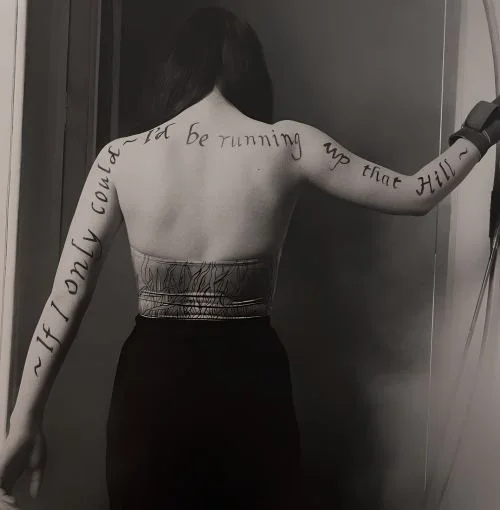
IN THIS PHOTO: Kate Bush in an outtake from the Running Up That Hill (A Deal with God) shoot in 1985/PHOTO CREDIT: John Carder Bush
Kate Bush’s Running Up That Hill (A Deal with God) at Forty-One
__________
I don’t feel I can add anything…
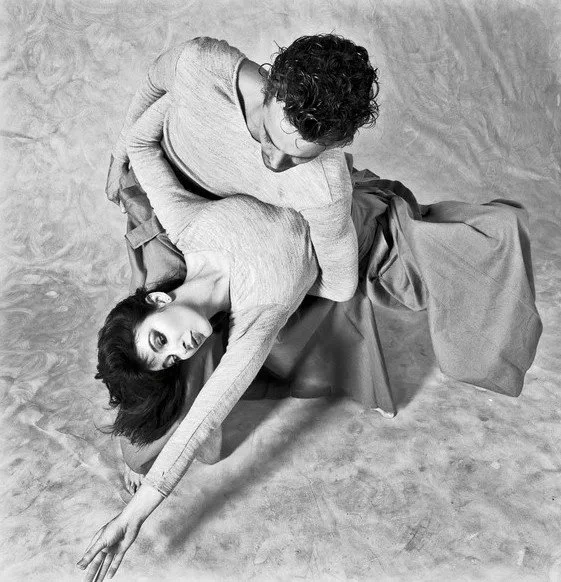
IN THIS PHOTO: Kate Bush in the video for Running Up That Hill (A Deal with God) with Michael Hervieu (now Misha Hervieu)/PHOTO CREDIT: John Carder Bush
new to features I have previously written about Kate Bush’s Running Up That Hill (A Deal with God). However, I do want to mark the song on its anniversary. Released as the first single from Hounds of Love on 5th August, 1985, this timeless song has spanned generations. From its initially released forty-one years ago through to its use in 2022 on Netflix’s Stranger Things to now, where it is still being played widely and discovered by new people. It is a track that has been streamed nearly two billion times on Spotify. Of time of writing this (21st June, 2026), the song has been streamed 1,754,277, 628. I do think it gets talked about pretty much as the only Kate Bush song. It dominates when people think of her. Those who don’t know the rest of her catalogue do at least recognise this song. It is good that people know Running Up That Hill (A Deal with God), though I do feel that they need to dig deeper and not just stop here. Even so, I am charged with writing about Running Up That Hill (A Deal with God) forty-one years after its release. When it was released as a single after featuring in Stranger Things, it got to number one in the U.K. Only the second time Kate Bush reached number one here. The first was when her debut single, Wuthering Heights, was released in 1978. It originally reached number three. I will start with some background and interview archive from the Kate Bush Encyclopedia:
“Song written by Kate Bush. The song was reportedly written in one evening in the summer of 1983. It was the first song recorded for the subsequent fifth studio album Hounds Of Love. The electronic drums, programmed by Del Palmer, and the Fairlight part were present from the first recording of the song. The lyrics speak of Bush’s impossible wish to become her lover, and he her, so that they could know what the other felt. Kate played the first versions of the songs to Paul Hardiman on 6 October 1983. He commented later: “The first time I heard ‘Running Up That Hill’ it wasn’t a demo, it was a working start. We carried on working on Kate and Del’s original. Del had programmed the Linn drum part, the basis of which we kept. I know we spent time working on the Fairlight melody/hook but the idea was there plus guide vocals.”
The track was worked on between 4 November and 6 December, with Stuart Elliott adding drums, but closely following the programmed pattern. Alan Murphy added guitar parts whereas Paddy Bush, always providing the most ingenious instruments, played the rather better known balalaika on this track.
‘Running Up That Hill’ was intended as a fond farewell to dance, at least as far as Kate’s video appearances were concerned. The music video, directed by David Garfath, featured Bush and dancer Michael Hervieu (who won an audition after Stewart Avon-Arnold was not available due to other commitments) in a performance choreographed by Diane Grey. The pair are wearing grey Japanese hakamas. The choreography draws upon contemporary dance with a repeated gesture suggestive of drawing a bow and arrow (the gesture was made literal on the image for the single in which Bush poses with a real bow and arrow), intercut with surreal sequences of Bush and Hervieu searching through crowds of masked strangers
It is very much about the power of love, and the strength that is created between two people when they’re very much in love, but the strength can also be threatening, violent, dangerous as well as gentle, soothing, loving. And it’s saying that if these two people could swap places – if the man could become the woman and the woman the man, that perhaps they could understand the feelings of that other person in a truer way, understanding them from that gender’s point of view, and that perhaps there are very subtle differences between the sexes that can cause problems in a relationship, especially when people really do care about each other. (The Tony Myatt Interview, November 1985)
‘Running Up That Hill’ was one of the first songs that I wrote for the album. It was very nice for me that it was the first single released, I’d always hoped that would be the way. It’s very much about a relationship between a man and a woman who are deeply in love and they’re so concerned that things could go wrong – they have great insecurity, great fear of the relationship itself. It’s really saying if there’s a possibility of being able to swap places with each other that they’d understand how the other one felt, that when they were saying things that weren’t meant to hurt, that they weren’t meant sincerely, that they were just misunderstood. In some ways, I suppose the basic difference between men and women, where if we could swap places in a relationship, we’d understand each other better, but this, of course, is all theoretical anyway. (Open Interview, 1985)
It seems that the more you get to know a person, the greater the scope there is for misunderstanding. Sometimes you can hurt somebody purely accidentally or be afraid to tell them something because you think they might be hurt when really they’ll understand. So what that song is about is making a deal with God to let two people swap place so they’ll be able to see things from one another’s perspective. (Mike Nicholls, ‘The Girl Who Reached Wuthering Heights’. The London Times, 27 August 1985)”.
There is a lot to unpack when it comes to this song. Aside from one or two idiotic takes on it – Melody Maker said Running Up That Hill (A Deal with God) “She’s precocious, dated, and dull. This record is dismally uninteresting” -, it gained universal acclaim. I do feel that it is this track we will be talking about generations from now. I feel it is so powerful and relevant. That idea of switching shoes and places with someone to better understand them. If you see it about two lovers breaking that barrier or a wider sense of divided people on the same wavelength, Bush doing this deal with God. It has this almost spiritual nature. It is wonderful that Running Up That Hill (A Deal with God) had this new life and was not just resigned to the 1980s. New generations discussing and listening to this epic track. In 2022, Classic Rock told the story behind Kate Bush’s best-known track:
“Yet 37 years after it initially reached number 3 in the UK (her biggest hit apart from 1978 debut Wuthering Heights), Running Up That Hill seems to have snowballed beyond that tie-in success and is encouraging many young viewers, who perhaps only knew of Kate Bush as somebody Florence Welch gassed on about in interviews, to investigate her back catalogue and embrace the worlds of albums such as 1985's Hounds Of Love (which yielded this song), The Kick Inside (1978), The Dreaming (1982), The Sensual World (1989) and The Red Shoes (1993). When Bush made her first live appearances for 35 years at a Hammersmith Apollo residency in 2014, her albums made a return to prominence, taking up lofty positions in the charts. It’s plausible that the knock-on effect of Running Up That Hill’s revival will detonate a comparable explosion of interest in all things Kate.
The Hounds Of Love album itself prompted something of a change of fortune, as its predecessor, The Dreaming, hadn’t sold too well. Hounds Of Love, on the other hand, gained rave reviews, the number one spot in the UK, a respectable showing in the US, and passed a million sales by 1998. Bush was in love with the Fairlight CMI synth and, after recording her demos, spent over a year on overdubs, mixing and tweaking. The result was effectively two mini-albums, with Side One the “pop” side (albeit art-pop), and Side Two an unapologetic prog concept suite about a woman drifting alone at sea at night.
Running Up That Hill opens Side One, which also contains Hounds Of Love's equally dramatic title track, The Big Sky and Cloudbusting, which was EMI’s preferred choice as lead single. Kate insisted on Running Up That Hill, as she deemed it more representative of the album’s direction. Another factor which had unnerved the label was the song’s original title of A Deal With God. On that issue, Kate gave way. (She may, as a teenager, have persuaded the label to release Wuthering Heights - not their choice - by bursting into tears, but now surrounded by a supportive family and business framework, she was savvier regarding which battles to choose). “For me, A Deal With God is the title”, she told Q in 1989, “but I was told that if I insisted, the radio stations in at least ten countries would refuse to play it – Spain, Italy, America, lots. I thought that was ridiculous. Still, especially after The Dreaming, I decided to weigh up priorities. Not to compromise creatively, but to not be so obsessive that I cut my own throat…I had to give the album a chance, I had to be grown up about this”.
The song, anyway, was about a man and a woman, with God as a secondary character. “I was trying to say that a man and woman can’t really understand each other because we are a man and a woman”, she told Richard Skinner on Radio 1. “And if we could swap our roles, be in each other’s place for a while, I think we’d be very surprised! It would lead to greater understanding. I thought the only way it could be done was, you know, a deal with the devil. And then I thought: well no, why not a deal with God? Because that’s so much more powerful…”
With its of-its-time interpretive dance video and a memorably incongruous showing on British 80s TV staple Wogan, the single took off and rebooted Bush’s career, allowing the album to loosen the reins and release its hounds. (That year, NME awarded it third best track of the year, behind two Jesus & Mary Chain toe-tappers). And while everyone from Placebo to First Aid Kit to Chromatics have subsequently concocted cover versions, none come close to the original’s rhythmic intensity - a blend of LinnDrum programming from Del Palmer and the drumming of Stuart Elliott, who’d worked with Cockney Rebel and Al Stewart and on all Bush’s albums up to that point. “He’s so easy to work with because he knows what I’m like”, Bush enthused. Kate’s brother Paddy’s balalaika is there too, subliminally shading in the arresting atmospherics. That bridge – “come on baby, come on darling…let’s exchange the experience” – remains thrilling”.
People today appreciate Running Up That Hill (A Deal with God) as being a great song. I don’t know if they understand its importance in 1985. It was not like Kate Bush was adored and quickly followed her last single with a new one. It was a difficult road. The Dreaming came out in 1982. There were singles released, though there was little chart success. Bush suffered exhaustion after the album and there was this tough period. Days before Running Up That Hill (A Deal with God) arrived, people were wondering where she was and if she was done. Rumours she was retired, a recluse, overweight, a drug addict. Misogyny as popular and prevalent in 1985 as it is now! If you are a female artist and dare to take time between albums then you are subjected to abuse and insults. In what is one of the biggest mic drops in history, Bush not only shut up moronic critics, a dubious EMI – who felt that, after producing The Dreaming solo and the album being seen as inaccessible and uncommercial by some, that it would not be wise to do it again – and anyone who doubted her, she released a track that is considered among the greatest ever. Showing that she was more than capable of producing a massive hit and staying try to herself. I guess, if she had continued along the lines of The Dreaming or released another flop, there would have been danger of being dropped or EMI stepping in. The success of the single and Hounds of Love – which came on 16th September, 1985 – meant that she was definitely back in their good books! I guess, when the song reaches two billion streams on Spotify – which may be as soon as next year -, more will be written about it. The Quietus published a feature in 2022. They asked, with regards Running Up That Hill (A Deal with God), “what does it mean and why has it connected so strongly with a younger generation?”:
“In the summer of 1985, Bush re-emerged. She’d been out of the public eye for three years. Back then, in the hyperactive, costume-changing, style-shifting ’80s, it felt like a lifetime. On August 3, NME ran a Where Are They Now? feature. Two days later, a single hit the shelves; EMI’s first choice had been ‘Cloudbusting’. As with ‘Wuthering Heights’, she called the shots, and opted for ‘Running Up That Hill (A Deal With God)’, that original title safely bracketed off.
Bush stared out from the cover with steely determination, bow in hand, arrow ready to fly. Like an archer setting its sights on a target, this was no mere comeback, but in her brother John Carder Bush’s words, "an act of spiritual, mental and physical focus". (He photographed the image and the moody reverse shot, taken at East Wickham Farm in a room so smoke-machine-filled that it had to be evacuated.)
A steady rhythm took ‘Running Up That Hill’ straight onto the dancefloor. Lofty proposals met it there. A lover yearns to strike a deal with the divine, to swap genders with her partner. Theirs is, for Bush, a love "that’s almost too big for them, with the potential for misunderstanding too great". Surging with optimism as it envisions the impossible, the track strives for that "inaccessible elsewhere", that misty hilltop where differences dissolve and true understanding exists. The gulf between humans had always been Bush’s forte, (the track’s distant balalaika echoing ‘Babooshka”s marital drama), but since ‘Wuthering Heights’, so had the imperious desire to cross it, at all costs. In its own mystical way, ‘Running Up That Hill’ is driven by that very ’80s imperative: Go For It!
The Fairlight is central; that original riff galloping throughout, the reverbed atmospherics bookending the song and those deep chords that tug the heartstrings, while the beat moves the body. Bush’s vocal is combative and sensual. Backing vocals mirror the mixed emotions, yay-yo-ing ecstatically, unleashing battle cries, akin to ‘Kiai!’, the cry made in Japanese martial arts – before Bush learnt dance, she studied karate (Stevie Nicks compared her to a ninja). The imagery is at turns passionate and menacing, thunder in hearts, bullets buried deep. In the orgasmic middle eight, Bush urges her lover to swap and exchange female/male pleasure, moving from traditional sex roles to something approaching the omnisexual (many of the song’s lines could be describing two men flip-fucking). Things intensify in its wake, lightning strikes with real drums, and Murphy’s guitar, all Gilmour-esque ‘feel’ squalls, as if the almighty has responded.
Unease threatens to tilt the radio-friendly axis, voices writhe and wriggle, souls stuck in the purgatory of their lonely skin, begging to break free and merge. The storm calms and a male/female voice sing its last lines, morphed like Bush and dance partner Michael Hervieu in the accompanying video. Kate Bush was going to the disco but it was on her terms, with this maelstrom of a song, conjured from earth and ether; male/female, human/machine, spirit/flesh and light/dark locked in an endless interplay. As with all the best pop music, the immediacy was a Trojan horse carrying an army of subversive ideas.
On its flip-side, she was alone at the piano, singing ‘Under The Ivy’; one of her best-loved B-sides. Seeking refuge, "away from the party", it’s the wallflower to the A-side’s diva, amongst the green and the grey like a gothic heroine. It comes straight from her East Wickham childhood pastorale, candid yet cloaked in secrecy. Here as on the album, the piano’s "rich and resonant", a Grotrian-Steinweg Grand, captured in a live room with an ambient mic, creating an "Erik Satie, alone after the guests have left the ballroom" vibe (Bush’s favourite pianists included Satie, Chopin and Windham Hill’s George Winston).
She performed ‘RUTH’ on Wogan, bow on back, standing before a lectern, Terry visibly awed. It featured repeatedly on Smash Hits‘ singles page, entrancing reviewer Ian Cranna. It sailed to No.3 in the UK singles chart, her biggest hit since ‘Wuthering Heights’. The video, shot at Hammer Horror HQ, Bray Studios (directed by Terry Gilliam’s cameraman, David Garfield), blended modern dance – Bush and partner Michael Hervieu, clad in Japanese Hakama trouser-skirts – and surreal sci-fi”.
I am going to end with the 2022 interview between Kate Bush and Emma Barnett. Bush would speak with Barnett again in 2024. However, this 2022 interview was rare. The first time Bush had conducted an interview around her work for many years. It was exciting to hear from her and the reaction to the runaway success of Running Up That Hill (A Deal with God). As The Guardian reported, Bush had not listened back to the song a lot before it was included in Stranger Things:
“Speaking to Barnett, Bush said she hadn’t listened to Running Up That Hill “for a really long time” before its return to the charts, adding: “I never listen to my old stuff.” She last performed it in 2014 for her theatrical London concert series Before the Dawn.
Bush said its original title was A Deal With God, but “I think they were just worried, the record company, that it wouldn’t get played on the radio. That people would feel it was a sensitive title.”
On the meaning of the song, she said: “I really like people to hear a song and take from it what they want. But originally it was written as the idea of a man and a woman swapping with each other. Just to feel what it was like, from the other side.”
In a previous interview in 1986, she elaborated on the song’s meaning, saying it was “about the fundamental differences between men and women, I suppose trying to remove those obstacles, being in someone else’s place; understanding how they see it, and hoping that would remove problems in the relationship.”
In her Radio 4 interview, Bush described 2022 as “an incredibly exciting time … OK, so it’s an awful time on a lot of levels for people. Very difficult. But it’s also a time when incredible things are happening. Technology is progressing at this incredible rate. That’s pretty overwhelming, really. But, you know, there’s so many advances in medicine and there are positive things – you just have to look a bit harder to find them at the moment, I think”.
Running Up That Hill (A Deal with God) turns forty-one on 5th August. I cannot blame people for talking about this song and it being their entry point into Kate Bush’s music. What I hope is that people explore her wider catalogue. The music video has been viewed more than 412 million times. Getting close to two billion streams. Widely played on radio since it was launched back into public consciousness, it is a work of genius. Few felt Kate Bush could survive or would produce anything great after The Dreaming received some mixed reviews. Singles that were not recorded to be singles and struggled to get much focus. This grand silencing bomb that arrived when she was about to be written off, forty-one years later, and we are still listening to this masterpiece. Kate Bush still very much active and relevant. A track that has a powerful message that is embraced and understood around the world. There are few songs ever released as powerful as Running Up That Hill (A Deal with God) I think. This is a song that affects me…
EVERY single time I hear it.