
FEATURE:
Kate Bush: Them Heavy People: The Extraordinary Characters in Her Songs
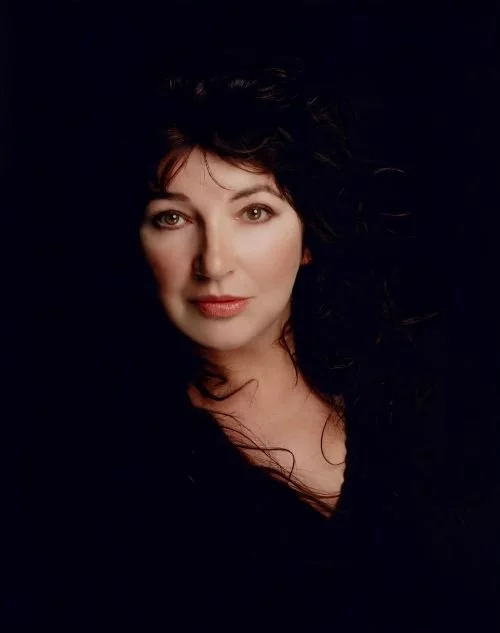
IN THIS PHOTO: Kate Bush in 2005/PHOTO CREDIT: Trevor Leighton
The Painter (An Architect’s Dream)/George the Wipe/Douglas Fairbanks… (Moments of Pleasure)
__________
I only have four more…
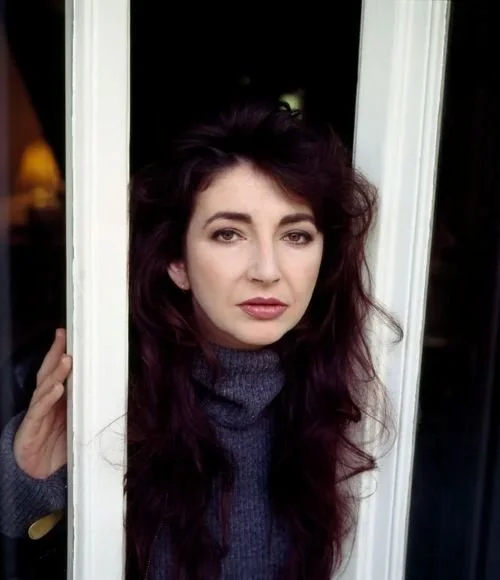
IN THIS PHOTO: Kate Bush in 1993/PHOTO CREDIT: John Stoddart
outings of this run of features to go. Where I pair characters in Kate Bush songs. Today, like the final edition, features a song with a lot of characters. In fact, it might rival Blow Away (For Bill) in terms of the most characters in one song. Both that song and the one I will finish with share Bill Duffield. Moments of Pleasure was included on The Red Shoes in 1993. Bill Duffield was part of Kate Bush’s crew for The Tour of Life in 1979. He died after the warm-up gig in a tragic accident. He is immortalised in two album tracks. Bush also held a benefit concert in his memory at the end of her The Tour of Life run and incredible musicians like Steve Harley and Peter Gabriel. That is when she and Gabriel started their professional association. Moments of Pleasure has so many characters in, I have had to shorten it and include two and an ellipsis! The first half is simpler, as there is only the one character on this Aerial track. I am leading into this rich stock of characters in a song that is tinged with sadness. People mentioned who are sadly no longer with us. Who passed before Bush recorded the track. Let’s start with The Artist from An Architect’s Dream. The Painter also features in The Painter’s Link. These songs featured on the second disc of Aerial, A Sky of Honey. It is set over the course of a summer’s day. I want to start out by looking at the filmic scope for this suite. I have written about it before. Bush did take A Sky of Honey to the stage for 2014’s Before the Dawn. It was realised. There was a tarnish when it comes to the original release of Aerial, as Rolf Harris featured on two tracks. He was The Painter in An Architect’s Dream and The Painter’s Link. We do not realise have that many other characters on that suite. Bush mimics birdsong and takes us to the ocean and beach. There are mentions of people, but they are not really given a name.
We sort of have this idea of Kate Bush travelling through the day in different locations. In Somewhere in Between, she is singing with Gary Brooker (Procol Harum). For the live version, Bush’s son Bertie provided the backing vocals. It was a shame that Rolf Harris appeared in the first place. I want to mention The Artist, not to spotlight Rolf Harris, but to give the song a new light and narrative. If it has troublesome and controversial connections on the original issue, the reissued Aerial removes Harris and replaces him with Albert McIntosh. Her son appearing on his mother’s album. Not the first time. He featured on 2011’s Director Cut and 50 Words for Snow. He was younger when he appeared in 2011 than he was on the Aerial 2018 re-issue. That was four years after he performed as The Artist on Before the Dawn. That live album came out in 2016. A tangled timeline and history, let’s not mention Rolf Harris again! Instead, I do think that The Painter is Albert McIntoish. I discussed McIntosh when I covered Aerial’s Bertie. That paen to her then-new son. What is notable about An Architect’s Dream, is that it adds this human element. In the sense we get vague or unnamed characters in other songs. Birdsong appears. Though there is a bit of story follow Prelude and Prologue. Those two songs open the album and take us through the afternoon. An Architect’s Dream comes next. I do wish I was at Before the Dawn to see this song played out. You imagine an English garden and this painter setting up. The title, An Architect’s Dream, makes me think that there is a painting style that is more akin to Line Art. It focuses on clean, unbroken strokes to define shapes, contours, and intricate details without relying on heavy shading or colour gradients. This is someone focused and immersed in that they are doing: “Watching the painter painting/And all the time, the light is changing/And he keeps painting/That bit there, it was an accident/But he's so pleased/It's the best mistake, he could make/And it's my favourite piece/It's just great”. I am trying to put a genre to this style of art. Maybe Dynamic Minimalist Art. That frequently uses needle-thin lines alongside bold, calligraphic strokes to create tension and movement. That idea of mistakes being a happy accident. Kate Bush recorded a song called Be Kind to My Mistakes. That came out in 1987 and featured in the film, Castaway. It does bring to mind a multi-dimensional debate. Whether mistakes in art are beneficial or exist. Some purists (or wrong-headed commentators) say mistakes cannot exist in art. We think about fine art especially as being perfect. Everything is intentional. The same with music. Do we listen to albums and assume everything recorded was what the artist originally came up with and intended?
In music, as in art, mistakes can lead to new discoveries and possibilities. An Architect’s Dream is about this artwork having incredible lines. Something you might find in an architect’s sketch of a new building. These lyrics give us “Curving and sweeping/Rising and reaching/I could feel what he was feeling/Lines like these have got to be/An architect's dream”. I keep imagining someone is painting in a garden. Or be a stream somewhere. Later in the song, we get the suggestion that this is street art. Someone battling changing light and weather conditions. Whilst this is painting and not chalk drawings on a pavement, I do instantly think of Mary Poppins. Bert (Dick Van Dyke) drawing these scenes on the pavement and the characters jumping into them. The Artist is working on the pavement, but it starts to rain. I wonder where this track was set. You could place it anywhere. Maybe somewhere in Paris. An Architect’s Dream is the first of a two-part story of The Painter. The Painter’s Link is the shorter conclusion. Lyrics quite brief. How the painting runs because of the rain. All the colours drip and form this perfect sunset. Quite psychedelic and romantic in a way. An Architect’s Dream runs at nearly five minutes. The Painter’s Link just over a minute and a half. I wonder why Bush decided to set up this artist and someone who painted brilliant and precise lines, only for them to be ruined by the rain. The opening of A Sky of Honey suggests warm sunshine and calm. There is this change of light and weather for our spotlight on The Artist. The next song in the suite is Sunset. In terms of the timeline, Prologue is set in the afternoon. The lyrics mention that it is afternoon. Meaning Prelude might either be later in the morning or early in the afternoon. The Painter is mentioned during the evening before the sun sets. Perhaps taking us to 9/9:30 p.m. Aerial Tal is where Bush duets with a bird (Bush does duet again for Aerial, but she is helpless with laughter). That takes us to the next morning at the break of dawn. What I do love is how we get an idea of the places and conditions. In terms of geography, I feel we start with an English garden. It then moves somewhere else. Nocturn and Aerial seem to suggest this golden and crystal water on a beach in Spain or the Balearics. Just judging by the music and its tone. Or maybe it is an English beach. In any case, I feel that An Architect’s Dream is this curious and brilliant song where we do spotlight this artist. Though I said we would not mention Rolf Harris, Kate Bush gave us some insight into The Painter and songs like An Architect’s Dream. What she was trying to achieve. Mark Radcliffe chatted with her in 2005 for BBC Radio 2. The below exchange takes us back to that idea of mistakes in art and how as a recording artist, she had made mistakes and songs have ended differently to how she intended them. Almost casting herself as The Artist. I do now like to think more that An Architect’s Dream is about Kate Bush then Rolf Harris. That it is a reference to her process as an artist and producer:
“Kate: Well, absolutely, and I suppose really that's what he sprung to mind because I needed a singing painter.
Mark: And there aren't many in the Yellow Pages
Kate: There aren't many.
Mark: There's a track on their called "An Architect's Dream", and in that there's a line where you say, "it was the best mistake he could make". Is that a kind of key phrase that like even though you get this precise way of making the sounds in your head that sometimes it's what you might call the mistakes or the accidents that are kind of a really special moments?
Kate: Yeah, well, I think in a lot of creative processes, that's the best thing can happen to you... is to make a mistake, and it's something you would never have consciously thought of, and it just happens. And it gives you somewhere to go off to that is far more interesting than something you would've thought of”.
Let’s move to the second song, as there are a lot of characters to include. I shall mention all that feature in Moments of Pleasure. One of the standout songs from 1993’s The Red Shoes, it was a time in Kate Bush’s career where she had personal loss and heartache. She had lost friends after The Sensual World’s release in 1989. In fact, guitarist Alan Murphy died a few days after the release of The Sensual World. He died on 19th October, 1989. He is mentioned on Moments of Pleasure. I am not mentioning Bush’s mother Hannah, as she had featured before. Her mother died on 14th February, 1992. It was a very tough few years. I want to start with some interview archive. The song was released as a single in November 1993, where it reached twenty-six in the U.K. On an album with too many layers and this rather compressed sound, Moments of Pleasure stands out. Bush at the piano. More revealing and barer than other tracks on The Red Shoes. The lines, “to those we love, to those who will survive” appear in the chorus and were written for her mother, who was ill with cancer at the time of recording. She died shortly afterwards. Kate Bush Encyclopedia provide us some useful archive:
“I think the problem is that during [the recording of] that album there were a lot of unhappy things going on in my life, but when the songs were written none of that had really happened yet. I think a lot of people presume that particularly that song was written after my mother had died for instance, which wasn’t so at all. There’s a line in there that mentions a phrase that she used to say, ‘every old sock meets an old shoe’, and when I recorded it and played it to her she just thought it was hilarious! She couldn’t stop laughing, she just thought it was so funny that I’d put it into this song. So I don’t see it as a sad song. I think there’s a sort of reflective quality, but I guess I think of it more as a celebration of life.
Interview with Ken Bruce, BBC Radio 2, 9 May 2011
I wasn’t really quite sure how “Moments of Pleasure” was going to come together, so I just sat down and tried to play it again– I hadn’t played it for about 20 years. I immediately wanted to get a sense of the fact that it was more of a narrative now than the original version; getting rid of the chorus sections somehow made it more of a narrative than a straightforward song.
I wonder why Bush reapproached Moments of Pleasure for Director’s Cut. The 1993 version seems of its time and reflected loss that was quite new. Maybe dated in 2011, I wonder whether she considered updating the lyrics to include other people. The song features in the 1993 short film, The Line, the Cross and the Curve. It was also performed for Aspel & Co on BBC on 20th June, 1993. The song has been covered a few times. I always think it is one of Kate Bush’s most personal songs, so it seems strange other singing it. Nerina Pallot among those who have covered it. I guess no song can truly belong to an artist and not be covered. You get something different when other artists tackle a track. Though Bush’s 1993 original remains the definitive version, I feel. I will mention one curious character soon. There is humour, loss and remembering friends passed. If Blow Away (For Bill) is Bush paying tribute to Bill Duffield and imagining him in Heaven with departed musicians like Billie Holiday and Minnie Riperton, Moments of Pleasure is this fantasy or dream where we see lost friends and those still alive together in this scene. “Some moments that I’ve had/Some moments of pleasure/I think about us lying/Lying on a beach somewhere/I think about us diving/Diving off a rock, into another moment”. These words open Moments of Pleasure. Giving us this romantic vibe. Many associate Moments of Pleasure as being this painful and morbid song. Bush almost shouting out the lines “Just being alive/It can really hurt”. It is definitely enforced by loss and her mother’s illness. Though there is this sense of fondly remembering people. “And I can hear my mother saying/“Every old sock meets an old shoe”/Isn’t that a great saying?”. Bush almost smiling and giving this chuckle. Humour and pathos alongside each other. George the Wipe is the first character mentioned. The moniker refers to a recording studio tape op (intern/assistant) who was working at Townhouse Studios around 1981. According to lore, he accidentally wiped a master tape recording for a track on her album, The Dreaming. It must have been stressful at the time, but I wonder what song was wiped and whether his is lore or how much truth there is.
The lines where he is mentioned suggests that it was funny or maybe this practical joke played on someone. Some say Bush and Del Palmer (her boyfriend at the time of The Dreaming being recorded) played a joke on someone to make them think that they had wiped a song. In reality nothing had been wiped: “Oh God I can’t stop laughing/This sense of humour of mine/It isn’t funny at all/Oh but we sit up all night/Talking about it”. Douglas Fairbanks is next in the roll call. Kate Bush and Del Palmer went to meet Michael Powell in New York in 1989. There was discussion or plans that she would compose music for a film of his. That the two would work together. Powell died in 1990, so there was not the opportunity for that dream to be realised. The Red Shoes is named after the 1948 film written and directed by Michael Powell and Emeric Pressburger. That film is based on an 1845 fairytale by Hans Christian Andersen. In a 1993 interview, Kate Bush was asked about Douglas Fairbanks and his inclusion on Moments of Pleasure:
“Who is the Douglas Fairbanks character in 'Moments Of Pleasure '?
'Ah... In a lot of ways that song, er.. well it's going back to that thing of paying homage to people who aren't with us anymore. I was very lucky to get to meet Michael (Powell, the film-maker who directed the original The Red Shoes) in New York before he died, and he and his wife were extremely kind. I'd had few conversations with him and I'd been dying to meet him. As we came out of the lift, he was standing outside with his walking stick and he was pretending to be someone like Douglas Fairbanks. He was completely adorable and just the most beautiful spirit, and it was a very profound experience for me. It had quite an inspirational effect on a couple of the songs.
"There's a song called 'The Red Shoes'. It's not really to do with his film but rather the story from which he took his film. You have these red shoes that just want to dance and don't want to stop, and the story that I'm aware of is that there's this girl who goes to sleep in the fairy story and they can't work out why she's so tired. Every morning, she's more pale and tired, so they follow her one night and what's happening is these shoes... she's putting these shoes on at night before she goes to bed and they whisk her off to dance with the fairies”.
Douglas Fairbanks (or Douglas Fairbanks Jr. specifically) died in 2000. was a leading man during the Golden Age of Hollywood. He appeared in adventure and swashbuckling roles like in The Prisoner of Zenda (1937), Gunga Din (1939), and The Corsican Brothers (1941). He was the son of Douglas Fairbanks. What makes Moments of Pleasure such a wonderful song is Bush remembering these great people. Just near the end of the song, Bush sings “Hey there Michael/Do you really love me?”. Such sweet words, but what did she mean by it?! Some mystery as to what she was asking there and whether it relates to this brief friendship. The final lines are for Bill Duffield: “Hey there Bill/Could you turn the lights up?”. This lighting director who only was in Kate Bush’s life for a matter of days remembered in a song fifteen years after his death. It is the final verse of Moments of Pleasure where we get Bush saying ‘hi’ and interacting with these beloved people: “Hey there Maureen/Hey there Bubba/Dancing down the aisle of a plane/‘S Murph, playing his guitar refrain/Hey there Teddy/Spinning in the chair at Abbey Road”. Maureen was Kate Bush’s aunt. This deeply personal requiem is so beautiful and stirring. Her aunt died before Bush’s career took off. Bubba is Gary Hurst, one of her dancers. A dear friend who was such an important part of her career and live work, he sadly died in 1990 of complications related to AIDS in Westminster, London. You read more about here. Alan Murphy is ‘S Murph. He died in 1989, as previously mentioned. John Barrett, a sound engineer at Abbey Road Studios, is Bubba. In terms of his role in Kate Bush’s music, we get more information here: “Engineer at Abbey Road Studios. He worked on Kate’s albums Never For Ever and The Dreaming, as well as the single December Will Be Magic Again. In 1981, he found he had cancer, and while receiving treatment he occupied himself with the task of going through the vaults of the studio and seeing exactly was and was not there with regards to the Beatles’ many recording sessions. He created a ‘catalogue’ of sorts, and while finding out exact dates for recording sessions also dubbed rare takes and demos. John Barrett passed away in February 1984”.
Kate Bush combining this brilliant engineer at Abbey Road Studios together with those who worked with her earlier. Family and friends mixed together. Rather than it being down and depressing, I thin Moments of Pleasure remembers these great people and says how difficult life is. But we need to grab these moments of pleasure. The good. Although Moments of Pleasure is this wonderful song, it didn’t chart well in 1993. This was a time when bands like Suede and Blur were coming through. Grunge still a big thing in the U.S., perhaps less toom in public consciousness and the upper reaches of the charts for a piano ballad. No matter if it is by Kate Bush or not. I will finish with perception and analysis of Moments of Pleasure. How it is viewed. Herald Scotland provides some thoughts on this stirring song that was included on two studio albums, a short film and was performed on T.V. It has also been covered by other artists. Those who obviously has no relationships with the people mentioned in the song:
“From the minor key melancholy of those opening piano chords and the accompanying shiver of strings to the breathy shimmer of that familiar voice, it catches me every time I hear it (and not just because I get to hear Kate Bush say my first name near the end). I loved it at the time and as the years pass it has grown to be my favourite song from her catalogue.
It's a mournful thing, a catalogue of loss replete, as her biographer Graeme Thomson says of its parent album The Red Shoes, with "all the ache of letting go". A song full of ghosts. Her Auntie Maureen, guitarist Alan Murphy, lighting engineer Bill Duffield. It was only years later that I learnt that the man in the lift in the second verse was in fact an account of her meeting with the film director Michael Powell in a snowy New York not long before he died, a tribute to a peculiarly English artist by another.
The music is lovely, a beautiful swell of sound on which her voice - which travels back and forth between breathy intimacy and high drama - settles into. But it's the words that get me every time.
I would like a place I could call my own ...
By contrast, on Regret it's the music I respond to. From the bright ringing of that first note to the way Hooky's bass appears and sits underneath the guitar line (quick question: does anyone else think this is the most melancholic bassline in pop?), the sound of Regret seems to me now - and possibly then - some kind of culmination.
Throughout the eighties NME bands, for want of a better description, had been moving towards a notion of the mainstream and subtly pulling the mainstream towards them at the same time. The Cure, Depeche Mode, Pet Shop Boys and New Order all helped rewrite what the sound of pop was in the UK. And for me this is where it peaks. I'm sure there are many who would argue that New Order's adventures on the dance floor is where you'll hear the best of them, or at least the band at their most innovative and adventurous.
But Regret for me is something better. It's the closest they ever got to that sonic chimera, the perfect pop song. Something that's both happy and sad at the same time. Something that hits you immediately every time you hear it. That doesn't need a particular mood to be listened to. Instead, it's a song that imposes itself on the listener. You have to respond to it”.
In 2018, The Guardian ranked Kate Bush’s singles. Moments of Pleasure came twelfth (out of twenty-nine). When MOJO decided on Kate Bush’s best fifty songs in 2024, they placed Moments of Pleasure eighth: “Moments… echoes life-and-death opus This Woman’s Work, down to the line “give these moments back”, but adds deluxe orchestral icing that Bush replaced on the Director’s Cut take with a hushed choir: a longer (by one minute), more solemn and shivery pleasure”. From The Painter that plays this important role in the unfolding summer’s day on Aerial’s A Sky of Honey, to a song from The Red Shoes that name-checks people who were important to Kate Bush but sadly died. All really fascinating. In the next edition of this feature, I think I will narrow things so that I mention fewer characters. It was nice digging into Moments of Pleasure. You feel sad and uplifted by Moments of Pleasure – well, I did at least – and there are other emotions and reactions evoked from An Architect’s Dream. Though the songs share little ground, the characters in them are as powerful and meaningful. It highlights and spotlights…
THE brilliance of Kate Bush’s songwriting.