
FEATURE:
Feel the Beat from the Tambourine
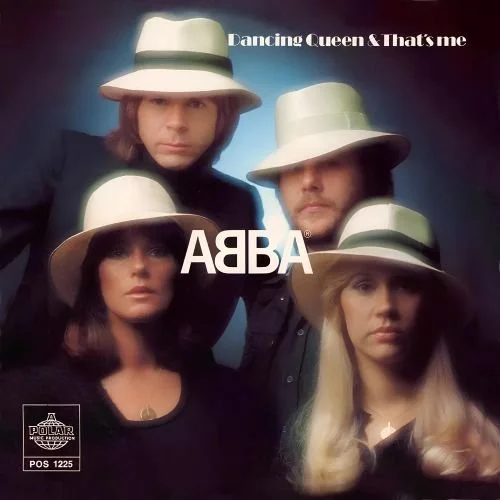
ABBA's Dancing Queen at Fifty
__________
ABBA themselves could claim…
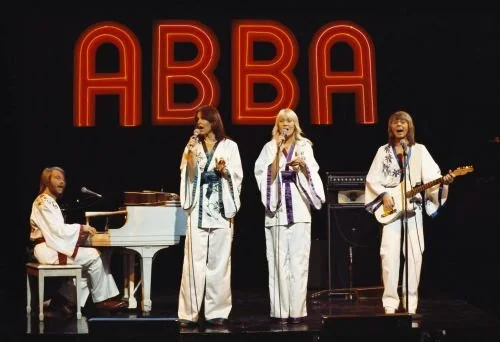
IN THIS PHOTO: ABBA’s Benny Andersson, Frida Lyngstad, Agnetha Fältskog and Björn Ulvaeus/PHOTO CREDIT: Michael Ochs Archives/Getty Images
to have written a few contenders for the best Pop song ever. Among them would be Super Troupers and Mama Mia. However, Dancing Queen is at the top of that list. Released as a single in Sweden on 16th August, 1976, I wanted to celebrate fifty years of this classic. The lead single from their fourth studio album, Arrival, Dancing Queen got a wider release and soon was hailed as ABBA’s signature song. The legacy of this track is immense! I am going to come to some reviews and features. Written by Benny Andersson, Björn Ulvaeus, and Stig Anderson, it has been covered multiple times. Though nothing matches the ABBA original. In 2021, Produce Like a Pro provided some lead-up and background to Dancing Queen. How the Swedish group hit Pop perfection with this 1976 anthem:
“Dancing Queen” was written by Benny and Björn, and manager Stig Anderson. They credit George McCrae’s 1974 disco hit, “Rock Your Baby” as a major inspiration. Under the working title of “Boogaloo”, Benny played the instrumental track for his wife Frida who was brought to tears by the sound. She recalled: “Benny came home with a tape of the backing track and played it for me. I thought it was so enormously beautiful that I started to cry.”
From the shimmery keyboard slide at the song’s start, listeners are transported into an joyous, almost magical sonic space. The track is pop perfection, brilliantly opening with a half chorus. Vocally, the chorus is exuberant and full of energy. The vocals on the verse pull back, although the infectious groove remains strong. This vocal phrasing mirrors the storytelling of the lyrics, setting the scene of a night club:
Friday night and the lights are low
Looking out for a place to go
Where they get play the right music
Getting in the swing
You come to look for a king
The low range of the melody on ending phrases like “you come to look for a king” creates a tone of anticipation. Further preparing for the glorious excitement which comes at the return of the chorus. The first verse is a double verse, whereas the second is shorter and quickly returns the listener to the highly anticipated chorus. The song is perfectly unbalanced; it is chorus heavy, and centered around the satisfaction of hitting the chorus’ final phrase.
Like many pop songs that describe dancing, there is a parallel between the joy and addiction of the song’s hook, and the physical motion of dancing to the music. “Dancing Queen” epitomizes that experience, bringing in a sonic color and energy that mirrors the experience of a night dancing the night away under the mesmerizing and brilliant lights of a night club.
“Dancing Queen” was recorded at Glen Studios, located in a suburb of Stockholm. On August 4, 1974, Björn and Benny entered the studio, along with some session players, including Rutger Gunnarsson on bass guitar and Roger Palm on drums. Gunnarsson had known and been working with Björn since the sixties with the Hootenanny Singers. Palm was a local session musician who had been working with ABBA since 1971. It was in these sessions on August 4 and 5th, that they laid down the instrumental backing tracks and melody which had so moved Frida. The rest of the track took several months to record. Even as late as December of 1975, Benny and Björn were still refining the recording. The track was produced by Benny and Björn, with Michael B. Tretow as the engineer.
“Dancing Queen” was completed around the same time as another one of their major hits, “Fernando”. The group wanted to release a single in March of 1976, but there was disagreement about which one to release. Anderson insisted that the group go with “Fernando,” a ballad which would contrast the group’s previous release, “Mamma Mia.” His choice was a strong one, and “Fernando” became one of ABBA’s best selling tracks. It remains one of the best selling singles of all time. Still, the group was confident that “Dancing Queen” was destined for success. Agnetha recalled: “It’s often difficult to know what will be a hit. The exception was ‘Dancing Queen.’ We all knew it was going to be massive.”
While the song had to wait another five months after “Fernando” to be released as a single, it got an early start in performance, including a January 1976 TV special in Germany and another television performance in Australia in March. And then in Sweden, the song was introduced at the televised wedding gala for King Carl XVI and Silvia Sommerlath on June 19, 1976. On August 16, 1976 “Dance Queen” was released as a single in Sweden. The response was massive, as it took the number one spot on charts all over the world – including in the US, when in April of 1977, it became the group’s first and only US number one hit.
And it remains their most popular and iconic hit. It is the quintessential ABBA recording, showcasing the band’s pop perfection. In 2015, it was inducted into the Grammy Hall of Fame. ABBA, as a group, remains one of the world’s best selling artists, and in 2010, they were inducted into the Rock and Roll Hall of Fame”.
In April 1977, Dancing Queen reached number one in the U.S. It provided Stereogum the opportunity to write about Dancing Queen for their The Number Ones feature. They awarded this perfect Pop song a perfect ten. How could it score anything less?! Fifty years later and it remains this flawless thing:
“You're John McCain. When you were 21 years old, you were flying a bombing mission over Hanoi, and a missile shot your plane down. You ejected from your plane, broke two arms and a leg, then landed in a lake and almost drowned. The soldiers who took you prisoner crushed your shoulder with a rifle butt and bayoneted you in the groin.
You were interrogated, beaten, denied medical care. You spent two years in solitary confinement. When your father was named commander of all the American forces in the Vietnam war, your captors tried to send you home. But adhering to the military code of conduct, you refused release, since other soldiers had been kept prisoner longer than you. So instead, you were tortured for years, beaten at regular intervals. And after five and a half years, when the war finally ended, you returned home to a country that had fundamentally changed.
You missed the cultural upheavals of the '60s. While they were happening, you were being tortured. You're unmoored, not sure how to return to American life. You remain in the Navy, go through physical therapy, take command of a training squadron. You cheat on your wife, who you married before your capture.
You don't pay a lot of attention to music. Music has changed, and you weren't around while that was happening. But one day, you hear a song. Two Swedish women are singing, in imperfect but somehow also perfect English, about a 17-year-old girl on a dancefloor. The music is bright and effervescent, and the voices are almost rapturous with joy. But there's an undercurrent to them, too, a sort of bone-deep melancholy. Those voices celebrate youth even as they mourn its loss. They stack melodies on top of melodies, rising on the music like currents of air. You love this song.
More than three decades later, you are running for president, and somebody from Blender magazine asks you to name your favorite songs. You oblige, and you name that song, ABBA's "Dancing Queen," as your favorite song of all time.
A few weeks later, the historian Walter Isaacson tries to snark-attack you about your pick. He asks you, "What were you thinking?" You're John McCain, and you're not going to take any of this shit from Walter Isaacson. You allow that your cultural experience is pretty particular: "If there is anything I am lacking in, I’ve got to tell you, it is taste in music and art and other great things in life. I’ve got to say that a lot of my taste in music stopped about the time I impacted a surface-to-air missile with my own airplane and never caught up again."
But you also know that ABBA rules, and you're happy to tell Walter Isaacson this: "Now look, everybody says, ‘I hate ABBA. Oh ABBA, how terrible! Blah blah blah.' How come everybody goes to Mamma Mia? Huh? I mean really, seriously, huh? ‘I hate ABBA, they’re no good, you know.’ Well, everybody goes. They’ve been selling out for years."
You're John McCain, and you are catastrophically wrong about so many things. But you are goddamn motherfucking right about ABBA.
"Dancing Queen" is a puzzle. It's about dancing, but it's not really a dance song. It's about loving rock music, but it's not a rock song. It's a party song and an elegy. And it's perfect. It's not the only perfect ABBA song. But perhaps thanks to that same sense of snobbery that John McCain encountered, it's the only ABBA song that ever hit #1 in the US. If we had to pick one ABBA song, we picked the right one.
To be fair, nothing about ABBA's genesis suggests that the group ever had a shot at conquering America. The four members of ABBA were all songwriters, and they'd all had Swedish hits, either solo or with their old bands, before they started the group. But they came from distinctly European musical traditions. They'd absorbed English glam and the '60s pop of Phil Spector. But as this Guardian piece points out, they'd also absorbed Italian balladry, Swedish folk music, and the sentimental German music-hall genre known as schlager. They sang in English, but English was very clearly not their first language.
Benny Andersson and Björn Ulvaeus, ABBA's two chief songwriters and producers, had been making hits in Sweden since they were teenagers in the '60s -- Andersson with his imitation-Beatles rock group the Hep Stars, Ulvaeus with his skiffle group the Hootenanny Singers. One singer, Agnetha Fältskog, had hit #1 in Sweden at age 18 with a schlager song that she'd written. The other, Frida Lyngstad, was also releasing schlager singles from a young age, but she didn't have a big hit until she started working with Andersson and Ulvaeus, who'd started writing songs together.
Eventually, Fältskog married Ulvaeus, and Lyngstad married Andersson. They all got together and formed a group, naming it ABBA -- the first letters of all their first names mashed together. (Abba was also a brand of pickled herring in Sweden; the group had to license the name from the company.) In 1972, ABBA entered a song called "Ring Ring" into a Swedish song competition, hoping that the song would go on to compete in the Eurovision Song Contest. The judges shot it down, but the track still went to #1 in Sweden.
The next year, ABBA entered another song, the glam-influenced "Waterloo," into the contest, and they made it in. ABBA won the Eurovision contest, and it became a European sensation, hitting #1 in three different countries, including the Eurovision host nation of the UK. Even in America, where nobody pays attention to Eurovision, "Waterloo" was a hit, peaking at #6. (It's a 9.) And by some grand cosmic coincidence, the same day that ABBA debuted "Waterloo" at Eurovision, their countrymen Blue Swede hit #1 in America with a cover of BJ Thomas' "Hooked On A Feeling." Blue Swede were the first Swedes ever to hit #1 in the US. ABBA would eventually be the second.
After "Waterloo," ABBA became global sensations. They were huge all over Europe, of course, but they were huge elsewhere, too -- Australia, South Africa, Japan. But after "Waterloo," America was largely immune. The ABBA songs that dominated the rest of the world charted in the US, but they didn't make the top 10. "Mamma Mia" peaked at #32. "I Do, I Do, I Do, I Do, I Do" and "SOS" both peaked at #15. "Fernando" peaked at #13. But "Dancing Queen" went all the way. "Dancing Queen" was undeniable.
"Dancing Queen" isn't a disco song, but it has disco somewhere in its DNA. Andersson and Ulvaeus, who wrote and produced the song, were inspired by the beat of George McCrae's "Rock Your Baby." But where "Rock Your Baby" is thin and propulsive, "Dancing Queen" is slow and lush and dramatic. Andersson and Ulvaeus, notorious studio perfectionists, piled sound on sound, melody on melody. The first thing we hear, a finger running down a piano keyboard, is a total Elton John flourish. When the song kicks in, it's absolutely piled with instruments -- keyboards, strings, something that sounds like a choir of backing vocals even though I think it's just a synth.
Ulvaeus and Andersson listened to that backing track again and again until they started to see the image of a girl losing herself on a dancefloor. The lyrics that they wrote are clumsy and strange. They're words that no native English speaker would ever even think to combine: "Getting in the swing / You came to look for a king." "With a bit of rock music, everything is fine." "The music's high." "You can dance. You can jive." But those words do their job. They conjure an image. When you close your eyes, you can see that girl, too. Maybe you can be that girl.
When Andersson played that backing track for Lyngstad, she broke down in tears. She hadn't heard how she'd sound on the song yet. She just knew. Years later, Lyngstad told The Guardian that she cried "out of pure happiness that I would get to sing that song, which is the absolutely the best song ABBA have ever done."
You can hear that. "Dancing Queen" only works if Lyngstad and Fältskog put everything into the song. You can't be neutral with "Dancing Queen." You have to belt it, and you have to put feeling into it. "Dancing Queen" isn't a song about apocalypse, or even about romantic desolation. It's just a night out in a nightclub. But if you're 17, if a nightclub is the only place where you really feel at home, then the importance of that night is massive and all-consuming. It obliterates everything else.
Something similar happens on 50 Cent's "In Da Club," a song that will eventually appear in this column, though the dynamic is different. On "In Da Club," there's no urgency in the vocals. 50 is calm and casual, babbling in singsong, telling you to come give him a hug. But the beat sounds like what's playing on a James Bond soundtrack when the train with the nuclear bomb is about to crash into the station and Bond has five seconds to defuse it. Clubbing can be epic, and the best songs about clubbing treat it as such.
Early on in "Dancing Queen," Lyngstad and Fältskog are ebullient, dramatic, incandescent with happiness: "Friday night, and the lights are low / Looking out for a place to... gooo." But when they hit the chorus, there's a sort of desperate longing in their voices. They remember being that girl, and they miss being that girl. They love that girl. They want nothing but the best for her. They're happy that the girl exists, that the nightclub exists, that the girl gets to feel like she does. But there's a devastating sense of loss somewhere in there, too. It's unstated, but it's there in the way those voices soar and crash together. They need you to feel the beat from the tambourine. It it absolutely vital that you feel that beat.
"Dancing Queen" is pop music operating on its highest possible level -- when everything is working in concert with everything else, when the meaning is so bold and bright and powerful that it doesn't even have to state itself. ABBA never made another song quite like it, but a lot of people tried. This Guardian piece notes some of its echoes. Elvis Costello, who once said that "Dancing Queen" is "manna from heaven," took the piano part and used it on his 1979 single "Oliver's Army." Chris Stein of Blondie, a band who will soon appear in this column, acknowledges that Blondie were trying to come up with their own "Dancing Queen" when they recorded their 1979 "Dreaming." MGMT took the languid, dreamy "Dancing Queen" tempo and intentionally replicated it on 2008's "Time To Pretend," the best song they've ever written”.
I will come to another feature soon. However, I found this one from 2016 that argues why Dancing Queen is the saddest record ever made. A song that sound joyous, if you dig deeper, you notice something a little darker. A song that could almost be turned into a short film, such is the richness of its lyrics. How it provides dissection and discussion:
“The basic point, the important point, here is this: you have spent your entire life believing “Dancing Queen” is a song about a 17 year old girl, dancing. And to a point, it is. Yet, have you ever thought about the song’s vantage point?
You are the Dancing Queen, young and sweet, only seventeen
Dancing Queen, feel the beat from the tambourine
You can dance, you can jive, having the time of your life
See that girl, watch that scene, digging the Dancing Queen
Make no mistake. This song is about the dancing queen, but it is most definitely not sung by her. Herein lies the tragedy. Our narrator has realized that she is no longer the Dancing Queen. She is no longer young, no longer sweet, no longer 17. Now, instead, she watches from the bar; the dancefloor a maelstrom of lost faith, memories, and missed opportunities. She was once 17, and as such was totally oblivious that the moment would ever end.
“Dancing Queen” is a song about this end. Or at least, edging ever closer towards it. It is a song that respects the truth that the passing of time only moves in one direction. That the second after the greatest moment of your life, it is as far behind you as it will be forever. Fuck your inner child, fuck ‘you’re only as young as the woman you feel’. You are young once, it happens, and then the rest is a slow slide towards something both inevitable and unknown. Of course, that’s not to say that the slide into adulthood can’t be a rich and bountiful experience. For many youth is an uncomfortable project, full of Muse albums and matted pubes, and as such something they are glad to watch it turn to ash over their shoulder. That’s fine, I get that. There are, however, a large percentage of people who only make sense when they are young. People who find a home away from home in the shimmering reaches of nightclubs. A lot of cynics would have you believe that nightclubs are only good for trying to pull women, or that those who purport to love them are merely extending some juvenile urge to deny ‘the real world’. Sadly, for all their wisdom, the truth is they don’t understand the confidence, the place, many people find when they go out—and just how out of place they can feel once those halcyon days are over. As soon as that moment passes—that moment when they were walking on air through the thick, black promise of the night—as soon as the sun starts to come up on the rest of their lives, they are destined to spend forever stewing on what has ended, or simply pretending it hasn’t.
To every wrong-side of thirty year-old still stubbing cigarettes out on coffee tables at 6 the next morning, everyone who has ever spent entire evenings listening to their terrible teenage CD collection, every aching back on a premature night-bus home: this one’s for you. This is what it’s all about. Watching the Dancing Queen flood the floor with light, a floor you used to own but now creaks under other feet. It’s a beautiful scene, sure, but also an inescapably sad one. Yes, it sounds happy, but that’s the point. The thick melancholy in every piano chord, the unmistakable, immediately singable nature of the chorus are all part of its power. Sometimes when I listen to “Dancing Queen”, around the 2:57 mark, I’m sure I can even hear someone scream. This isn’t joy. This is agony.
ABBA have been fucking depressing on many other occasions. They basically live-blogged their respective divorces via disco ballads. “Slipping Through My Fingers” captures, with devastating effect, the slow trickle of child ageing away from their parent. “The Day Before You Came” details the oblivious mundane existence that precedes a life-changing encounter. And “S.O.S.”—your Aunty Mary’s favourite—horrifically masters the point of total disembodiment from somebody you thought you’d spend forever with. Pretty much everything they have ever recorded is imbued with a wistfulness. A constant interplay between pop sensibility and twisted mentality.
Yet for my money, none of their hits come anywhere close to “Dancing Queen” in the longing stakes. It is a song that says the best has been. The best now belongs to somebody else. The best you can now do is watch the best and remember when you were the best. It’s a song for the moment when the value of your memories outweigh the value of your ambitions. “Dancing Queen”, a song now most commonly preceded by a function DJ slurring the words “get yer dancing shoes on” into a low quality microphone or belted at West End audiences, is in fact a song about watching the party from the other side of the glass, knowing you’ll never be on the list again”.
In 2016, The Guardian named Dancing Queen the best Pop song ever. They wrote how this classic “has won over everyone from punks to royalty and almost caused a riot in New York. So how has the song’s low-lit Friday night managed to last for ever?”. It is an interesting question:
“What is it that elevates Dancing Queen above so many other beautifully produced, catchy, euphoric songs? Pete Waterman, who knows a thing or two about writing a hit, believes it exemplifies how the best Swedish artists are able to soak up popular trends and regurgitate them as something fresh: “Listen to Dancing Queen and you can hear Elton John straight away, you can hear the Beatles, disco is coming along with the Bee Gees, and you can hear that,” he says. “It’s also got what all great pop songs have – a great first line. ‘Friday night and the lights are low’ … boosh! You’re away. All great records start with a bang.”
Indeed, the record starts with such a bang that, after that initial piano roll, it catapults you straight into the middle of the chorus: an explosive opening before the song has even officially started.
It could have all been quite different. An early version opened with the less immediate line: “Baby, baby you’re out of sight/Hey, you’re lookin’ alright tonight.” Back then, the song was called Boogaloo, too, before the band’s manager Stig Anderson earned his fee by suggesting an alternative title.
The music – which updated the laidback disco groove of George McCrae’s Rock Your Baby with Abba’s sparkling pop panache – was finished before the lyrics were considered, which was how most of Abba’s songs were developed: “I would play the songs over and over again,” Ulvaeus told me in 2014, “and I would literally see images of things coming up.”
In Dancing Queen’s case, these images told the story of a 17-year-old girl on a nightclub dancefloor – lost in the music and the moment. The sonic euphoria mirrors the freedom that the dancefloor can bring, although, as with all Abba songs, there’s a hint of what Ulvaeus called “that Nordic melancholic feeling” to it. The teenage girl isn’t the narrator, after all, so is the listener really just an observer, looking back on their lost youth? Ultimately, the song seems less concerned with making you gaze forlornly back than it does with bringing the abandonment of your teenage years into the present, at least for four glorious minutes.
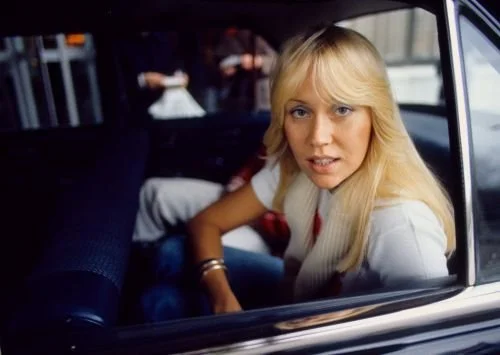
IN THIS PHOTO: Agnetha Fältskog arrives in The Hague, Netherlands to record the T.V. programme. Eén van de Acht, in 1976/PHOTO CREDIT: Gijsbert Hanekroot/Redferns
No wonder, then, that it’s such a wedding disco staple (there are only two kinds of wedding discos: ones that open with Dancing Queen, and terrible ones). No wonder that other artists have tried to channel its evergreen properties: the band may have been the definition of uncool at their peak – perma-smiling europop stars in sequinned jumpsuits – but that didn’t stop their more critically adored peers from borrowing from them. Chris Stein admitted to trying to replicate the song for Blondie’s hit Dreaming, while Elvis Costello – who once admitted he viewed Dancing Queen as “manna from heaven” – famously was inspired by the descending octave piano chords for his hit Oliver’s Army. More recently, MGMT told the podcast Song Exploder how they purposefully stuck to Dancing Queen’s relaxed 101 BPM tempo for their breakthrough hit Time to Pretend.
Australian/Swedish twin sister duo Say Lou Lou have a particular affection for the 70s pop/disco sound (their latest release is a cover of Saturday Night Fever) but believe much of Dancing Queen’s magic rests in the lyrics: “Dedicating a whole song to a girl wanting to dance without it necessarily having to be about romance made us feel excited and thrilled,” says Elektra June Kilbey-Jansson. “Crowning a 17-year old girl in a nightclub a queen feels so dramatic and attention-grabbing. They would find great song titles and work it through the song with memorable keywords – in this case swing, jive, rock, king and queen.” (Let’s be thankful once more that the band didn’t stick with Boogaloo).
While these artists have all helped Dancing Queen live on, there’s another, stronger force that’s kept it at the forefront of public consciousness: the musical Mamma Mia!. Judy Craymer, who conceived the monster hit stage show and film, believes its success has helped pass the music of Abba on from generation to generation. “An 89-year-old would say ‘that’s our song’, but children can learn it, too, almost like a nursery rhyme, and it’s very attractive to them,” she says, pointing out how countless parents have told her that the soundtrack’s version of Dancing Queen is one of their school-run staples.
Craymer credits the way the song “explodes from the stage or screen” for its prominent role in the musical and film. She also recalls the runup to opening Mamma Mia! in New York back in 2001, when the cast were due to perform Dancing Queen as part of a free concert in Times Square. “But the police had heard that it could cause a euphoric frenzy in the crowd!” she says, laughing. “They had heard about the reactions the song had got in San Francisco, with people getting up out of their seats, and in the end I don’t think we were allowed to perform it”.
Spending fourteen weeks at number one on the Swedish charts, Dancing Queen dominated in 1976. Fifty years after its release, and it still sounds utterly perfect! Here is a brief snapshot of its legacy, and how this astonishing song is regarded: “In 2000, "Dancing Queen" came fourth in a Channel 4 television poll of "The 100 Greatest Number One Singles”. It was chosen as No. 148 on the Recording Industry Association of America's Songs of the Century list. It was ranked No. 171 on Rolling Stone's 2004 list of "The 500 Greatest Songs of All Time", the only ABBA song on the list. That same year, it made VH1's "100 Greatest Dance Songs in Rock & Roll" at No. 97. Also in 2000, editors of Rolling Stone with MTV compiled a list of the best 100 pop songs; "Dancing Queen" placed 12th among songs of the 1970s. Billboard and Rolling Stone both ranked the song number one on their lists of the greatest ABBA songs. In 2023, it was ranked No. 2 on Billboard's list of "The 500 Best Pop Songs". On 9 November 2002, the results of a poll, "Top 50 Favourite UK #1's", was broadcast on Radio 2, celebrating the 50th anniversary of The Official UK Charts Company. 188,357 listeners voted and "Dancing Queen" came out at No. 8”. This article also talks about the legacy of ABBA’s Dancing Queen. I am going to come back to The Guardian for the final piece. In 2020, when deciding the U.K.’s best number one singles, Dancing Queen came in ninth. It is amazing to think eight other song were deemed better number one! In any case, it is clear this dazzling Pop song remains untouched:
“It takes 18 seconds for Dancing Queen to drop into one of the greatest moments in pop. It speaks volumes that the 18 seconds preceding it are pretty wonderful too: that song bursting into life on that impossibly joyous piano glissando, before eight bars of sparkling, effortless mid-tempo pop.
Then Agnetha Fältskog and Frida Lyngstad start to sing, effectively bringing us into the middle of a chorus. Their lyrics should scan as simple, bouncy instructions (“You can dance / You can jive / Having the time of your life”) but the women’s longing harmonies transform them. Stretched over two yearning notes, the word “you” is delivered to the listener as if Agnetha and Frida are trying desperately to fill them with confidence. As they sing “having the time of your life”, the melody takes a downward, melancholic turn, and the bassline follows. A moment of enjoyment turns into something sadder, more reflective, perhaps one of nostalgia.
We’re then told to switch our perspective – “to see that girl, watch that scene” – to imagine ourselves as the Dancing Queen, only 17, feeling the beat of the tambourine. Maybe we once were. Maybe we still can be, even if only in our wedding disco-lit memories, or our glittering imaginations.
Dancing Queen was the lead single from Abba’s fourth album, Arrival. Released in the summer of 1976, it got to No 1 in 15 countries including the UK (where it stayed at the top for five weeks) and the US. It first came to life a year earlier, when Björn Ulvaeus and Benny Andersson were in their tiny songwriting cabin on the Swedish island of Viggsö, trying to craft their own take on early disco. They loved the loose, languid drumbeat of George McCrae’s 1974 hit Rock Your Baby, and used it as an inspiration (it was even played in the studio before Dancing Queen’s final recording for them to capture its atmosphere).
They initially called the song Boogaloo, but Abba manager and co-writer Stig Anderson suggested a different title. When Benny Andersson played Lyngstad (then his partner) the instrumental demo, she burst into tears.
The dense arrangements in Dancing Queen’s final mix make it especially magical. Their Phil Spector-obsessed audio mixer, Michael B Tretow, talked through the layering of the song in a 2001 BBC pop music series, Walk on By. Multiple tracks of percussion, stuttering guitars, synthesised strings, clavinet and vocals filled every second of the song with nagging pop hooks. In the same documentary, Nile Rodgers said he was hugely inspired by this approach to songcraft (in 1976, he was in the early stages of putting together Chic).
Dancing Queen was premiered in June 1976 in a suitably regal setting: a gala to celebrate the wedding of Sweden’s King Carl XVI. By the autumn, it was an international smash, with even smirking music press critics recognising its brilliance. “Any band that can make even disco sound like the Ronettes can’t be all bad!” crowed Robot A Hull in Creem. “It’s fodder for the masses in its least derogatory sense,” wrote Tim Lott in Sounds. New wavers loved Dancing Queen too. Elvis Costello cribbed its piano line for Oliver’s Army and Chris Stein admitted that Blondie’s Dreaming was “pretty much a copy of Dancing Queen”.
Although some of its lyrics have dated (“You’re a teaser, you turn ’em on” might not pass muster today), the bulk of them capture a sense of boundless possibility. Our dancing queen is looking for someone to dance with, but “anybody could be that guy” – the thrilling mystery of the future from the perspective of youth gleams in those words. A verse later, we’re told “anyone will do / You’re in the mood for a dance”. Even in the less progressive mid-1970s, having someone to dance with was far less important than the dancing itself.
“And when you get the chance,” we’re told, we become the dancing queen – that small word “and” positing this transformation as an inevitability. Today, the song’s legacy still delivers this message. Its way of bringing people together was underlined in the Abba film, Mamma Mia, as an ever-growing crowd gathered to sing it while roaming the streets of the fictional Greek island of Kalokairi. (This montage was revisited, with even bigger crowds, in its 2018 sequel.) Theresa May’s arrival to the song on stage at the 2018 Conservative party conference also showed us its transformative power: the right-wing press briefly turned in her favour in the midst of Brexit negotiations because of it (the Daily Mail said she’d “danced her way back to authority”).
Covers of the song also kept coming in lockdown. US alt-pop artist Elliot Lee released a fragile ukulele version. Lewis Capaldi covered it for an American coronavirus fundraising campaign. It made regular appearances in online social-distancing singalongs too, telling us all that we can dance, we can jive, even when we’re not allowed to look “out for a place to go”. Dancing Queen reminds us that having the time of our lives is something that’s always there, and that’s always possible”
On 16th August, it will be fifty years since Dancing Queen was released. Initially released in their native Sweden, ABBA’s masterpiece then spread to the world. One of the greatest songs ever written, it is impossible to not feel uplifted and inspired by this song. In 2018, CRACK asked six artists to name their favourite ABBA song. Quiet Luke picked Dancing Queen and explained why it is so enduring and powerful: “I think the music has lasted because it’s so wholesome. People sometimes just want something that feels good, is fun for the whole family without context and decade-tested. I think they’re definitely misunderstood, being Scandinavian and all. It adds another layer to their interpretation of the wall of sound, of the disco trend happening, of pop music in general. I think most people probably assume they’re just American or something. If you look at the pop music coming out of Scandinavian countries today, I think you’ll see Abba’s influence from Max Martin to all the celestial, atmospheric rock that comes out of there. Abba runs deep”. I hope there is proper celebration of this flawless masterpiece on its anniversary. Even though it has inspired so many people, no other song has reached quite the same heights in terms of endurance and brilliance. The supreme Dancing Queen will continue to reign…
FOR all of time.