FEATURE:
Spotlight
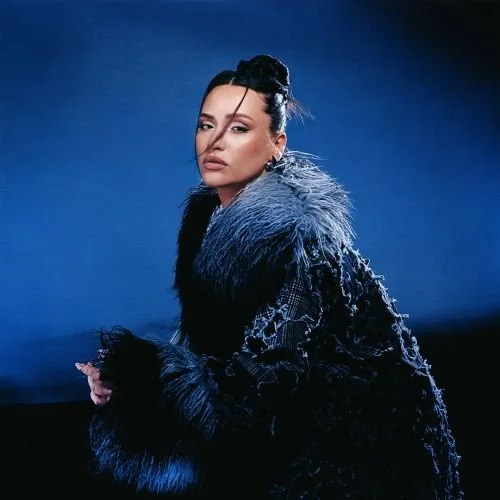
Lia Kali
__________
I do want to get…

to some interviews with the amazing Lia Kali. She released her new album, Kaelis, last year. It is an amazing release that announces this phenomenal talent. Collaborating with Toni Anzis on the tracks, if you have not heard this album and this artist, then do go and seek it out. Let’s start out with MME Awards and their introduction of the incredible Lia Kali:
“Craziest thing that happened on tour?
Back in 2023, when we launched the first album 'Contra Todo Pronóstico', one of the very first shows was in Berlin. Those days I was really afraid of flying, but we planned to travel by plane to Berlin from BCN to make this show. We had already boarded, plane started moving, on its way to the take-off runway and I started to panic so much that we had to stop the plane, so I could get out of the plane. The very first moment I touched land I said to my tour manager: "OK, now I'm fine, let's rent a car and we go straight to Berlin". Even though it took us 15h, I arrived on time to make a line-check and play the show.
Which song of your own means the most to you and why?
Very difficult to say, depends on the moment. Right now I would say "Contra Todo Pronóstico", "Cantaré" or "Niño". These songs touch me when I sing or hear them at the moment.
What do people like to do if they like you?
You will love LIA KALI if you love true people and true music, you will love LIA KALI if you never judge a book by it's cover. no matter where you come from or the language you speak
What is something (almost) nobody knows about you?
I'm a super fan of Christmas and Halloween decos!
Dream collab for your art or music:
Lauryn Hill. Or Nathy Peluso. Or ROSALÍA.
Leave a message here for your fans:
I LOVE YOU TO THE MAX! THANKS FOR ALWAYS BEING THERE!
Lastly, give us a random inspirational quote!
Imagination has no limits. The physical world does. Art exists in both”.
There are a couple of chats from last year that I want to come to. Kaelis is an extraordinary album from a singular artist. This interview with the Barcelona-born singer is interesting. How she reflects on this new album. Her best work to date. I really love the music she is making and am excited to see what comes next:
“Does the album meet your expectations?
— I love it. And the feedback from people who've heard it is much better than the previous one, so I feel very, very satisfied with the work done.
Kaelis It's a concept album. When did you decide it would have a common thread?
— From the beginning, I was very clear about what I wanted the narrative to be. Because of everything I was experiencing at the time, because of everything that had happened with the first album, because of the vertigo and fears I'd felt following the success that had come my way.
Were you so surprised by the success?
— A lot, yes. I've been doing bars, weddings, and baptisms for sixteen years. And suddenly I make my first album, have a thousand people at Apolo, everyone singing the songs... And I do eighty concerts in a year. All of this changes my life a lot. It changes how people around you see you and how people who don't know you see you. Things are happening very fast.
Speaking of relationships, two songs are two opposite sides: With you necklace and I will sing. Because each one is sung from a different place. Who are you singing to?
— They are very different, yes. With you necklace, to a betrayal and a loss I suffered. When things are going well for you, sometimes the people around you, unfortunately, don't take it well, and suddenly you lose someone you loved very much, because they can't process it. And I will singAlthough it seems like a love song, I write to music, as a song of gratitude for all the positive things that music has given me.
With your first album, when people asked you about your influences, you mentioned soul singers and female rappers. Have you added any others?
— Yes, I've discovered people. Luz Gaggi, for example, an incredible Argentinian, and Milo Jota. And Eladio Carrión, who I hadn't listened to much until he asked me to collaborate with him. I listened to him and said wow, I like the way he makes music. And, of course, there are always the influences that are never lacking: Amy Winehouse, Erykah Badu, Lauryn Hill, Ray Charles, Etta James...
Unlike other singers of your generation and younger, you have influences that go way back. Do you think it shows in your singing?
— Yes, it's very noticeable. Sometimes people tell me, "What a strange voice." They're people who've never heard soul music. I think soul music has helped me because it's given me that identity. I come from mothers that most people in urban music don't have.
What is your best memory related to music and what memory would you like to forget?
— One of the best, especially the first times. Over the years, you lose the sensations you experienced with your first kiss, those things that happen when you're a child and you're just beginning to discover the world. And music has given them back to me. For example, the prospect of making the first WiZink [now Movistar Arena] is giving me butterflies again. Like the first time I went up to the Palau Sant Jordi with Kase.O and did that collaboration with an artist I'd listened to for so many years. The best thing music has given me is being able to somehow return to that childhood or innocence, to those beautiful things you feel the first time you do it”.
Let’s finish off with The Line of Best Fit. Lia Kali does have a solid fanbase in the U.K. I would love to see her perform live, as I can imagine she brings life to these songs and creates a spectacle. Right now, she is touring Europe:
“I connected my fear of flying with the panic I felt when things started going well for me,” she says, explaining the conceptual backbone of her latest record Kaelis. “It was about learning how to place success in my life without it consuming me.” It's the kind of admission that feels slightly off-limits, like listening in on a thought still being worked through.
That sense of exposure is not new to Kali’s career, but it has evolved. Raised on the outskirts of Barcelona, her first moments of visibility came through breakout performances on Spanish talent shows Operación Triunfo and La Voz, environments built to spotlight voices before context. For many artists, that format becomes the story.
For Kali, it was a temporary stage. What preceded this was slower and more deliberate: street performances, jam sessions in once legendary local spots like Marula Café and Jazz Sí, long nights playing soul, jazz and blues, and eventually her debut album Contra Todo Pronóstico – a record born out of urgency rather than strategy.
“It’s an album I love and hate," she tells me. "It was very hard to make because I was carrying a lot of stress and anxiety. I love it because it came out and it cost me a lot. I hate it because I felt there was pressure, like you have to release something now. I was working as a waitress in two places at the same time. The only thing that made life worthwhile was making music.”
There was no expectation of reach or recognition: “I wanted to give my dad a physical record and say, ‘Here it is,’ and give one to my grandmother too. I didn’t care what happened after.”
What happened after changed everything for Kail. Her brand of soulful trap struck a chord with a scene of urban music that's proving to be one of the most provocative proving grounds in the world. Nurturing artists like fellow Barcelona local Nathy Peluso as well as el madrileño himself, C. Tangana, and global sensation Bad Gyal, Spain’s urban music scene is breeding some of the most genre-bending artists in the world right now. Lia Kali is no exception to this and her musical progression over her short career is a testament to her innate ability to adapt, innovate, and keep moving.
With growing audiences and a second album comes touring, visibility, and the unromantic realities of success. Sophomore record Kaelis was written while playing close to eighty shows, built under pressure and time constraints, and shaped by a life suddenly in motion. It's an album that documents that shift without celebrating it, asking how an artist can grow without surrendering the conditions that made the work possible in the first place.
By the time Kali began working on her second album, the circumstances around her music had shifted completely. What once lived in spare hours and borrowed energy had become a full-time reality. “With the second album, that other part comes in,” she says. “Like, shit, people liked it, now this is my job. This has become my work, thank God it feeds me and my family.”
The record was written and recorded in fragments, stitched together between flights, hotels, and stages. There was no retreat from the noise of it. “I had no life,” she explains. “Monday to Friday I was in the studio, and on weekends I was touring around the world and around Spain.”
Kali does not frame success as a triumphal arc but speaks openly about its psychological cost. “It brought an external pressure that I hadn’t had before,” she says. “Stress and anxiety were part of it.”
Visibility changes how she moves through the world, too: “When people start to recognise you, you feel more awkward going to the street,” she admits. “Videos appear that you don’t control. You can’t relax the same way anymore.”
The street offered something different. It was less polished, less controlled, and more honest. “My jam sessions ended up being more on the street," she explains. "Anyone who passes by and wants to make music is welcome to join.”
That camaraderie left a lasting imprint: “The street taught me openness,” she says. "My friends are my family.”
The moment that really made her sound unignorable was "La Cruz" a track that marked a clear departure from expectation. “It’s a very dark, techno track, with very electronic roots. That’s where there was a big change," she tells me.
The shift came from curiosity rather than strategy. Working with new people mattered less for the outcome than for what it unlocked internally. “By experimenting with more people I discovered that it motivates you to get into things and places you don’t know,” she says. “It’s like you become a bit of a child again. I realised that I really enjoy searching for my sound in new places and exploring new genres.”
For Kali, experimentation is a way of staying honest. She is careful to separate instinct from calculation. “I don’t go into the studio thinking, ‘Now I’m going to add this style,’” she says. “It comes from what I feel. There’s a part of respect for music and respect for my way of understanding and living it.”
That philosophy carries through to how her music exists beyond the studio. Despite being associated with contemporary urban sounds, Kali has remained committed to playing with a live band. It is not the simplest route, nor the cheapest but the one that reflects where she comes from. “I always came from soul, blues, jazz,” she says. “I always played with a band, earning fifty euros per gig, playing shows where nobody wanted to listen.”
Her live show is electric and completely reimagines her hits with a more soulful and jam-focused approach that’s rooted in her musical history. The next chance to catch her will be at January's Eurosonic Noorderslag showcase where she’ll be part of a group of artists highlighting the next generation of Catalan talent, along with LLUM, Sofía Gabbana and CLARAGUILAR.
As her audience has grown, so has her insistence on drawing lines – not just between honesty and performance, but between what belongs to the work and what belongs to her. “Generally, I don’t talk much about my life publicly,” she says. “My private life is my refuge. I protect my intimacy.”
This does not mean her songs are emotionally guarded: “I talk about [people I love] in my songs,” she admits. “But nobody knows. Music comes first.”
Kaelis is chaptered by personal voice notes that she sends to her mother. She talks about how much her family means to her, that she met a guy she thinks she likes, and how all this success can feel heavier than people might think. Each of these notes are titled by coordinates in the album’s tracklist; each one pointing out important locations in her life such as Plaza Castilla where she first began jamming in the street”.
Let’s end with a review of the staggering Kaelis. Even though it is a Spanish-language album, it achieved worldwide success. If you have not yet fallen under the spell of this tremendous Spanish artist, then do make sure that you get Lia Kali…
INTO your life.
__________
Follow Lia Kali