FEATURE:
If I Ruled the World
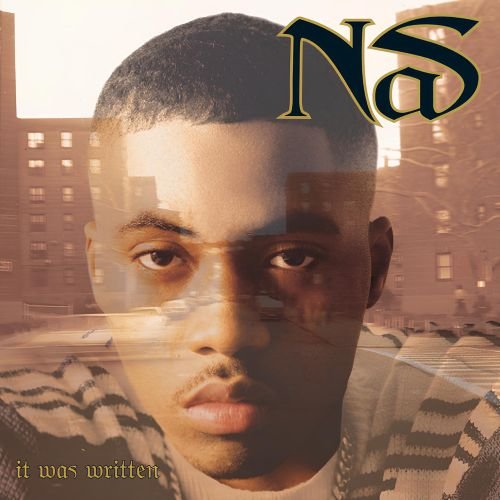
Nas’s It Was Written at Thirty
__________
MOST artists…
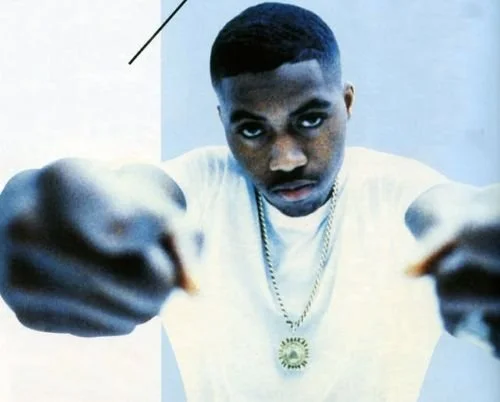
are fortunate if they can release one classic or masterpiece in their career. Nas is among a select group of artists who has released several. His first was 1994’s Illmatic. That was his debut album. Many would feel pressure and expectation to make a second album as strong or better. Nas released It Was Written and blew away any doubters that he was a one-album artist or was a flash in the pan. Even though he has been involved with feuds and controversies – which might be part of Hip-Hop culture but leaves black marks on any artists who participate -, the albums he has released are phenomenal. On 2nd July, 1996, It Was Written received some mixed reviews. In years since, It Was Written has grown in reputation and seen as a hugely influential Hip-Hop album. Nas is one of very few Hip-Hop artists from the 1990s still recording and putting out great albums. His latest, 2023’s Magic, is a brilliant album. He has had dips in terms of quality and form. As It Was Written turned thirty yesterday, I want to spend some time with it now. Illmatic was defined by its rawness and underground edge. It Was Written has a more polished sound. Not that this sacrifices his bite and genius. Instead, it is a more commercial album that retains a lot of the roots and core of Illmatic and opened his music up to a wider audience. Nas embraced mafioso and gangsta themes. Mafioso Rap is a hardcore Hip-Hop subgenre founded by Kool G Rap in the late 1980s. Nas helped popularise it and make it more visible in 1996. Reaching number one on the US Billboard 200 chart, It Was Written was a massive instant success.
I am going to get to some features around Nas’s It Was Written. In 2021, Mic Cheque reflected on Nas’s second studio album. One that very much established him as a Rap great. To this day, he remains so influential. Someone that many new Hip-Hop artists look up to and idolise. It Was Written is not only one of the great Hip-Hop albums of the 1990s. It is one of the best albums ever:
“On July 2, 1996, Nas released his sophomore album, It Was Written, under Columbia Records. Coming off his lauded debut, it was vital that the Queensbridge emcee got his second album right. The hip hop community wouldn’t shut up about Illmatic – still to this day. The task was to match it up and have lightning strike twice. Easier said than done, of course.
To understand It Was Written, we must first set the scene. Gangsta rap was on the decline, Death Row and Bad Boy were dominating forces, and on the periphery was the assertion of alternative pioneers (OutKast, De La Soul). It was a transitional period when it came to creativity; anyone could push the margins to new widths if they were brave enough.
Enter Nas, now a New York superstar ready to take the next leap. Illmatic was critically-acclaimed, though it only peaked at number 12 on the charts and took two years to be certified Gold. Now managed by Steve Stoute, the ultimate mission became turning Nas into a commercial force. Also managed by Stoute were production duo Trackmasters (Poke & Tone), whom Stoute convinced Nas to grant dibs to produce a bulk of the album. Known for their knack with crossover records, there was belief that this team could bring Nas the sort of success that Large Professor, Pete Rock and DJ Premier couldn’t.
It was for these very tactics that the public were not receptive at first. Though most critics favoured the record, fans noticed a departure from the predecessor’s dusty, jazz production – enough to call Nas a sellout, going pop, or whatever equivalent phrase of the nature.
But commercially, the album prevailed. It Was Written debuted at number one, selling 268,000 copies first-week and remains Nas’ best-selling record to date. The first two singles not only charted fairly in the States, but made their marks worldwide, particularly across Europe.
In retrospect, the notion that It Was Written was a ‘sellout’ record was beyond a stretch. Only three of its fourteen tracks carry a crossover appeal, which all still maintain the lyrical dexterity and flair Nas became known for.
Twenty-five years later, it is common knowledge that Nas dropped back-to-back classics, and just like his debut impacted and influenced hip hop massively. From Nasty Nas to Nas Escobar, It Was Written took the Queensbridge block tales and expanded the landscape to represent a matured pro on top of the game; both the rap game and the crack game.
It Was Written was instrumental in pioneering mafioso rap, the tougher cousin of gangsta rap where the artist narrates the life of a head honcho. Organised crime and cartel fantasies were the soundtrack for this suave, polished branch that came across more articulate and sophisticated. Nas set this benchmark with It Was Written, a rapper only with a pen like his could unlock. The songs are trapped in the purgatory of Nas’ dynamics; the sound feels Hollywood, but the realities around him are still entrenched in street life. That is what It Was Written does so well, managing to find a faultless balance in the new and old, which is ultimately what brought Nas new fans while keeping the existing.
If Illmatic was like a film, It Was Written is more like a play, acting out scenes of gang violence, betrayal and retaliation, kingpin moves and environmental observations. Just like how Illmatic paints pictures of local Queensbridge life, It Was Written maps out the mobster mentalities in high definition. Which is why it can be said that Nas’ lyricism is on par or even better than on Illmatic.
Over the years, the hip hop community’s staunch stance towards It Was Written has gradually dwindled. Long misunderstood, it is now rightly recognised as Nas’ second back-to-back classic where he elevated his career while maintaining his penmanship. It Was Written now comfortably sits high up as runner-up in Nas’ album rankings, becoming far from a one-album wonder that many claim he is when reflecting on his discography. Though if you ask Lupe Fiasco, Royce da 5’9″ or Schoolboy Q, It Was Written is a better album than Illmatic.
Its role in pioneering mafioso rap can only be challenged by Raekwon’s Only Built 4 Cuban Linx or Jay-Z’s Reasonable Doubt. Rarely will you find an album from this era that did not so effortlessly merge the commercial with the ground roots and maintain artistic authenticity.
If Trackmasters were to produce the entire album, history could have etched a different legacy. What It Was Written ensures it must do is balance the spaghetti-western sounds of “Affirmative Action” and “Nas Is Coming” with your traditional boom-bap flavours. Havoc, DJ Premier, Live Squad and L.E.S. have vital contributions that bring the ‘authentic’ Nas back to our ears.
To this day, the influence of It Was Written rings in hip hop. Would Pooh Shiesty and Lil Durk’s 2020-21 hit “Back in Blood” exist without “Take It in Blood”? Or the countless personification of a gun that have been laid since “I Gave You Power”? How ahead of the curve were Nas and Dr. Dre when it came to ensuring both coasts could co-exist and thrive simultaneously?
It broke the lingering sophomore curse that was weighing on Nas’ shoulders. No longer was he the shy Queensbridge kid on the block. His confident across the album was fully warranted, and listening back only solidifies just how exceptionally gifted Nasir Jones is”.
When it comes to Hip-Hop and Rap, if an artist comes in with this raw sound or a distinct vibe and then they become more polished or commercial, they are seen as selling out. Even if It Was Written was a commercial hit, it was widely panned by critics. Many thought Nas had betrayed his roots or was going for fame rather than being authentic. Luckily, the discourse has changed through the years. It is rightly seen as a seismic album and one that took Nas to new heights. A restless young master who was not going to repeat himself. In another twenty-fifth anniversary feature, this one from The Ringer, they looked at the critics backlash. A panned album now a classic. “But what did the discourse at the time get right—and what did it miss?”:
“Rolling Stone gave the album two stars, criticizing Nas for trafficking in rap that prizes “authenticity, not articulation” and calling the lead single a “crossover con job.” However cynically you choose to read the rollout, it worked. While Illmatic hit no. 12 on the Billboard 200 and took nearly two years to be certified gold, It Was Written spent four weeks at no. 1 and was double platinum just a couple of months after its release.
Since that release 25 years ago this month, It Was Written’s reputation has been rehabilitated, though these original complaints frame the discussion, even in its most impassioned defenses. This is unavoidable: Its poppiest songs are without exception its worst, and—especially on the A side, when they appear as tracks 3, 5, and 7—they creep in like intrusive thoughts, refusing the record any of the rhythm that its better moments deserve. What scans differently today is that pulp-crime undercurrent. It can be overused (such as in the first two-thirds of “Street Dreams”), but with some remove, whatever credibility-straining maneuvers Nas pulls just make It Was Written’s songs more desperate, more claustrophobic, more immediate. It brings to mind a question Nas asks on one of the album’s best—and most undeniably menacing—songs: “Why shoot the breeze about it / When you could be about it?”
There are points on It Was Written that are as dazzlingly written and delivered as anything in Nas’s catalog. The shootout skit that ends “Street Dreams” gives way to “I Gave You Power,” the Premier-helmed track on which Nas personifies a gun. It is a serviceable concept that could easily become overwrought, but by the beginning of its madcap third verse, the song has earned a wrenching pathos: You hold your breath when Nas raps about the gun owner’s hand reaching into the hiding place where it lives; you feel that owner’s palm trembling as he grips it. On the opening song, “The Message,” Nas is as dense and virtuosic as ever: see the way Nas sets up, from the first line of the second verse, the rhyme scheme that he’ll eventually drill down on, briefly abandon, and eventually pay off with the word “Datsun,” all while telling a breathless story about brief hospital stays and unsolvable shootings.
And not all of the album’s polish is bad. It is notable that, on virtually all of the solo songs (and on its superb posse cut), the best verse comes last—evidence of a careful approach to the songwriting, and a reliable way to maintain some forward motion even when the dregs fuck up the flow. The exception is “Take It in Blood,” but this does not mean that song loses steam toward its end. Instead, like “The Message,” it’s a maze of staggering detail and pinpoint rhymes, impossible to find your way into or out of. It invites the kind of rewinds that wear grooves into your brain. Combine this subtle elegance with the album’s B-side that, one song aside, is hollowed-out and venomous—Mobb Deep’s Havoc helms “The Set Up” and “Live Nigga Rap”; “Suspect” is a dead-eyed threat—and It Was Written seems like a monster, a deeper dive into the horrors of Nas’s youth formatted for the big screen.
But you cannot simply write off that one song on the B-side: “Black Girl Lost,” which features Jodeci’s JoJo, is adult-contemporary radio’s version of ’90s R&B-rap hybrids, silky smooth but mawkish in the worst way. The track nearly derails the album just as it seems to be recovering from that stop-start sputter of an opening (and some would later openly mock Nas for having made it at all).
Those earlier pop forays are not as disastrous as “Black Girl Lost,” but they come close. Writing for the short-lived but massively influential magazine Ego Trip, Elliott Wilson described the Trackmasters’ beat for “Watch Dem Niggas” as having an “N.O. Joe–like synthesized laziness.” At first read, this scans as a mid-’90s New Yorker’s flat rejection of what was happening in the South, but to listen to “Watch Dem” is to hear, unmistakably, a photocopy of a photocopy of the style Joe turned out so reliably. And then there’s the almost comically cheesy, Dr. Dre–produced “Nas Is Coming,” a heralded union of the West and East Coasts that evokes the very worst music made on each.
What tantalizes on It Was Written are the moments of near-perfect coalescence that hint at what a consistently focused Nas over the Trackmasters’ best sheen might have unlocked in each other. All that labyrinthine writing on “The Message,” for example, is laid over that Sting sample; “If I Ruled the World (Imagine That)” marries Whodini to The Score in a crystal-clear mix for radio. The most curious example of this, though, comes in the second verse of “Watch Dem,” when Nas’s animated delivery embodies the merger while his lyrics literalize it. The song is otherwise pedestrian, but here he raps about doing 90 on the freeway, drunk, with 10 grand in cash and a gun beside him. A “death wish,” he says. But when he checks his watch—a Movado, he notes—he sees that it’s 7 o’clock, “the God hour,” the Five Percenter ideology bleeding through the way it would for a native New Yorker in this era. The implicit argument is that “Street Dreams” and “Suspect” do not come from different neighborhoods, but the same one—one that Nas had been documenting from his teenage years on. End of article”.
There have not been that many thirtieth anniversary features around It Was Written. Albumism looked back at a classic. Some people who grew up with the album maybe had a negative reaction or felt like Nas had slumped on his second albums. It has taken years to see that they were hasty, and It Was Written is a brilliant album. It deserves more love and respect than perhaps it gets:
“For his sophomore effort, Nas reunited with producer Samuel Barnes who had previously gone by the name Red Hot Lover Tone and accompanied Nas and Chubb Rock as a rapper on MC Serch’s 1992 single “Back To The Grill.” Now partnered with Jean-Claude Olivier (Poke) to collectively form the production duo the Trackmasters, Poke & Tone orchestrated the majority of It Was Written’s production.
Starting with the opening song, “The Message,” Nas puts all of his contemporaries on notice by proving to have the most lethal pen in the industry, rhyming, “They let me let y'all ni**as know one thing / there's one life, one love, so there can only be one king / the highlights of living, Vegas style roll dice in linen / Antera spinning on millenniums / twenty G bets I'm winning them / threats I'm sending them, Lex with TV sets the minimum, ill sex adrenaline / party with villains, a case of Demi-Sec to chase the Henny / wet any clique, with the semi TEC who want it.”
The album’s lead single “If I Ruled The World (Imagine That)” is an example of the album’s ambition. Nas taps his Columbia Records labelmate Lauryn Hill to sing one of the most memorable choruses of the era. Still enjoying the success of the Fugees’ The Score, which was released a few months earlier in February 1996, Hill helped the song chart on Billboard’s Hot 100, Hot R&B/Hip-Hop Singles & Tracks, and Hot Rap Tracks. “If I Ruled The World” also secured Nas his very first GRAMMY nomination, in the category of Best Rap Solo Performance.
It Was Written’s second single, “Street Dreams,” followed the success of “If I Ruled The World” soaring higher on Billboard’s Hot 100 (#22) and earning its own Gold certification. A great example of Nas’ lyrical depth, he expands upon the dark but lucid narratives of eyewitness accounts inside the Queensbridge Housing Projects to script his novella of a hustler’s ambition. With the lines, “With the glaze in my eye, that we find when we crave / dollars and cents, a fugitive with two attempts / Jakes had no trace of the face, now they drew a print / though I'm innocent, ‘til proven guilty / I'ma try to get filthy, purchase a club and start up realty / for real G, I'ma fulfill my dream / if I conceal my scheme, then precisely I'll build my cream,” Nas paints a picture as vivid as any chapter from a Donald Goins novel”.
I am a day late celebrating thirty years of It Was Written. It is a phenomenal Hip-Hop album and one that is always compared unfavourably to Illmatic. The same with his subsequent work. We should see It Was Written as a separate album. One that should not be compared to his debut. In its own right, It Was Written is phenomenal. Thirty years later and the album is still inspiring people. For that reason alone, we have to say that it is…
WORTHY of a thirtieth anniversary salute.