
FEATURE:
Modern-Day Queens
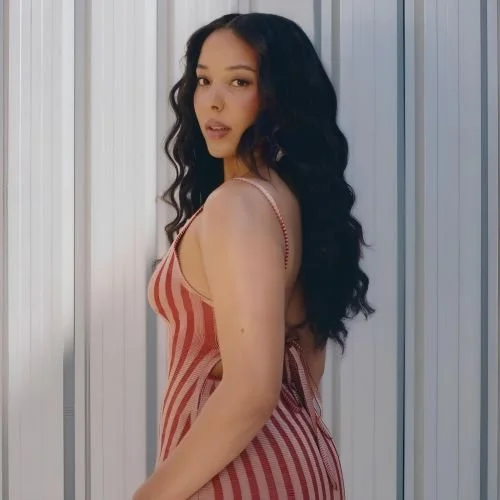
Grace Carter
__________
I have written about…
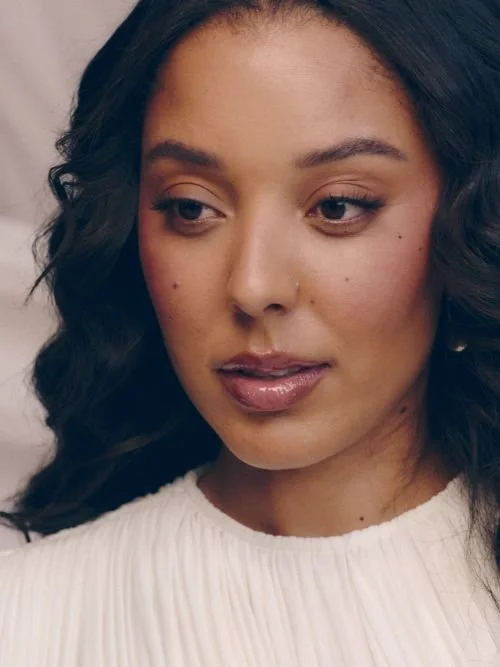
Grace Carter before. She is a brilliant London artist I have been following for years now. Someone who warrants so much more exposure and attention. I am featuring her now as her recent single. White, is extraordinary and must-hear. I think it is appropriates to include Grace Carter in this Modern-Day Queens. I will come to an article about Carter’s new single, White. I do want to come back to 2023. Three have not been too many recent interviews. However, I do feel it is important to look back and get some insight on Grace Carter. Euphoria Magazine spent time with Carter and asked her about her career and new music:
“Your career has been gaining steam with every music you put out, and you’ve even gone on tours with some big names – Dua Lipa for example – how does it feel to have these things working for you?
I love making music and I’m so grateful I get to do this every single day. The opportunities I have been blessed with have been so incredible and I’m just super excited for what’s to come. It’s been a rollercoaster ride for me in a lot of ways but I wouldn’t change it for the world as everything I have experienced has made me the artist I am now.
Your music is inspired by your lived experience and from the happenings around you. Do you have to feel a certain way about something in order to write about it?
For sure, my music is completely dictated by what’s happening in my life. The reason I started writing songs wasn’t to be an artist but it was a tool for me to be able to process the things I was going through, especially as a child. People always make jokes about my music being super deep but me being a really happy person and I genuinely think that is because I am able to put my emotions into something which allows me to move forward.
I think anyone who has ever experienced racism will feel some kind of healing from your song “Riot.” You wrote the song years ago, what made you release it now?
This song was started by a collaborator of mine called Fabienne Holloway in 2014 when Eric Garner was murdered. I was sent the song in 2020 and it proved that in all of that time, nothing had changed. I’ve always started and finished every song I have released but this one was different. The fact that every single lyric still rang true 6 years later made me feel as though this record really needed to be heard. This song isn’t about me, it’s about standing up for what I believe in. As an artist, I want to be able to use my voice to talk about things that are important to me and as a woman of colour this song and the meaning behind it is very important to me.
You fought for the sound that you have now rather than let others shape your music. That’s not something most newcomers would have done, what motivated you to stand your ground?
I was raised by an incredibly strong woman who taught me to always go with my gut and not be swayed and she’s always given me the confidence to sit comfortably in myself. This industry can be crazy, we’re all so young when we come into it and have people telling us how to be. It’s very easy to lose yourself which I have definitely experienced at times but I’ve learned to always remember why I do this. It’s because I love making music and that always had to be my main focus.
Some of your songs were inspired by your childhood experiences, most notably moving from a mixed neighborhood to a mostly white one. What was adjusting to your new environment like at the time?
It was very complicated. There’s a song on the project called “Mother” that talks about this very experience. I went from living in North West London to Brighton which at the time was a very big culture shock. I am a mixed-race girl who grew up in a white family and then went from the diverse city of London to Brighton where I was one of the only non-white people in my year. Navigating that was really hard but I also really appreciate that whole chapter of my life as feeling different is what drew me to start making music.
You don’t only tell stories through your lyrics, you also complement them with the visuals. How involved are you in the making of your music videos?
I love it!! I try to be involved in everything I do, I’m not proud to say that there have been a couple of things I’ve done where I couldn’t be massively involved and you can tell! I’m a visual person so reinforcing the message behind the songs through a music video is super exciting and important for me.
You said that the video for “Pick Your Tears Up” represents being able to tackle certain challenges when you have other people that understand your pain by your side. And it’s something you say you personally connect with. How important was it for you to pass this message on?
Growing up is tough for anyone, you’re going through so many changes and it can feel very lonely. When I was in secondary school I really struggled with my identity but then I found my circle who made everything feel easier, they were like me and we all understood each other. I wanted to capture that in the video and I think Iggy who directed it did an amazing job of conveying that feeling of sisterhood.
Which artists did you love listening to as a kid?
Nina Simone, Alicia Keys, Adele, Angie Stone… Strong women!”.
I think I first wrote about Grace Carter in 2017 or 2018. I have been following her for a while now. I do hope that we get some new interviews with her. As there has been a lot happening in the past few years, Carter’s words and story should be told. CLASH talked with an artist who was realising the power of her voice:
“Would you say that your relationship and approach to music has shifted across the years?
I think so, for sure. I went through a period of time in 2019, 2020 where I didn’t write any music at all and that was a very weird time for me, because music has been something that I’ve done consistently from the age of 13. I used to write songs because I needed to write about my feelings, and then it became my job. There’s a lot of pressure, alot of things that you have to do, a lot of opinions – I think I listened to that a lot. That scared me into a silent phase, where I couldn’t even be creative, and then coming out the other end of that, and having those conversations too, it was really shit and really hard. I felt really lost. But I’m now in a place where I go to the studio and I’m just existing, being there and talking about the things that I’m feeling at that moment. I’m not overthinking it and that’s a really exciting place to be in.
What was it like entering the music industry at such a young age? How would you describe that experience?
I think it’s so interesting, I speak to a lot of my friends about this. We’re all so young when people find us and we think we know everything but we truly don’t, we don’t know who we are. It was exciting when I was 17, but I think through that excitement there was a level of naivety from me. I’d written songs about my absent father and that became a really attractive story for people, they loved it. I think a lot of my life is in my music and it hasn’t always been put in the right hands. Being on stage, singing songs about trauma, coming off stage, being asked questions about trauma, being in meetings, people encouraging me to write more about my trauma, it was a lot. But I think through that I’ve definitely processed a lot of things, I’ve been forced to, but I now know what my boundaries are.
As someone who writes from a very vulnerable and personal standpoint, is there a level of uncertainty in what you share with the world?
I think after my first project, there definitely was a time where I felt like I needed to protect myself because my life didn’t feel like my life anymore. Now, I’ve realised the power of my voice. There’s so many people that don’t have that voice, they don’t have that outlet and that place to write how they feel. It’s artists like myself, and so many artists who write these things down, who give a voice to people who can’t explain how they feel. So I don’t think so, I think it’s just about understanding who I need to surround myself with.
How does the project mark a new chapter for Grace Carter? What themes are you trying to unpack on the record?
There’s lots of different themes. There’s a song on the project called ‘Mother’ which is about mine and my mum’s relationship, it’s very much focused on identity. I basically grew up in a white family, in a white town and it’s about how I navigated that. It’s about how much I love my mom, but sometimes I just don’t feel like her. There’s a song called ‘Hope’, which is about pushing myself forward and finding hope.
I think that there’s lots of different sounds happening on the project too, it feels a bit more like I’ve been experimenting and finding what sort of artist I want to be again. I really missed putting out a body of work, I think I’m just trying not to overthink. I’ve made some songs I really love and I think for me now it’s just about doing more of the same and being on a path of putting music out. That’s what I love to do. ‘A Little Lost, A Little Found’ is the first step of that. I’m just having fun.
If you could hand one piece of advice to a young, emerging artist making their first steps in the industry for the first time, what would it be?
Be patient, trust your gut. I think for a long time, I would never trust my gut. Surround yourself with good people and just have fun. The main thing is just make music that you love because no one knows more than you. Listen sometimes, take advice, take tips, but don’t let that be your whole thing. Just try and listen to yourself and hold on to the reasons why you are where you are. It’s hard work, but it’s really rewarding.
Lastly, which three artists are currently taking over Grace Carter’s playlist?
One of my really good friends just released an album, his name is Q, he’s amazing. My friend Rachel Chinouriri – also love her, she’s the funniest person I know. And then there’s an artist from France, she’s called Yseult, she is incredible. She has a song called ‘Corps’ and I’ve been raving about the song for like three years. I don’t understand a word of it but it’s the most beautiful piece of music ever and she’s incredible”.
Let’s finish off with The Line of Best Fit and this wonderful new single. There is a lot of desire and demand for what comes next from Grace Carter. Such a immensely talented and stunning artist, I hope that this incredible songwriter keeps on releasing music:
"White" comes with a candid open letter to fans in which she describes feeling “defined by” childhood trauma during her initial rise to prominence.
In the letter, the 26-year-old reflects on entering the music industry at 17 and beginning to release music two years later. She worked independently before signing to a major label, but now says she had little sense of self outside the big emotions she was carrying. Her debut project, Why Her, Not Me, directly addressed growing up with an absent parent.
“Writing it was one of the most healing experiences of my life, but I wasn't prepared for what came afterwards,” Carter writes. “Every day, I was revisiting the hardest parts of my childhood, reliving them on stage, in interviews and in the studio. Without the emotional support I needed around me, I eventually stopped processing that sadness and instead felt like I was defined by it.”
The letter details a subsequent creative and emotional stall. Carter says she became scared to open up again, feeling that her early work had boxed her into a narrative of pain. Seeking a reset, she booked an impromptu flight to Stockholm last year. Away from label expectations and live commitments, she says she wrote freely for the first time in years: “Nobody was expecting anything from me. Nobody was putting pressure on me,” she explains. The resulting material, she adds, sounds different from her earlier output – less dark, more reflective, hopeful and optimistic.
“For years, I felt like my actual taste in music was never fully represented in what I was making,” Carter continues. “Because so much of my writing came from such emotional places, the sonics often felt secondary. With this new music, it was important that it felt like the records my girls and I genuinely love, whether that's SZA, Frank Ocean or Solange.”
"White" is the first chapter of this new phase. Written after the end of a seven-year relationship, the song addresses the pressure many young women feel to settle down before “time runs out”. Carter recorded parts of the vocal both sped up and slowed down “to mirror that feeling of being rushed through life”.
The letter frames the Stockholm sessions as an exploration of what she calls her “adult adolescence” – the messy, confusing and beautiful period in your twenties and thirties when the world no longer sees you as a child, even if part of you still feels like one”.
If you have not heard Grace Carter, then do go and seek her out. She is one of our absolute best artists. I have been a fan for years, and I do hope that she continues to release brilliant music for many years more. There is nobody out there like her. She is most definitely…
ONE of our best artists.
__________
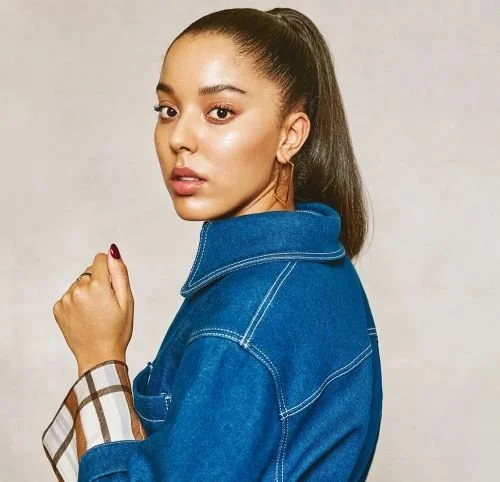
Follow Grace Carter
Official:
https://www.gracecarterofficial.com/
TikTok:
https://www.tiktok.com/@gracecartermusic
Twitter:
Facebook:
https://www.facebook.com/itsgracecarter
Instagram:
https://www.instagram.com/gracecarter/
YouTube:
https://www.youtube.com/channel/UCMgjBHlBeDPdcAF5A69DOuw
Spotify:
https://open.spotify.com/artist/2LuHL7im4aCEmfOlD4rxBC?si=SAnhXCzdS2GE2MBmkyflFQ